Siokis Anastasios, Robert Philippe A, Demetriou Philippos, Kvalvaag Audun, Valvo Salvatore, Mayya Viveka, Dustin Michael L, Meyer-Hermann Michael
Department of Systems Immunology and Braunschweig Integrated Centre of Systems Biology, Helmholtz Centre for Infection Research, Braunschweig 38106, Germany.
Kennedy Institute of Rheumatology, Nuffield Department of Orthopaedics, Rheumatology and Musculoskeletal Sciences, University of Oxford, Oxford OX3 7FY, UK.
iScience. 2021 Sep 9;24(10):103100. doi: 10.1016/j.isci.2021.103100. eCollection 2021 Oct 22.
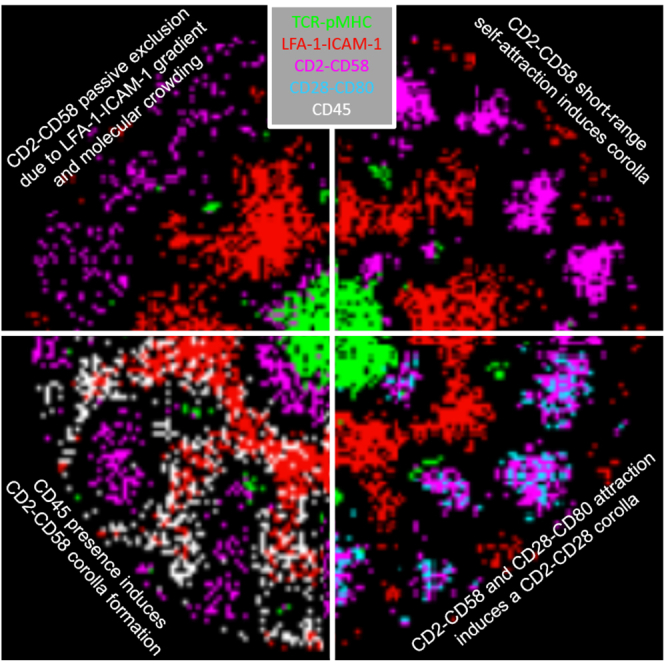
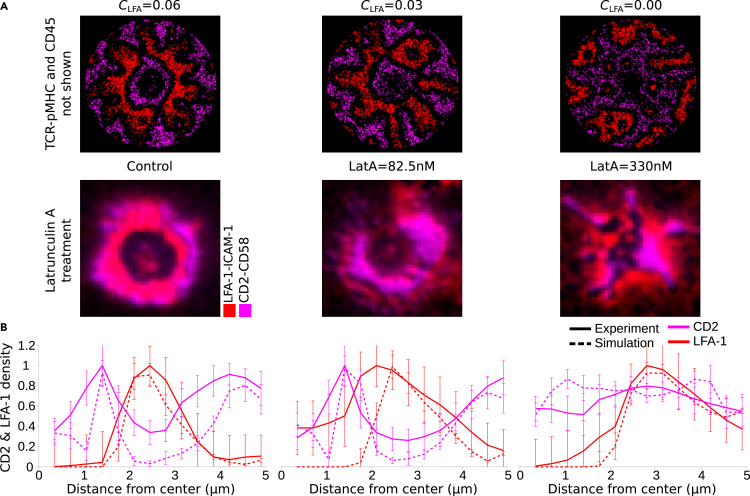
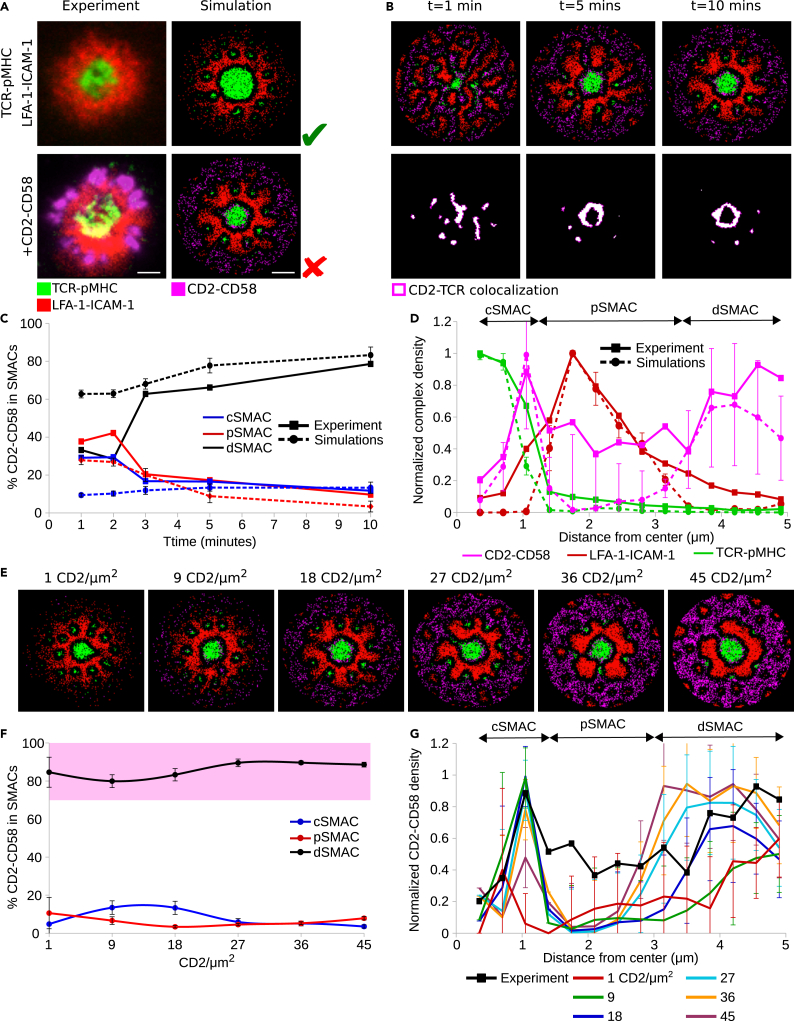
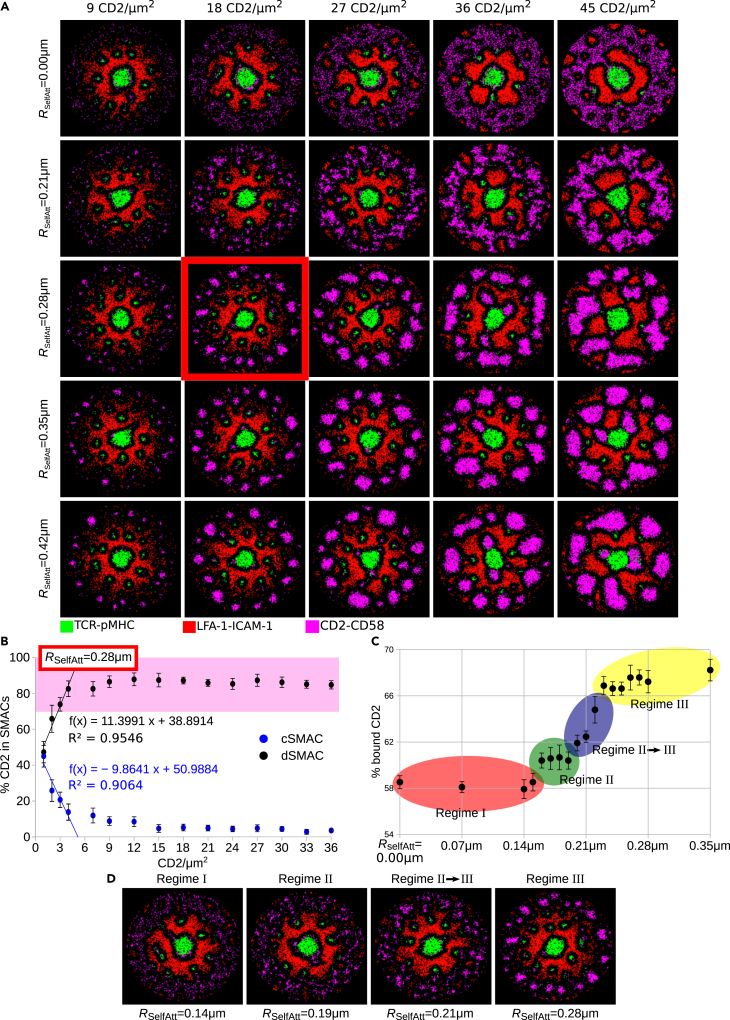
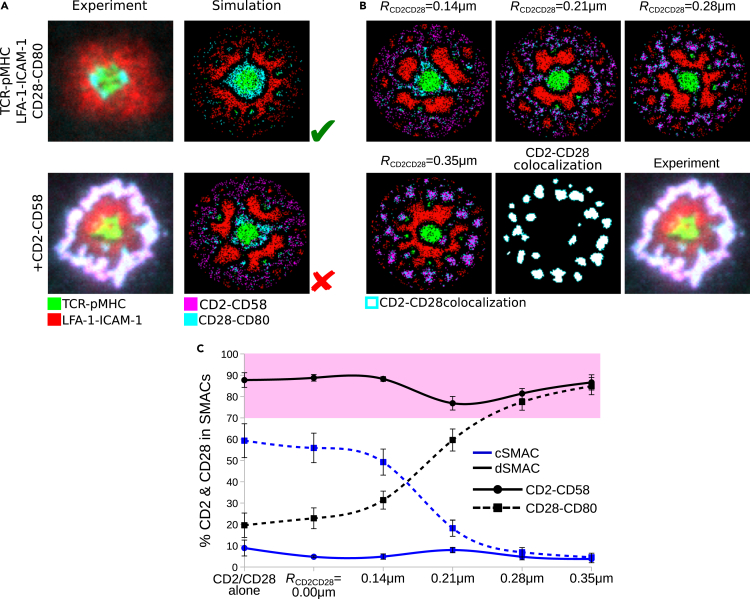
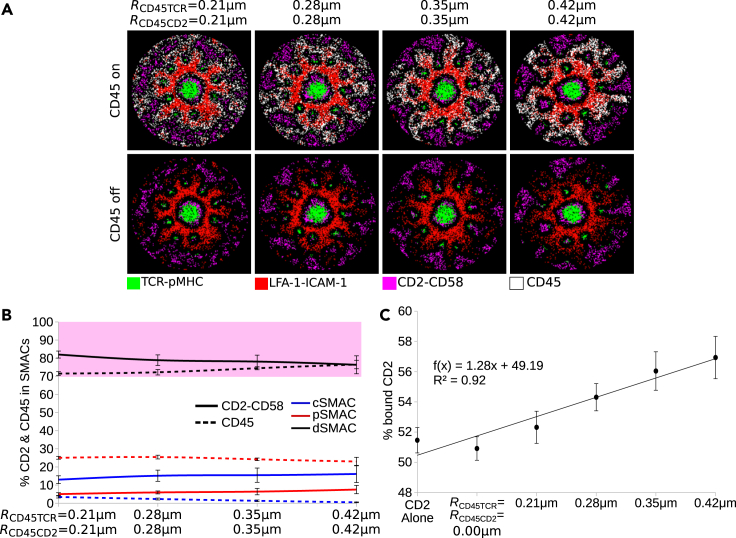
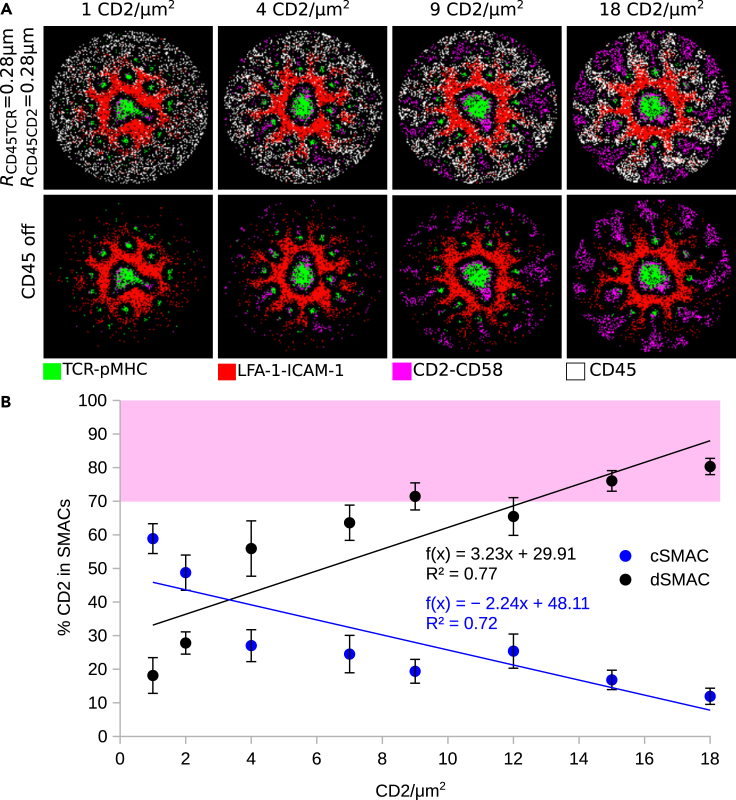
Small immunoglobulin superfamily (sIGSF) adhesion complexes form a corolla of microdomains around an integrin ring and secretory core during immunological synapse (IS) formation. The corolla recruits and retains major costimulatory/checkpoint complexes, such as CD28, making forces that govern corolla formation of particular interest. Here, we investigated the mechanisms underlying molecular reorganization of CD2, an adhesion and costimulatory molecule of the sIGSF family during IS formation. Computer simulations showed passive distal exclusion of CD2 complexes under weak interactions with the ramified F-actin transport network. Attractive forces between CD2 and CD28 complexes relocate CD28 from the IS center to the corolla. Size-based sorting interactions with large glycocalyx components, such as CD45, or short-range CD2 self-attraction successfully explain the corolla 'petals.' This establishes a general simulation framework for complex pattern formation observed in cell-bilayer and cell-cell interfaces, and the suggestion of new therapeutic targets, where boosting or impairing characteristic pattern formation can be pivotal.
小免疫球蛋白超家族(sIGSF)黏附复合体在免疫突触(IS)形成过程中围绕整合素环和分泌核心形成微结构域花冠。该花冠招募并保留主要的共刺激/检查点复合体,如CD28,这使得控制花冠形成的力量格外引人关注。在此,我们研究了sIGSF家族的黏附及共刺激分子CD2在IS形成过程中分子重组的潜在机制。计算机模拟显示,在与分支状F-肌动蛋白转运网络的弱相互作用下,CD2复合体被被动地排斥到远端。CD2与CD28复合体之间的吸引力将CD28从IS中心重新定位到花冠。与大型糖萼成分(如CD45)基于大小的分选相互作用或短程CD2自身吸引成功解释了花冠“花瓣”的形成。这为在细胞双层和细胞-细胞界面观察到的复杂模式形成建立了一个通用的模拟框架,并提出了新的治疗靶点,其中增强或削弱特征性模式形成可能至关重要。