Department of Respiratory Diseases, Shenzhen Children's Hospital, No. 7019 Yitian Road, Futian District, Shenzhen, 518038, Guangdong, China.
Department of Microbiology and Immunology, College of Basic Medicine, Guangdong Medical University, Dongguan, 523808, China.
Virol J. 2021 Oct 9;18(1):202. doi: 10.1186/s12985-021-01669-y.
The effect of SARS-CoV-2 on existing respiratory pathogens in circulation remains uncertain. This study aimed to assess the impact of SARS-CoV-2 on the prevalence of respiratory pathogens among hospitalized children.
This study enrolled hospitalized children with acute respiratory infections in Shenzhen Children's Hospital from September to December 2019 (before the COVID-19 epidemic) and those from September to December 2020 (during the COVID-19 epidemic). Nasopharyngeal swabs were collected, and respiratory pathogens were detected using multiplex PCR. The absolute case number and detection rates of 11 pathogens were collected and analyzed.
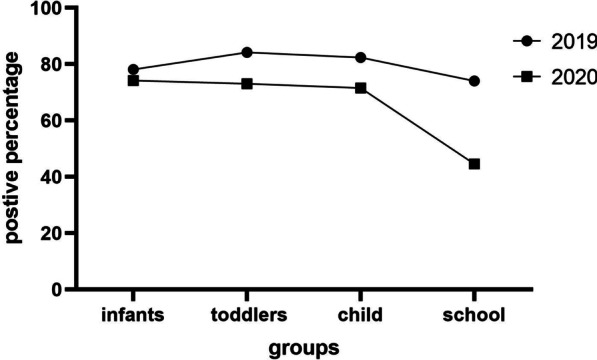
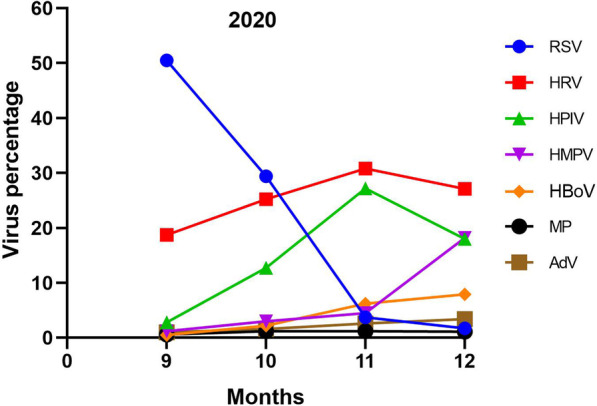
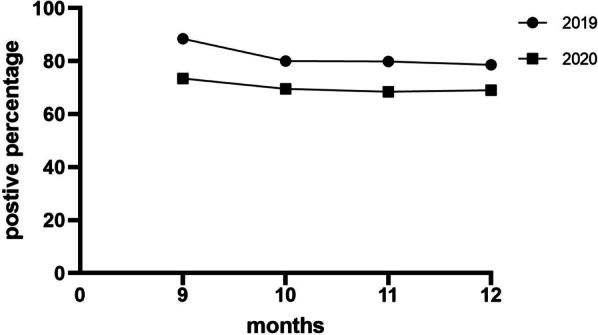
A total of 5696 children with respiratory tract infection received multiplex PCR examination for respiratory pathogens: 2298 from September to December 2019 and 3398 from September to December 2020. At least one pathogen was detected in 1850 (80.5%) patients in 2019, and in 2380 (70.0%) patients in 2020; the detection rate in 2020 was significantly lower than that in 2019.The Influenza A (InfA) detection rate was 5.6% in 2019, but 0% in 2020. The detection rates of Mycoplasma pneumoniae, Human adenovirus, and Human rhinovirus also decreased from 20% (460), 8.9% (206), and 41.8% (961) in 2019 to 1.0% (37), 2.1% (77), and 25.6% (873) in 2020, respectively. In contrast, the detection rates of Human respiratory syncytial virus, Human parainfluenza virus, and Human metapneumovirus increased from 6.6% (153), 9.9% (229), and 0.5% (12) in 2019 to 25.6% (873), 15.5% (530), and 7.2% (247) in 2020, respectively (p < 0.0001).
Successful containment of seasonal influenza as a result of COVID-19 control measures will ensure we are better equipped to deal with future outbreaks of both influenza and COVID-19.Caused by virus competition, the detection rates of Human respiratory syncytial virus, Human parainfluenza virus, and Human metapneumovirus increased in Shenzhen,that reminds us we need to take further monitoring and preventive measures in the next epidemic season.
SARS-CoV-2 对现有循环呼吸道病原体的影响尚不确定。本研究旨在评估 SARS-CoV-2 对住院儿童呼吸道病原体流行率的影响。
本研究纳入 2019 年 9 月至 12 月(COVID-19 流行前)和 2020 年 9 月至 12 月(COVID-19 流行期间)在深圳市儿童医院因急性呼吸道感染住院的儿童。采集鼻咽拭子,采用多重 PCR 检测呼吸道病原体。收集并分析 11 种病原体的绝对病例数和检出率。
共对 5696 例呼吸道感染患儿进行了呼吸道病原体多重 PCR 检查:2019 年 9 月至 12 月 2298 例,2020 年 9 月至 12 月 3398 例。2019 年有 1850 例(80.5%)患儿至少检出 1 种病原体,2020 年有 2380 例(70.0%)患儿至少检出 1 种病原体;2020 年的检出率明显低于 2019 年。2019 年甲型流感(InfA)检出率为 5.6%,而 2020 年为 0%。肺炎支原体、人腺病毒和人鼻病毒的检出率也分别从 2019 年的 20%(460)、8.9%(206)和 41.8%(961)降至 2020 年的 1.0%(37)、2.1%(77)和 25.6%(873)。相比之下,人呼吸道合胞病毒、人副流感病毒和人偏肺病毒的检出率则从 2019 年的 6.6%(153)、9.9%(229)和 0.5%(12)上升至 2020 年的 25.6%(873)、15.5%(530)和 7.2%(247)(p<0.0001)。
由于 COVID-19 控制措施成功控制了季节性流感,我们将更好地应对未来流感和 COVID-19 的爆发。病毒竞争导致深圳市人呼吸道合胞病毒、人副流感病毒和人偏肺病毒的检出率上升,这提醒我们在下一个流行季节需要采取进一步的监测和预防措施。