Qin Yaqi, Wang Dan, Fu Jiaxin, Zhang Zhike, Qin Yonghua, Hu Guibing, Zhao Jietang
State Key Laboratory for Conservation and Utilization of Subtropical Agro-Bioresources/Key Laboratory of Biology and Genetic Improvement of Horticultural Crops (South China), Ministry of Agriculture and Rural Affairs/Guangdong Litchi Engineering Research Center, College of Horticulture, South China Agricultural University, Guangzhou, China.
Plant Methods. 2021 Oct 9;17(1):103. doi: 10.1186/s13007-021-00802-w.
Litchi chinensis Sonn. is an economically important fruit tree in tropical and subtropical regions. However, litchi functional genomics is severely hindered due to its recalcitrance to regeneration and stable transformation. Agrobacterium rhizogenes-mediated hairy root transgenic system provide an alternative to study functional genomics in woody plants. However, the hairy root transgenic system has not been established in litchi.
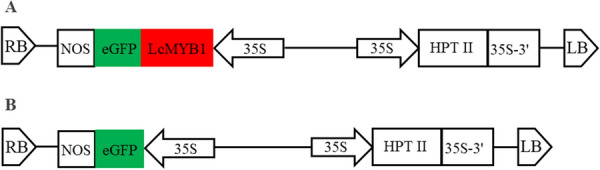
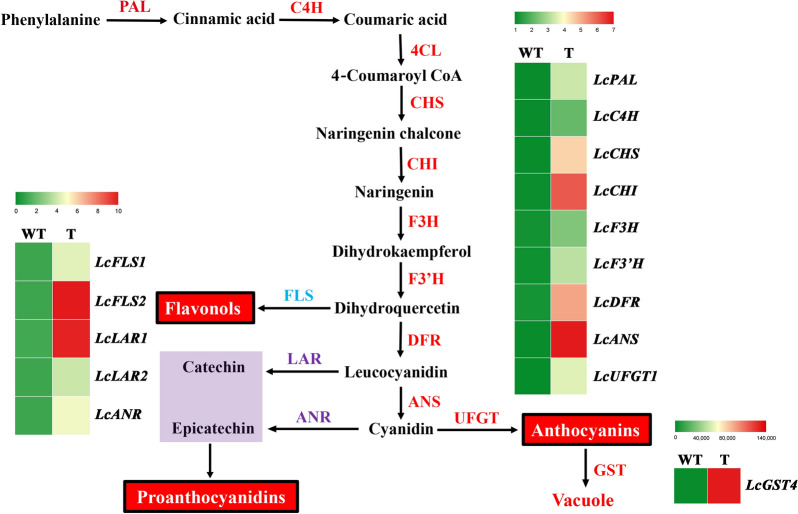
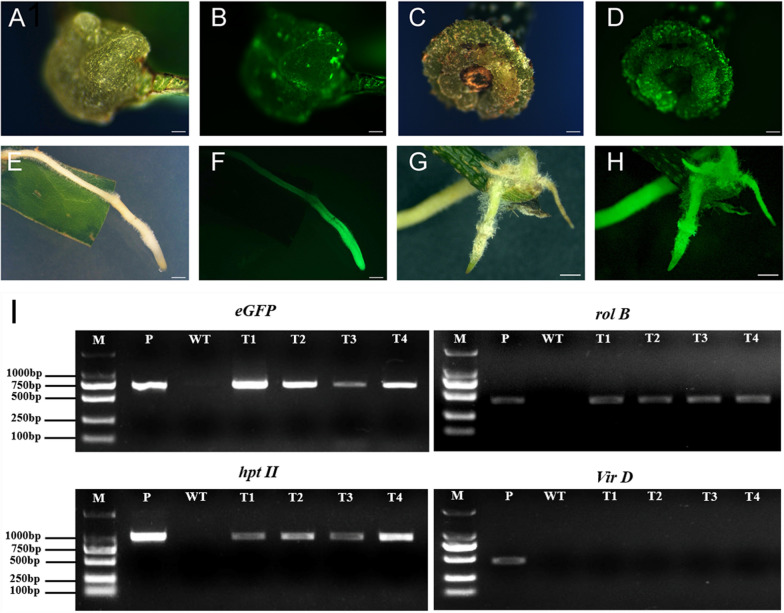
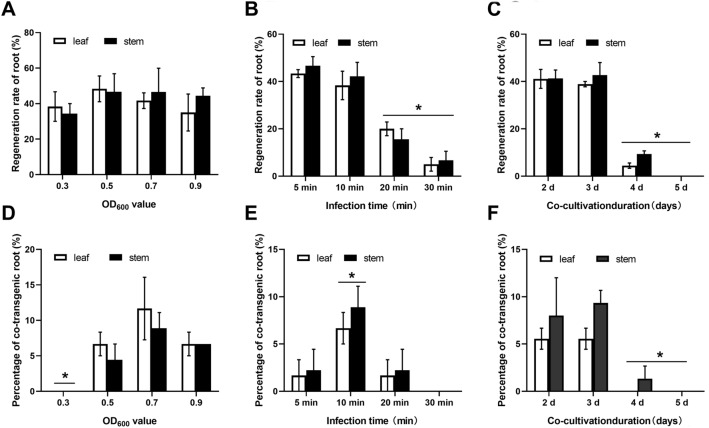
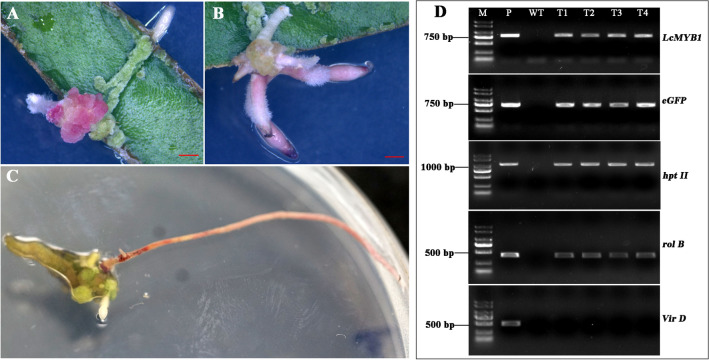
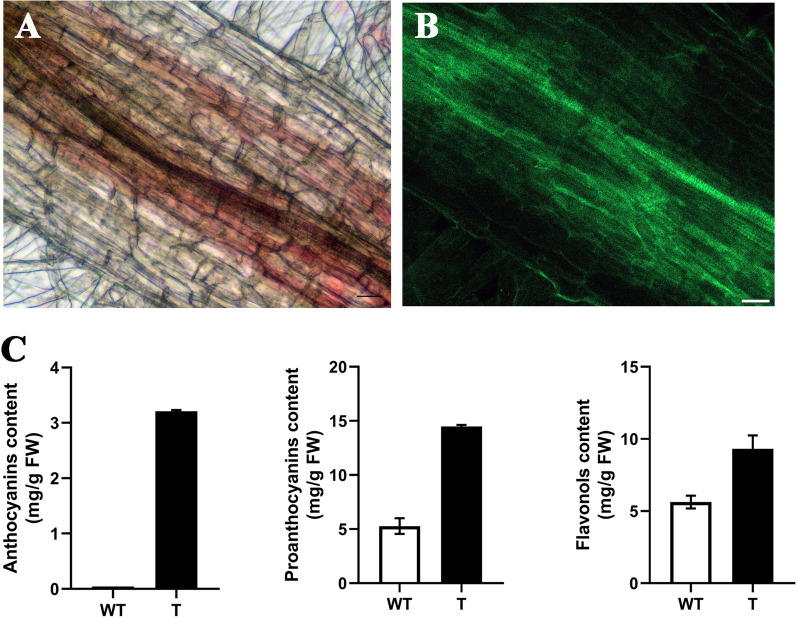
In this study, we report a rapid and highly efficient A. rhizogenes-mediated co-transformation system in L. chinensis using Green Fluorescent Protein (GFP) gene as a marker. Both leaf discs and stem segments of L. chinensis cv. 'Fenhongguiwei' seedlings were able to induce transgenic hairy roots. The optimal procedure involved the use of stem segments as explants, infection by A. rhizogenes strain MSU440 at optical density (OD) of 0.7 for 10 min and co-cultivation for 3 days, with a co-transformation efficiency of 9.33%. Furthermore, the hairy root transgenic system was successfully used to validate the function of the key anthocyanin regulatory gene LcMYB1 in litchi. Over-expression of LcMYB1 produced red hairy roots, which accumulated higher contents of anthocyanins, proanthocyanins, and flavonols. Additionally, the genes involving in the flavonoid pathway were strongly activated in the red hairy roots.
We first established a rapid and efficient transformation system for the study of gene function in hairy roots of litchi using A. rhizogenes strain MSU440 by optimizing parameters. This hairy root transgenic system was effective for gene function analysis in litchi using the key anthocyanin regulator gene LcMYB1 as an example.
荔枝是热带和亚热带地区具有重要经济价值的果树。然而,由于其再生和稳定转化的难处理性,荔枝功能基因组学研究受到严重阻碍。发根农杆菌介导的毛状根转基因系统为木本植物功能基因组学研究提供了一种替代方法。然而,荔枝尚未建立毛状根转基因系统。
在本研究中,我们报道了一种利用绿色荧光蛋白(GFP)基因作为标记的发根农杆菌介导的荔枝快速高效共转化系统。荔枝品种‘粉hong桂味’幼苗的叶片和茎段均能诱导出转基因毛状根。最佳方法是使用茎段作为外植体,用发根农杆菌菌株MSU440在光密度(OD)为0.7的条件下侵染10分钟并共培养3天,共转化效率为9.33%。此外,毛状根转基因系统成功用于验证荔枝中关键花青素调控基因LcMYB1的功能。LcMYB1的过表达产生了红色毛状根,其积累了更高含量的花青素、原花青素和黄酮醇。此外,类黄酮途径相关基因在红色毛状根中被强烈激活。
我们首次通过优化参数,利用发根农杆菌菌株MSU440建立了一种快速高效的转化系统,用于荔枝毛状根基因功能研究。以关键花青素调控基因LcMYB1为例,该毛状根转基因系统对荔枝基因功能分析有效。