Centro de Tecnologías Nucleares en Ecosistemas Vulnerables, División de Investigación y Aplicaciones Nucleares, Comisión Chilena de Energía Nuclear, Las Condes, Nueva Bilbao, 12501, Santiago, Chile.
Fundación Añañuca, Camino La Laguna S/N, San Vicente de Taguatagua, Región del Libertador Bernardo O'Higgins, Chile.
Environ Geochem Health. 2022 Oct;44(10):3173-3189. doi: 10.1007/s10653-021-01098-4. Epub 2021 Oct 9.
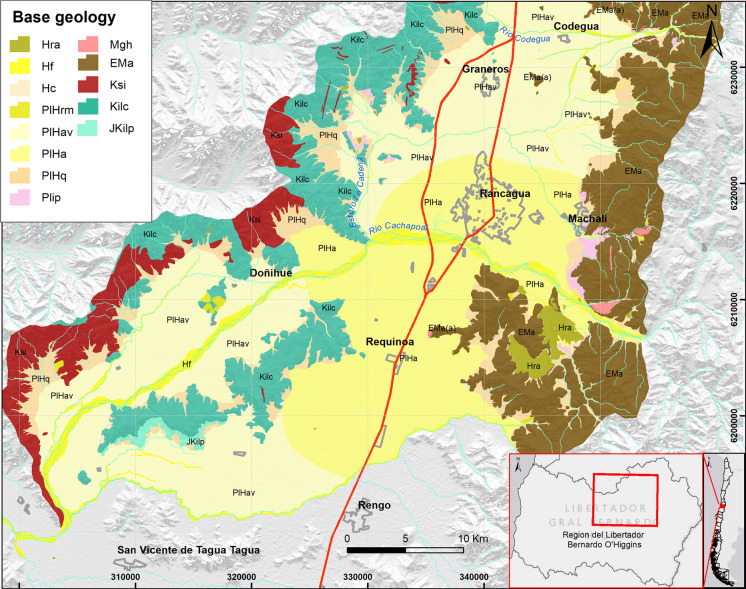
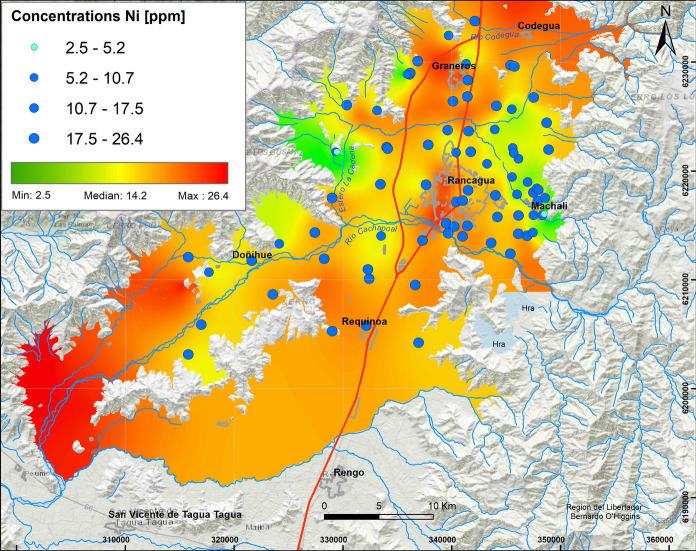
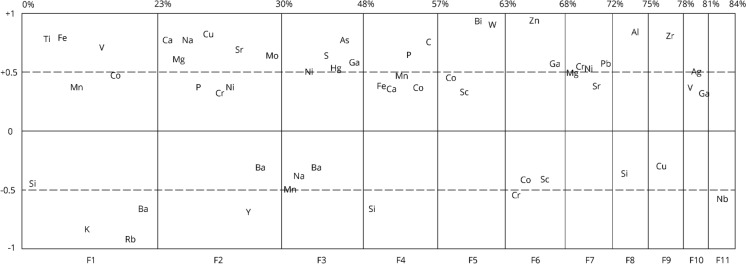
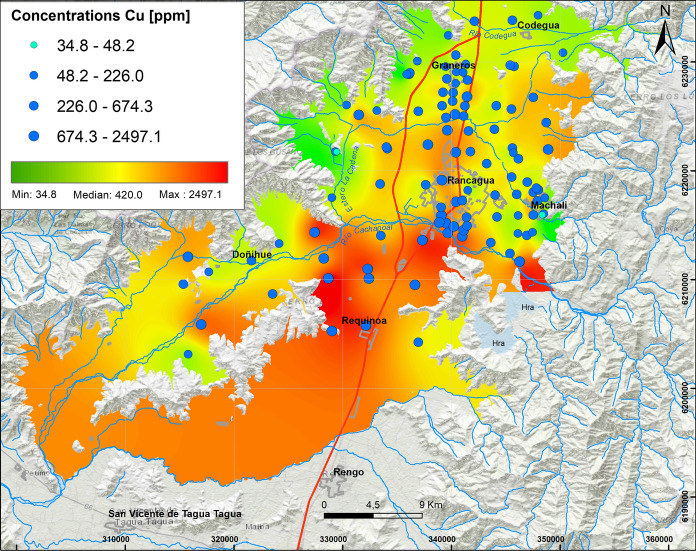
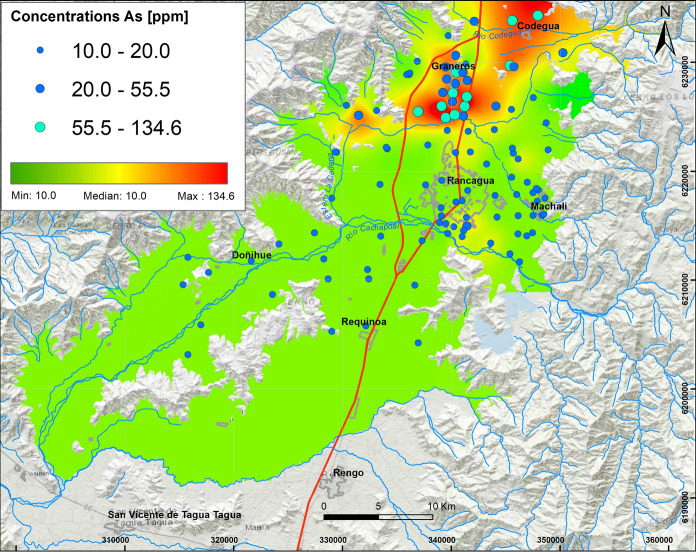
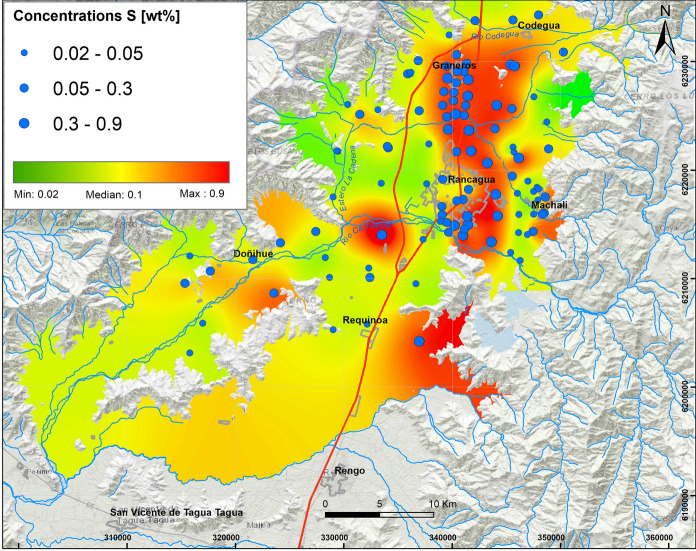
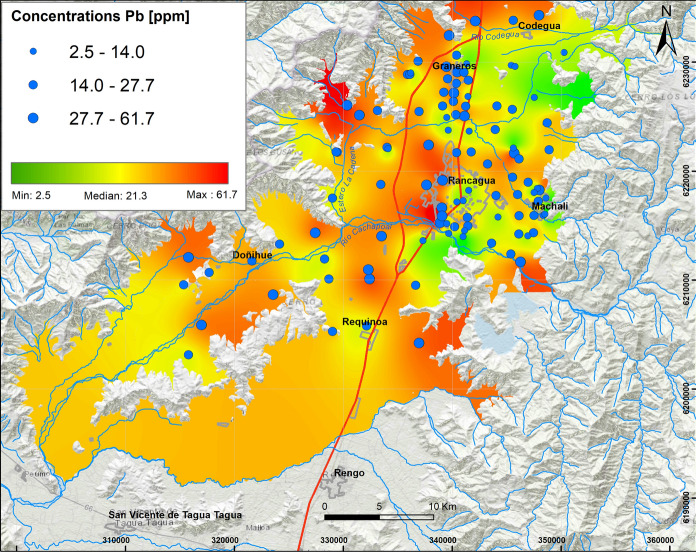
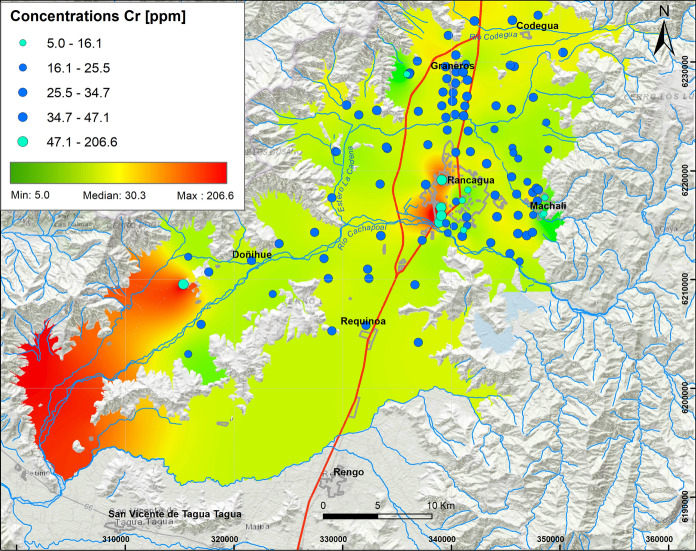
The importance of environmental geochemistry baseline in soils of O´Higgins Region, Chile, since it hosts in its eastern area one of the major Cu-Mo producing mines in the country, is to establish and explain relationships between the chemical compositions of the Earth's surface and potential contaminants sources such as mining industry, agriculture and urban activity. A total of 109 samples of urban, peri-urban and rural soils were analyzed with X-ray fluorescence to determine most of the elemental concentrations analyzed. The C and S analyses were performed with the high-temperature combustion method, and a MERCUR mercury analyzer was used for Hg. The study shows that the distribution patterns for most major elements and some trace elements are controlled by the lithologic substrate. This study identified areas with metals and metalloids in high concentrations, which are a risk to the environment and health according to established international regulations. Some of these components correspond to Cu (2500 ppm), Mo (26,5 ppm), As (134,6 ppm), Cr (206.6 ppm), Hg (0.2 ppm), Ni (26.4 ppm), Pb (61.7 ppm), V (227,2 ppm) and Zn (180.3 ppm). Through an elementary association analysis, most of these elements resulted from extractive activities of Cu, metal alloys and oil combustion. It was also possible to trace the use of fertilizers and pesticides in agricultural soils, as well as the combustion of oil related to vehicles in the study area. This information is relevant to implement environmental management strategies to control possible exposure to toxic compounds to human health.
奥希金斯地区(智利)土壤环境地球化学基线的重要性在于,该地区东部是智利主要的铜钼生产矿区之一。该研究旨在建立并解释地球表面化学成分与潜在污染源(如采矿业、农业和城市活动)之间的关系。采用 X 射线荧光法对 109 个城市、城郊和农村土壤样本进行了分析,以测定大多数分析元素的浓度。采用高温燃烧法进行 C 和 S 分析,并用 MERCUR 汞分析仪测定 Hg。研究表明,大多数主要元素和一些微量元素的分布模式受岩性基底控制。本研究确定了一些高浓度金属和类金属元素存在的区域,这些元素根据既定的国际法规对环境和健康构成了风险。其中一些成分对应于 Cu(2500 ppm)、Mo(26.5 ppm)、As(134.6 ppm)、Cr(206.6 ppm)、Hg(0.2 ppm)、Ni(26.4 ppm)、Pb(61.7 ppm)、V(227.2 ppm)和 Zn(180.3 ppm)。通过基本的元素关联分析,这些元素主要来自 Cu、金属合金和石油燃烧的提取活动。还可以追踪研究区域内农业土壤中肥料和农药的使用情况,以及与车辆相关的石油燃烧情况。这些信息对于实施环境管理策略以控制人类健康可能接触有毒化合物具有重要意义。