Chen Chaoyi, Feng Zhanchun, Ding Yufeng, Yan Ziqi, Wang Jia, Wang Ruoxi, Feng Da
School of Medicine and Health Management, Tongji Medical College of Huazhong University of Science and Technology, Wuhan, China.
Tongji Hospital Affiliated to Tongji Medical College of Huazhong University of Science and Technology, Wuhan, China.
Front Pharmacol. 2021 Sep 21;12:734637. doi: 10.3389/fphar.2021.734637. eCollection 2021.
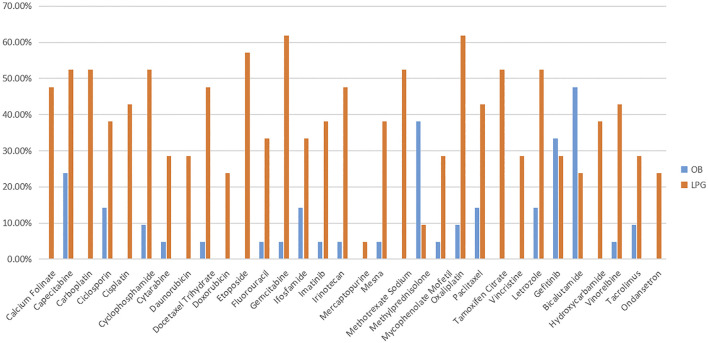
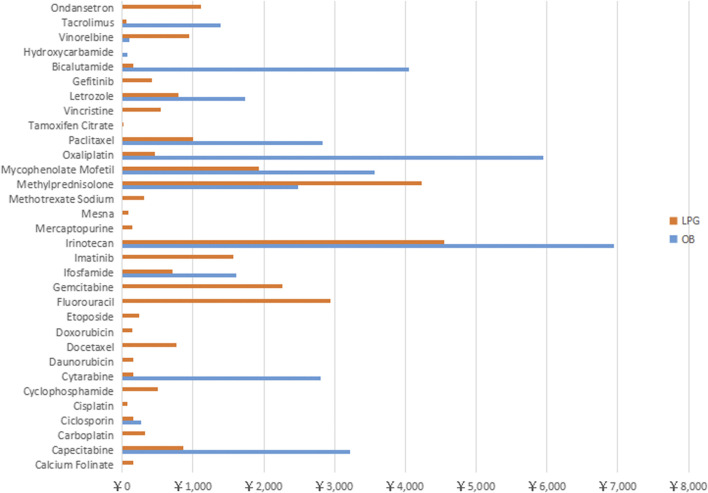
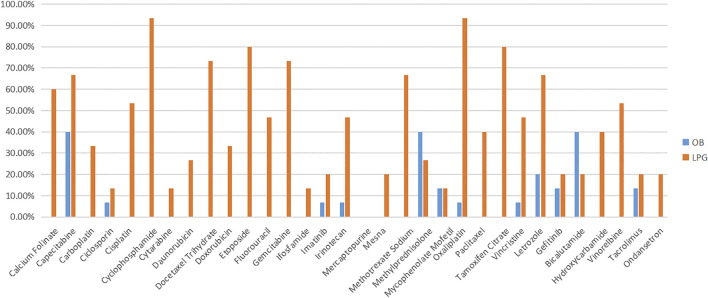
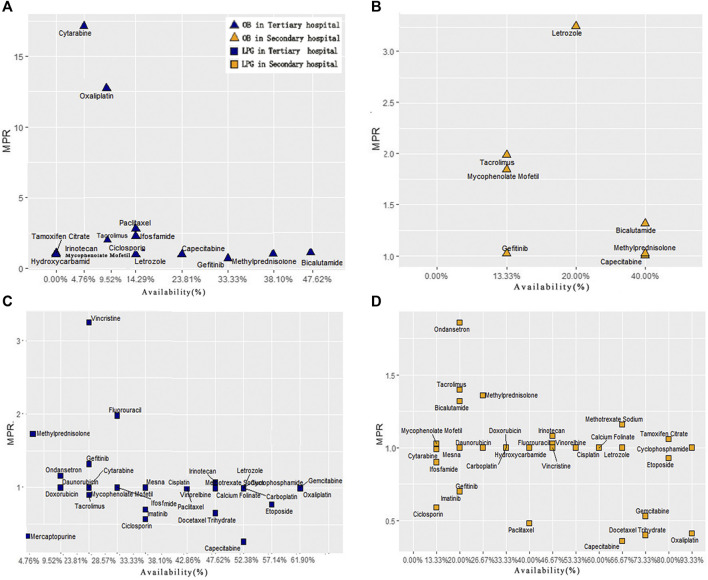
poses a serious threat to one's health, which caused significant economic burden on the family and society. Poor availability and affordability resulted in some essential medicines failing to meet the basic health needs of this group of patients. The objective of this study was to evaluate the availability, prices and affordability of 32 anticancer essential medicines in Hubei Province, China. Data on the availability and price related information of 32 essential anticancer medicines in the capital and five other cities of Hubei Province were collected. A total of 28 hospitals were sampled, which included 13 tertiary hospitals and 15 secondary hospitals. We used the standard methods developed by the World Health Organization and Health Action International to compare the differences in drug price, availability and affordability between secondary hospitals and tertiary hospitals. Overall, the availability of medicine was higher in tertiary hospitals. The average availability of originator brand (OBs) was 13.70% (tertiary hospitals) VS 6.67% (secondary hospitals), and lowest-priced generic (LPGs) was 62.83% (tertiary hospitals) VS 42.92% (secondary hospitals). The MPR value of most sampled medicines in secondary hospitals were less than 1. In contrast, the MPR of Cytarabine (17.15), Oxaliplatin (12.73) were significantly higher than the international reference price. The top three OBs' total expenses for 30-days treatment were Irinotecan, Oxaliplatin, Bicalutamide. Further, their affordability was relative low, as the costs for one course using these medicines were much higher than 20% of the minimum family monthly income. Though the "Zero Mark-Up" and "Centralized procurement policy of anti-tumor drugs" policies have been implemented in China, the availability issue yet to be addressed. High price and low affordability were the major barriers to the access of essential anticancer medicines. Measures should be taken to provide sufficient, available and affordable medicines to patients in need.
对个人健康构成严重威胁,给家庭和社会造成了巨大的经济负担。药品可及性差和可负担性低导致一些基本药物无法满足这组患者的基本健康需求。本研究的目的是评估中国湖北省32种抗癌基本药物的可及性、价格和可负担性。收集了湖北省省会及其他五个城市32种基本抗癌药物的可及性和价格相关信息。共抽取了28家医院,其中包括13家三级医院和15家二级医院。我们采用世界卫生组织和国际卫生行动组织制定的标准方法,比较二级医院和三级医院在药品价格、可及性和可负担性方面的差异。总体而言,三级医院的药品可及性更高。原研品牌(OBs)的平均可及率为13.70%(三级医院)对6.67%(二级医院),最低价仿制药(LPGs)为62.83%(三级医院)对42.92%(二级医院)。二级医院中大多数抽样药品的MPR值小于1。相比之下,阿糖胞苷(17.15)、奥沙利铂(12.73)的MPR显著高于国际参考价格。30天治疗的前三种OBs总费用分别是伊立替康、奥沙利铂、比卡鲁胺。此外,它们的可负担性相对较低,因为使用这些药物一个疗程的费用远高于家庭月最低收入的20%。尽管中国已实施了“零差率”和“抗肿瘤药物集中采购政策”,但可及性问题仍有待解决。高价格和低可负担性是获得基本抗癌药物的主要障碍。应采取措施为有需要的患者提供充足、可及且可负担的药品。