Li Xue, Zou Yu, Fu Yuan-Yuan, Xing Jia, Wang Kai-Yue, Wan Peng-Zhi, Zhai Xiao-Yue
Department of Histology and Embryology, Basic Medical College, China Medical University, Shenyang, China.
Department of Nephrology, Shengjing Hospital of China Medical University, Shenyang, China.
Front Physiol. 2021 Sep 17;12:680544. doi: 10.3389/fphys.2021.680544. eCollection 2021.
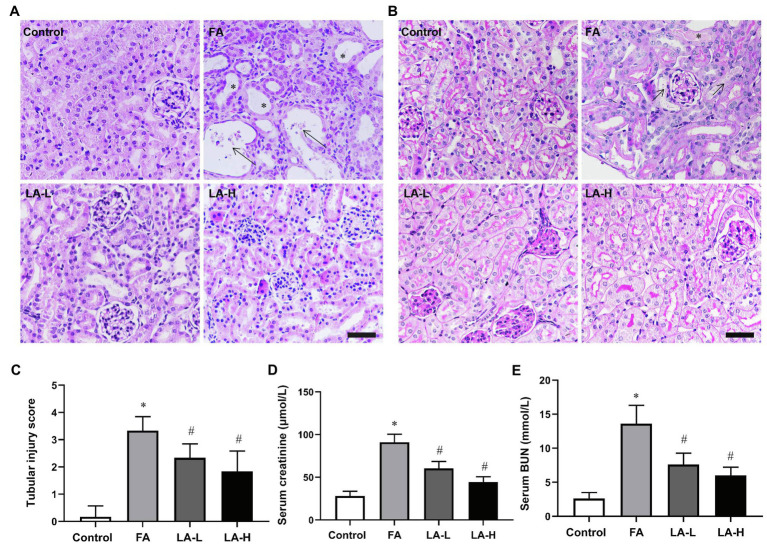
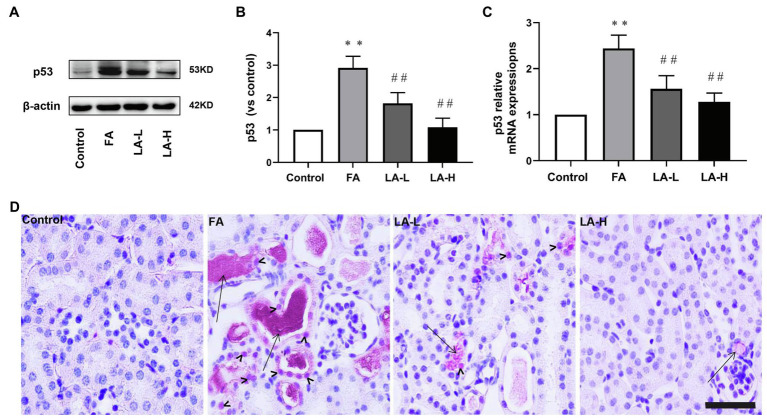
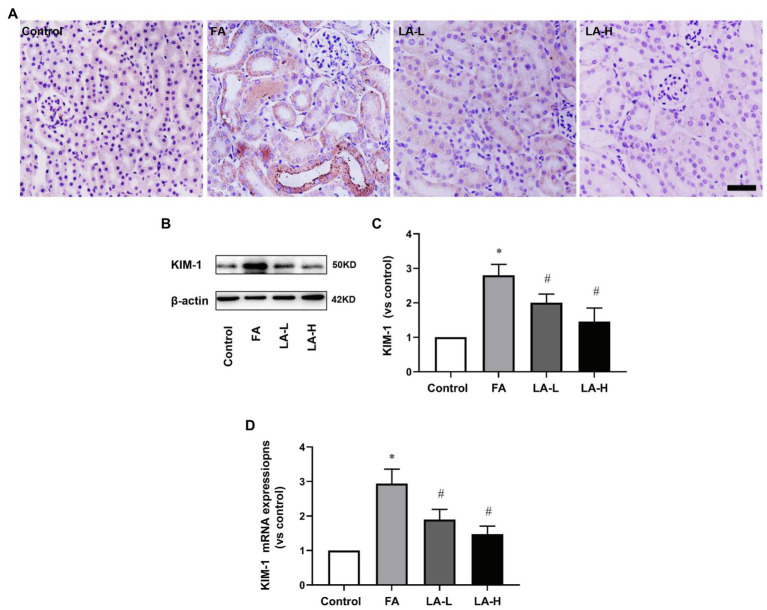
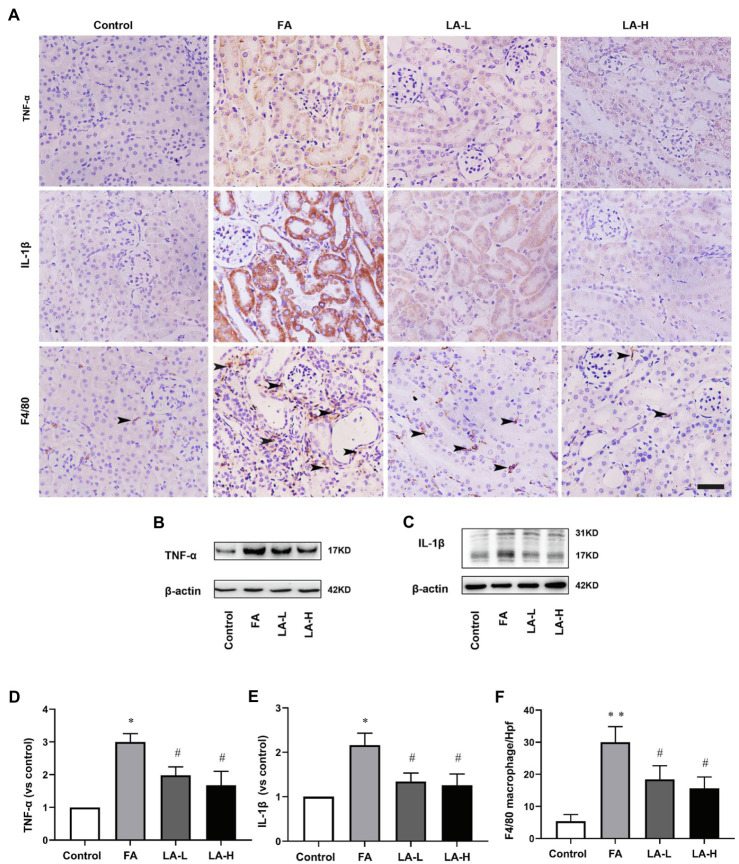
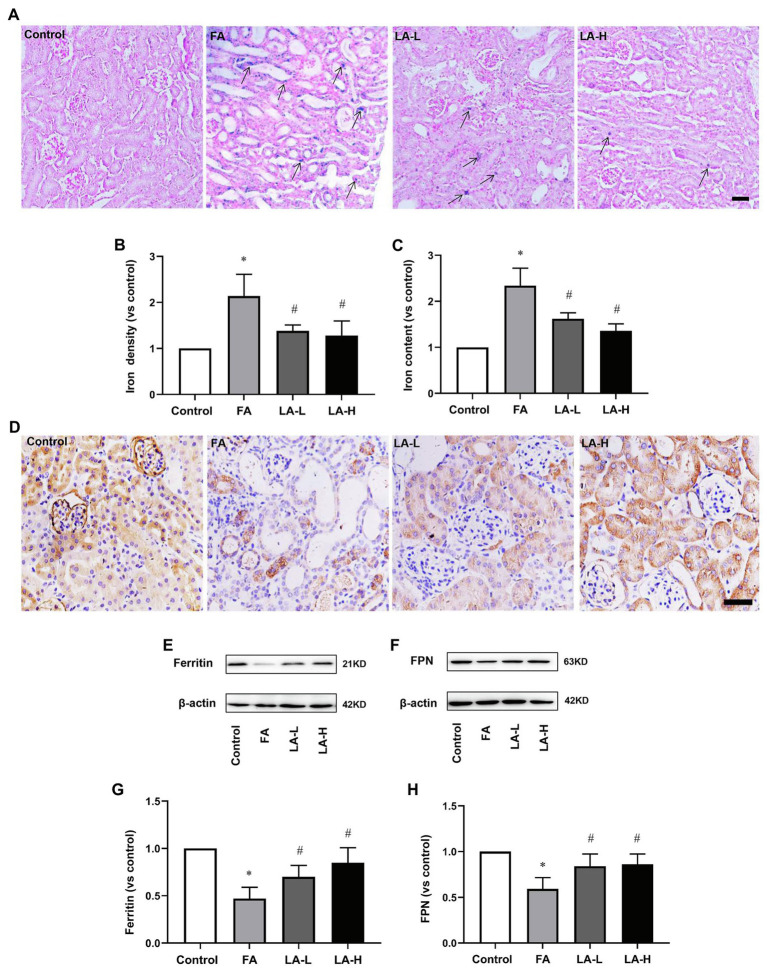
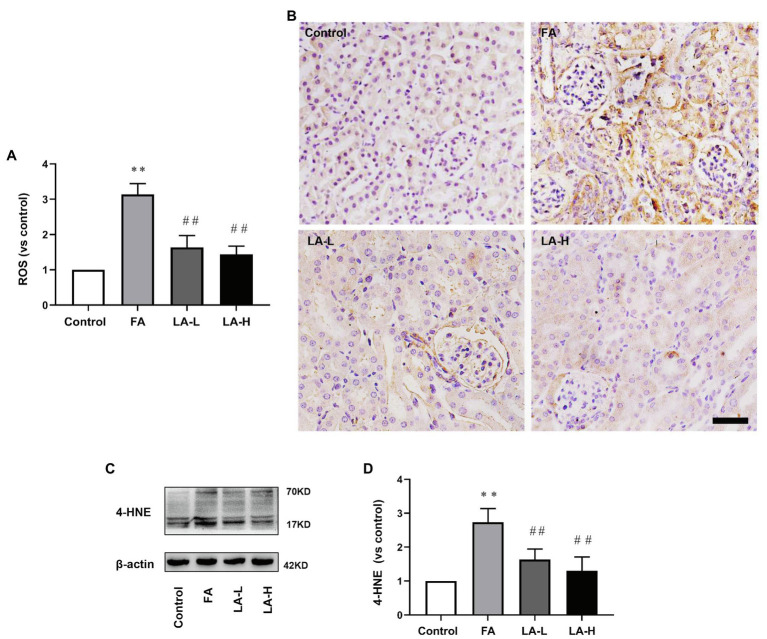
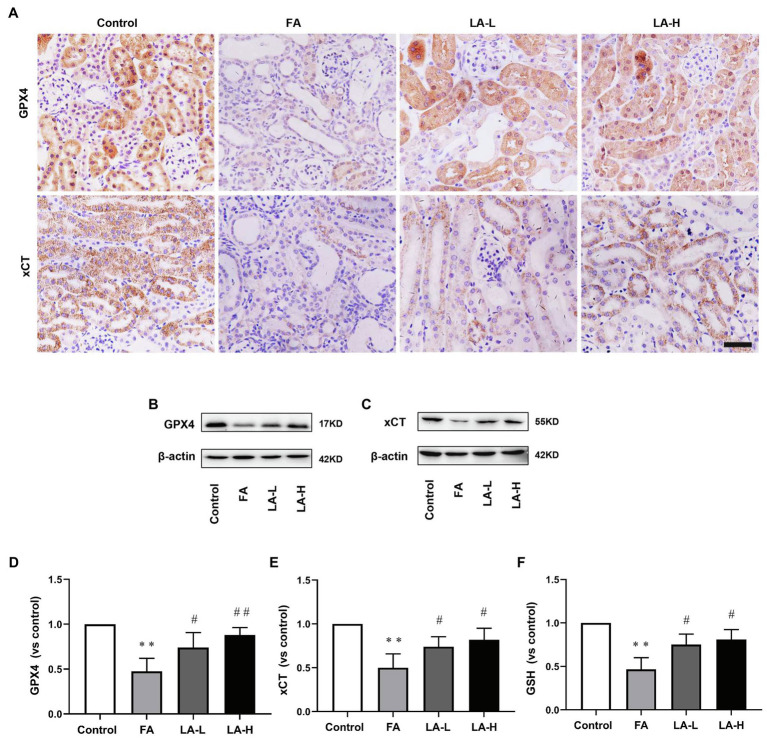
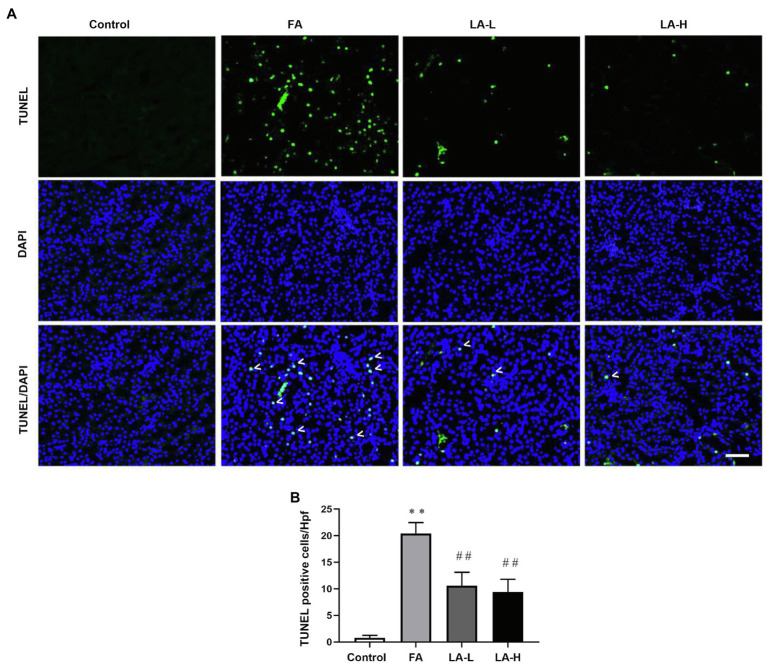
Folic acid (FA)-induced acute kidney injury (AKI) is characterized by the disturbance of redox homeostasis, resulting in massive tubular necrosis and inflammation. Α-lipoic acid (LA), as an antioxidant, has been reported to play an important role in renal protection, but the underlying mechanism remains poorly explored. The aim of this study is to investigate the protective effect of LA on FA-induced renal damage. Our findings showed that LA could ameliorate renal dysfunction and histopathologic damage induced by FA overdose injection. Moreover, FA injection induced severe inflammation, indicated by increased release of pro-inflammatory cytokines tumor necrosis factor (TNF)-α and IL-1β, as well as infiltration of macrophage, which can be alleviated by LA supplementation. In addition, LA not only reduced the cellular iron overload by upregulating the expressions of Ferritin and ferroportin (FPN), but also mitigated reactive oxygen species (ROS) accumulation and lipid peroxidation by increasing the levels of antioxidant glutathione (GSH) and glutathione peroxidase-4 (GPX4). More importantly, we found that LA supplementation could reduce the number of Terminal deoxynucleotidyl transferase dUTP nick end labeling (TUNEL)-positive tubular cells caused by FA, indicating that the tubular cell death mediated by ferroptosis may be inhibited. Further study demonstrated that LA supplementation could reverse the decreased expression of cystine/glutamate antiporter xCT (SLC7A11), which mediated GSH synthesis. What is more, mechanistic study indicated that p53 activation was involved in the inhibitory effect of SLC7A11 induced by FA administration, which could be suppressed by LA supplementation. Taken together, our findings indicated that LA played the protective effect on FA-induced renal damage mainly by inhibiting ferroptosis.
叶酸(FA)诱导的急性肾损伤(AKI)的特征是氧化还原稳态紊乱,导致大量肾小管坏死和炎症。α-硫辛酸(LA)作为一种抗氧化剂,已报道在肾脏保护中起重要作用,但其潜在机制仍未得到充分探索。本研究的目的是探讨LA对FA诱导的肾损伤的保护作用。我们的研究结果表明,LA可以改善FA过量注射引起的肾功能障碍和组织病理学损伤。此外,FA注射诱导了严重的炎症反应,表现为促炎细胞因子肿瘤坏死因子(TNF)-α和白细胞介素-1β的释放增加,以及巨噬细胞浸润,而补充LA可以缓解这些症状。此外,LA不仅通过上调铁蛋白和铁转运蛋白(FPN)的表达来减少细胞内铁过载,还通过增加抗氧化剂谷胱甘肽(GSH)和谷胱甘肽过氧化物酶-4(GPX4)的水平来减轻活性氧(ROS)积累和脂质过氧化。更重要的是,我们发现补充LA可以减少FA引起的末端脱氧核苷酸转移酶dUTP缺口末端标记(TUNEL)阳性肾小管细胞的数量,表明铁死亡介导的肾小管细胞死亡可能受到抑制。进一步的研究表明,补充LA可以逆转介导GSH合成的胱氨酸/谷氨酸反向转运体xCT(SLC7A11)表达的降低。此外,机制研究表明,p53激活参与了FA给药诱导的SLC7A11的抑制作用,而补充LA可以抑制这种作用。综上所述,我们的研究结果表明,LA对FA诱导的肾损伤的保护作用主要是通过抑制铁死亡来实现的。