Tiwari Pankaj Kumar, Rai Rajanish Kumar, Khajanchi Subhas, Gupta Rabindra Kumar, Misra Arvind Kumar
Department of Basic Science and Humanities, Indian Institute of Information Technology, Bhagalpur, 813210 India.
Department of Mathematics, School of Sciences, National Institute of Technology Andhra Pradesh, Tadepalligudem, 534101 India.
Eur Phys J Plus. 2021;136(10):994. doi: 10.1140/epjp/s13360-021-01997-6. Epub 2021 Oct 4.
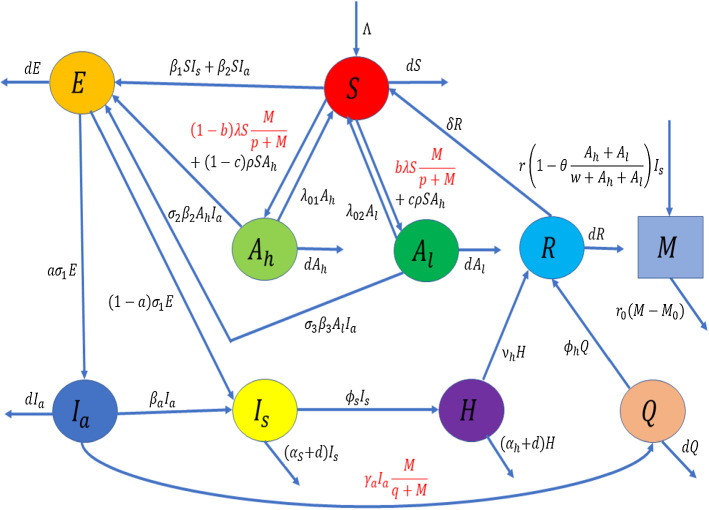
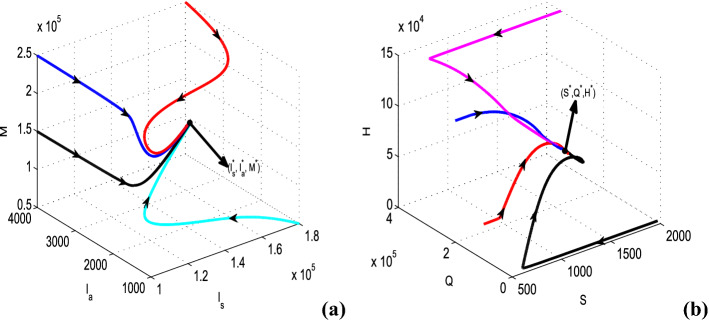
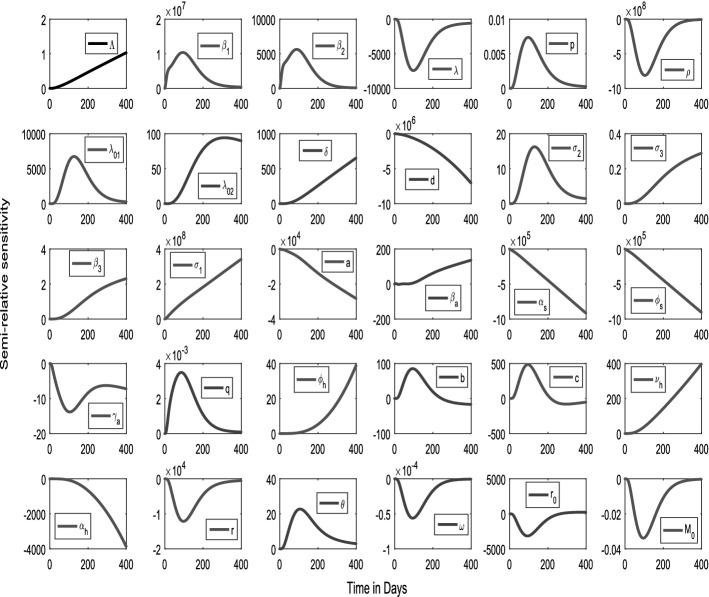
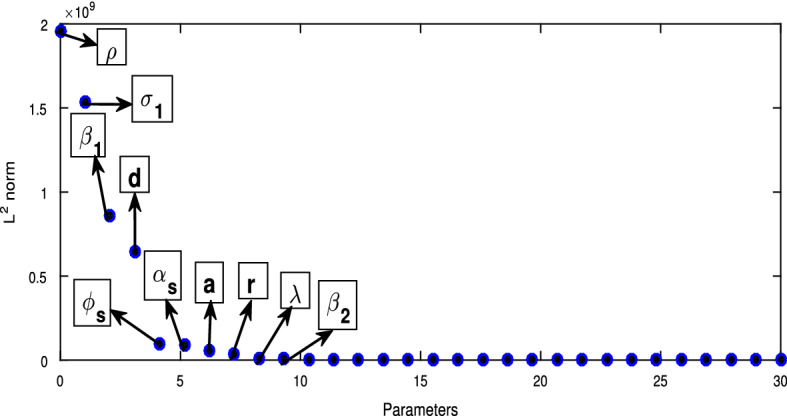
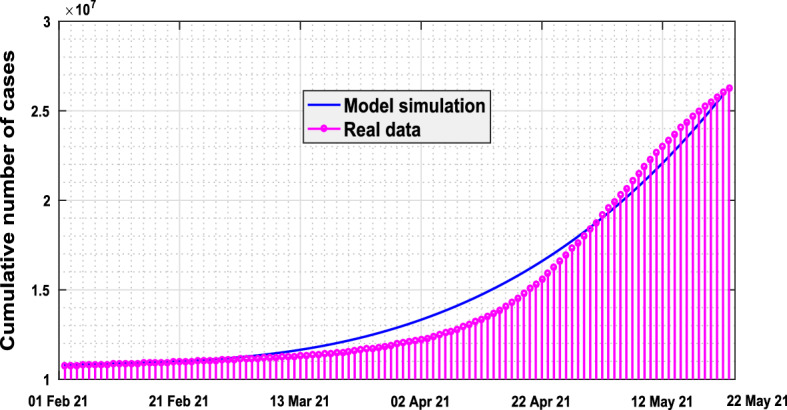
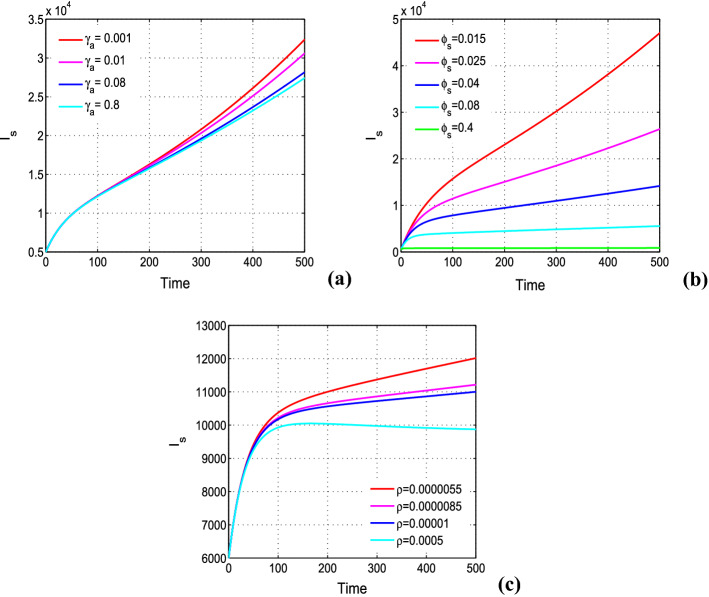
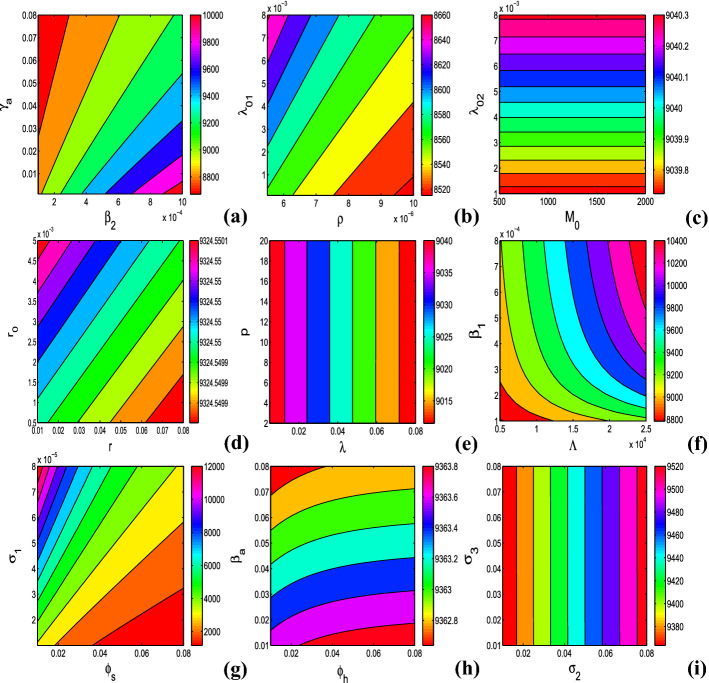
The effects of social media advertisements together with local awareness in controlling COVID-19 are explored in the present investigation by means of a mathematical model. The expression for the basic reproduction number is derived. Sufficient conditions for the global stability of endemic equilibrium are obtained. We perform sensitivity analysis to identify the key parameters of the model having great impacts on the prevalence and control of COVID-19. We calibrate the proposed model to fit the data set of COVID-19 cases for India. Our simulation results show that dissemination rate of awareness among susceptible individuals at community level and individual level plays pivotal role in curtailing the COVID-19 disease. Moreover, we observe that the global information distributing from social media and local awareness coming from mouth-to-mouth communication between unaware susceptible and aware people, together with hospitalization of symptomatic individuals and quarantine of asymptomatic individuals, are much beneficial in reducing COVID-19 cases in India. Our study suggests that both global and local awareness must be implemented effectively to manage the burden of COVID-19 pandemic.
本研究通过数学模型探讨了社交媒体广告以及当地的认知度在控制新冠疫情方面的作用。推导了基本再生数的表达式。获得了地方病平衡点全局稳定性的充分条件。我们进行敏感性分析,以确定对新冠疫情的流行和控制有重大影响的模型关键参数。我们对所提出的模型进行校准,以拟合印度的新冠病例数据集。我们的模拟结果表明,社区层面和个人层面易感个体中的认知传播率在遏制新冠疫情方面起着关键作用。此外,我们观察到,来自社交媒体的全球信息传播以及未意识到风险的易感人群与意识到风险的人群之间口口相传产生的当地认知度,再加上有症状个体的住院治疗和无症状个体的隔离,对减少印度的新冠病例非常有益。我们的研究表明,必须有效实施全球和地方层面的认知措施,以应对新冠疫情的负担。