Khajanchi Subhas, Sarkar Kankan, Mondal Jayanta, Nisar Kottakkaran Sooppy, Abdelwahab Sayed F
Department of Mathematics, Presidency University, 86/1 College Street, Kolkata 700073, India.
Department of Mathematics, Malda College, Malda, West Bengal 732101, India.
Results Phys. 2021 Jun;25:104285. doi: 10.1016/j.rinp.2021.104285. Epub 2021 May 6.
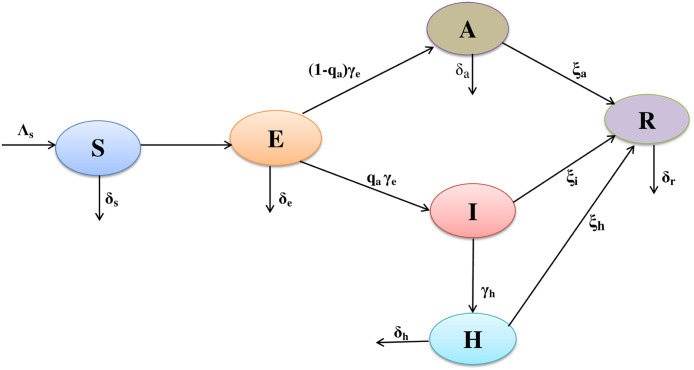
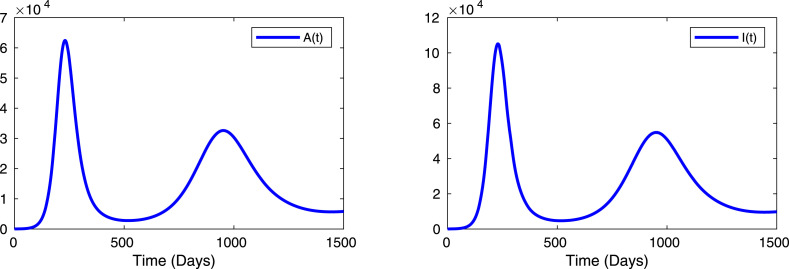
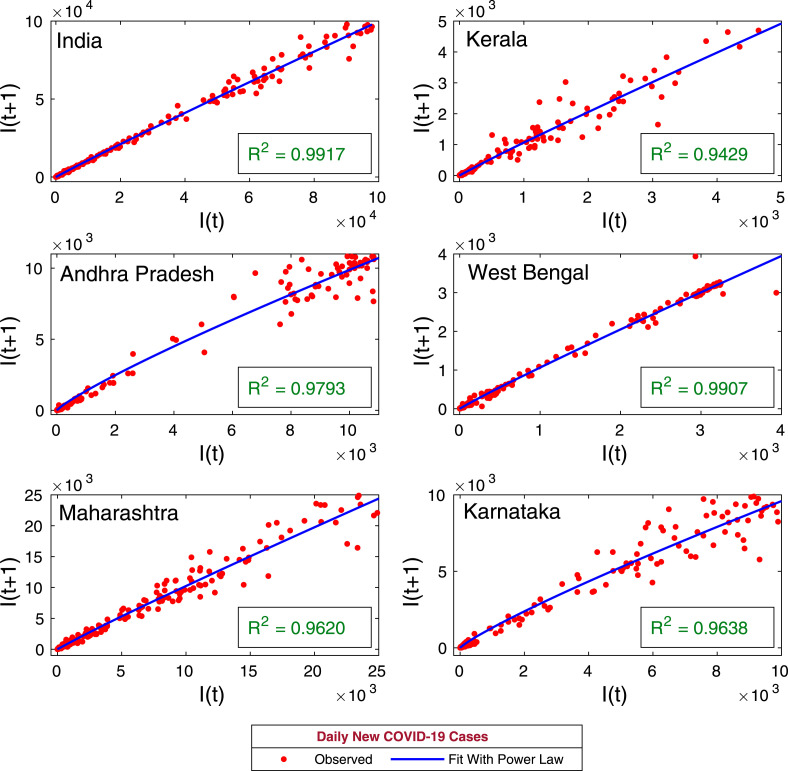
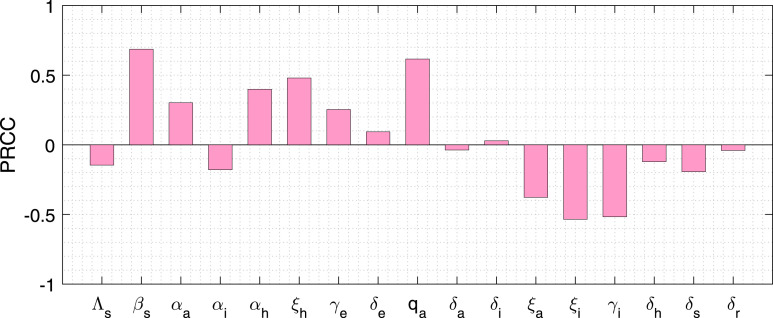
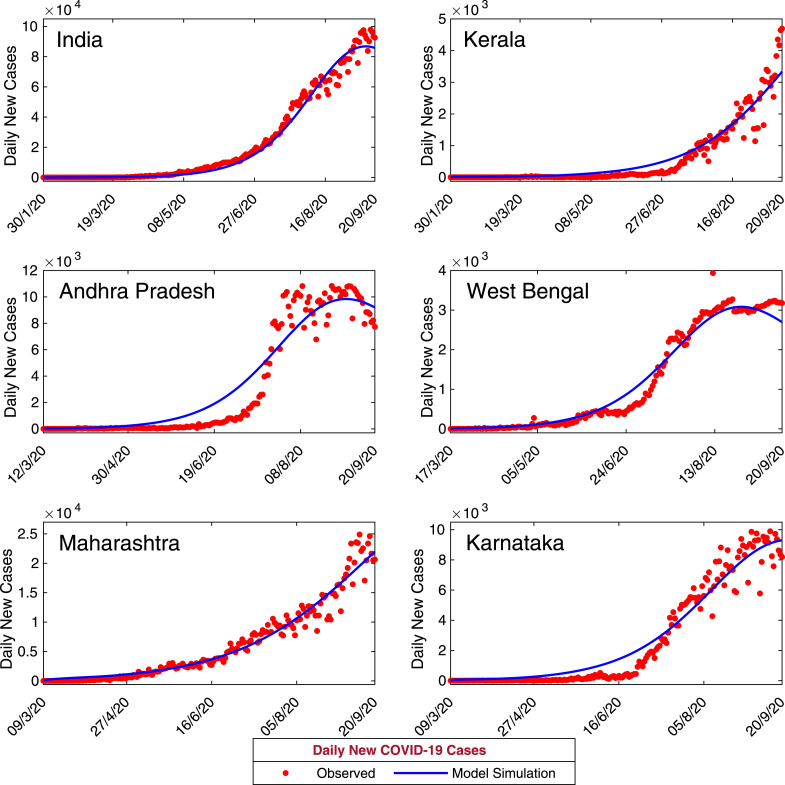
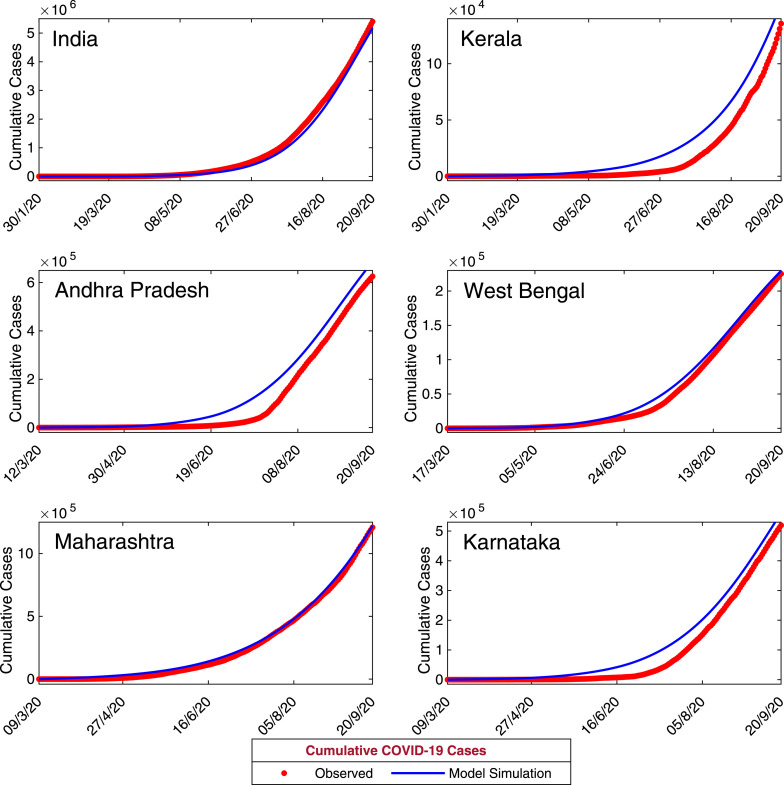
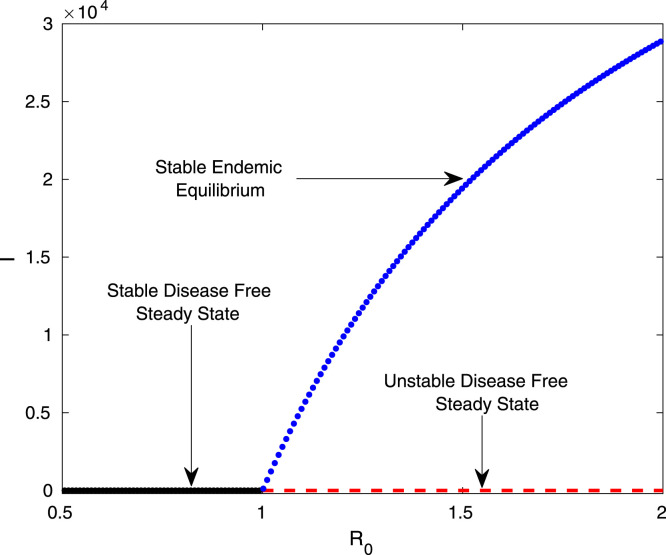
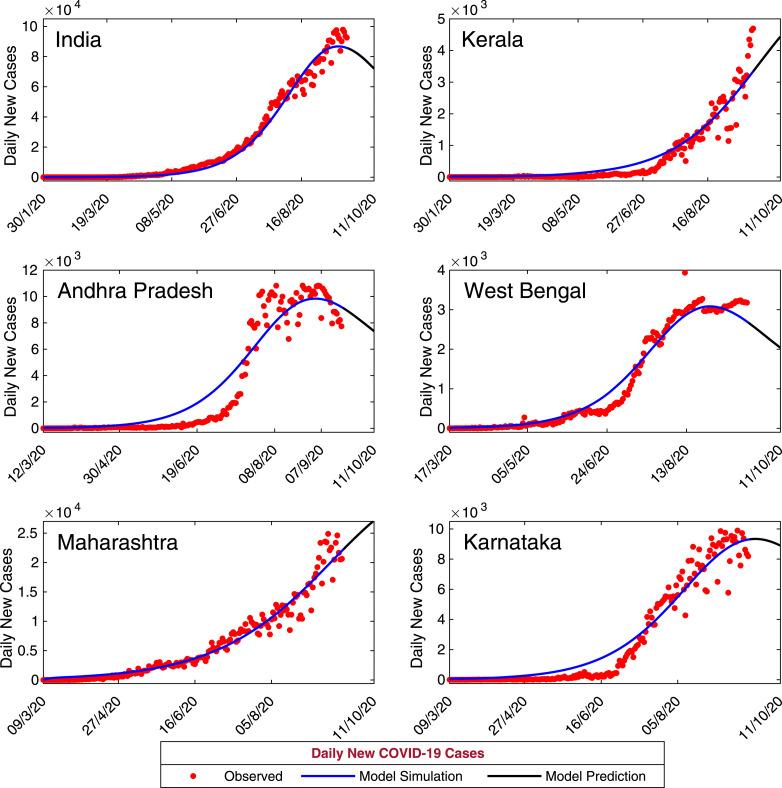
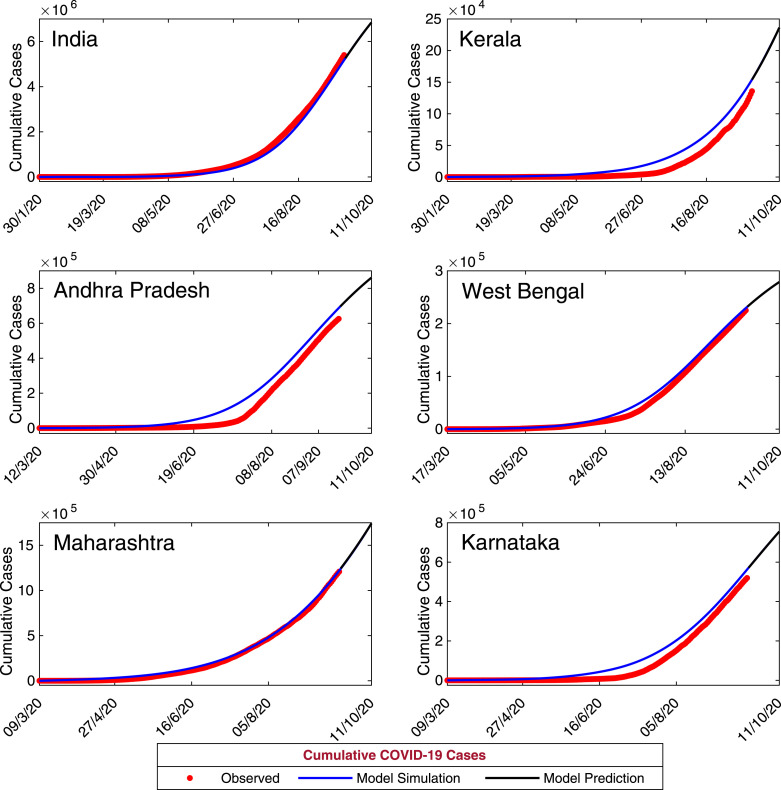
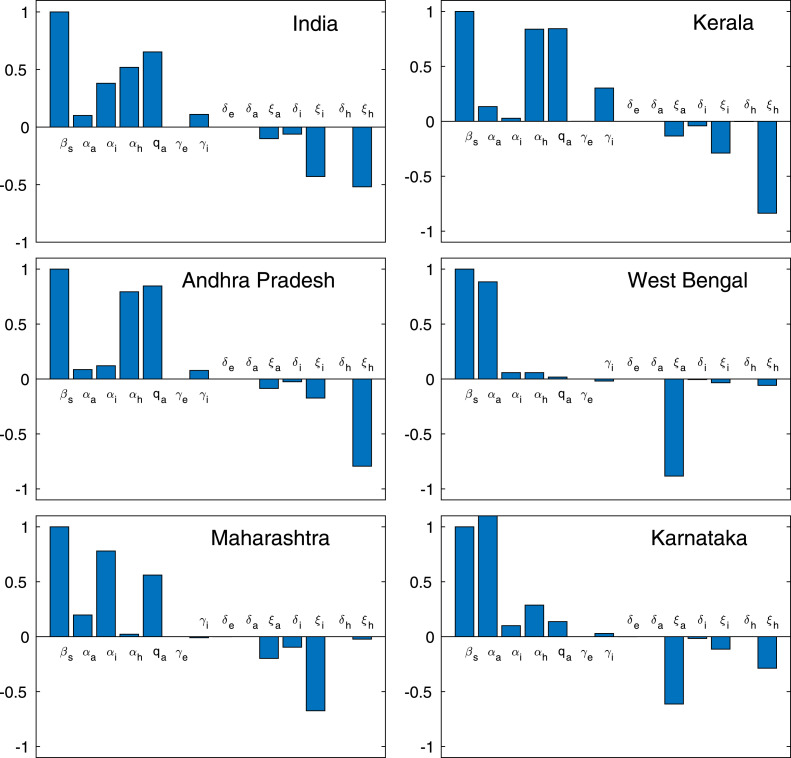
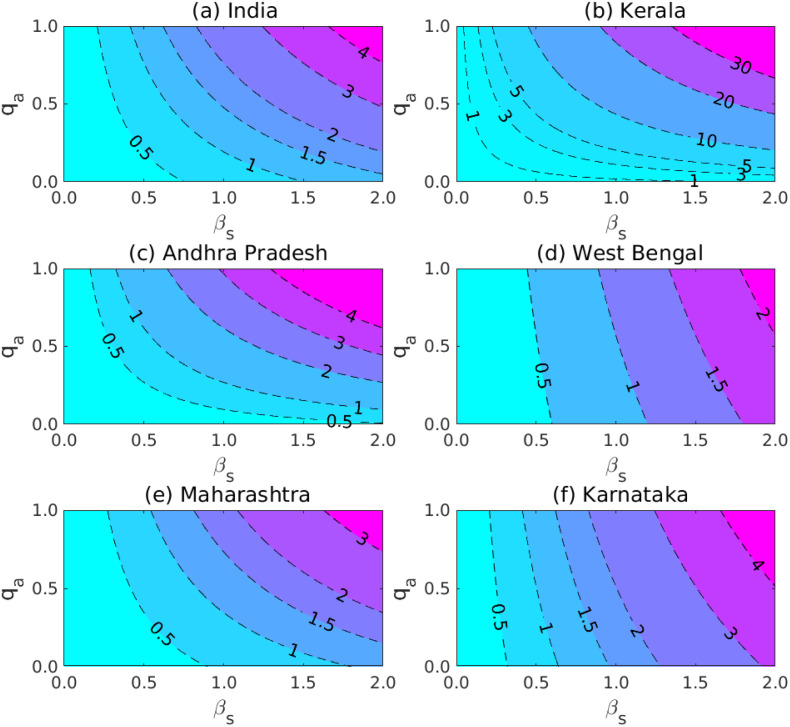
Mathematical modeling plays an important role to better understand the disease dynamics and designing strategies to manage quickly spreading infectious diseases in lack of an effective vaccine or specific antivirals. During this period, forecasting is of utmost priority for health care planning and to combat COVID-19 pandemic. In this study, we proposed and extended classical SEIR compartment model refined by contact tracing and hospitalization strategies to explain the COVID-19 outbreak. We calibrated our model with daily COVID-19 data for the five provinces of India namely, Kerala, Karnataka, Andhra Pradesh, Maharashtra, West Bengal and the overall India. To identify the most effective parameters we conduct a sensitivity analysis by using the partial rank correlation coefficients techniques. The value of those sensitive parameters were estimated from the observed data by least square method. We performed sensitivity analysis for to investigate the relative importance of the system parameters. Also, we computed the sensitivity indices for to determine the robustness of the model predictions to parameter values. Our study demonstrates that a critically important strategy can be achieved by reducing the disease transmission coefficient and clinical outbreak rate to control the COVID-19 outbreaks. Performed short-term predictions for the daily and cumulative confirmed cases of COVID-19 outbreak for all the five provinces of India and the overall India exhibited the steady exponential growth of some states and other states showing decays of daily new cases. Long-term predictions for the Republic of India reveals that the COVID-19 cases will exhibit oscillatory dynamics. Our research thus leaves the option open that COVID-19 might become a seasonal disease. Our model simulation demonstrates that the COVID-19 cases across India at the end of September 2020 obey a power law.
数学建模对于更好地理解疾病动态以及在缺乏有效疫苗或特定抗病毒药物的情况下设计应对快速传播的传染病的策略起着重要作用。在此期间,预测对于医疗保健规划和抗击新冠疫情至关重要。在本研究中,我们提出并扩展了经典的SEIR compartment模型,通过接触者追踪和住院策略进行优化,以解释新冠疫情的爆发。我们使用印度五个邦(喀拉拉邦、卡纳塔克邦、安得拉邦、马哈拉施特拉邦、西孟加拉邦)以及整个印度的每日新冠数据对模型进行了校准。为了确定最有效的参数,我们使用偏秩相关系数技术进行了敏感性分析。通过最小二乘法从观测数据中估计这些敏感参数的值。我们对 进行敏感性分析以研究系统参数的相对重要性。此外,我们计算了 的敏感性指数以确定模型预测对参数值的稳健性。我们的研究表明,通过降低疾病传播系数 和临床爆发率来控制新冠疫情,可以实现一项至关重要的策略。对印度所有五个邦以及整个印度的新冠疫情每日和累计确诊病例进行的短期预测显示,一些邦呈稳定指数增长,而其他邦的每日新增病例数呈下降趋势。对印度共和国的长期预测表明,新冠病例将呈现振荡动态。我们的研究因此留下了新冠疫情可能成为季节性疾病的可能性。我们的模型模拟表明,2020年9月底印度各地的新冠病例服从幂律。