Tabberer Maggie, von Maltzahn Robyn, Bacci Elizabeth D, Karn Hayley, Hsieh Ray, Howell Timothy A, Bailes Zelie, Fowler Andrew, Lee Laurie, Murray Lindsey T
GSK House, 980 Great West Road, Brentford, Middlesex, TW8 9GS, UK.
Evidera, Patient-Centered Research, 615 2nd Avenue, Seattle, WA, 98104, USA.
J Patient Rep Outcomes. 2021 Oct 10;5(1):104. doi: 10.1186/s41687-021-00338-6.
Symptom constructs included in the Evaluating Respiratory Symptoms in Chronic Obstructive Pulmonary Disease (E-RS®: COPD) tool may be relevant to patients with asthma. The purpose of this study was to evaluate content validity and psychometric performance of the E-RS: COPD in moderate/severe asthma patients.
Content validity of the E-RS: COPD was evaluated in patients with moderate/severe asthma using concept elicitation and cognitive debriefing interviews. Secondary analyses using data from two clinical trials in patients with moderate/severe asthma evaluated the factor structure of the E-RS: COPD plus two supplementary items (wheeze; shortness of breath with strenuous physical activity) and assessed psychometric properties of the tool, which will be referred to as E-RS®: Asthma when used in asthma populations.
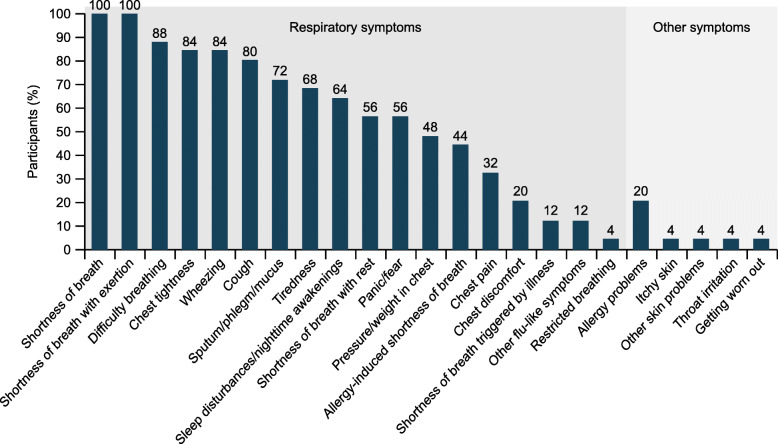
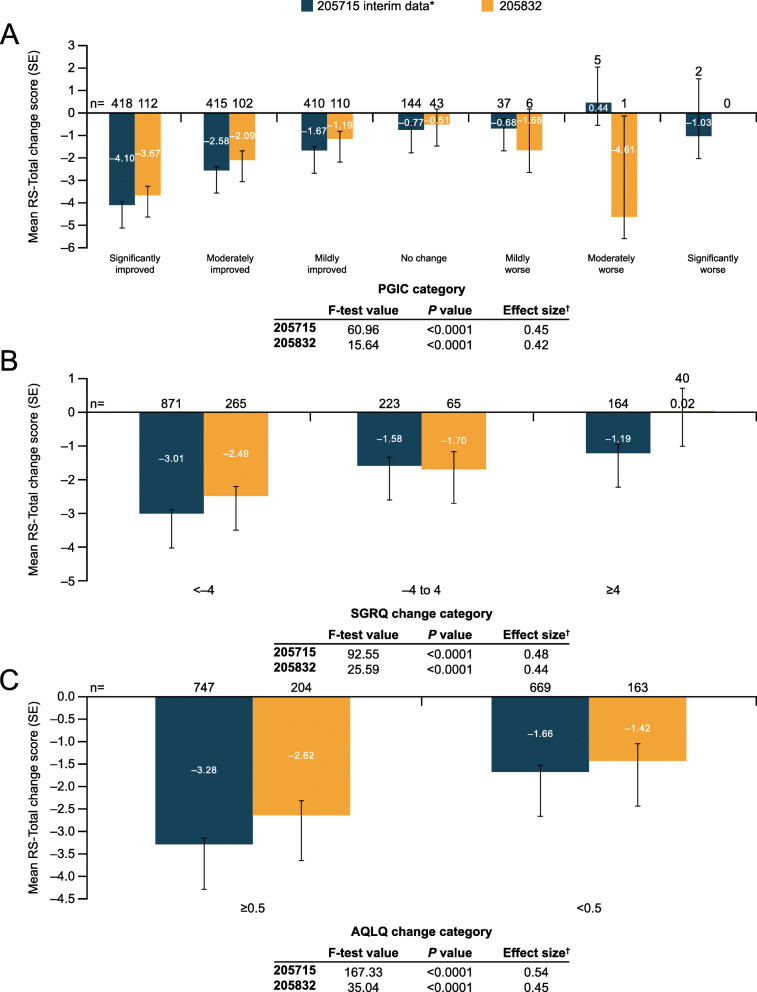
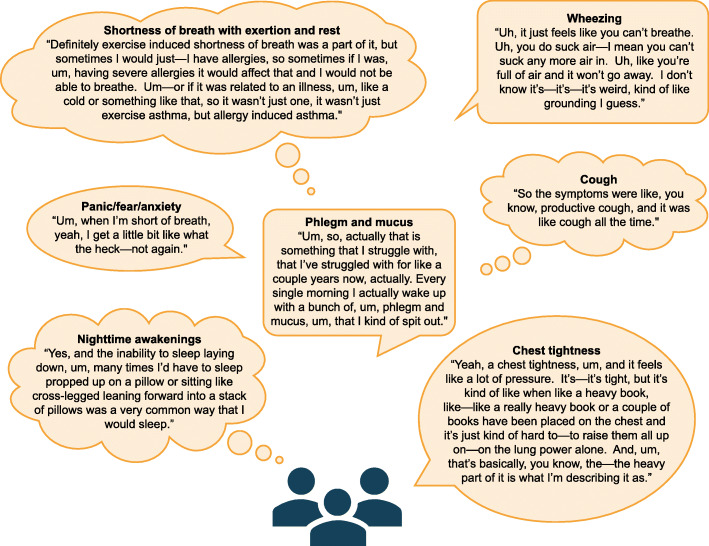
Qualitative interviews (N = 25) achieved concept saturation for asthma respiratory symptoms. Concepts in the E-RS: COPD were relevant to patients and instructions were understood. Most patients (19/25; 76%) reported experiencing all concepts in the E-RS: COPD; no patients indicated missing symptoms. Secondary analyses of clinical trial data supported the original factor structure (RS-Total and three symptom-specific subscales). The two supplemental items did not fit with this factor structure and were not retained. RS-Total and subscale score reliability was high (internal consistency [α] > 0.70). Validity was demonstrated through significant (P < 0.0001) relationships with the St George's Respiratory Questionnaire (SGRQ) and Asthma Symptom Severity scale. E-RS: Asthma was responsive to change when evaluated using SGRQ, Patient Global Impression of Change and Asthma Quality of Life Questionnaire as anchors (P < 0.0001). Clinically meaningful change thresholds were also identified (RS-Total: - 2.0 units).
The E-RS: Asthma is reliable and responsive for evaluating respiratory symptoms in patients with moderate/severe asthma.
慢性阻塞性肺疾病评估呼吸症状(E-RS®:COPD)工具中包含的症状结构可能与哮喘患者相关。本研究的目的是评估E-RS:COPD在中度/重度哮喘患者中的内容效度和心理测量性能。
使用概念引出和认知反馈访谈对中度/重度哮喘患者评估E-RS:COPD的内容效度。利用两项中度/重度哮喘患者临床试验的数据进行二次分析,评估E-RS:COPD加上两个补充项目(喘息;剧烈体力活动时气短)的因子结构,并评估该工具的心理测量特性,在哮喘人群中使用时将其称为E-RS®:哮喘。
定性访谈(N = 25)实现了哮喘呼吸症状的概念饱和。E-RS:COPD中的概念与患者相关且说明易懂。大多数患者(19/25;76%)报告经历了E-RS:COPD中的所有概念;没有患者表示有遗漏症状。临床试验数据的二次分析支持了原有的因子结构(RS总分和三个症状特异性子量表)。两个补充项目不符合该因子结构,未被保留。RS总分和子量表得分的信度较高(内部一致性[α]>0.70)。通过与圣乔治呼吸问卷(SGRQ)和哮喘症状严重程度量表的显著(P<0.0001)关系证明了效度。以SGRQ、患者总体变化印象和哮喘生活质量问卷为锚点进行评估时,E-RS:哮喘对变化有反应(P<0.0001)。还确定了具有临床意义的变化阈值(RS总分:-2.0单位)。
E-RS:哮喘在评估中度/重度哮喘患者的呼吸症状方面是可靠且有反应性的。