Biophysics Graduate Group, University of California, Berkeley, California, United States of America.
Department of Molecular and Cell Biology, University of California, Berkeley, California, United States of America.
PLoS Biol. 2021 Oct 11;19(10):e3001425. doi: 10.1371/journal.pbio.3001425. eCollection 2021 Oct.
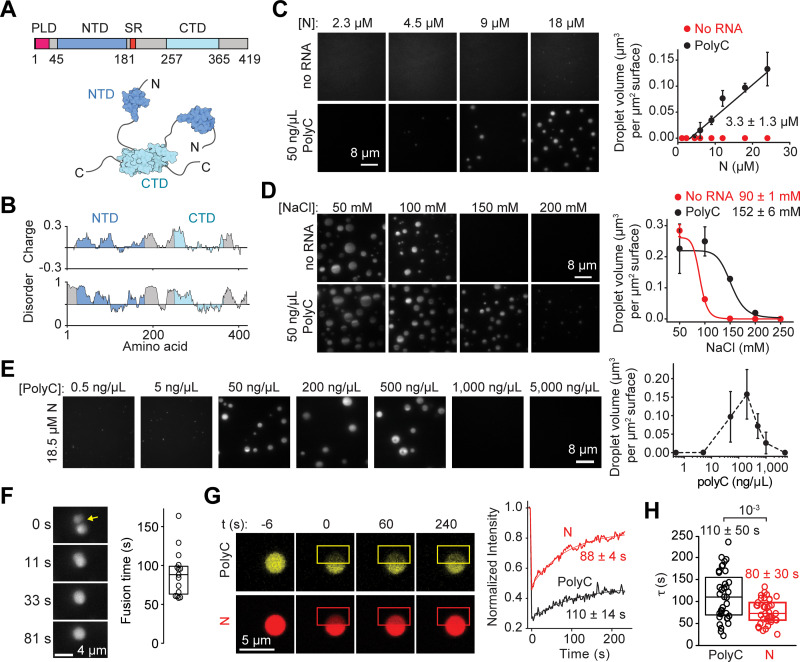
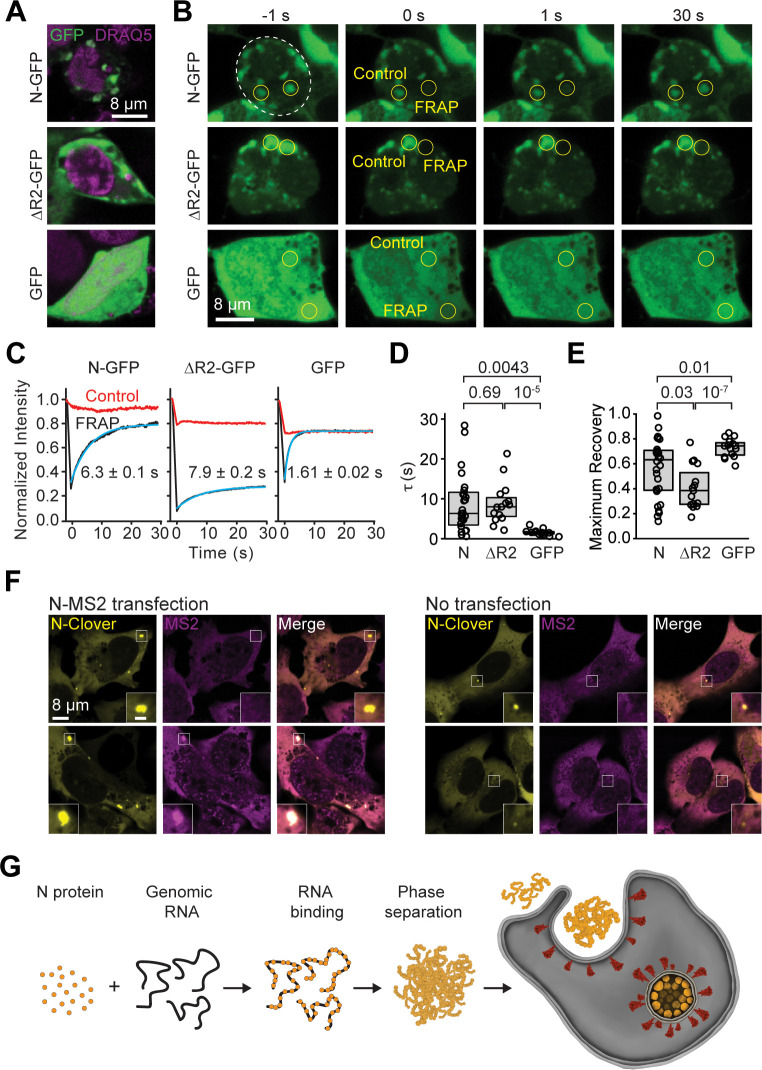
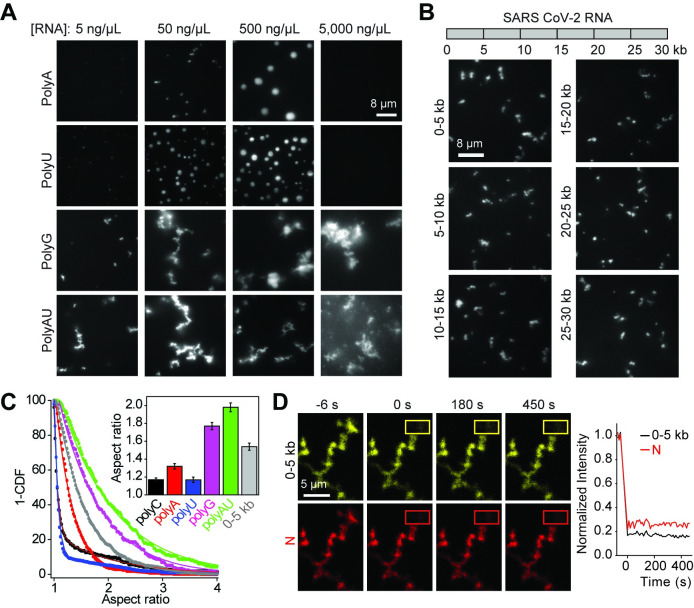
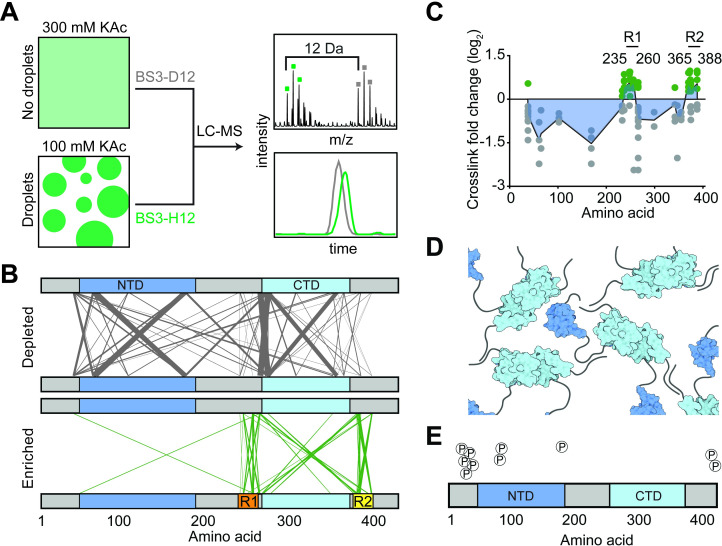
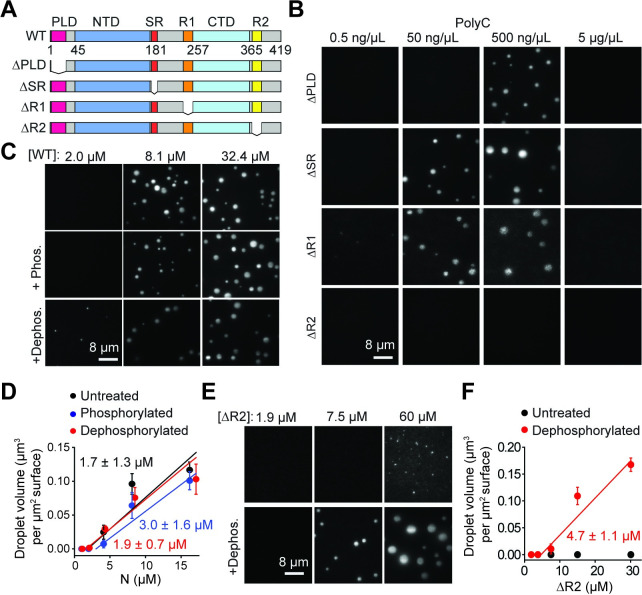
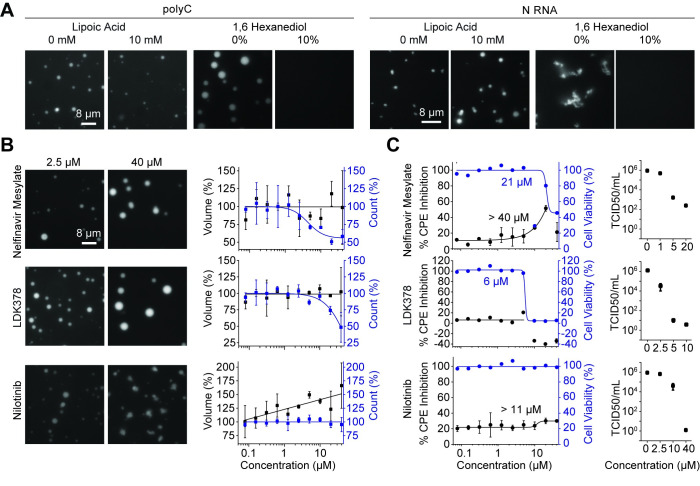
The Severe Acute Respiratory Syndrome Coronavirus 2 (SARS-CoV-2) infection causes Coronavirus Disease 2019 (COVID-19), a pandemic that seriously threatens global health. SARS-CoV-2 propagates by packaging its RNA genome into membrane enclosures in host cells. The packaging of the viral genome into the nascent virion is mediated by the nucleocapsid (N) protein, but the underlying mechanism remains unclear. Here, we show that the N protein forms biomolecular condensates with viral genomic RNA both in vitro and in mammalian cells. While the N protein forms spherical assemblies with homopolymeric RNA substrates that do not form base pairing interactions, it forms asymmetric condensates with viral RNA strands. Cross-linking mass spectrometry (CLMS) identified a region that drives interactions between N proteins in condensates, and deletion of this region disrupts phase separation. We also identified small molecules that alter the size and shape of N protein condensates and inhibit the proliferation of SARS-CoV-2 in infected cells. These results suggest that the N protein may utilize biomolecular condensation to package the SARS-CoV-2 RNA genome into a viral particle.
严重急性呼吸综合征冠状病毒 2(SARS-CoV-2)感染会导致 2019 年冠状病毒病(COVID-19),这是一种严重威胁全球健康的大流行疾病。SARS-CoV-2 通过将其 RNA 基因组包装到宿主细胞的膜封闭物中进行繁殖。病毒基因组包装到新形成的病毒粒子是由核衣壳(N)蛋白介导的,但潜在的机制仍不清楚。在这里,我们表明 N 蛋白在体外和哺乳动物细胞中与病毒基因组 RNA 形成生物分子凝聚物。虽然 N 蛋白与不形成碱基配对相互作用的同聚 RNA 底物形成球形组装,但它与病毒 RNA 链形成不对称凝聚物。交联质谱(CLMS)鉴定了一个驱动凝聚物中 N 蛋白相互作用的区域,并且该区域的缺失会破坏相分离。我们还鉴定了一些小分子,这些小分子可以改变 N 蛋白凝聚物的大小和形状,并抑制感染细胞中 SARS-CoV-2 的增殖。这些结果表明,N 蛋白可能利用生物分子凝聚将 SARS-CoV-2 RNA 基因组包装到病毒颗粒中。