School of Integrative Plant Sciences, Cornell University, Ithaca, New York 14953, United States.
Cornell Atkinson Center for Sustainability, Cornell University, Ithaca New York 14953, United States.
Environ Sci Technol. 2021 Nov 2;55(21):14795-14805. doi: 10.1021/acs.est.1c02425. Epub 2021 Oct 12.
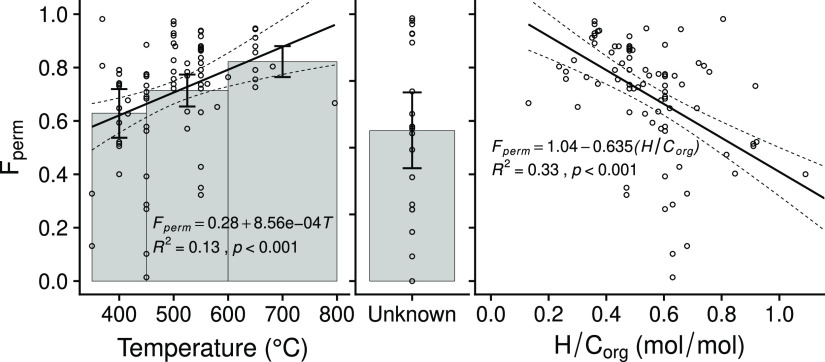
Stabilizing the global climate within safe bounds will require greenhouse gas (GHG) emissions to reach net zero within a few decades. Achieving this is expected to require removal of CO from the atmosphere to offset some hard-to-eliminate emissions. There is, therefore, a clear need for GHG accounting protocols that quantify the mitigation impact of CO removal practices, such as biochar sequestration, that have the potential to be deployed at scale. Here, we have developed a GHG accounting methodology for biochar application to mineral soils using simple parameterizations and readily accessible activity data that can be applied at a range of scales including farm, supply chain, national, or global. The method is grounded in a comprehensive analysis of current empirical data, making it a robust method that can be used for many applications including national inventories and voluntary and compliance carbon markets, among others. We show that the carbon content of biochar varies with feedstock and production conditions from as low as 7% (gasification of biosolids) to 79% (pyrolysis of wood at above 600 °C). Of this initial carbon, 63-82% will remain unmineralized in soil after 100 years at the global mean annual cropland-temperature of 14.9 °C. With this method, researchers and managers can address the long-term sequestration of C through biochar that is blended with soils through assessments such as GHG inventories and life cycle analyses.
将全球气候稳定在安全范围内需要在几十年内将温室气体(GHG)排放量降至净零。预计这将需要从大气中去除 CO2 以抵消一些难以消除的排放。因此,显然需要温室气体核算协议来量化 CO2 去除实践的缓解影响,例如生物炭固存,这些实践有可能大规模部署。在这里,我们开发了一种用于将生物炭应用于矿物土壤的温室气体核算方法,该方法使用简单的参数化和易于获取的活动数据,可以在包括农场、供应链、国家或全球等各种规模上应用。该方法基于对当前经验数据的综合分析,因此是一种稳健的方法,可用于许多应用,包括国家清单以及自愿和合规碳市场等。我们表明,生物炭的碳含量因原料和生产条件而异,从低至 7%(生物污泥的气化)到 79%(高于 600°C 时的木材热解)。在全球平均农田温度为 14.9°C 的情况下,这初始碳的 63-82%在 100 年内将保持未矿化状态。使用这种方法,研究人员和管理人员可以通过生物炭与土壤混合的长期封存来解决通过温室气体清单和生命周期分析等评估。