Wang Xueyu, Yung Mingo M H, Sharma Rakesh, Chen Fushun, Poon Ying-Tung, Lam Wai-Yip, Li Benjamin, Ngan Hextan Y S, Chan Karen K L, Chan David W
Department of Obstetrics & Gynaecology, Li Ka Shing Faculty of Medicine, The University of Hong Kong, Hong Kong, China.
Centre for PanorOmic Sciences Proteomics and Metabolomics Core, Li Ka Shing Faculty of Medicine, The University of Hong Kong, Hong Kong, China.
Cancers (Basel). 2021 Sep 24;13(19):4795. doi: 10.3390/cancers13194795.
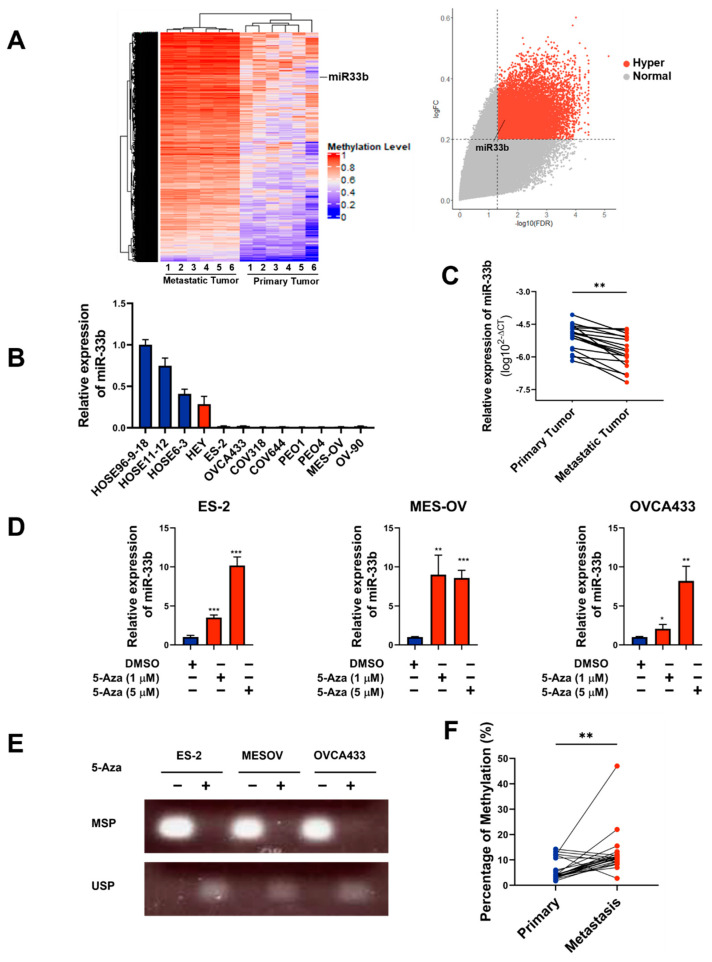
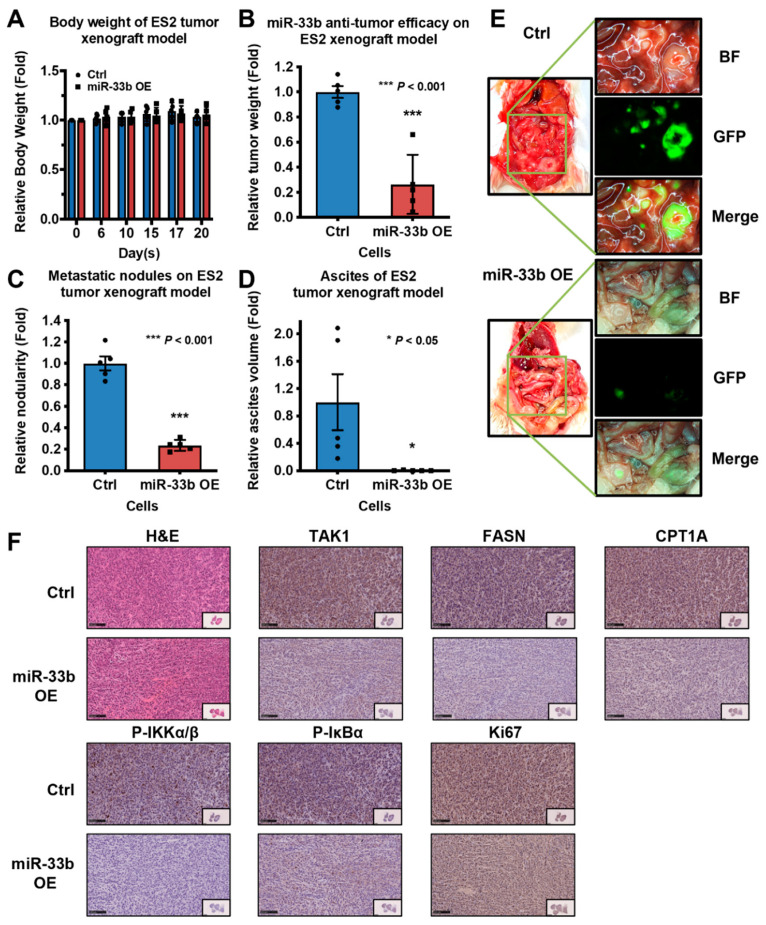
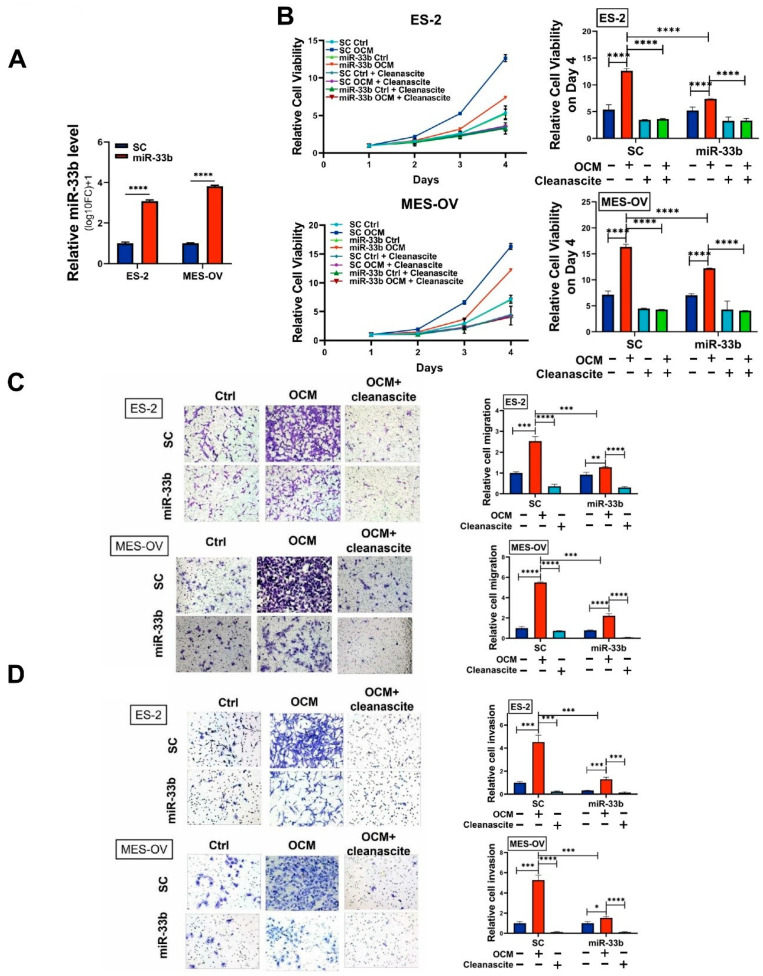
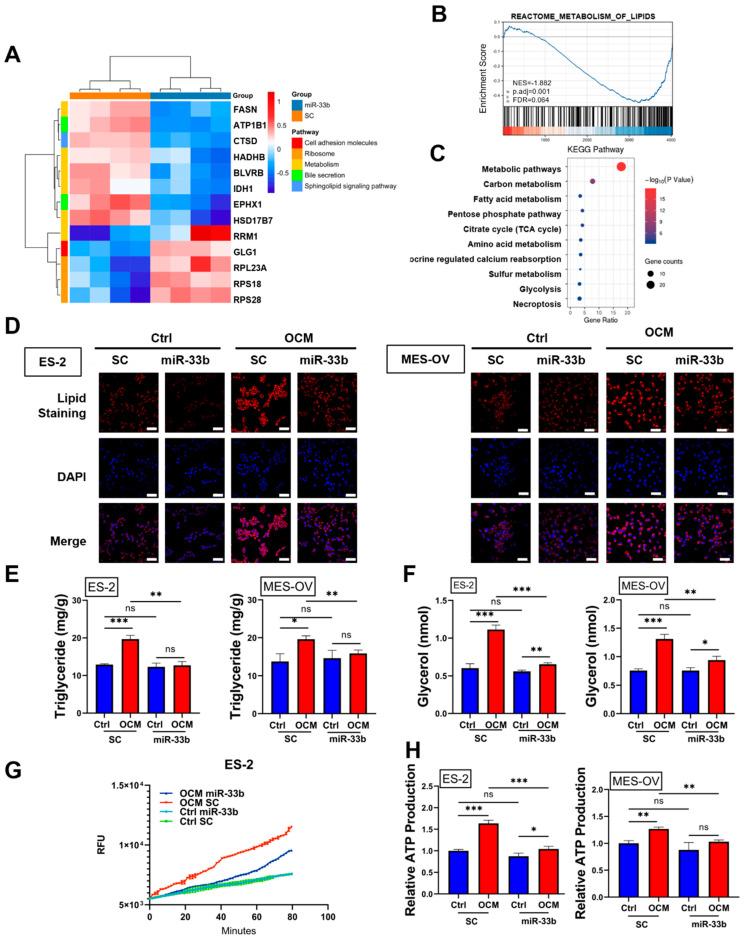
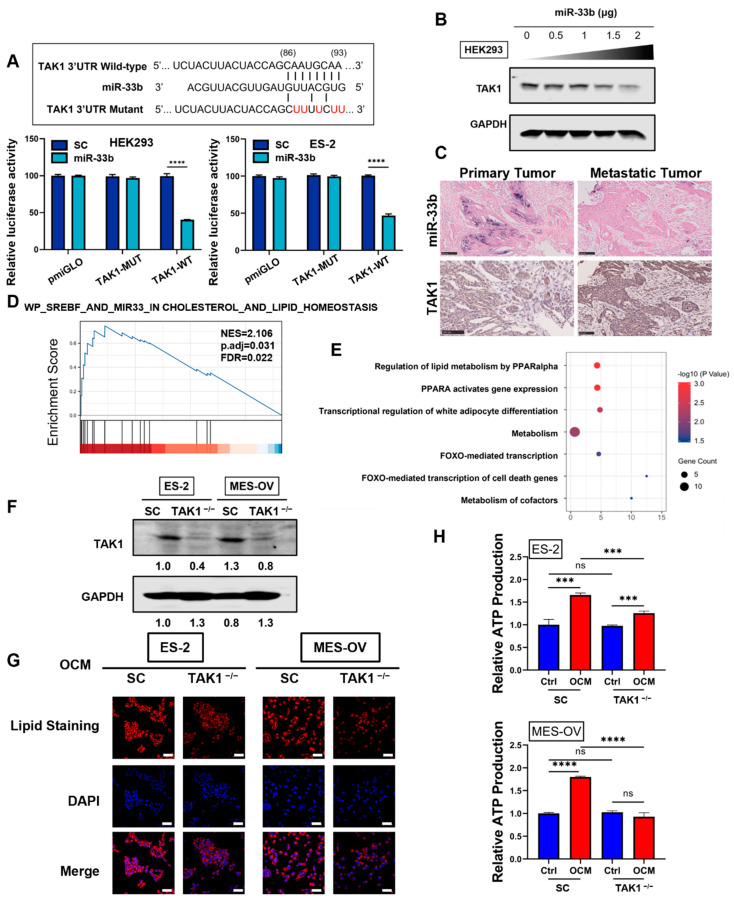
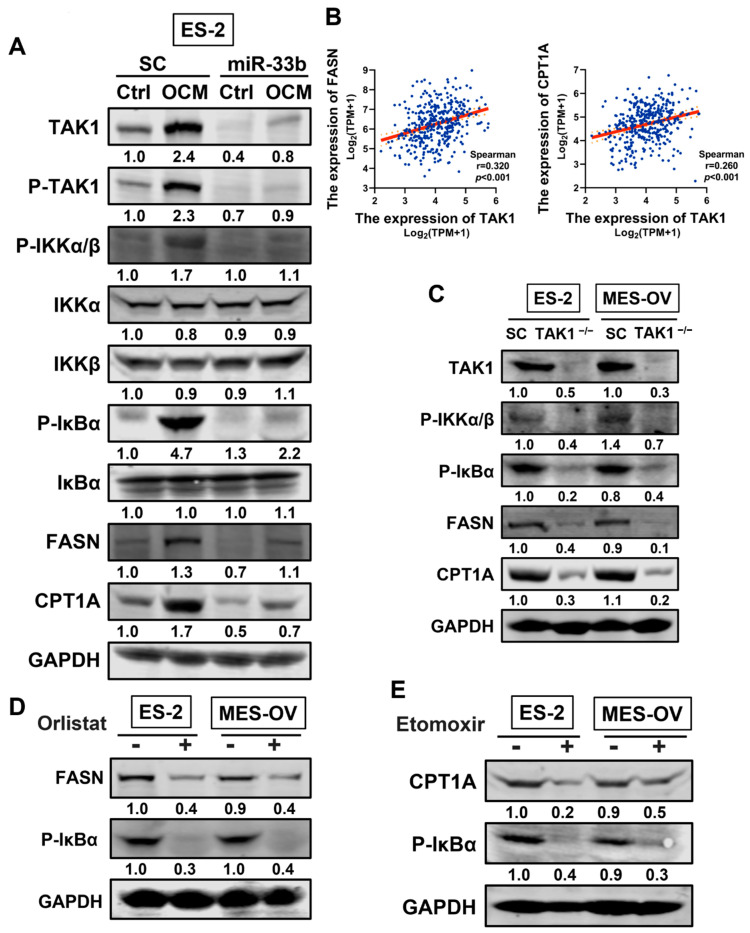
Peritoneal metastases are frequently found in high-grade serous carcinoma (HGSOC) patients and are commonly associated with a poor prognosis. The tumor microenvironment (TME) is a complex milieu that plays a critical role in epigenetic alterations driving tumor development and metastatic progression. However, the impact of epigenetic alterations on metastatic ovarian cancer cells in the harsh peritoneal microenvironment remains incompletely understood. Here, we identified that miR-33b is frequently silenced by promoter hypermethylation in HGSOC cells derived from metastatic omental tumor tissues. Enforced expression of miR-33b abrogates the oncogenic properties of ovarian cancer cells cocultured in omental conditioned medium (OCM), which mimics the ascites microenvironment, and in vivo tumor growth. Of note, restoration of miR-33b inhibited OCM-upregulated de novo lipogenesis and fatty acid β-oxidation in ovarian cancer cells, indicating that miR-33b may play a novel tumor suppressor role in the lipid-mediated oncogenic properties of metastatic ovarian cancer cells found in the omentum. Mechanistic studies demonstrated that miR-33b directly targets transforming growth factor beta-activated kinase 1 (TAK1), thereby suppressing the activities of fatty acid synthase (FASN) and carnitine palmitoyltransferase 1A (CPT1A) in modulating lipid metabolic activities and simultaneously inhibiting the phosphorylation of NF-κB signaling to govern the oncogenic behaviors of ovarian cancer cells. Thus, our data suggest that a lipid-rich microenvironment may cause epigenetic silencing of miR-33b, which negatively modulates ovarian cancer peritoneal metastases, at least in part, by suppressing TAK1/FASN/CPT1A/NF-κB signaling.
在高级别浆液性癌(HGSOC)患者中经常发现腹膜转移,且通常与预后不良相关。肿瘤微环境(TME)是一个复杂的环境,在驱动肿瘤发展和转移进程的表观遗传改变中起关键作用。然而,在恶劣的腹膜微环境中,表观遗传改变对转移性卵巢癌细胞的影响仍未完全了解。在此,我们发现miR-33b在源自转移性大网膜肿瘤组织的HGSOC细胞中经常因启动子高甲基化而沉默。强制表达miR-33b可消除在模拟腹水微环境的大网膜条件培养基(OCM)中共培养的卵巢癌细胞的致癌特性以及体内肿瘤生长。值得注意的是,miR-33b的恢复抑制了OCM上调的卵巢癌细胞中的从头脂肪生成和脂肪酸β-氧化,表明miR-33b可能在大网膜中发现的转移性卵巢癌细胞的脂质介导的致癌特性中发挥新的肿瘤抑制作用。机制研究表明,miR-33b直接靶向转化生长因子β激活激酶1(TAK1),从而在调节脂质代谢活性时抑制脂肪酸合酶(FASN)和肉碱棕榈酰转移酶1A(CPT1A)的活性,同时抑制NF-κB信号通路的磷酸化以控制卵巢癌细胞的致癌行为。因此,我们的数据表明,富含脂质的微环境可能导致miR-33b的表观遗传沉默,这至少部分地通过抑制TAK1/FASN/CPT1A/NF-κB信号通路来负调节卵巢癌腹膜转移。