Department of Biochemistry, Faculty of Pharmacy, Minia University, Minia 61519, Egypt.
Department of Biochemistry, Faculty of Pharmacy, Deraya University, Minia 61111, Egypt.
Int J Mol Sci. 2021 Oct 1;22(19):10669. doi: 10.3390/ijms221910669.
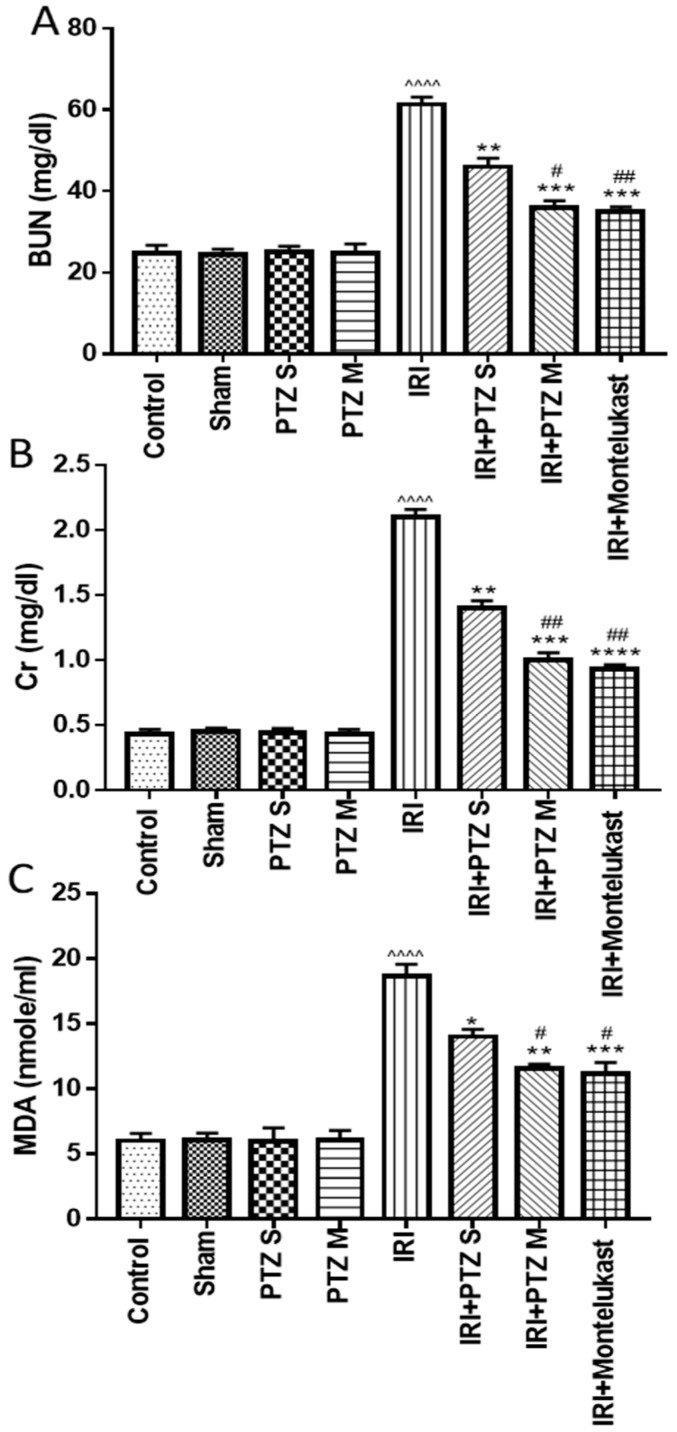
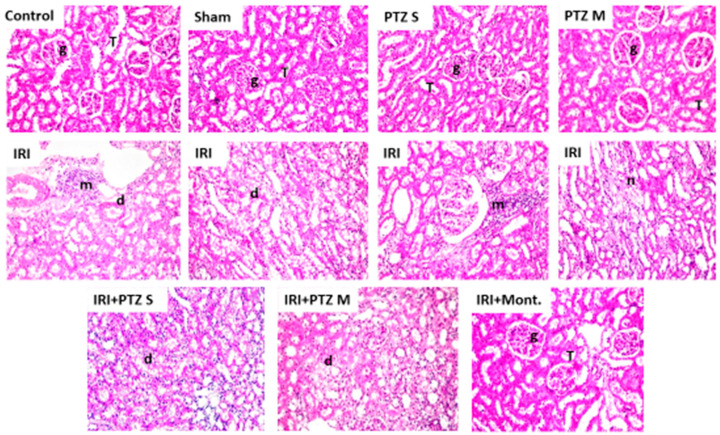
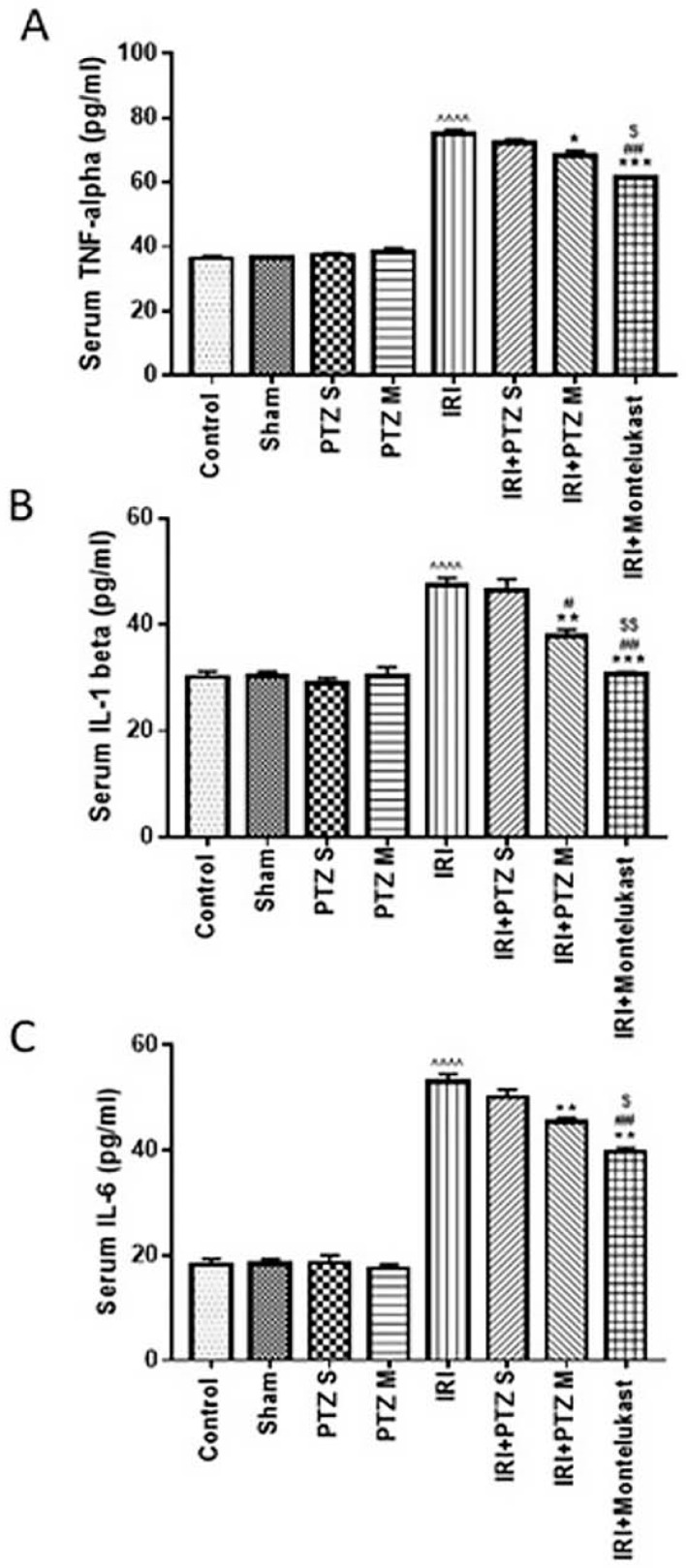
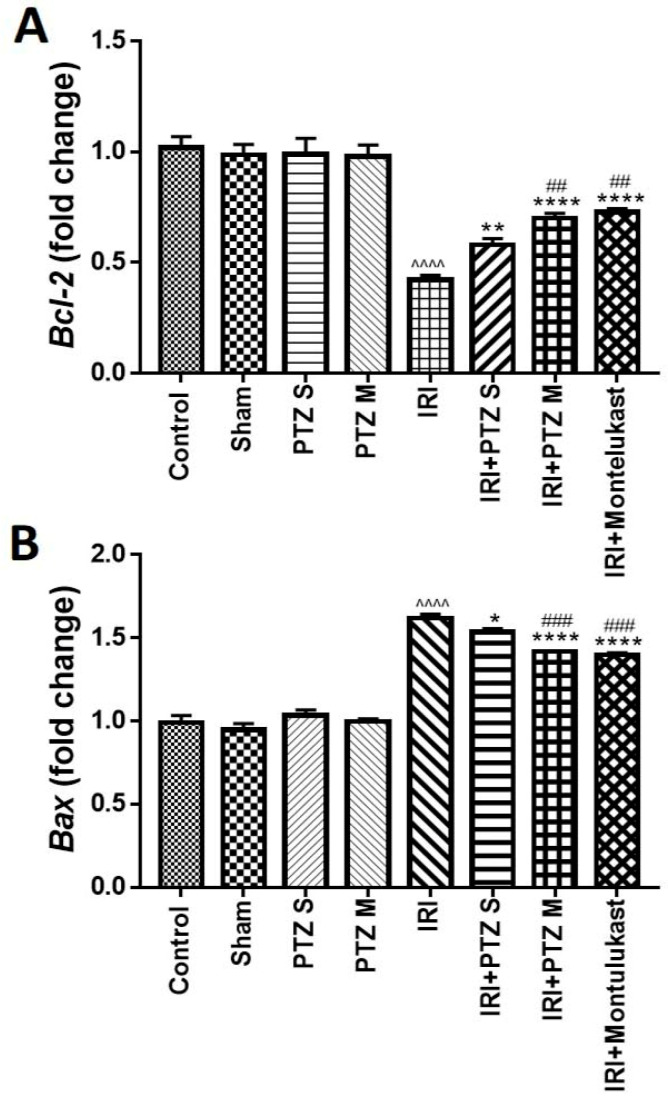
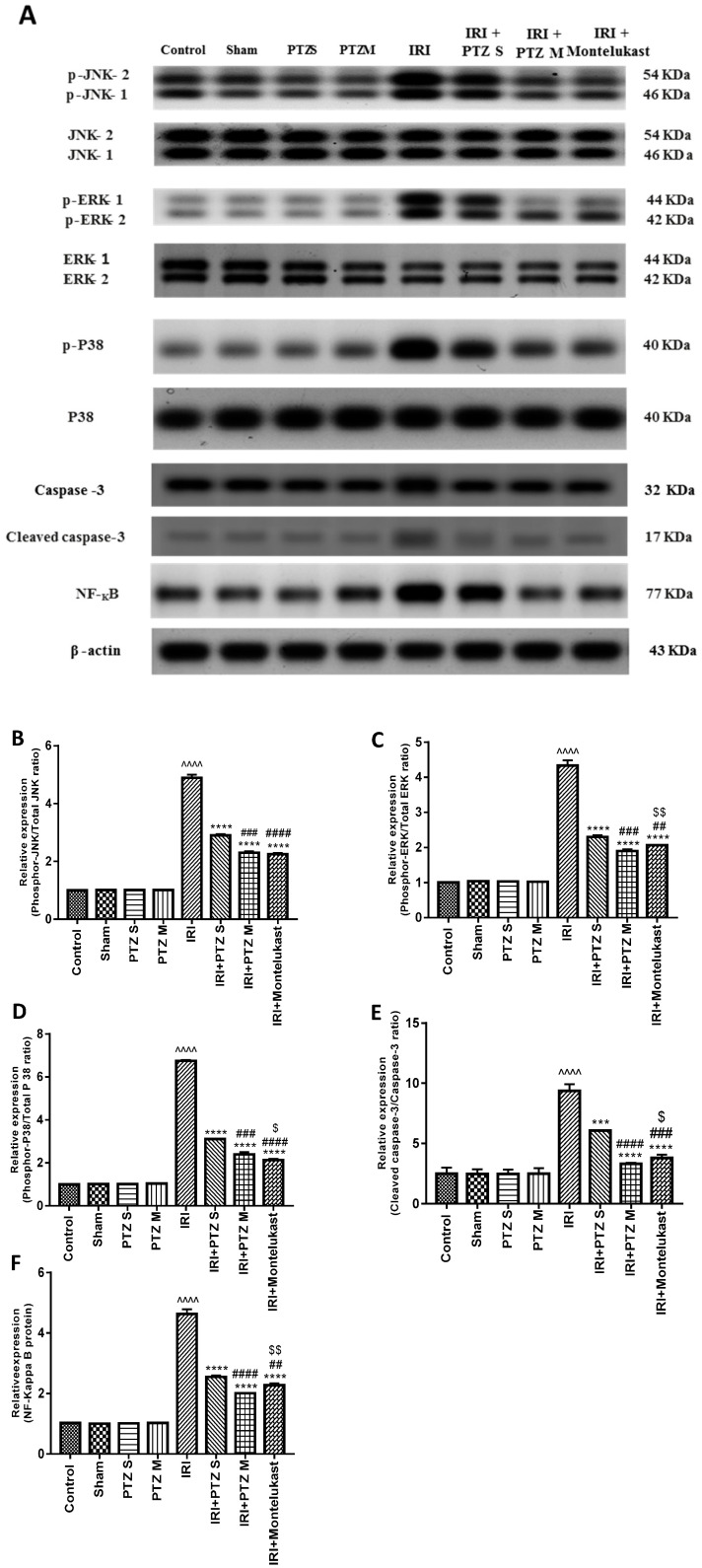
Ischemia/reperfusion injury (IRI) in the kidney is the most common cause of acute renal dysfunction through different cell damage mechanisms. This study aimed to investigate, on molecular basics for the first time, the effect of pantoprazole on renal IRI in rats. Different biochemical parameters and oxidative stress markers were assessed. ELISA was used to estimate proinflammatory cytokines. qRT-PCR and western blot were used to investigate the gene and protein expression. Renal histopathological examination was also performed. IRI resulted in tissue damage, elevation of serum levels of creatinine, urea nitrogen, malondialdehyde, TNF-α, IL-6, IL-1β, up-regulation of NF-κB, JNK1/2, ERK1/2, p38, and cleaved caspase-3 proteins. Furthermore, it up-regulated the expression of the gene and down-regulated the expression of the -2 gene. Treatment of the injured rats with pantoprazole, either single dose or multiple doses, significantly alleviated IRI-induced biochemical and histopathological changes, attenuated the levels of proinflammatory cytokines, down-regulated the expression of NF-κB, JNK1/2, ERK1/2, p38, and cleaved caspase-3 proteins, and the gene, and up-regulated -2 gene expression. Moreover, treatment with pantoprazole multiple doses has an ameliorative effect that is greater than pantoprazole single-dose. In conclusion, pantoprazole diminished renal IRI via suppression of apoptosis, attenuation of the pro-inflammatory cytokines' levels, and inhibition of the intracellular signaling pathway MAPK (ERK1/2, JNK, p38)-NF-κB.
肾缺血/再灌注损伤(IRI)是通过不同的细胞损伤机制导致急性肾功能障碍的最常见原因。本研究旨在首次从分子基础上探讨泮托拉唑对大鼠肾 IRI 的影响。评估了不同的生化参数和氧化应激标志物。ELISA 用于估计促炎细胞因子。qRT-PCR 和 Western blot 用于研究基因和蛋白表达。还进行了肾组织病理学检查。IRI 导致组织损伤,血清肌酐、尿素氮、丙二醛、TNF-α、IL-6、IL-1β水平升高,NF-κB、JNK1/2、ERK1/2、p38 和 cleaved caspase-3 蛋白表达上调。此外,它还上调了基因的表达,下调了基因的表达。无论是单次还是多次给予泮托拉唑治疗受伤大鼠,均可显著减轻 IRI 引起的生化和组织病理学变化,减弱促炎细胞因子水平,下调 NF-κB、JNK1/2、ERK1/2、p38 和 cleaved caspase-3 蛋白的表达以及基因的表达,并上调基因的表达。此外,泮托拉唑多次给药的治疗效果优于单次给药。总之,泮托拉唑通过抑制细胞凋亡、减弱促炎细胞因子水平以及抑制细胞内信号通路 MAPK(ERK1/2、JNK、p38)-NF-κB 来减轻肾 IRI。