Cennamo Nunzio, Arcadio Francesco, Zeni Luigi, Catalano Ester, Del Prete Domenico, Buonanno Gionatan, Minardo Aldo
Department of Engineering, University of Campania Luigi Vanvitelli, Via Roma 29, 81031 Aversa, Italy.
Sensors (Basel). 2021 Sep 22;21(19):6333. doi: 10.3390/s21196333.
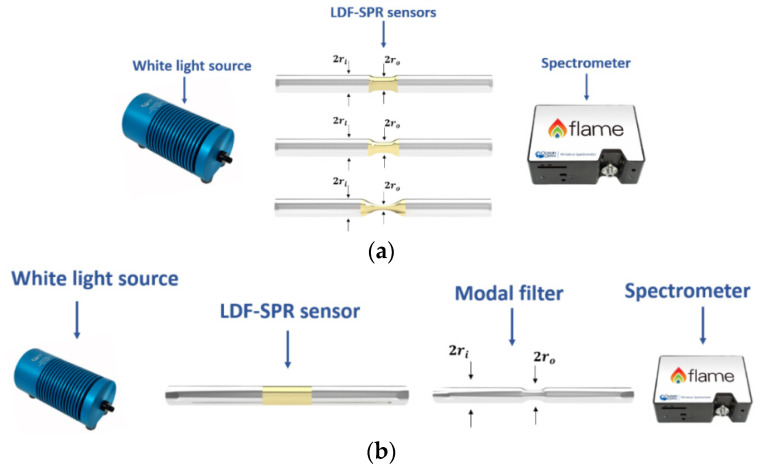
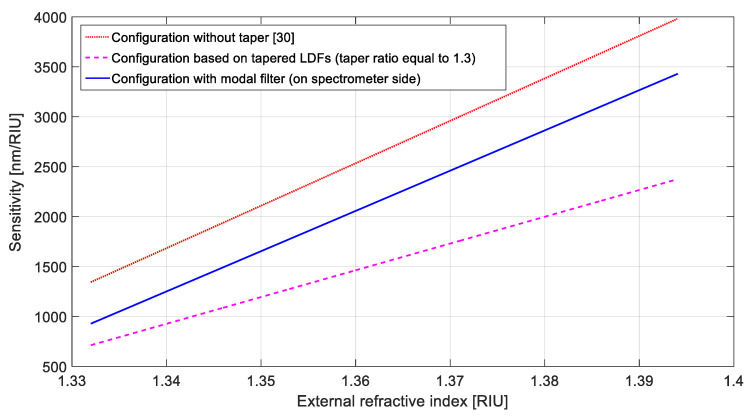
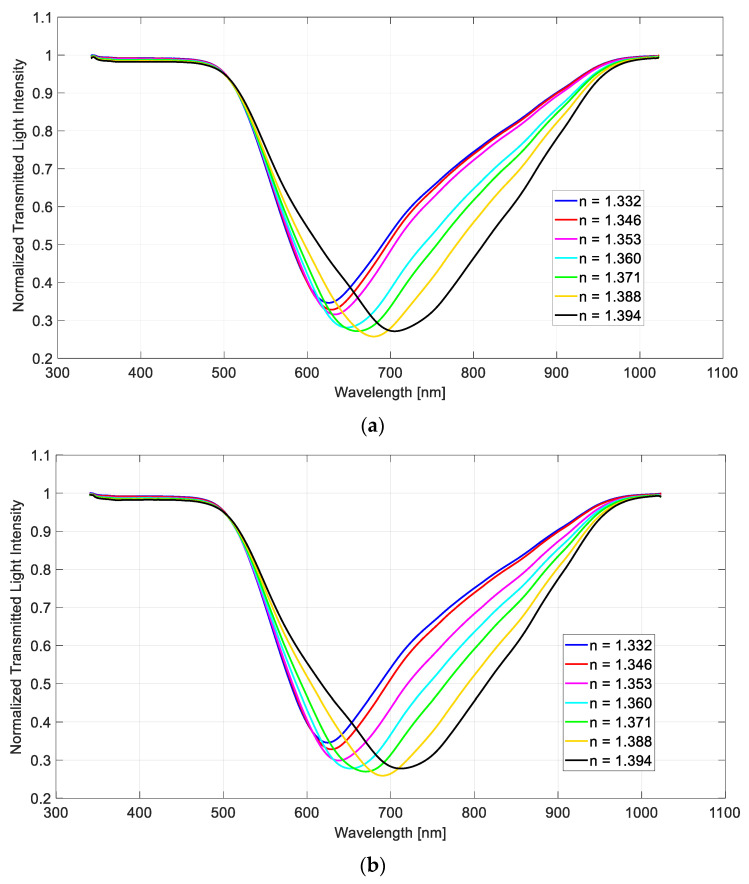
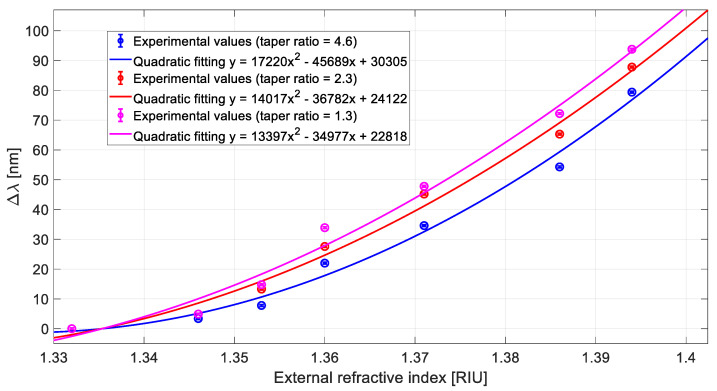
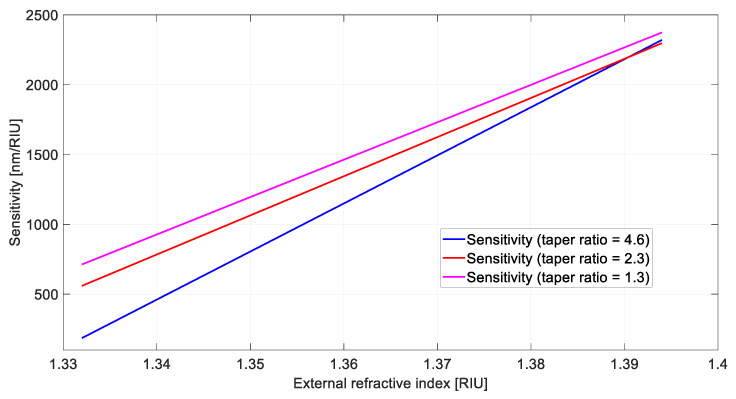
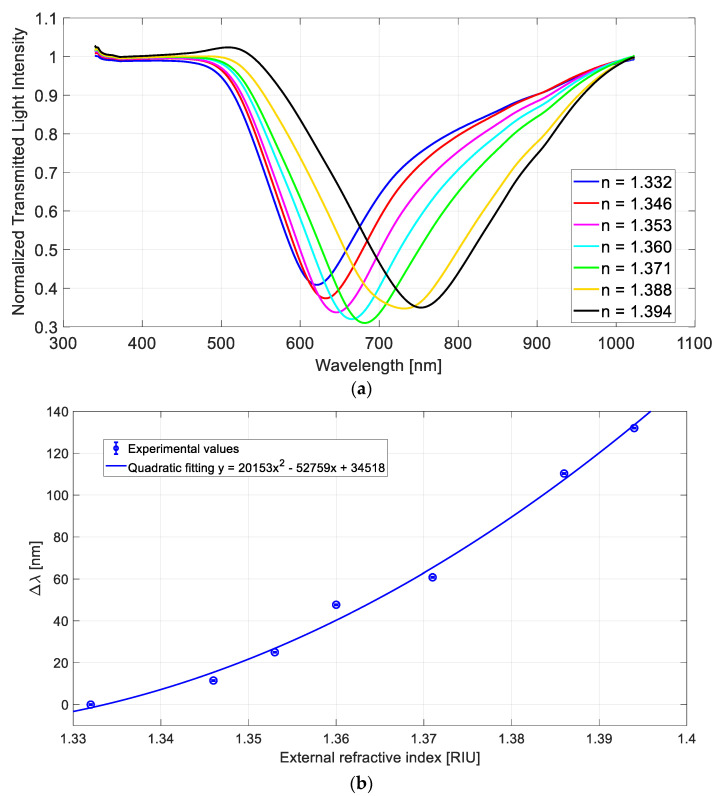
In this work, we experimentally analyzed the effect of tapering in light-diffusing optical fibers (LDFs) when employed as surface plasmon resonance (SPR)-based sensors. Although tapering is commonly adopted to enhance the performance of plasmonic optical fiber sensors, we have demonstrated that in the case of plasmonic sensors based on LDFs, the tapering produces a significant worsening of the bulk sensitivity (roughly 60% in the worst case), against a slight decrease in the full width at half maximum (FWHM) of the SPR spectra. Furthermore, we have demonstrated that these aspects become more pronounced when the taper ratio increases. Secondly, we have established that a possible alternative exists in using the tapered LDF as a modal filter after the sensible region. In such a case, we have determined that a good trade-off between the loss in sensitivity and the FWHM decrease could be reached.
在这项工作中,我们通过实验分析了锥形渐变的光散射光纤(LDF)用作基于表面等离子体共振(SPR)的传感器时的效果。尽管通常采用锥形渐变来提高等离子体光纤传感器的性能,但我们已经证明,对于基于LDF的等离子体传感器而言,锥形渐变会使整体灵敏度显著恶化(在最坏情况下约为60%),而SPR光谱的半高宽(FWHM)仅略有减小。此外,我们已经证明,当锥度比增加时,这些情况会变得更加明显。其次,我们已经确定,在敏感区域之后将锥形渐变的LDF用作模式滤波器存在一种可能的替代方案。在这种情况下,我们已经确定,可以在灵敏度损失和FWHM减小之间实现良好的权衡。