Laboratory of Wave Engineering, School of Electrical Engineering, EPFL, Lausanne, Switzerland.
Univ Lyon, ENS de Lyon, Univ Claude Bernard, CNRS, Laboratoire de Physique, Lyon, France.
Nature. 2021 Oct;598(7880):293-297. doi: 10.1038/s41586-021-03868-7. Epub 2021 Oct 13.
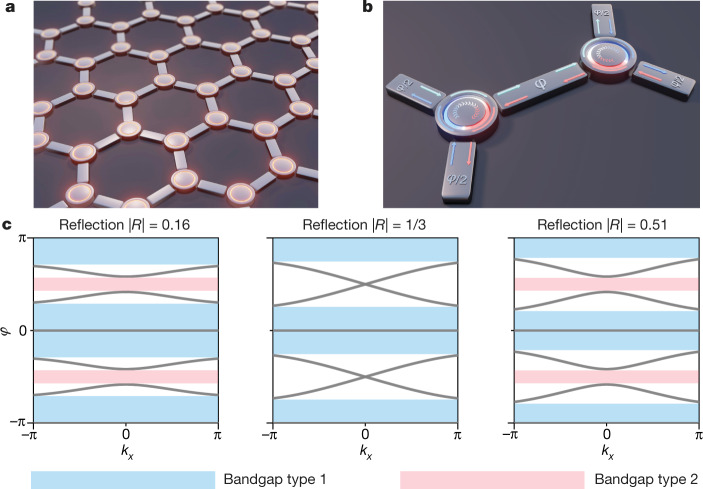
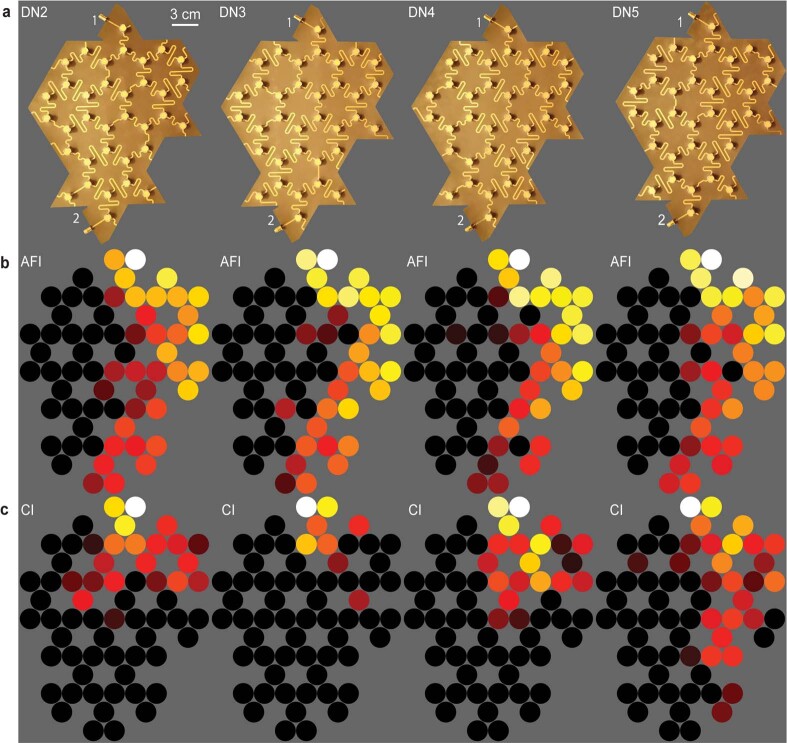
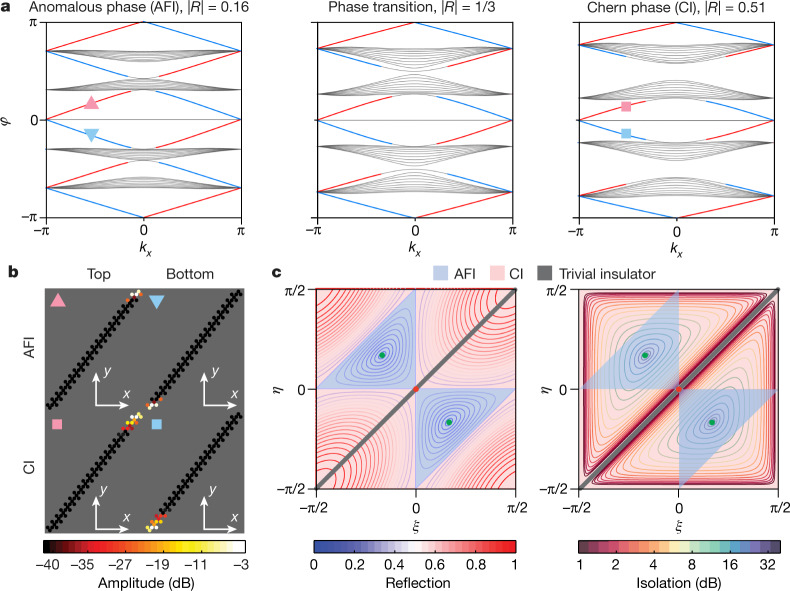
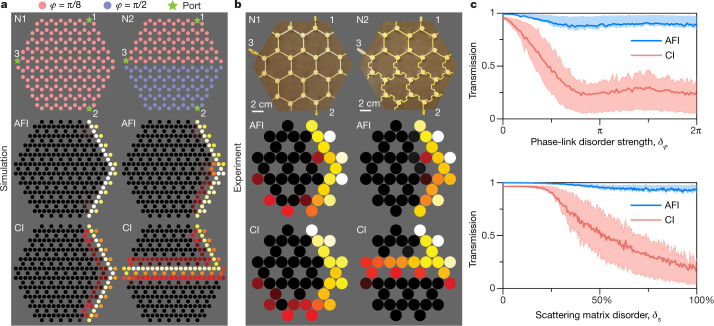
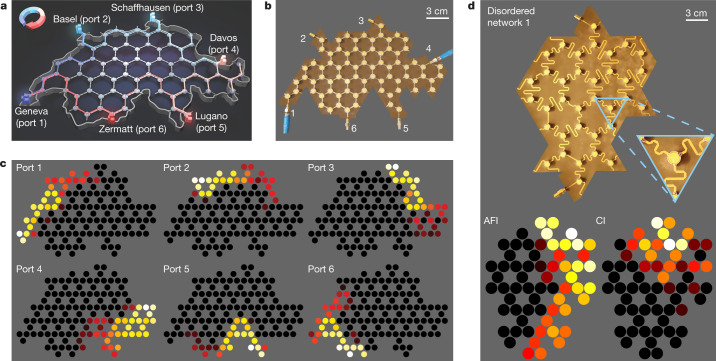
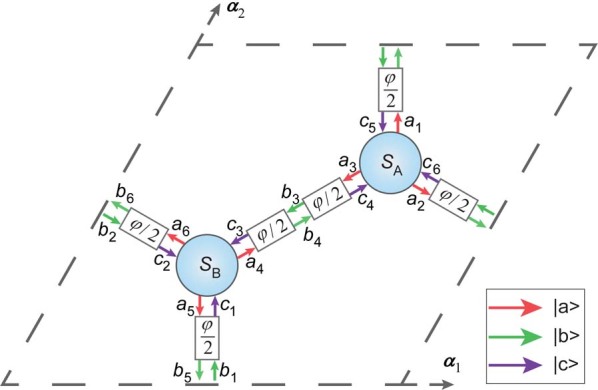
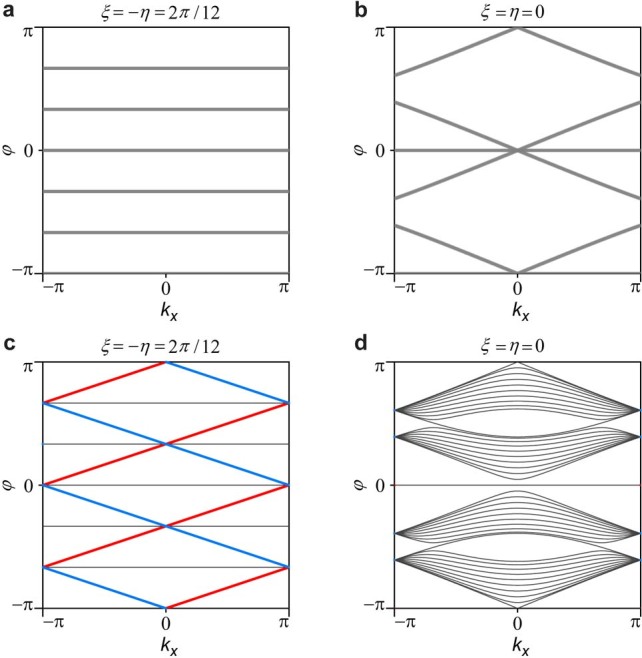
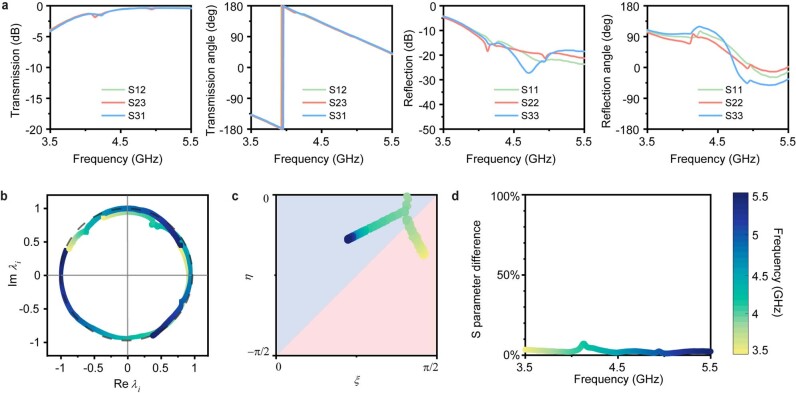
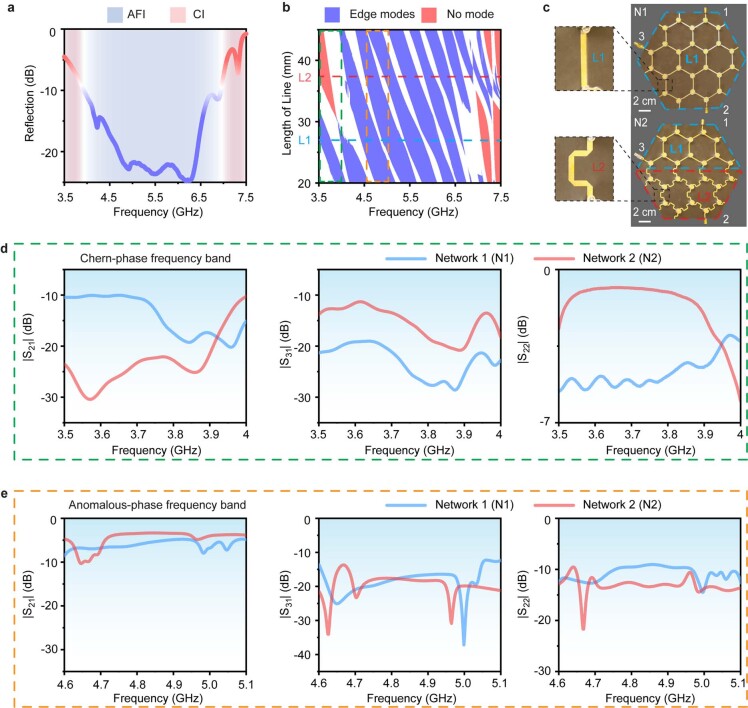
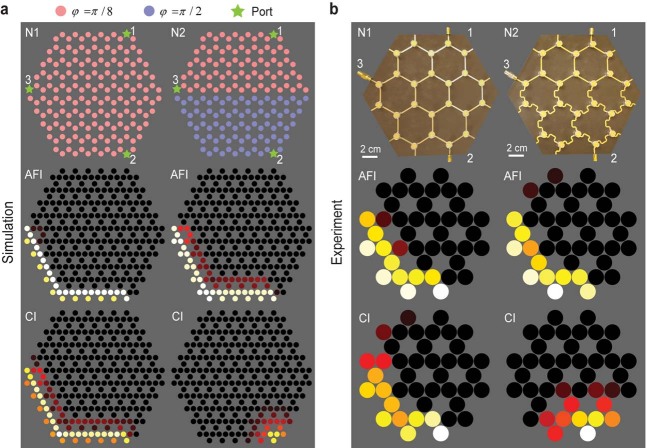
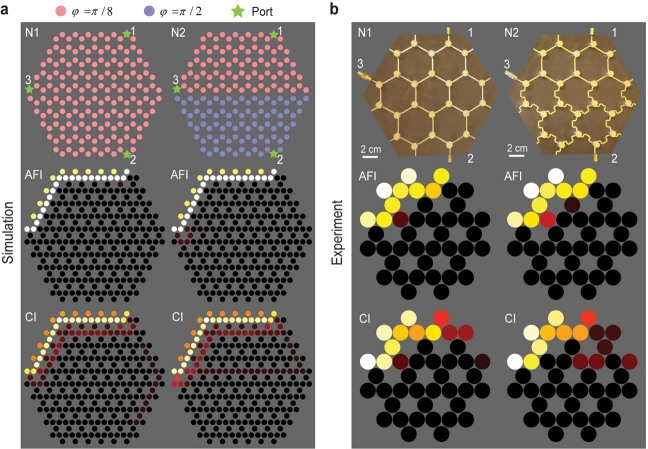
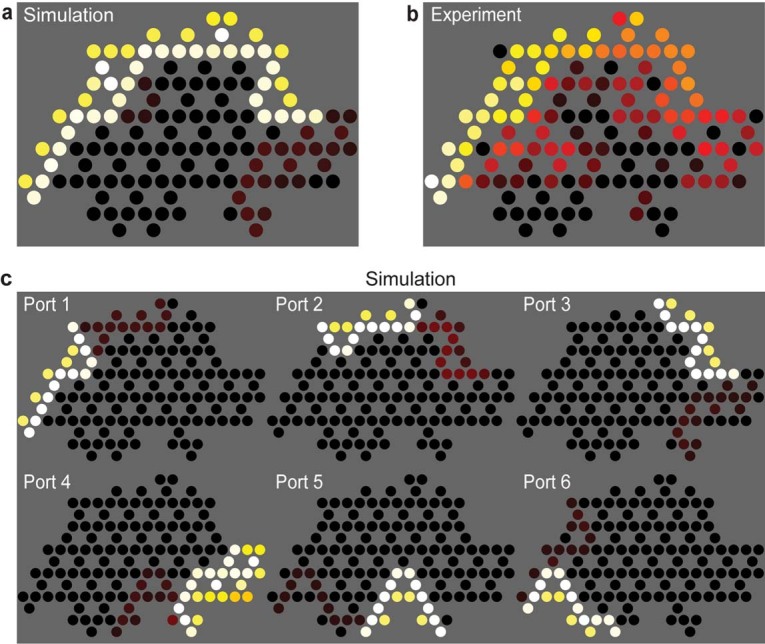
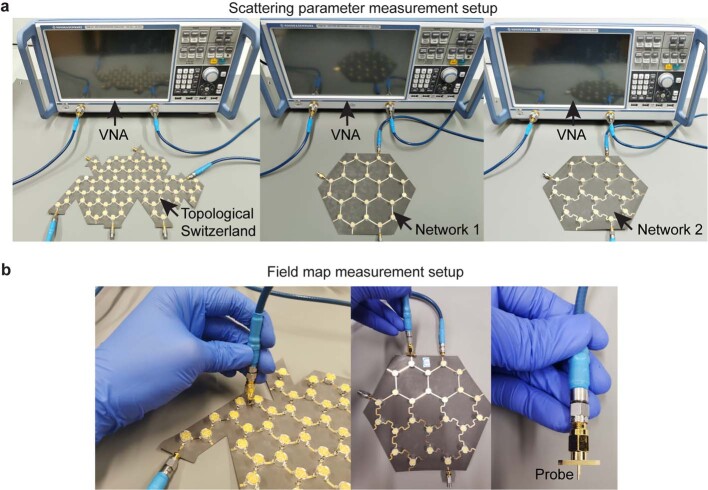
Robustness against disorder and defects is a pivotal advantage of topological systems, manifested by the absence of electronic backscattering in the quantum-Hall and spin-Hall effects, and by unidirectional waveguiding in their classical analogues. Two-dimensional (2D) topological insulators, in particular, provide unprecedented opportunities in a variety of fields owing to their compact planar geometries, which are compatible with the fabrication technologies used in modern electronics and photonics. Among all 2D topological phases, Chern insulators are currently the most reliable designs owing to the genuine backscattering immunity of their non-reciprocal edge modes, brought via time-reversal symmetry breaking. Yet such resistance to fabrication tolerances is limited to fluctuations of the same order of magnitude as their bandgap, limiting their resilience to small perturbations only. Here we investigate the robustness problem in a system where edge transmission can survive disorder levels with strengths arbitrarily larger than the bandgap-an anomalous non-reciprocal topological network. We explore the general conditions needed to obtain such an unusual effect in systems made of unitary three-port non-reciprocal scatterers connected by phase links, and establish the superior robustness of anomalous edge transmission modes over Chern ones to phase-link disorder of arbitrarily large values. We confirm experimentally the exceptional resilience of the anomalous phase, and demonstrate its operation in various arbitrarily shaped disordered multi-port prototypes. Our results pave the way to efficient, arbitrary planar energy transport on 2D substrates for wave devices with full protection against large fabrication flaws or imperfections.
对无序和缺陷的鲁棒性是拓扑系统的一个关键优势,这表现在量子霍尔效应和自旋霍尔效应中不存在电子背散射,以及在其经典类似物中存在单向波导。二维(2D)拓扑绝缘体由于其紧凑的平面几何形状,与现代电子学和光子学中使用的制造技术兼容,为各种领域提供了前所未有的机会。在所有 2D 拓扑相中,由于其非互易边缘模式的真正背散射免疫性,Chern 绝缘体是目前最可靠的设计,这种免疫性是通过时间反转对称性破缺带来的。然而,这种对制造容差的抵抗力仅限于与带隙相同数量级的波动,这仅限制了它们对小扰动的弹性。在这里,我们研究了在一个边缘传输可以在任意大于带隙的无序水平下幸存的系统中的鲁棒性问题——一个异常的非互易拓扑网络。我们探索了在由通过相位链路连接的单元三端口非互易散射器组成的系统中获得这种异常效应所需的一般条件,并确定了异常边缘传输模式相对于 Chern 模式对任意大的相位链路无序的优越鲁棒性。我们通过实验证实了异常相位的异常弹性,并在各种任意形状的无序多端口原型中展示了其功能。我们的结果为具有完全免受大制造缺陷或不完美影响的二维衬底上的高效、任意平面能量传输铺平了道路,为波器件提供了完全保护。