Rana Santu, Luo Wei, Tran Truyen, Venkatesh Svetha, Talman Paul, Phan Thanh, Phung Dinh, Clissold Benjamin
Applied Artificial Intelligence Institute (A2I2), Deakin University, Geelong, VIC, Australia.
School of Information Technology, Deakin University, Burwood, VIC, Australia.
Front Neurol. 2021 Sep 27;12:670379. doi: 10.3389/fneur.2021.670379. eCollection 2021.
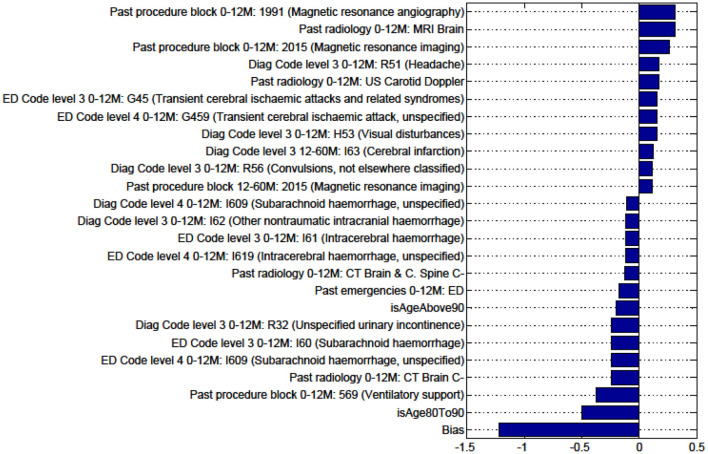
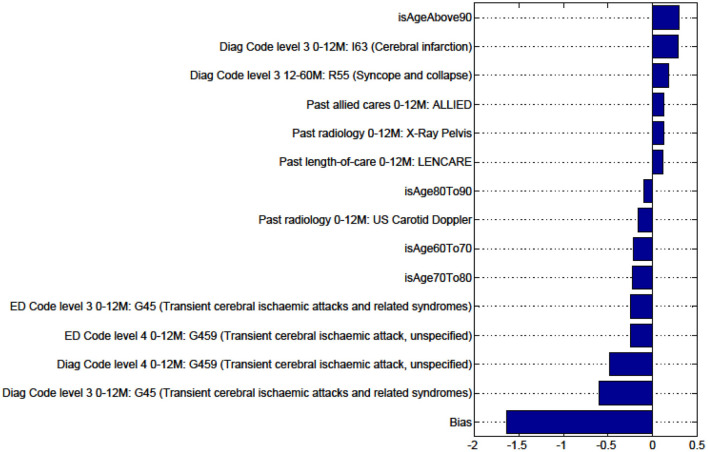
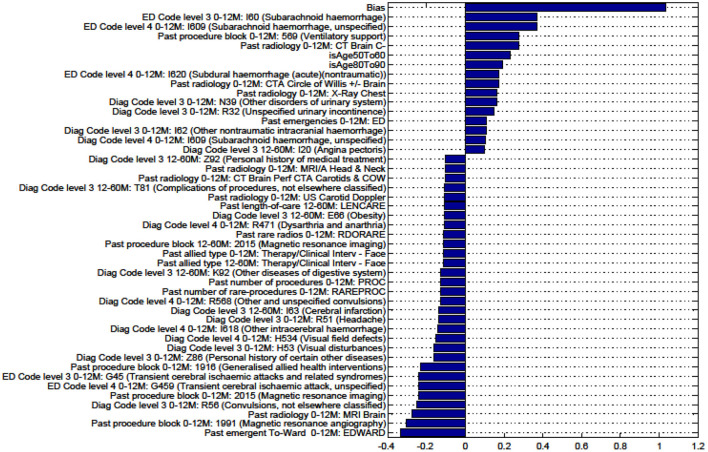
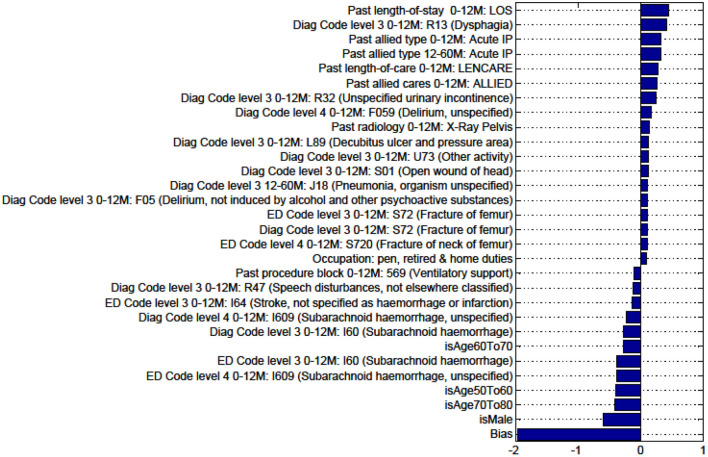
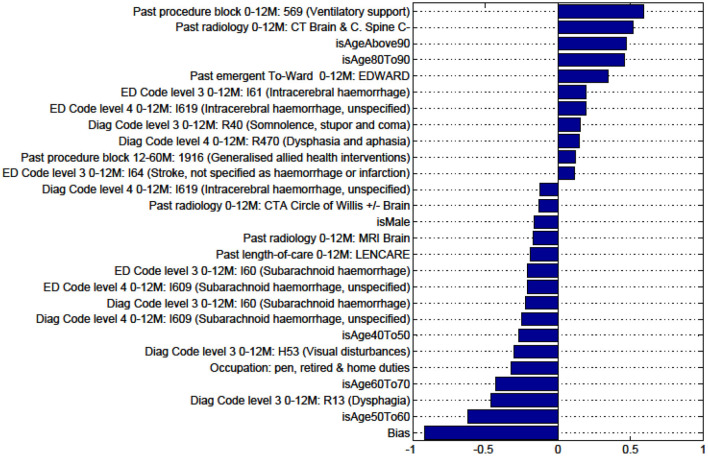
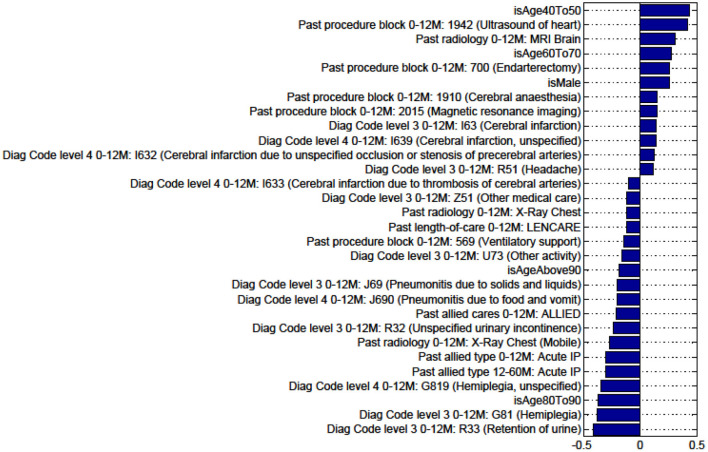
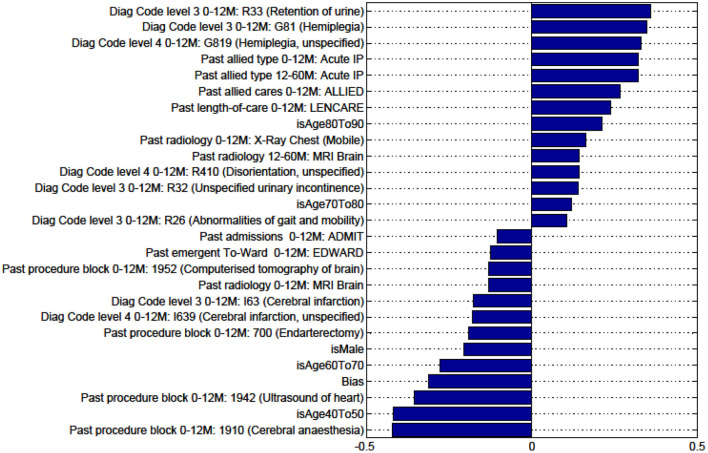
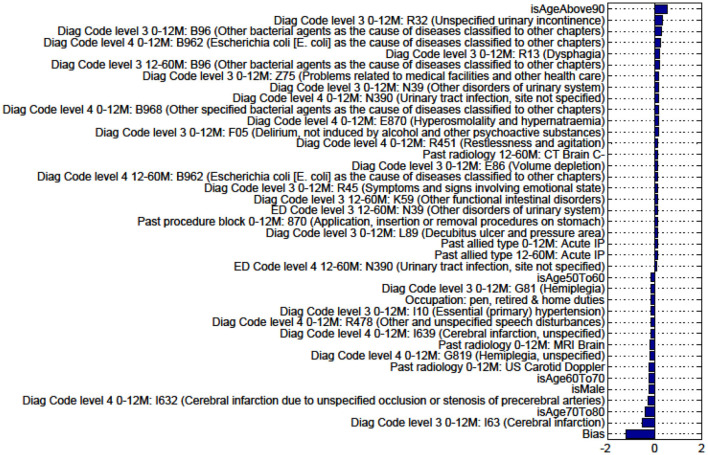
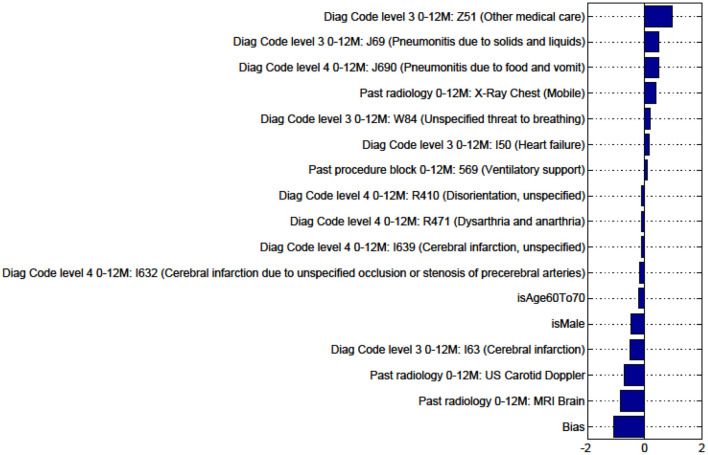
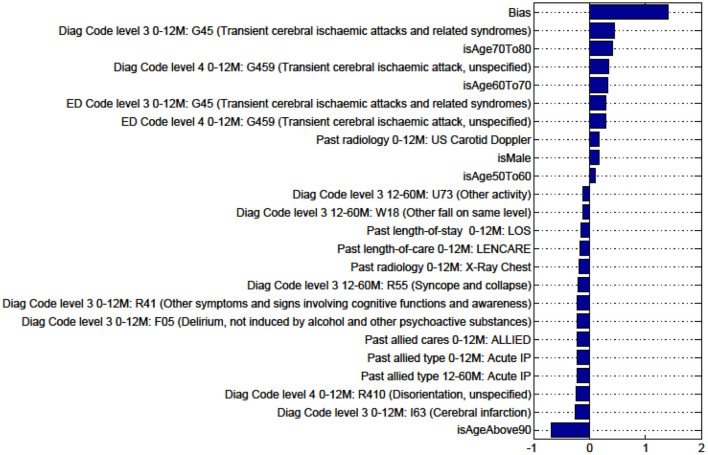
To use available electronic administrative records to identify data reliability, predict discharge destination, and identify risk factors associated with specific outcomes following hospital admission with stroke, compared to stroke specific clinical factors, using machine learning techniques. The study included 2,531 patients having at least one admission with a confirmed diagnosis of stroke, collected from a regional hospital in Australia within 2009-2013. Using machine learning (penalized regression with Lasso) techniques, patients having their index admission between June 2009 and July 2012 were used to derive predictive models, and patients having their index admission between July 2012 and June 2013 were used for validation. Three different stroke types [intracerebral hemorrhage (ICH), ischemic stroke, transient ischemic attack (TIA)] were considered and five different comparison outcome settings were considered. Our electronic administrative record based predictive model was compared with a predictive model composed of "baseline" clinical features, more specific for stroke, such as age, gender, smoking habits, co-morbidities (high cholesterol, hypertension, atrial fibrillation, and ischemic heart disease), types of imaging done (CT scan, MRI, etc.), and occurrence of in-hospital pneumonia. Risk factors associated with likelihood of negative outcomes were identified. The data was highly reliable at predicting discharge to rehabilitation and all other outcomes vs. death for ICH (AUC 0.85 and 0.825, respectively), all discharge outcomes except home vs. rehabilitation for ischemic stroke, and discharge home vs. others and home vs. rehabilitation for TIA (AUC 0.948 and 0.873, respectively). Electronic health record data appeared to provide improved prediction of outcomes over stroke specific clinical factors from the machine learning models. Common risk factors associated with a negative impact on expected outcomes appeared clinically intuitive, and included older age groups, prior ventilatory support, urinary incontinence, need for imaging, and need for allied health input. Electronic administrative records from this cohort produced reliable outcome prediction and identified clinically appropriate factors negatively impacting most outcome variables following hospital admission with stroke. This presents a means of future identification of modifiable factors associated with patient discharge destination. This may potentially aid in patient selection for certain interventions and aid in better patient and clinician education regarding expected discharge outcomes.
与中风特定临床因素相比,使用机器学习技术,利用现有的电子管理记录来识别数据可靠性、预测出院目的地,并识别与中风住院后特定结局相关的风险因素。该研究纳入了2531例至少有一次确诊中风住院记录的患者,这些患者于2009年至2013年期间从澳大利亚一家地区医院收集。使用机器学习(带有套索的惩罚回归)技术,将2009年6月至2012年7月期间首次住院的患者用于推导预测模型,将2012年7月至2013年6月期间首次住院的患者用于验证。考虑了三种不同的中风类型[脑出血(ICH)、缺血性中风、短暂性脑缺血发作(TIA)],并考虑了五种不同的比较结局设置。将我们基于电子管理记录的预测模型与一个由“基线”临床特征组成的预测模型进行比较,该模型对中风更具特异性,如年龄、性别、吸烟习惯、合并症(高胆固醇、高血压、心房颤动和缺血性心脏病)、所做的影像学检查类型(CT扫描、MRI等)以及院内肺炎的发生情况。识别了与不良结局可能性相关的风险因素。对于脑出血患者,该数据在预测出院至康复以及所有其他结局与死亡方面具有高度可靠性(AUC分别为0.85和0.825);对于缺血性中风患者,该数据在预测除出院回家与康复之外的所有出院结局方面具有高度可靠性;对于TIA患者,该数据在预测出院回家与其他结局以及出院回家与康复方面具有高度可靠性(AUC分别为0.948和0.873)。电子健康记录数据似乎比机器学习模型中的中风特定临床因素能更好地预测结局。与对预期结局产生负面影响相关的常见风险因素在临床上似乎很直观,包括老年人群、既往通气支持、尿失禁、影像学检查需求以及联合健康投入需求。该队列的电子管理记录产生了可靠的结局预测,并识别出了对中风住院后大多数结局变量产生负面影响的临床上合适的因素。这提供了一种未来识别与患者出院目的地相关的可改变因素的方法。这可能潜在地有助于某些干预措施的患者选择,并有助于就预期出院结局对患者和临床医生进行更好的教育。