Laboratory of Aging Neuroscience and Neuropharmacology, School of Basic Medicine and Clinical Pharmacy, China Pharmaceutical University, Nanjing, 210009, China.
Institute of Geriatric Immunology, School of Medicine, Jinan University, Guangzhou, 510632, China.
Theranostics. 2021 Sep 13;11(19):9452-9469. doi: 10.7150/thno.62376. eCollection 2021.
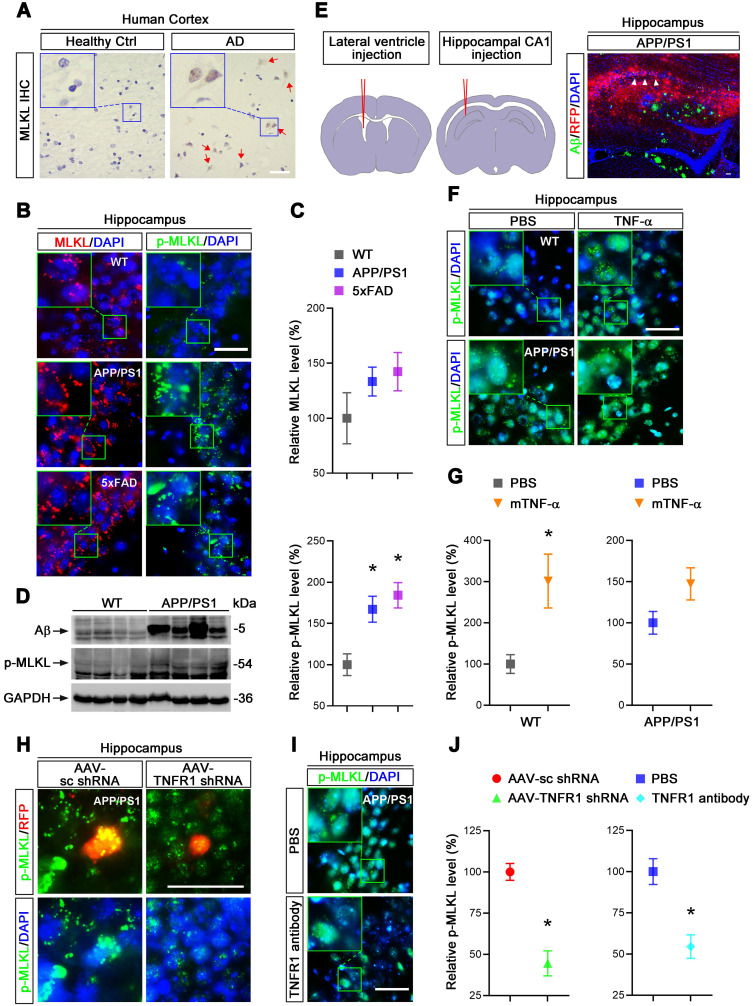
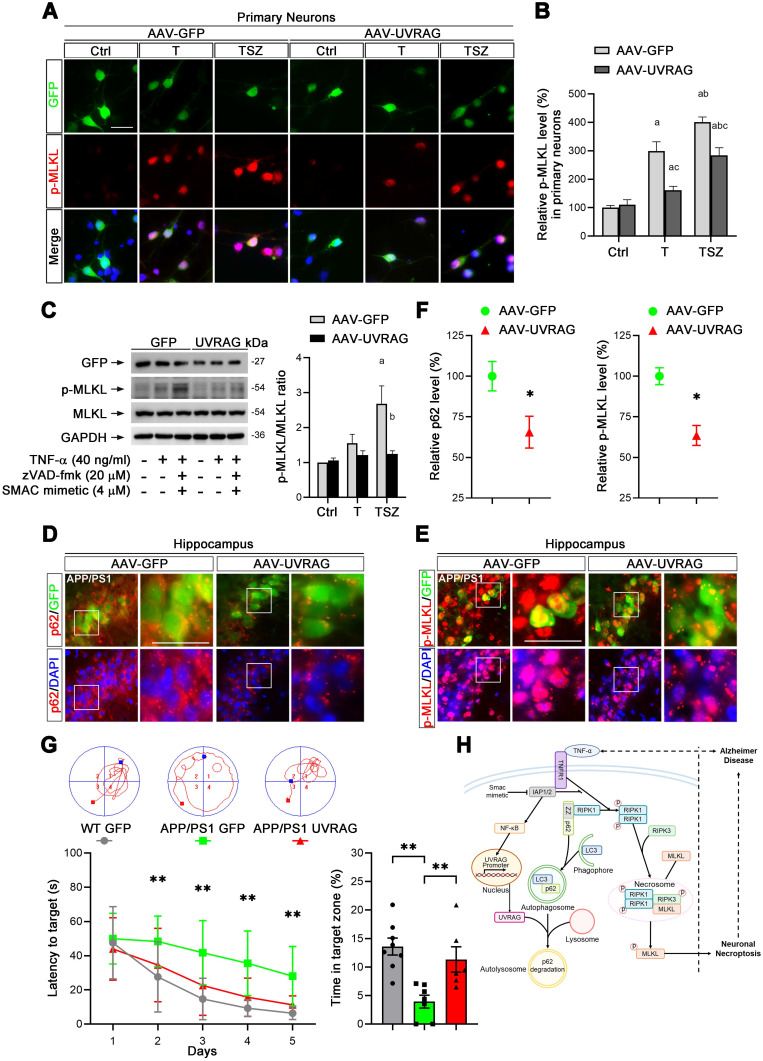
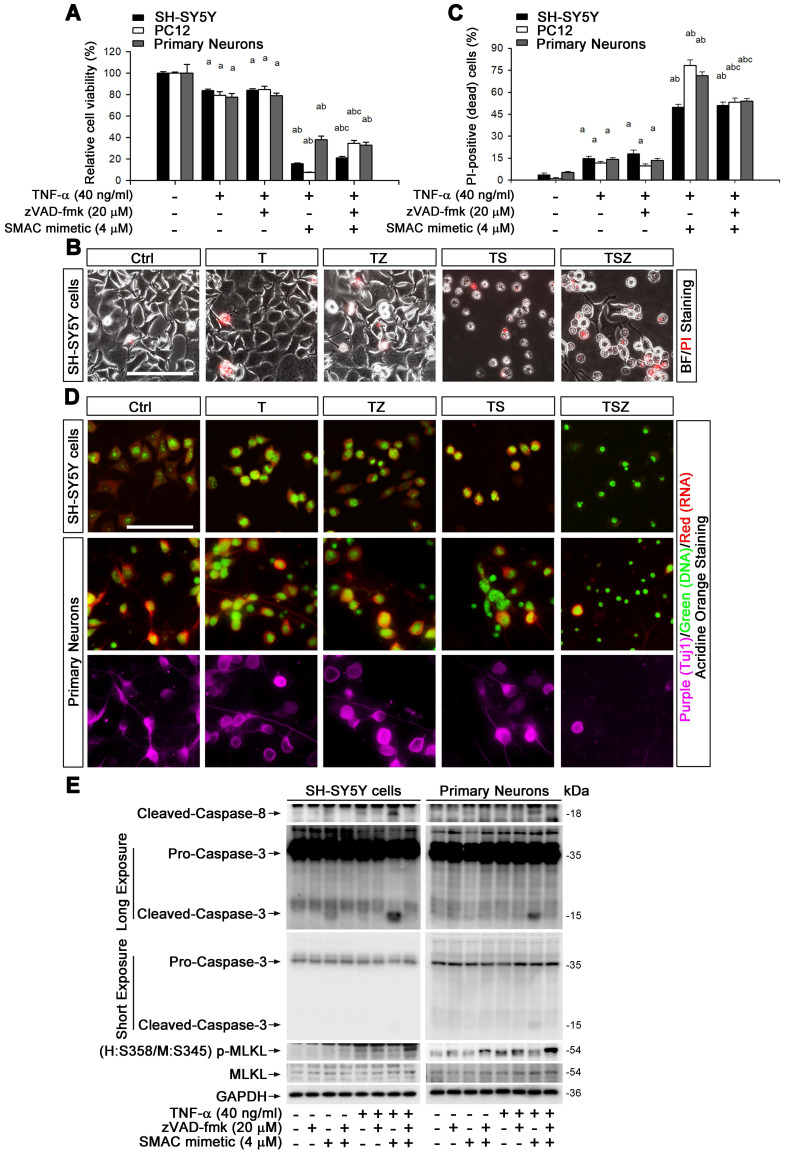
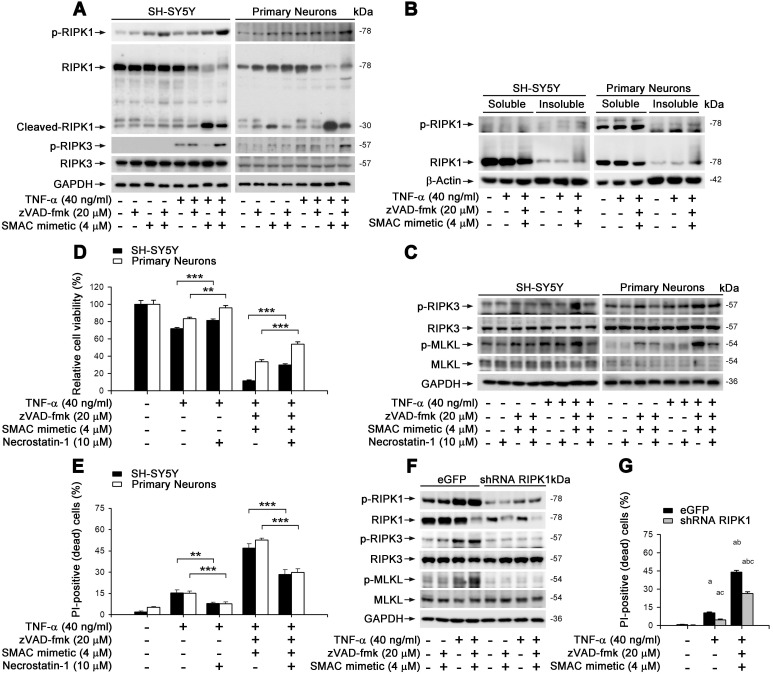
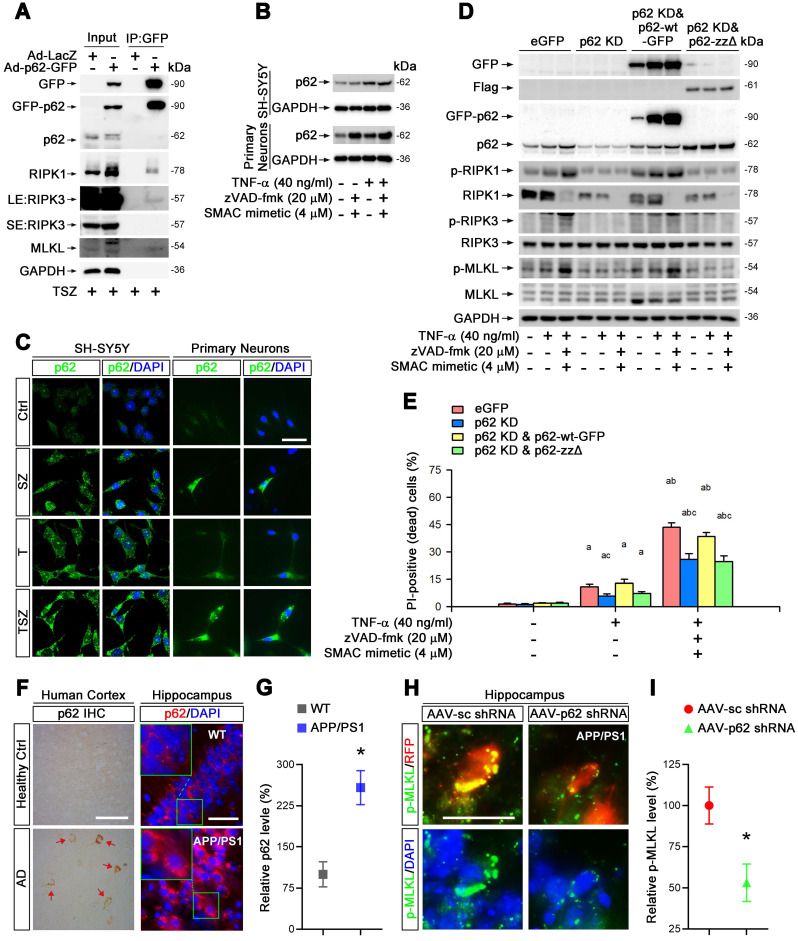
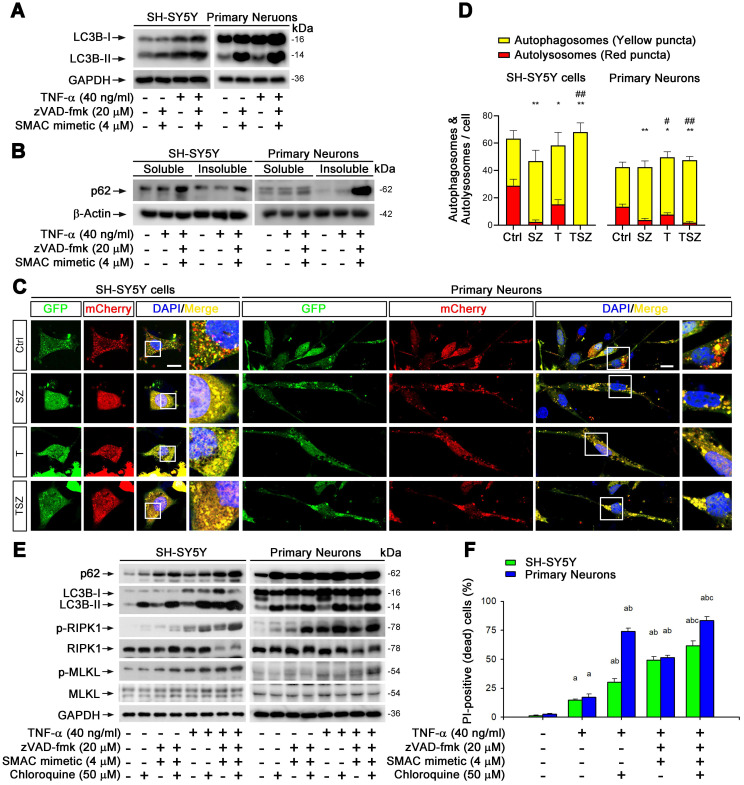
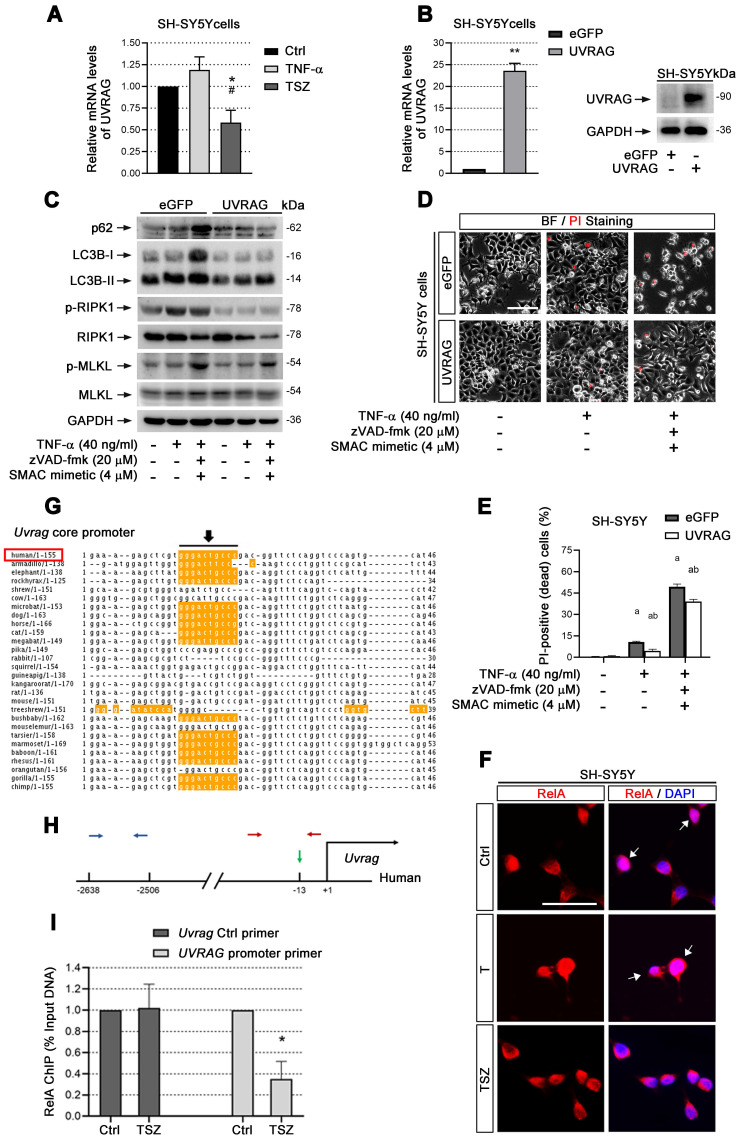
Neuronal death is a major hallmark of Alzheimer's disease (AD). Necroptosis, as a programmed necrotic process, is activated in AD. However, what signals and factors initiate necroptosis in AD is largely unknown. We examined the expression levels of critical molecules in necroptotic signaling pathway by immunohistochemistry (IHC) staining and immunoblotting using brain tissues from AD patients and AD mouse models of APP/PS1 and 5×FAD. We performed brain stereotaxic injection with recombinant TNF-α, anti-TNFR1 neutralizing antibody or AAV-mediated gene expression and knockdown in APP/PS1 mice. For studies, we used TNF-α combined with zVAD-fmk and Smac mimetic to establish neuronal necroptosis models and utilized pharmacological or molecular biological approaches to study the signaling pathways. We find that activated neuronal necroptosis is dependent on upstream TNF-α/TNFR1 signaling in both neuronal cell cultures and AD mouse models. Upon TNF-α stimulation, accumulated p62 recruits RIPK1 and induces its self-oligomerization, and activates downstream RIPK1/RIPK3/MLKL cascade, leading to neuronal necroptosis. Ectopic accumulation of p62 is caused by impaired autophagy flux, which is mediated by UVRAG downregulation during the TNF-α-promoted necroptosis. Notably, UVRAG overexpression inhibits neuronal necroptosis in cell and mouse models of AD. We identify a finely controlled regulation of neuronal necroptosis in AD by coordinated TNF-α signaling, RIPK1/3 activity and autophagy machinery. Strategies that could fine-tune necroptosis and autophagy may bring in promising therapeutics for AD.
神经元死亡是阿尔茨海默病(AD)的主要标志之一。细胞坏死性凋亡作为一种程序性坏死过程,在 AD 中被激活。然而,AD 中哪些信号和因素引发细胞坏死性凋亡在很大程度上尚不清楚。我们通过免疫组织化学(IHC)染色和免疫印迹分析,使用 AD 患者和 APP/PS1 及 5×FAD 转基因 AD 小鼠模型的脑组织,检测了细胞坏死性凋亡信号通路中关键分子的表达水平。我们在 APP/PS1 小鼠中进行脑立体定向注射重组 TNF-α、抗 TNFR1 中和抗体或 AAV 介导的基因表达和敲低。为了进行研究,我们使用 TNF-α 联合 zVAD-fmk 和 Smac 模拟物建立神经元坏死性凋亡模型,并利用药理学或分子生物学方法研究信号通路。我们发现,在神经元细胞培养物和 AD 小鼠模型中,激活的神经元坏死性凋亡依赖于上游 TNF-α/TNFR1 信号。在 TNF-α 刺激下,积累的 p62 招募 RIPK1 并诱导其自身寡聚化,激活下游 RIPK1/RIPK3/MLKL 级联反应,导致神经元坏死性凋亡。p62 的异位积累是由于自噬通量受损所致,这是由 TNF-α 促进的坏死性凋亡过程中 UVRAG 下调介导的。值得注意的是,UVRAG 过表达可抑制 AD 细胞和小鼠模型中的神经元坏死性凋亡。我们确定了 AD 中神经元坏死性凋亡的精细调控,由协调的 TNF-α 信号、RIPK1/3 活性和自噬机制介导。精细调节坏死性凋亡和自噬的策略可能为 AD 带来有前景的治疗方法。