He Xige, Wu Rihan, Yun Yueying, Qin Xia, Chen Lu, Han Yunfei, Wu Jindi, Sha Lina, Borjigin Gerelt
College of Food Science and Engineering Inner Mongolia Agricultural University Hohhot China.
College of Biochemistry and Engineering Hohhot Vocational College Hohhot China.
Food Sci Nutr. 2021 Aug 25;9(10):5722-5734. doi: 10.1002/fsn3.2537. eCollection 2021 Oct.
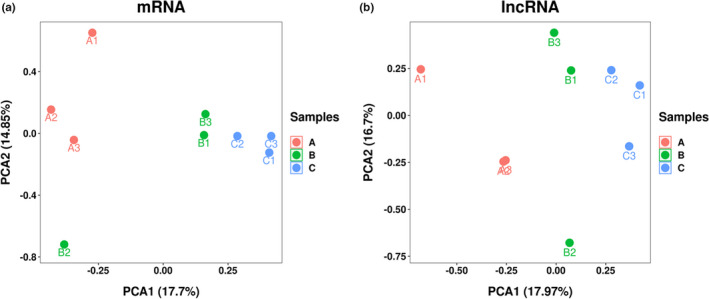
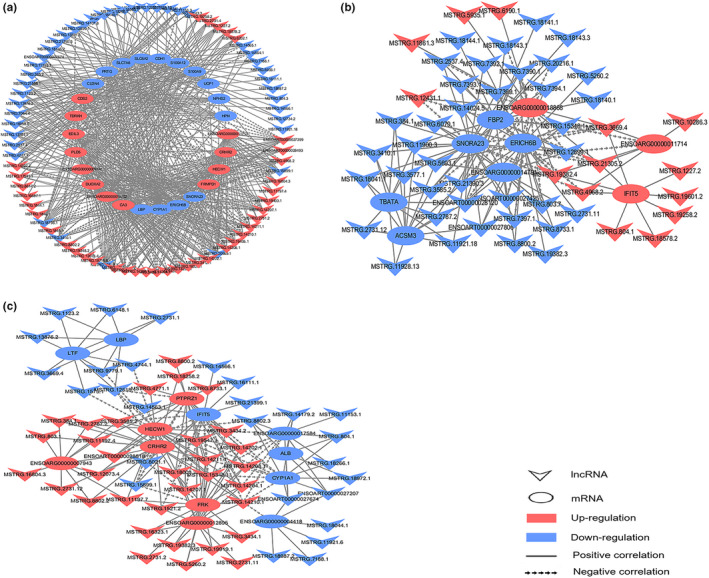
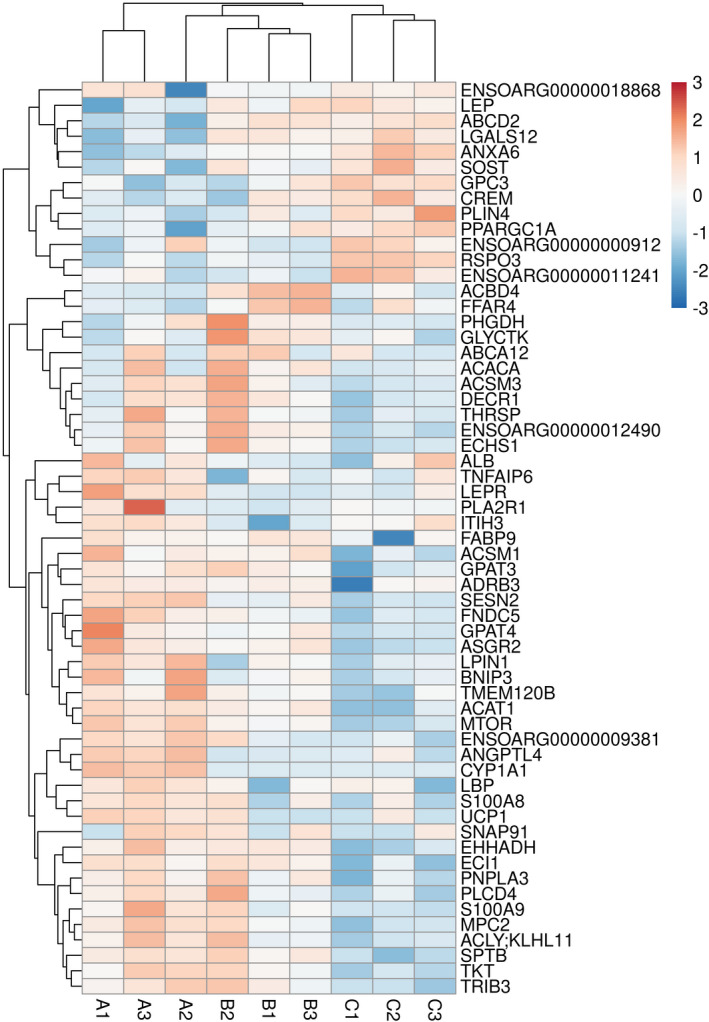
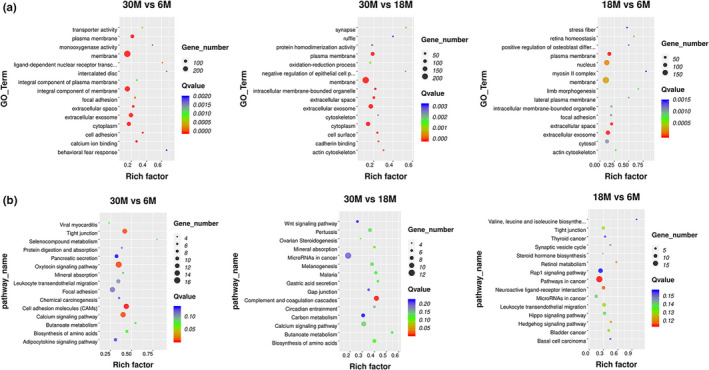
The tail fat of sheep is the most typical deposited fat, and it can be widely used in human daily life, such as diet, cosmetics, and industrial raw materials. To understand the potential regulatory mechanism of different growth stages of tail fat in Sunite sheep, we performed high-throughput RNA sequencing to characterize the long noncoding RNA (lncRNA) and messenger RNA (mRNA) expression profiles of the sheep tail fat at the age of 6, 18, and 30 months. A total of 223 differentially expressed genes (DEGs) and 148 differentially expressed lncRNAs were found in the tail fat of 6-, 18-, and 30-month-old sheep. Based on functional analysis, we found that fat-related DEGs were mainly expressed at 6 months of age and gradually decreased at 18 and 30 months of age. The target gene prediction analysis shows that most of the lncRNAs target more than 20 mRNAs as their transregulators. Further, we obtained several fat-related differentially expressed target genes; these target genes interact with different differentially expressed lncRNAs at various ages and play an important role in the development of tail fat. Based on the DEGs and differentially expressed lncRNAs, we established three co-expression networks for each comparison group. Finally, we concluded that the development of the sheep tail fat is more active during the early stage of growth and gradually decreases with the increase in age. The mutual regulation of lncRNAs and mRNAs may play a key role in this complex biological process.
绵羊的尾脂是最典型的沉积脂肪,可广泛应用于人类日常生活,如饮食、化妆品和工业原料等方面。为了解苏尼特羊尾脂不同生长阶段的潜在调控机制,我们进行了高通量RNA测序,以表征6个月、18个月和30个月龄绵羊尾脂的长链非编码RNA(lncRNA)和信使RNA(mRNA)表达谱。在6个月、18个月和30个月龄绵羊的尾脂中,共发现223个差异表达基因(DEG)和148个差异表达lncRNA。基于功能分析,我们发现与脂肪相关的DEG主要在6月龄时表达,在18月龄和30月龄时逐渐减少。靶基因预测分析表明,大多数lncRNA作为反式调节因子靶向20多个mRNA。此外,我们获得了几个与脂肪相关的差异表达靶基因;这些靶基因在不同年龄与不同的差异表达lncRNA相互作用,在尾脂发育中起重要作用。基于DEG和差异表达lncRNA,我们为每个比较组建立了三个共表达网络。最后,我们得出结论,绵羊尾脂在生长早期发育较为活跃,并随着年龄的增长而逐渐减弱。lncRNA和mRNA的相互调节可能在这一复杂的生物学过程中起关键作用。