Love Ephy R, Dexter Franklin, Reminick Jason I, Karan Suzanne B
The Bredesen Center, Data Science Engineering, University of Tennessee, Knoxville, USA.
Anesthesia, University of Iowa, Iowa City, USA.
Cureus. 2021 Aug 29;13(8):e17538. doi: 10.7759/cureus.17538. eCollection 2021 Aug.
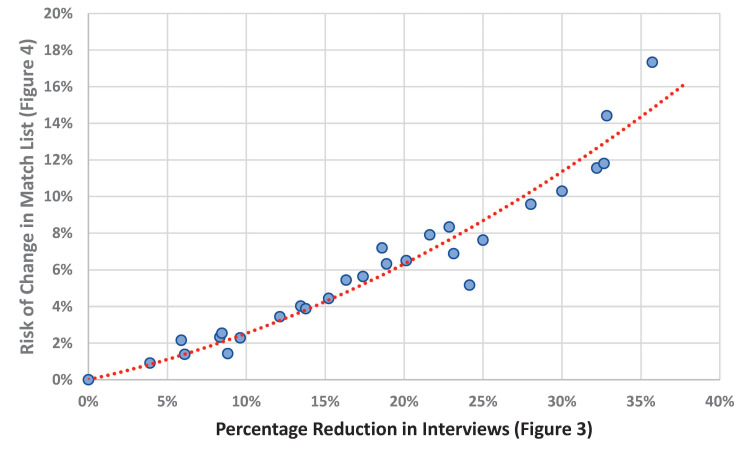
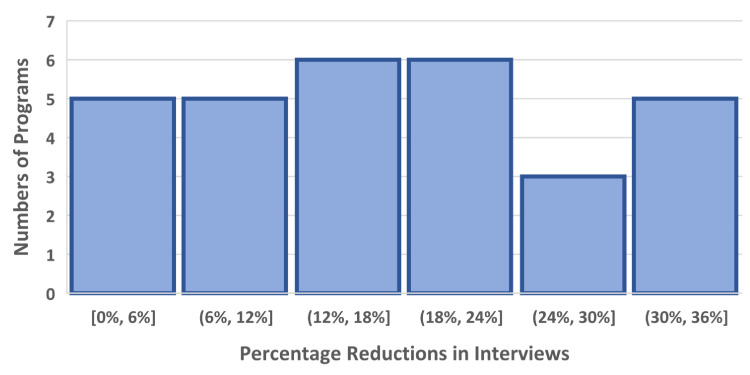
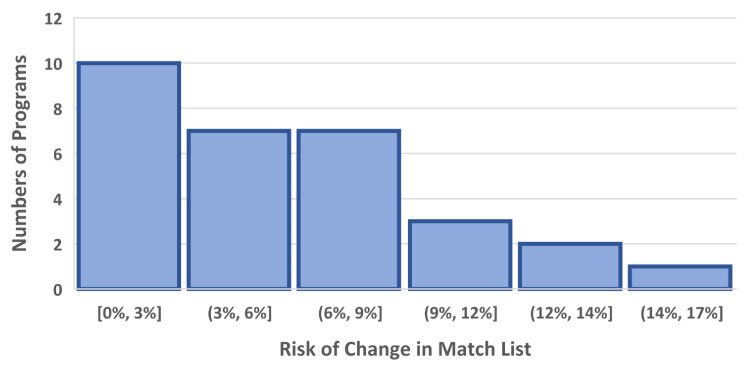
Background The U.S. residency recruitment process is expensive and time-consuming because of application inflation and over-invitation. Objective Using interview and match data, we quantify the predicted effects if anesthesiology residency programs excluded interviews for applicants who are very unlikely to match. Methods We previously published the validity and accuracy of the logistic regression model based on data from interview scheduling software used by 32 U.S. anesthesiology residency programs and 1300 applicants from 2015-18. Data used were program region, applicant address, numbers of interviews of the interviewee, medical school US News and World Report (USNWR) rank, the difference between United States Medical Licensing Exam (USMLE) Step 1 and 2 Clinical Knowledge (CK) scores, and the historical average of USMLE scores of program residents. In the current study completed in 2020, the predicted probabilities and their variances were summed among interviewees for 30 deidentified programs. Results For anesthesiology, the median residency program could reduce their interviews by 16.9% (97.5% confidence interval 8.5%-24.1%) supposing they would not invite applicants if the 99% upper prediction limit for the probability of matching was less than 10.0%. The corresponding median savings would be 0.80 interviews per matched spot (0.34-1.33). In doing so, the median program would sustain a risk of 5.3% (97.5% confidence interval 2.3%-7.9%) of having at least one interviewee removed from their final rank-to-match list. Conclusion Using novel interview data and analyses, we demonstrate that residency programs can substantively reduce interviews with less effect on rank-to-match lists. The data-driven approach to manage marginal interviews allows program leadership to better weigh costs and benefits when composing their annual list of interviewees.
由于申请人数膨胀和过度邀请,美国住院医师招录过程既昂贵又耗时。目的:利用面试和匹配数据,我们量化了麻醉学住院医师项目排除对极不可能匹配的申请者进行面试所产生的预期效果。方法:我们之前基于32个美国麻醉学住院医师项目使用的面试安排软件数据以及2015 - 2018年的1300名申请者的数据,发表了逻辑回归模型的有效性和准确性。使用的数据包括项目地区、申请者地址、被面试者的面试次数、医学院《美国新闻与世界报道》(USNWR)排名、美国医师执照考试(USMLE)第一步和第二步临床知识(CK)分数之差,以及项目住院医师USMLE分数的历史平均值。在2020年完成的当前研究中,对30个去识别化项目的被面试者的预测概率及其方差进行了汇总。结果:对于麻醉学来说,假设如果匹配概率的99%上预测限小于10.0%就不邀请申请者,那么中位住院医师项目可以将面试减少16.9%(97.5%置信区间8.5% - 24.1%)。每个匹配名额对应的中位节省面试次数为0.80次(0.34 - 1.33)。这样做,中位项目将面临5.3%(97.5%置信区间2.3% - 7.9%)的风险,即至少有一名被面试者从最终排名 - 匹配名单中被剔除。结论:通过使用新颖的面试数据和分析,我们证明住院医师项目可以大幅减少面试,同时对排名 - 匹配名单的影响较小。这种数据驱动的方法来管理边缘面试,使项目负责人在制定年度被面试者名单时能够更好地权衡成本和收益。