Nyström Alexander, Bruckner-Tuderman Leena, Kiritsi Dimitra
Department of Dermatology, Medical Faculty, Medical Center - University of Freiburg, Freiburg, Germany.
Freiburg Institute for Advanced Studies, Freiburg, Germany.
Front Genet. 2021 Sep 28;12:737272. doi: 10.3389/fgene.2021.737272. eCollection 2021.
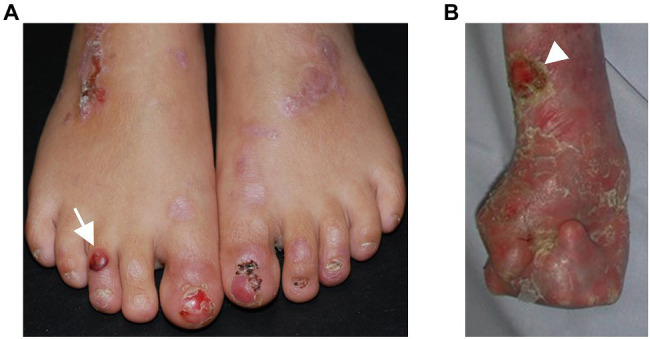
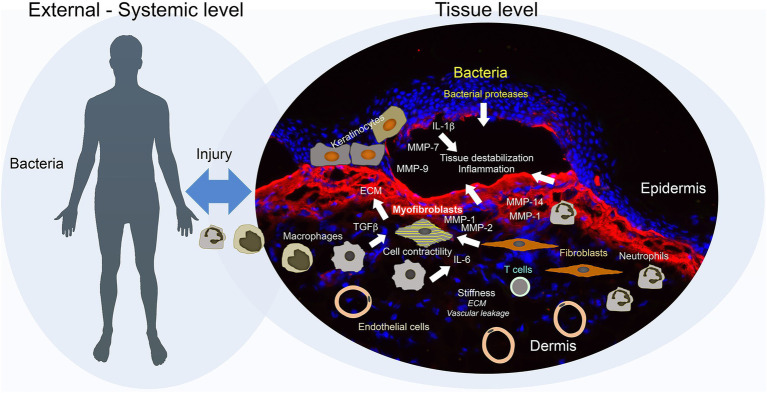
The phenotypic presentation of monogenetic diseases is determined not only by the nature of the causative mutations but also is influenced by manifold cellular, microenvironmental, and external factors. Here, heritable extracellular matrix diseases, including dystrophic epidermolysis bullosa (DEB), are no exceptions. Dystrophic epidermolysis bullosa is caused by mutations in the gene encoding collagen VII. Deficiency of collagen VII leads to skin and mucosal fragility, which progresses from skin blistering to severe fibrosis and cancer. Clinical and pre-clinical studies suggest that targeting of secondary disease mechanisms or employment of natural disease modifiers can alleviate DEB severity and progression. However, since many of these mechanisms are needed for tissue homeostasis, informed, selective targeting is essential for safe and efficacious treatment. Here, we discuss a selection of key disease modifiers and modifying processes active in DEB, summarize the still scattered knowledge of them, and reflect on ways forward toward their utilization for symptom-relief or enhancement of curative therapies.
单基因疾病的表型表现不仅取决于致病突变的性质,还受到多种细胞、微环境和外部因素的影响。在这里,遗传性细胞外基质疾病,包括营养不良性大疱性表皮松解症(DEB),也不例外。营养不良性大疱性表皮松解症是由编码VII型胶原蛋白的基因突变引起的。VII型胶原蛋白的缺乏会导致皮肤和粘膜脆弱,从皮肤水疱发展到严重纤维化和癌症。临床和临床前研究表明,针对继发性疾病机制或使用天然疾病修饰剂可以减轻DEB的严重程度和进展。然而,由于组织稳态需要许多这些机制,明智的、选择性的靶向对于安全有效的治疗至关重要。在这里,我们讨论了在DEB中活跃的一些关键疾病修饰剂和修饰过程,总结了关于它们的仍然零散的知识,并思考将它们用于缓解症状或增强治疗效果的未来方向。