An Lanfen, Zhang Jun, Feng Dilu, Zhao Yingchao, Ouyang Weixiang, Shi Rui, Zhou Xing, Yu Zhicheng, Wei Sitian, Min Jie, Wang Hongbo
Department of Obstetrics and Gynecology, Union Hospital, Tongji Medical College, Huazhong University of Science and Technology, Wuhan 430022, China.
Cancer Center, Union Hospital, Tongji Medical College, Huazhong University of Science and Technology, Wuhan 430022, China.
Stem Cells Int. 2021 Oct 5;2021:1434856. doi: 10.1155/2021/1434856. eCollection 2021.
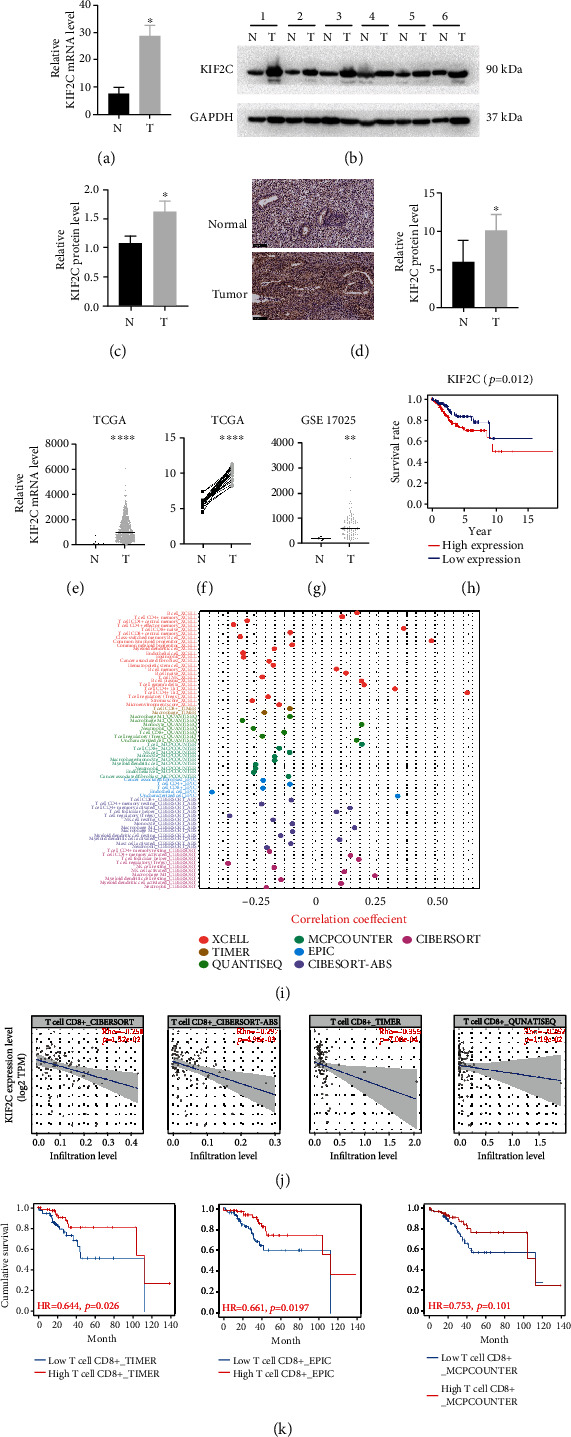
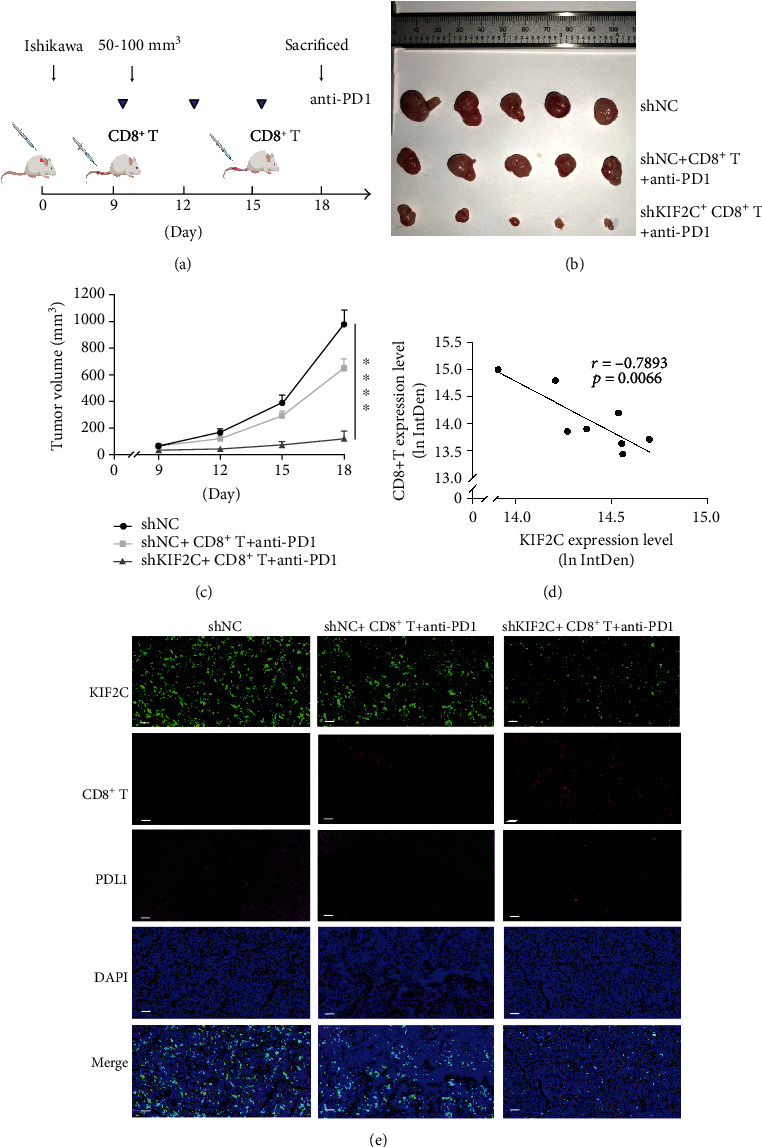
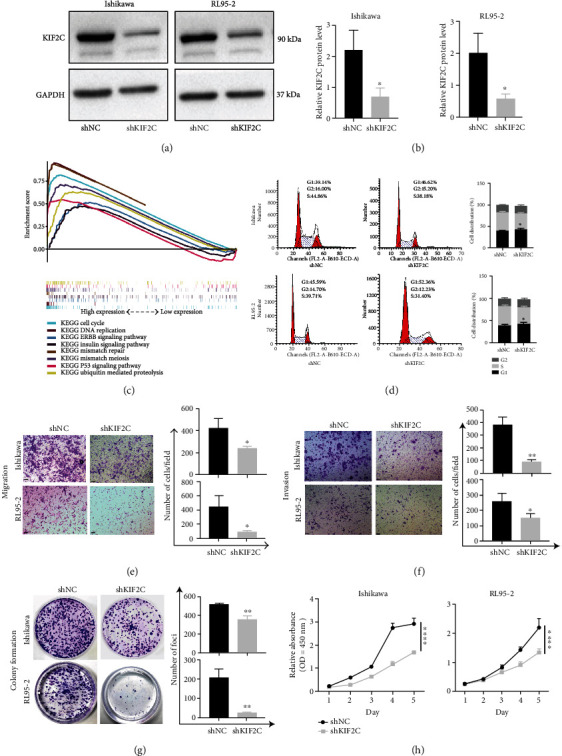
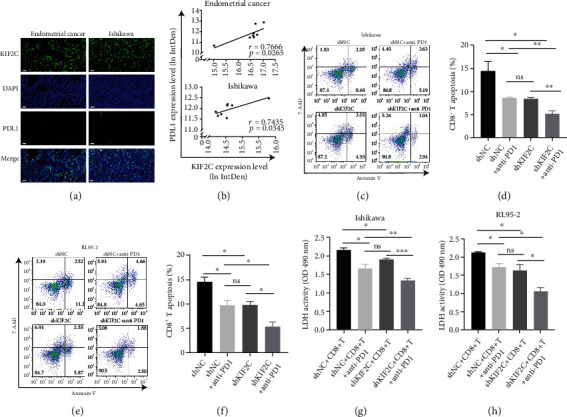
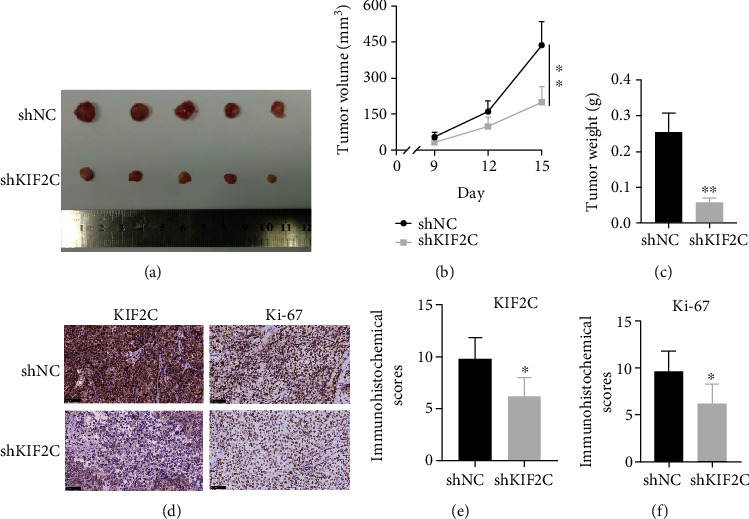
Endometrial cancer (EC) is commonly diagnosed cancer in women, and the prognosis of advanced types of EC is extremely poor. Kinesin family member 2C (KIF2C) has been reported as an oncogene in cancers. However, its pathophysiological roles and the correlation with tumor-infiltrating lymphocytes in EC remain unclear. The mRNA and protein levels of KIF2C in EC tissues were detected by qRT-PCR, Western blot (WB), and IHC. CCK8, Transwell, and colony formation assay were applied to assess the effects of KIF2C on cell proliferation, migration, and invasion. Cell apoptosis and cell cycle were analyzed by flow cytometry. The antitumor effect was further validated in the nude mouse xenograft cancer model and humanized mouse model. KIF2C expression was higher in EC. Knockdown of KIF2C prolonged the G1 phases and inhibited EC cell proliferation, migration, and invasion in vitro. Bioinformatics analysis indicated that KIF2C is negatively correlated with the infiltration level of CD8 T cells but positively with the poor prognosis of EC patients. The apoptosis of CD8 T cell was inhibited after the knockdown of KIF2C and was further inhibited when it is combined with anti-PD1. Conversely, compared to the knockdown of KIF2C expression alone, the combination of anti-PD1 further promoted the apoptosis of Ishikawa and RL95-2 cells. Moreover, the knockdown of KIF2C inhibited the expression of Ki-67 and the growth of tumors in the nude mouse xenograft cancer model. Our study found that the antitumor efficacy was further evaluated by the combination of anti-PD1 and KIF2C knockdown in a humanized mouse model. This study indicated that KIF2C is a novel prognostic biomarker that determines cancer progression and also a target for the therapy of EC and correlated with tumor immune cells infiltration in EC.
子宫内膜癌(EC)是女性中常见的诊断出的癌症,晚期EC的预后极差。驱动蛋白家族成员2C(KIF2C)在癌症中被报道为一种癌基因。然而,其在EC中的病理生理作用以及与肿瘤浸润淋巴细胞的相关性仍不清楚。通过qRT-PCR、蛋白质免疫印迹(WB)和免疫组化(IHC)检测EC组织中KIF2C的mRNA和蛋白质水平。应用CCK8、Transwell和集落形成试验来评估KIF2C对细胞增殖、迁移和侵袭的影响。通过流式细胞术分析细胞凋亡和细胞周期。在裸鼠异种移植癌模型和人源化小鼠模型中进一步验证其抗肿瘤作用。KIF2C在EC中的表达较高。敲低KIF2C可延长G1期,并在体外抑制EC细胞的增殖、迁移和侵袭。生物信息学分析表明,KIF2C与CD8 T细胞的浸润水平呈负相关,但与EC患者的不良预后呈正相关。敲低KIF2C后,CD8 T细胞的凋亡受到抑制,与抗PD1联合使用时进一步受到抑制。相反,与单独敲低KIF2C表达相比,抗PD1联合使用进一步促进了Ishikawa和RL95-2细胞的凋亡。此外,敲低KIF2C可抑制裸鼠异种移植癌模型中Ki-67的表达和肿瘤生长。我们的研究发现,在人源化小鼠模型中,通过抗PD1与敲低KIF2C联合使用可进一步评估抗肿瘤疗效。本研究表明,KIF2C是一种决定癌症进展的新型预后生物标志物,也是EC治疗的靶点,并且与EC中的肿瘤免疫细胞浸润相关。