Department of Radiation Oncology, Stanford University, Stanford, CA, USA; Stanford Cancer Institute, Stanford University, Stanford, CA, USA.
Division of Oncology, Department of Medicine, Stanford Cancer Institute, Stanford University, Stanford, CA, USA.
Cell. 2020 Oct 15;183(2):363-376.e13. doi: 10.1016/j.cell.2020.09.001. Epub 2020 Oct 1.
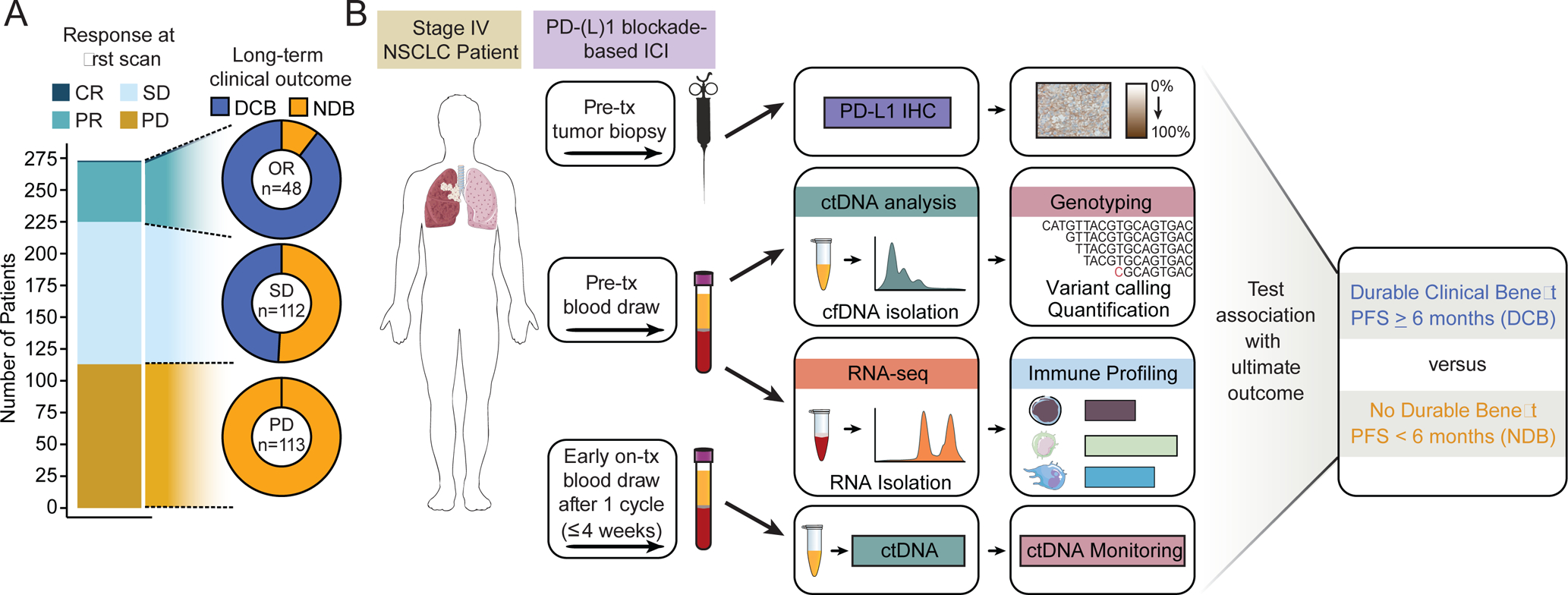
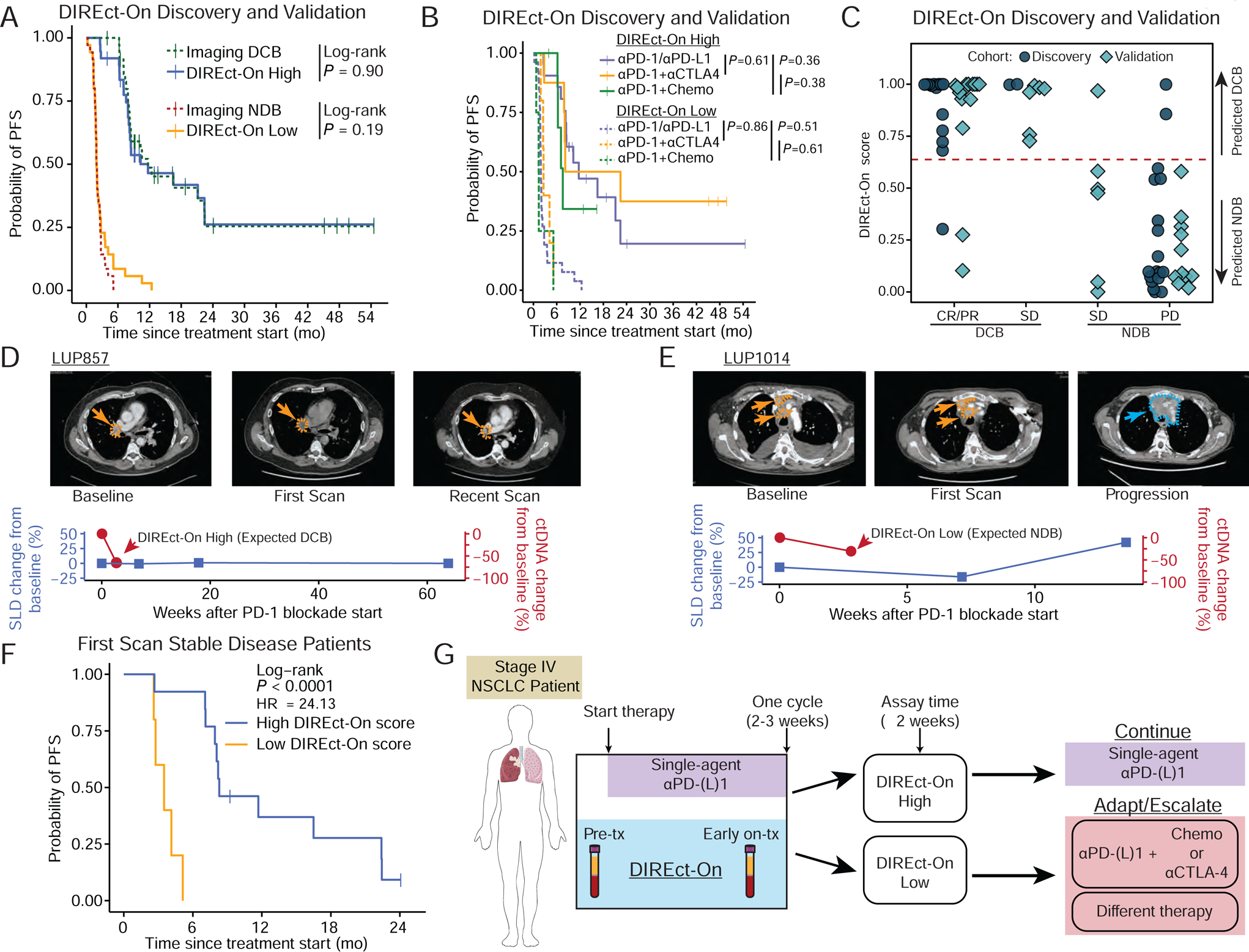
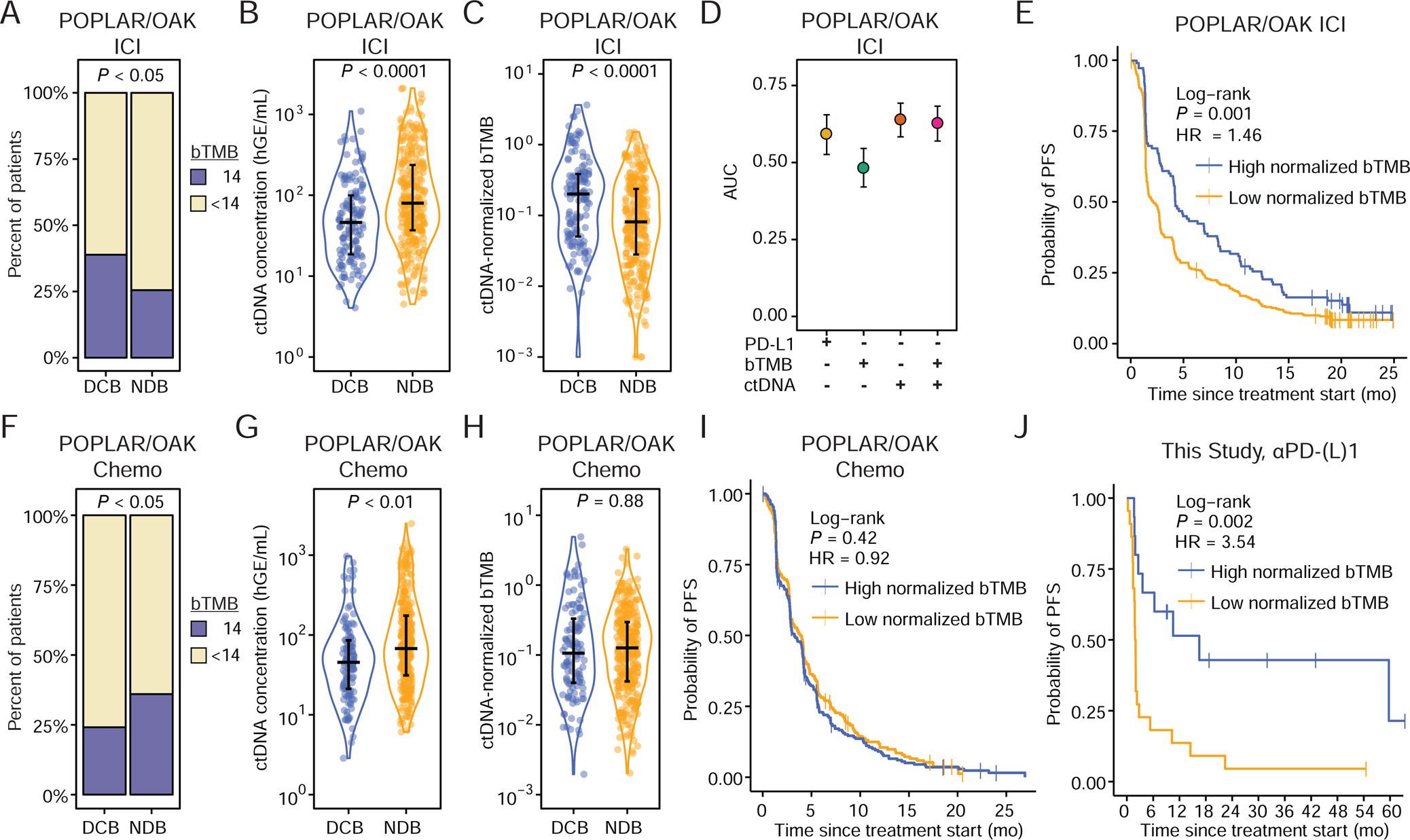
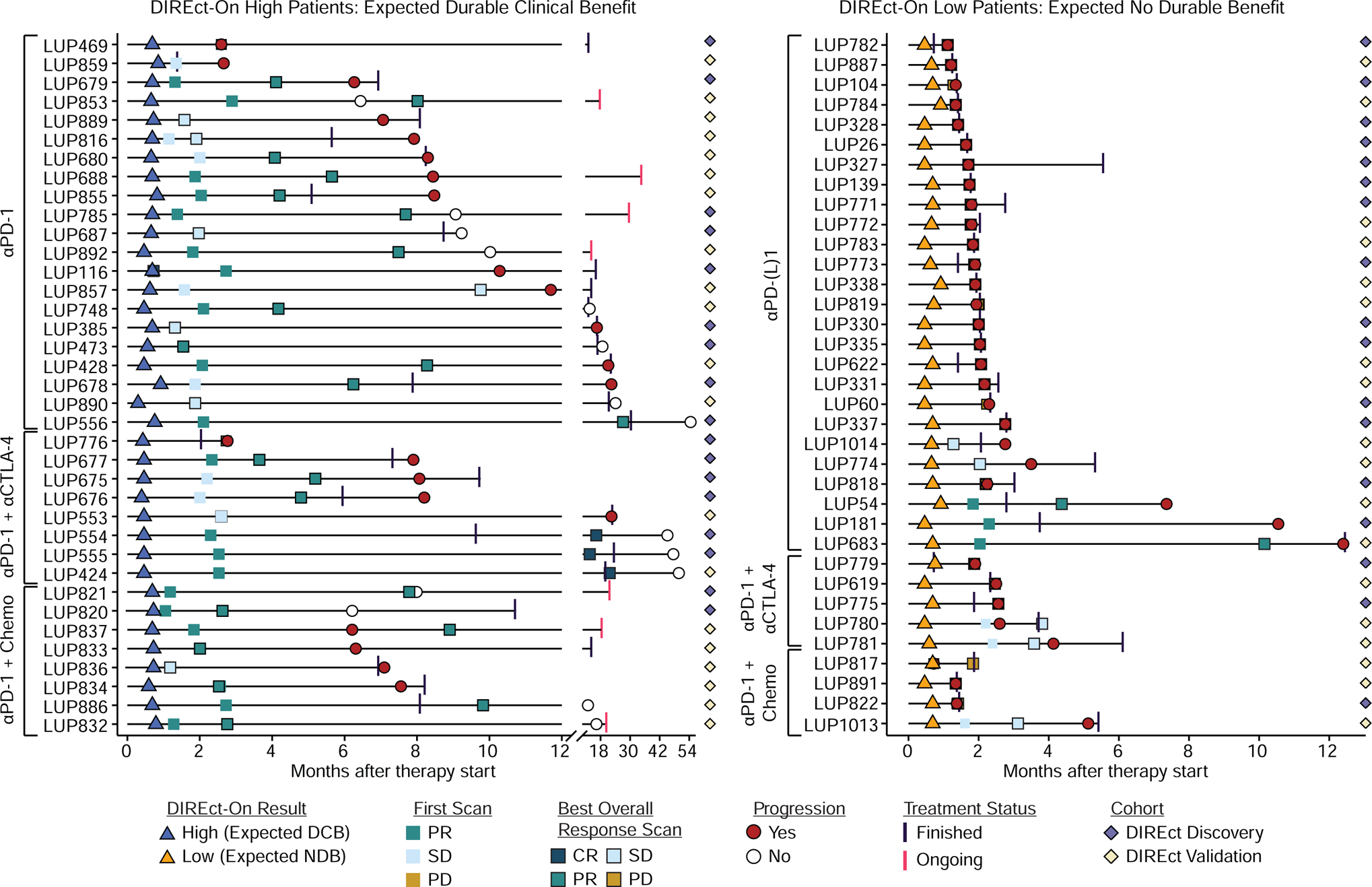
Although treatment of non-small cell lung cancer (NSCLC) with immune checkpoint inhibitors (ICIs) can produce remarkably durable responses, most patients develop early disease progression. Furthermore, initial response assessment by conventional imaging is often unable to identify which patients will achieve durable clinical benefit (DCB). Here, we demonstrate that pre-treatment circulating tumor DNA (ctDNA) and peripheral CD8 T cell levels are independently associated with DCB. We further show that ctDNA dynamics after a single infusion can aid in identification of patients who will achieve DCB. Integrating these determinants, we developed and validated an entirely noninvasive multiparameter assay (DIREct-On, Durable Immunotherapy Response Estimation by immune profiling and ctDNA-On-treatment) that robustly predicts which patients will achieve DCB with higher accuracy than any individual feature. Taken together, these results demonstrate that integrated ctDNA and circulating immune cell profiling can provide accurate, noninvasive, and early forecasting of ultimate outcomes for NSCLC patients receiving ICIs.
尽管免疫检查点抑制剂(ICI)治疗非小细胞肺癌(NSCLC)可产生显著持久的反应,但大多数患者会出现早期疾病进展。此外,常规影像学的初始反应评估通常无法确定哪些患者将获得持久的临床获益(DCB)。在这里,我们证明了治疗前循环肿瘤 DNA(ctDNA)和外周 CD8 T 细胞水平与 DCB 独立相关。我们进一步表明,单次输注后 ctDNA 的动态变化有助于识别将获得 DCB 的患者。整合这些决定因素,我们开发并验证了一种完全非侵入性的多参数检测方法(DIREct-On,通过免疫分析和治疗时的 ctDNA 进行持久免疫治疗反应评估),该方法比任何单个特征更准确地预测哪些患者将获得 DCB。总之,这些结果表明,整合 ctDNA 和循环免疫细胞分析可以为接受 ICI 治疗的 NSCLC 患者的最终结局提供准确、无创和早期预测。