A A Abdullah, Ahmed Musa, Oladokun Adesina
Department of Obstetrics and Gynecology, College of Medicine, University of Ibadan, Ibadan, Nigeria.
Qatar Med J. 2021 Oct 1;2021(3):47. doi: 10.5339/qmj.2021.47. eCollection 2021.
BACKGROUND/AIM: Infertility is defined as the inability of heterosexual couples to achieve a successful clinically recognizable pregnancy after 12 months or more of regular, unprotected sexual intercourse. Infertility estimations are very important to inform the healthcare policymakers and governments to implement appropriate social and economic policies. Thus, this study aimed to estimate the pooled prevalence of infertility (primary and secondary) and its etiologic factors in Sudan.
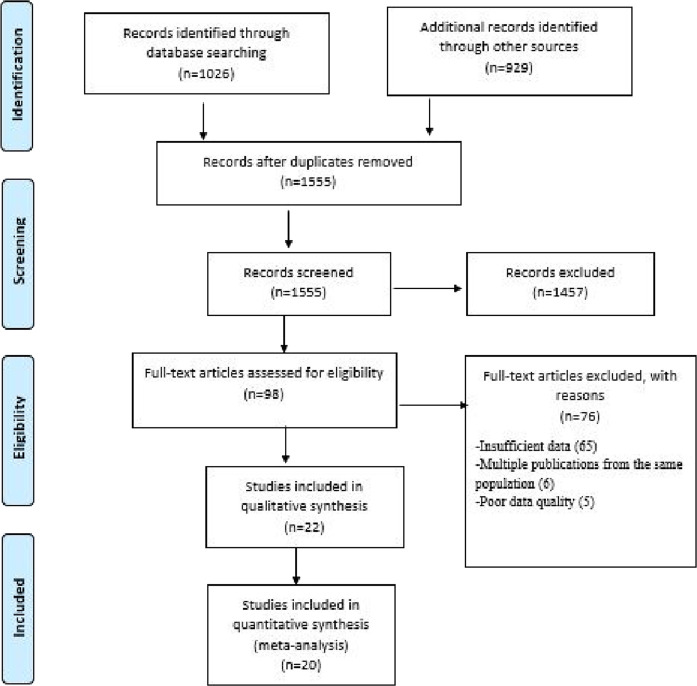
This study included all published and unpublished studies written in Arabic or English. Electronic sources (namely, PubMed, MEDLINE, Embase, Cochrane Central Register of Controlled Trials, and ClinicalTrials.gov) and nonelectronic sources (direct Google search, Google Scholar, OpenGrey, OATD, WorldCat log, and university websites) were used from their inception to May 16, 2021. A total of 1955 studies were reviewed, of which only 20 studies were eligible for the meta-analysis. Studies were eligible if they provided the prevalence of infertility in Sudan. The Joanna Briggs Institute Quality Assessment Tool was used to evaluate each study. Data synthesis and statistical analysis were conducted using Jeffrey's Amazing Statistics Program version 0.14.1.0.
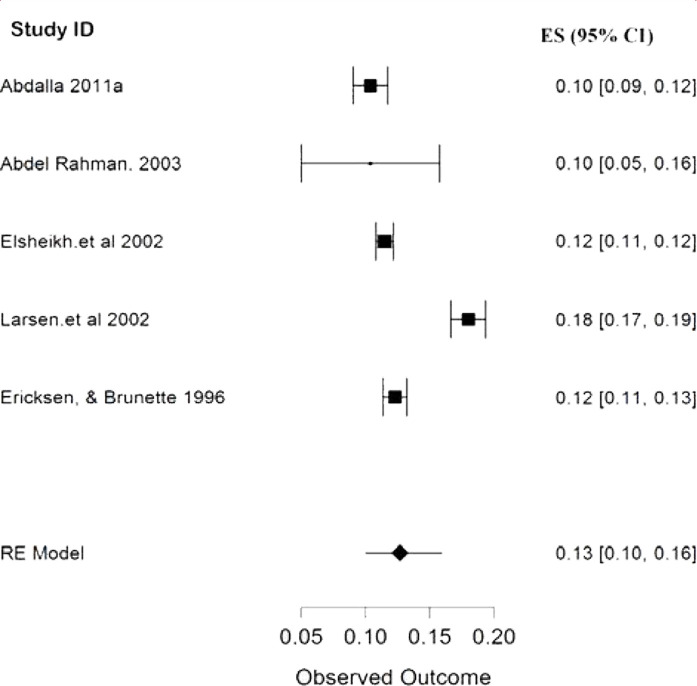
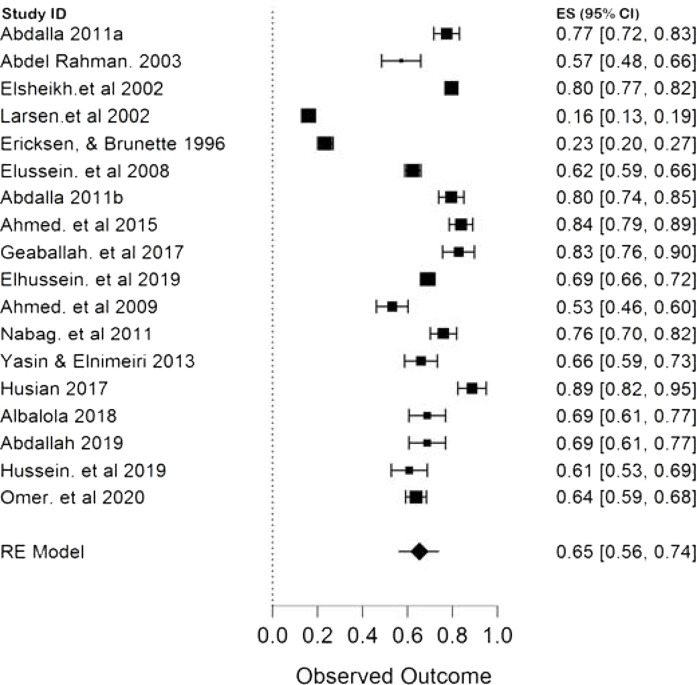
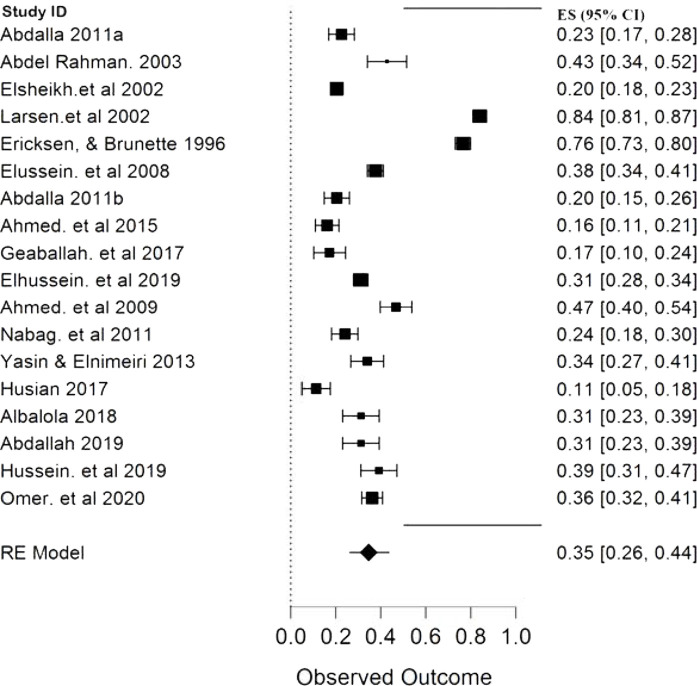
The pooled prevalence of overall infertility, primary infertility, and secondary infertility in Sudan were 13% (I = 96.45, < 0.001), 65% (I = 98.5, < 0.001), and 35% (I = 98.5, < 0.001), respectively, and the prevalence of infertility factors were 41%, 27%, 16%, and 17% for female, male, combined factors, and unexplained factors, respectively. Women with infertility were mainly present because of ovulatory disorders (ovulatory factors, 36%; polycystic ovary syndrome, 38%). By contrast, spermatic disorders such as azoospermia (37%), oligozoospermia (30%), and asthenozoospermia (30%) were the main causes of male infertility.
In Sudan, the prevalence of primary infertility is higher than that of secondary infertility. Female factors were the most common causes of infertility in Sudan, and this study found a high prevalence of unexplained factors. Polycystic ovary syndrome and azoospermia were the most common causes of female and male infertility in Sudan, respectively. The interpretation of these findings should take into consideration the presence of substantial heterogeneity between the included studies.
背景/目的:不孕症的定义为异性恋夫妇在规律、无保护性交12个月或更长时间后未能实现临床上可识别的成功妊娠。不孕症评估对于告知医疗保健政策制定者和政府实施适当的社会和经济政策非常重要。因此,本研究旨在估计苏丹不孕症(原发性和继发性)的合并患病率及其病因。
本研究纳入了所有以阿拉伯语或英语撰写的已发表和未发表的研究。从电子资源(即PubMed、MEDLINE、Embase、Cochrane对照试验中央注册库和ClinicalTrials.gov)和非电子资源(直接谷歌搜索、谷歌学术、OpenGrey、OATD、WorldCat日志和大学网站)自创建至2021年5月16日进行检索。共审查了1955项研究,其中只有20项研究符合荟萃分析的条件。如果研究提供了苏丹不孕症的患病率,则符合纳入标准。使用乔安娜·布里格斯研究所质量评估工具对每项研究进行评估。使用杰弗里神奇统计程序0.14.1.0进行数据合成和统计分析。
苏丹总体不孕症、原发性不孕症和继发性不孕症的合并患病率分别为13%(I² = 96.45,P < 0.001)、65%(I² = 98.5,P < 0.001)和35%(I² = 98.5,P < 0.001),不孕症因素的患病率女性、男性、合并因素和不明原因因素分别为41%、27%、16%和17%。不孕症女性主要是由于排卵障碍(排卵因素,36%;多囊卵巢综合征,38%)。相比之下,精子疾病如无精子症(37%)、少精子症(30%)和弱精子症(30%)是男性不孕症的主要原因。
在苏丹,原发性不孕症的患病率高于继发性不孕症。女性因素是苏丹不孕症最常见的原因,本研究发现不明原因因素的患病率较高。多囊卵巢综合征和无精子症分别是苏丹女性和男性不孕症最常见的原因。对这些结果的解释应考虑到纳入研究之间存在的实质性异质性。