Sharma Jitendra Kumar, Sihmar Monika, Santal Anita Rani, Prager Louis, Carbonero Franck, Singh Nater Pal
Centre for Biotechnology, Maharshi Dayanand University, Rohtak, India.
Department of Microbiology, Maharshi Dayanand University, Rohtak, India.
Front Nutr. 2021 Sep 28;8:708194. doi: 10.3389/fnut.2021.708194. eCollection 2021.
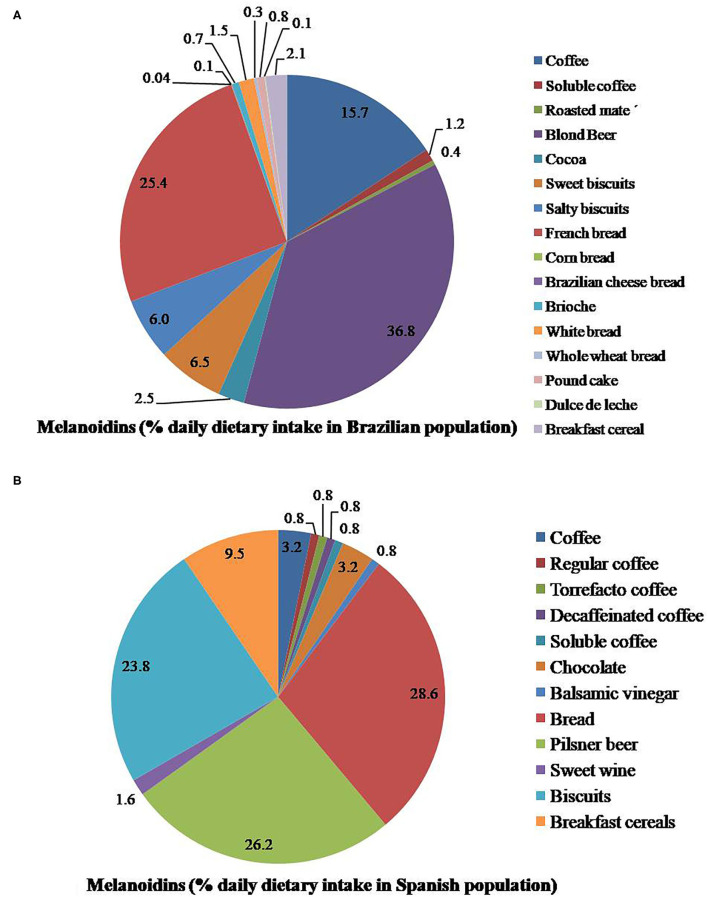
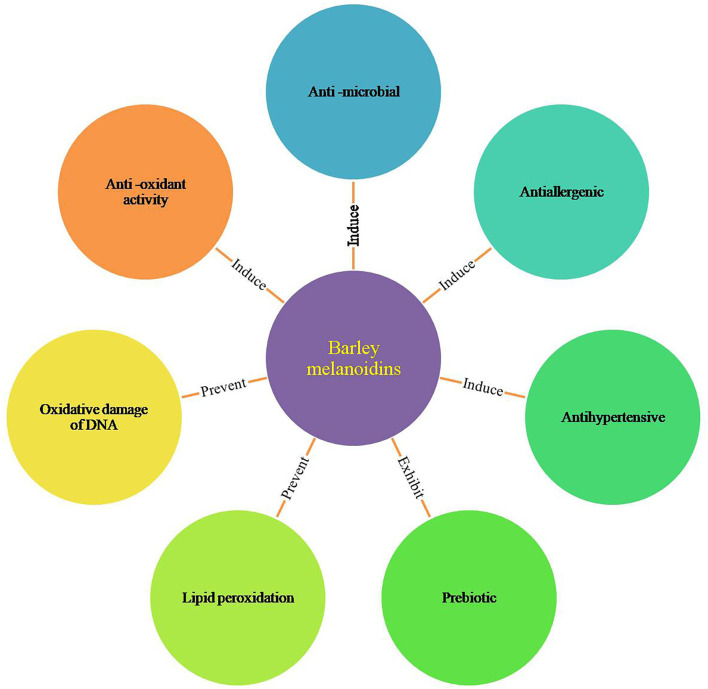
This paper is a review of the potential health benefits of barley melanoidins. Food melanoidins are still rather understudied, despite their potential antioxidant, antimicrobial, and prebiotic properties. Free radicals are villainous substances in humans produced as metabolic byproducts and causing cancers and cardiovascular diseases, and the melanoidins alleviate the effects of these free radicals. Malt is produced from cereal grains such as barley, wheat, and maize, and barley is predominantly used in beer production. Beer (alcoholic and non-alcoholic) is a widely consumed beverage worldwide and a good source of dietary melanoidins, which enhance the beers' flavor, texture, and sensorial properties. Melanoidins, the final products of the Maillard reaction, are produced at different stages during the brewing process. Beer melanoidins protect the cells from oxidative damage of DNA. The high reducing capacity of melanoidins can induce hydroxyl radicals from HO in the presence of ferric ion (Fe). Melanoidins inhibit lipid peroxidation during digestion due to their chelating metal property. However, lower digestibility of melanoidins leads to less availability to the organisms but is considered to function as dietary fiber that can be metabolized by the lower gut microbiota and possibly incur prebiotic properties. Melanoidins promote the growth of Lactobacilli and Bifidobacteria in the gastrointestinal tract, preventing the colonization of potential pathogens. Barley is already popular through beer production and increasingly as a functional food. Considering this economic and industrial importance, more research to explore the chemical properties of barley melanoidins and corresponding health benefits as barley is warranted.
本文综述了大麦类黑素潜在的健康益处。尽管食品类黑素具有潜在的抗氧化、抗菌和益生元特性,但目前对其研究仍相对较少。自由基是人体新陈代谢产生的有害物质,会引发癌症和心血管疾病,而类黑素可减轻这些自由基的影响。麦芽由大麦、小麦和玉米等谷物制成,其中大麦主要用于啤酒生产。啤酒(包括酒精啤酒和无酒精啤酒)是全球广泛消费的饮品,也是膳食类黑素的良好来源,可增强啤酒的风味、口感和感官特性。类黑素是美拉德反应的最终产物,在酿造过程的不同阶段产生。啤酒中的类黑素可保护细胞免受DNA氧化损伤。类黑素具有较高的还原能力,在铁离子(Fe)存在的情况下,能从HO诱导产生羟基自由基。类黑素因其螯合金属的特性,可抑制消化过程中的脂质过氧化。然而,类黑素较低的消化率导致其对生物体的可利用性较低,但它被认为可作为膳食纤维,由肠道下部的微生物群代谢,可能具有益生元特性。类黑素可促进胃肠道中乳酸菌和双歧杆菌的生长,防止潜在病原体的定植。大麦已通过啤酒生产广为人知,并越来越多地作为功能性食品。鉴于其经济和工业重要性,有必要开展更多研究来探索大麦类黑素的化学性质及其相应的健康益处。