Department of Neurosurgery, Beijing Tiantan Hospital, Capital Medical University, Beijing, 100070, China.
Cell Death Dis. 2021 Oct 16;12(11):952. doi: 10.1038/s41419-021-04245-y.
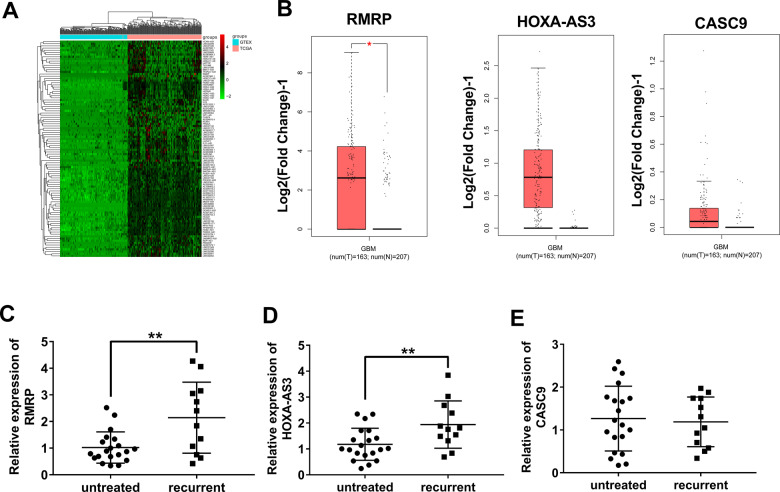
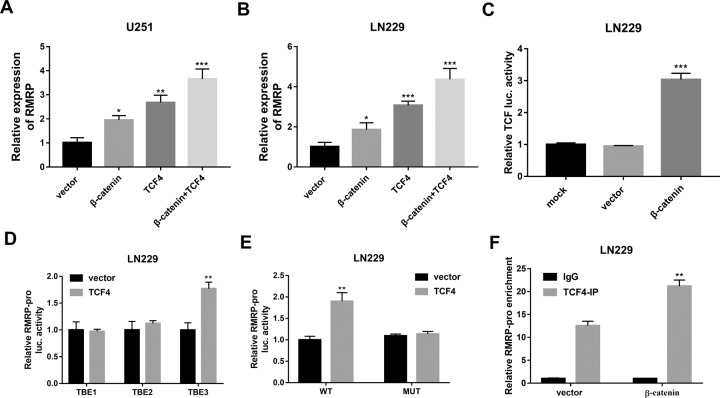
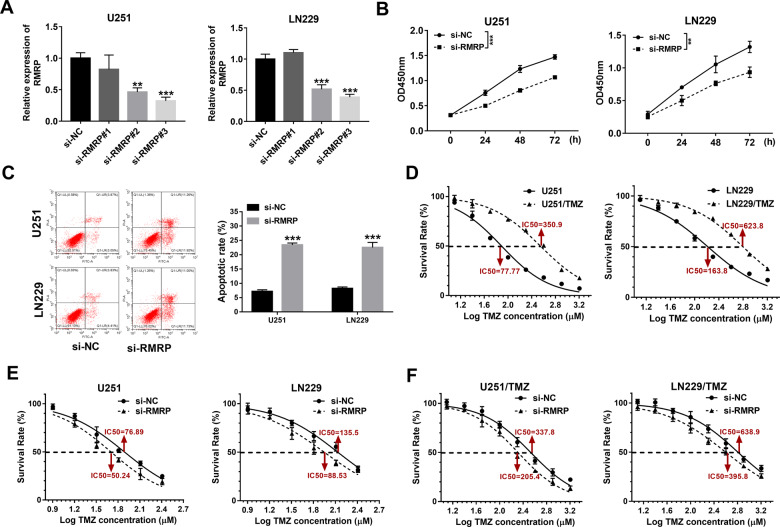
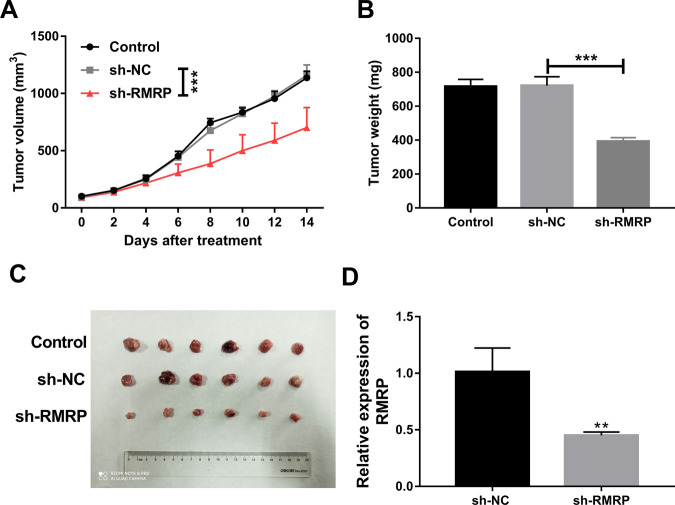
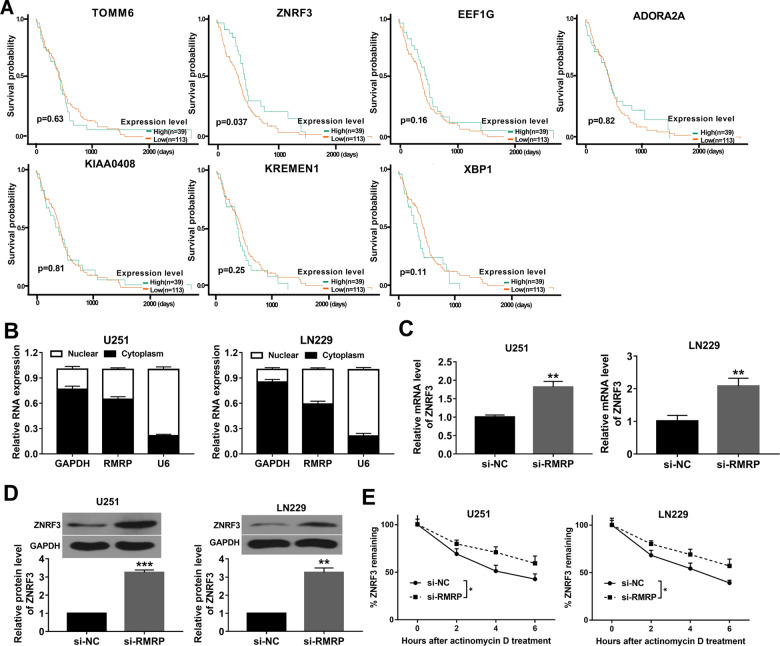
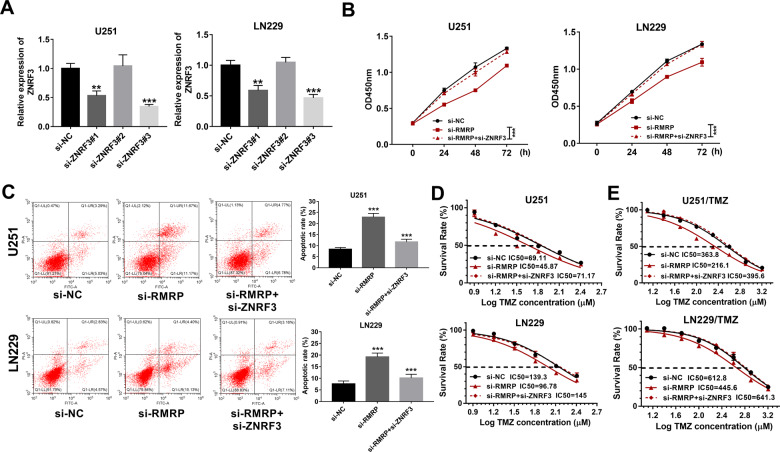
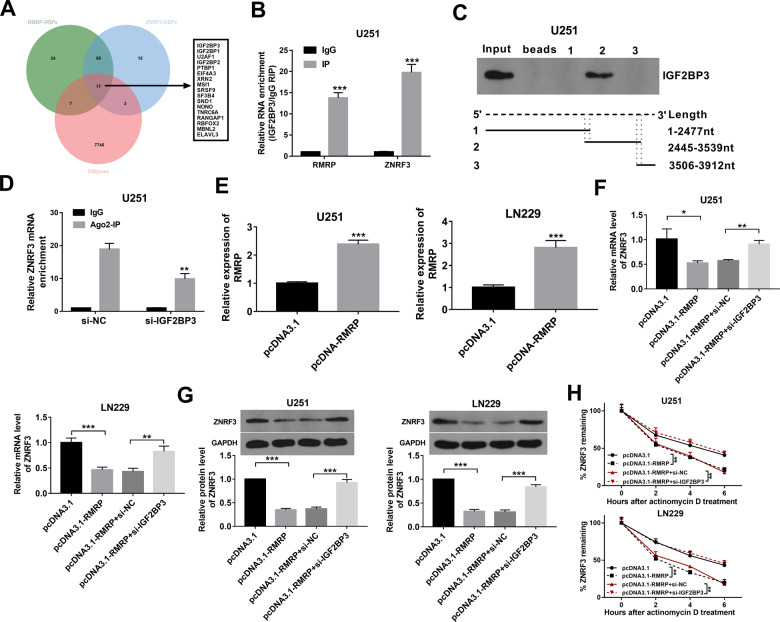
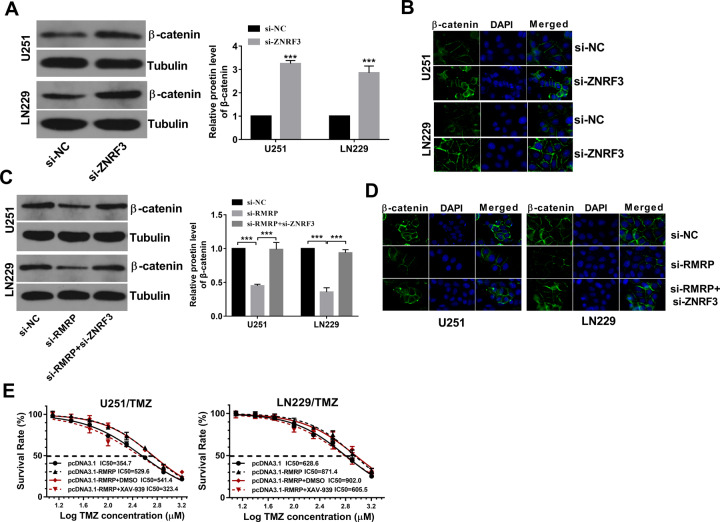
Drug resistance strikingly limits the therapeutic effect of temozolomide (TMZ) (a common drug for glioma). Long non-coding RNA (lncRNA) RMRP has been found to be implicated in glioma progression. However, the effect of RMRP on TMZ resistance along with related molecular mechanisms is poorly defined in glioma. In the present study, RMRP, ZNRF3, and IGF2BP3 were screened out by bioinformatics analysis. The expression levels of lncRNAs and mRNAs were measured by RT-qPCR assay. Protein levels of genes were detected by western blot and immunofluorescence assays. ZNRF3 mRNA stability was analyzed using Actinomycin D assay. Cell proliferative ability and survival rate were determined by CCK-8 assay. Cell apoptotic pattern was estimated by flow cytometry. The effect of RMRP knockdown on the growth of TMZ-treated glioma xenograft tumors was explored in vivo. The relationships of IGF2BP3, RMRP, and ZNRF3 were explored by bioinformatics prediction analysis, RNA immunoprecipitation, luciferase, and RNA pull-down, and chromatin immunoprecipitation assays. The results showed that RMRP was highly expressed in glioma. RMRP knockdown curbed cell proliferation, facilitated cell apoptosis and reduced TMZ resistance in glioma cells, and hindered the growth of TMZ-treated glioma xenograft tumors. RMRP exerted its functions by down-regulating ZNRF3 in glioma cells. IGF2BP3 interacted with RMRP and ZNRF3 mRNA. IGF2BP3 knockdown weakened the interaction of Argonaute 2 (Ago2) and ZNRF3. RMRP reduced ZNRF3 expression and mRNA stability by IGF2BP3. RMRP knockdown inhibited β-catenin expression by up-regulating ZNRF3. The inhibition of Wnt/β-catenin signaling pathway by XAV-939 weakened RMRP-mediated TMZ resistance in glioma cells. β-catenin promoted RMRP expression by TCF4 in glioma cells. In conclusion, RMRP/ZNRF3 axis and Wnt/β-catenin signaling formed a positive feedback loop to regulate TMZ resistance in glioma. The sustained activation of Wnt/β-catenin signaling by RMRP might contribute to the better management of cancers.
耐药性显著限制了替莫唑胺(TMZ)(一种用于治疗神经胶质瘤的常用药物)的治疗效果。长链非编码 RNA(lncRNA)RMRP 已被发现与神经胶质瘤的进展有关。然而,RMRP 对 TMZ 耐药的影响以及相关的分子机制在神经胶质瘤中尚未得到明确界定。在本研究中,通过生物信息学分析筛选出 lncRNA 和 mRNA。通过 RT-qPCR 检测 lncRNA 和 mRNA 的表达水平。通过 Western blot 和免疫荧光检测基因蛋白水平。通过 Actinomycin D 检测 ZNRF3 mRNA 稳定性。通过 CCK-8 检测细胞增殖能力和存活率。通过流式细胞术检测细胞凋亡模式。体内研究 RMRP 敲低对 TMZ 处理的神经胶质瘤异种移植肿瘤生长的影响。通过生物信息学预测分析、RNA 免疫沉淀、荧光素酶和 RNA 下拉以及染色质免疫沉淀检测 IGF2BP3、RMRP 和 ZNRF3 的关系。结果表明,RMRP 在神经胶质瘤中高表达。RMRP 敲低抑制神经胶质瘤细胞的增殖,促进细胞凋亡,降低 TMZ 耐药性,抑制 TMZ 处理的神经胶质瘤异种移植肿瘤的生长。RMRP 通过下调神经胶质瘤细胞中的 ZNRF3 发挥其功能。IGF2BP3 与 RMRP 和 ZNRF3 mRNA 相互作用。IGF2BP3 敲低削弱了 Argonaute 2(Ago2)和 ZNRF3 的相互作用。RMRP 通过 IGF2BP3 降低 ZNRF3 表达和 mRNA 稳定性。RMRP 敲低通过上调 ZNRF3 抑制β-catenin 表达。XAV-939 抑制 Wnt/β-catenin 信号通路减弱了 RMRP 介导的神经胶质瘤细胞 TMZ 耐药性。T 细胞因子 4(TCF4)在神经胶质瘤细胞中促进 RMRP 表达。总之,RMRP/ZNRF3 轴和 Wnt/β-catenin 信号形成正反馈回路,调节神经胶质瘤的 TMZ 耐药性。RMRP 通过 TCF4 持续激活 Wnt/β-catenin 信号可能有助于更好地管理癌症。