Nguyen Tuyet-Mai, Malik Ashish, Budhwar Pawan
N63 2.04, 170 Kessel Road, Brisbane, QLD 4111, Griffith University, Australia.
Thuongmai University, Viet Nam.
J Bus Res. 2022 Feb;139:161-172. doi: 10.1016/j.jbusres.2021.09.026. Epub 2021 Sep 29.
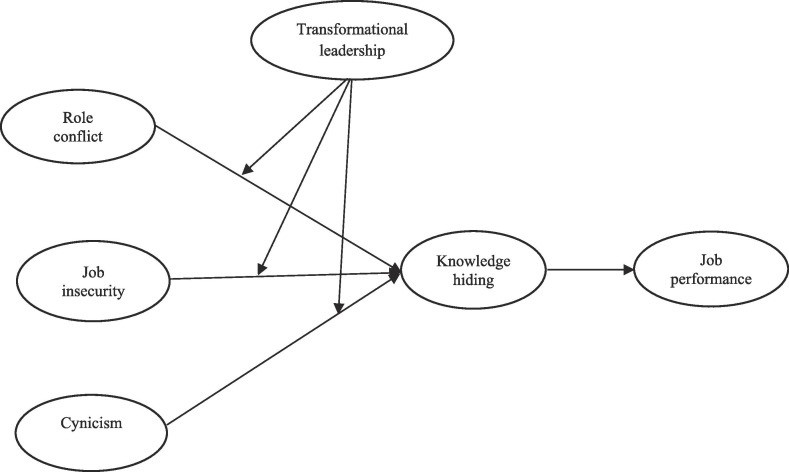
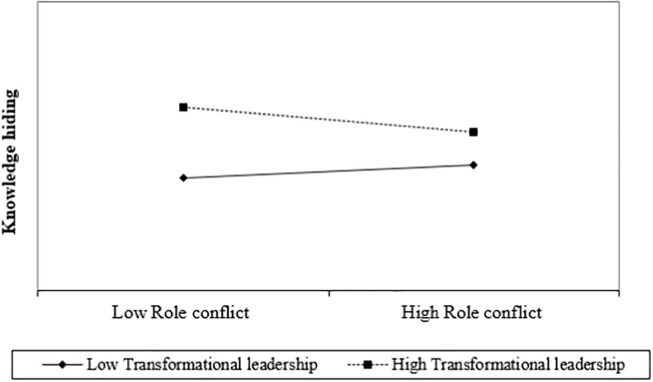
The COVID-19 pandemic has caused organizational crises leading to shutdowns, mergers, downsizing or restructuring to minimize survival costs. In such organizational crises, employees tend to experience a loss or lack of resources, and they are more likely to engage in knowledge hiding to maintain their resources and competitive advantage. Knowledge hiding has often caused significant adverse consequences, and the research on knowledge hiding is limited. Drawing upon the Conservation of Resources and Transformational Leadership theories, a conceptual framework was developed to examine knowledge hiding behavior and its antecedents and consequences. We collected data from 281 Vietnamese employees working during the COVID-19 pandemic. Our results show that role conflict, job insecurity, and cynicism positively impact knowledge hiding behavior. Knowledge hiding behavior negatively affects job performance and mediates the antecedents of knowledge hiding on job performance. Transformational leadership moderated the impact of role conflict on knowledge hiding.
新冠疫情引发了组织危机,导致企业停工、合并、裁员或重组,以尽量降低生存成本。在这种组织危机中,员工往往会经历资源损失或匮乏,他们更有可能进行知识隐藏,以维持自身资源和竞争优势。知识隐藏常常会造成严重的不良后果,而关于知识隐藏的研究有限。基于资源守恒理论和变革型领导理论,构建了一个概念框架,以研究知识隐藏行为及其前因后果。我们收集了281名在新冠疫情期间工作的越南员工的数据。我们的研究结果表明,角色冲突、工作不安全感和玩世不恭的态度对知识隐藏行为有正向影响。知识隐藏行为对工作绩效有负面影响,并在知识隐藏的前因与工作绩效之间起中介作用。变革型领导调节了角色冲突对知识隐藏的影响。