University of Bordeaux, LAMC, Pessac, France.
INSERM U1029, Pessac, France.
Mol Cancer. 2021 Oct 20;20(1):136. doi: 10.1186/s12943-021-01416-5.
Renal Cell Carcinoma (RCC) is difficult to treat with 5-year survival rate of 10% in metastatic patients. Main reasons of therapy failure are lack of validated biomarkers and scarce knowledge of the biological processes occurring during RCC progression. Thus, the investigation of mechanisms regulating RCC progression is fundamental to improve RCC therapy.
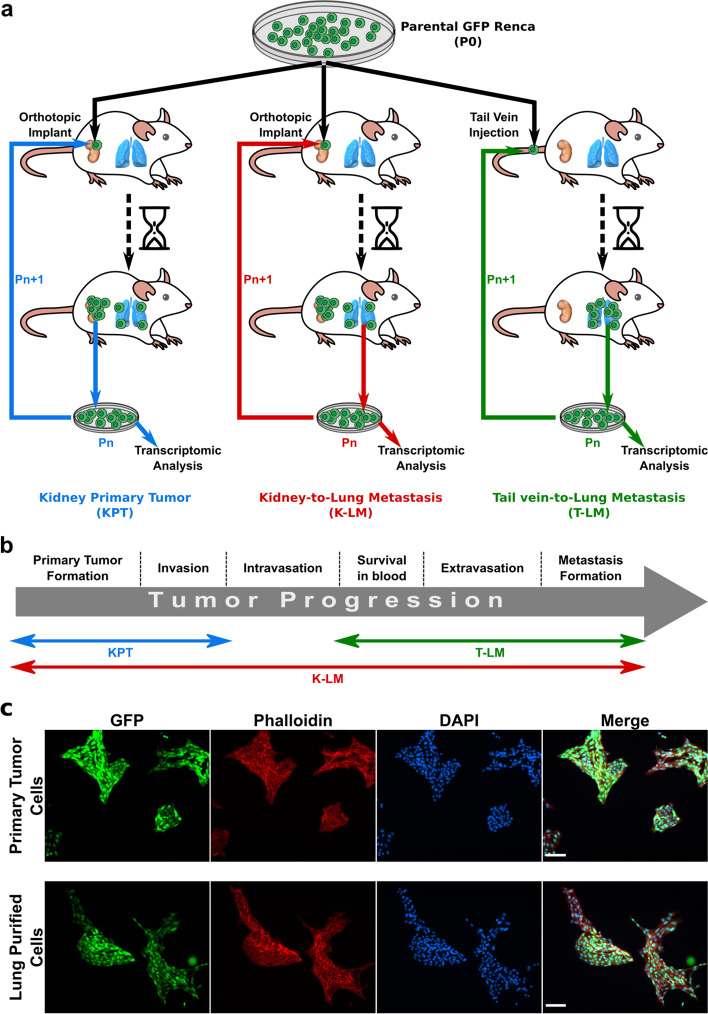
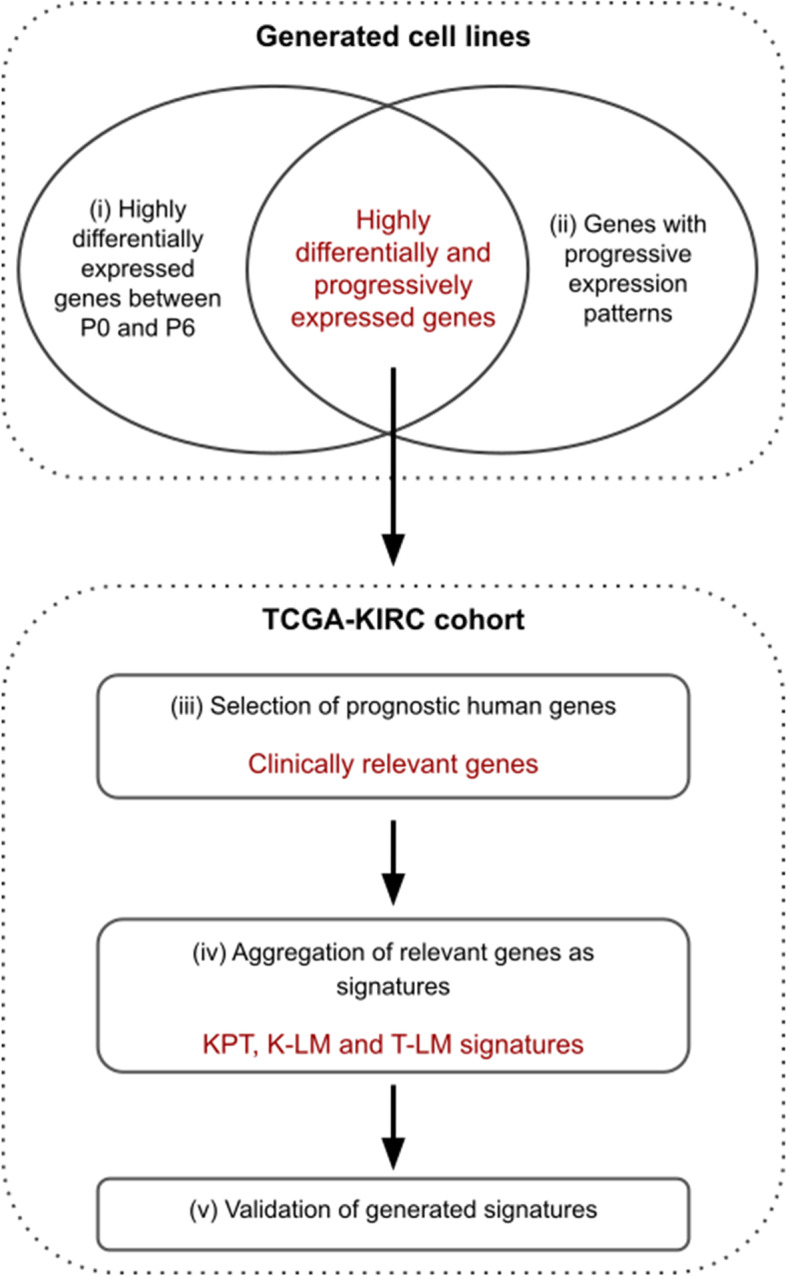
In order to identify molecular markers and gene processes involved in the steps of RCC progression, we generated several cell lines of higher aggressiveness by serially passaging mouse renal cancer RENCA cells in mice and, concomitantly, performed functional genomics analysis of the cells. Multiple cell lines depicting the major steps of tumor progression (including primary tumor growth, survival in the blood circulation and metastatic spread) were generated and analyzed by large-scale transcriptome, genome and methylome analyses. Furthermore, we performed clinical correlations of our datasets. Finally we conducted a computational analysis for predicting the time to relapse based on our molecular data.
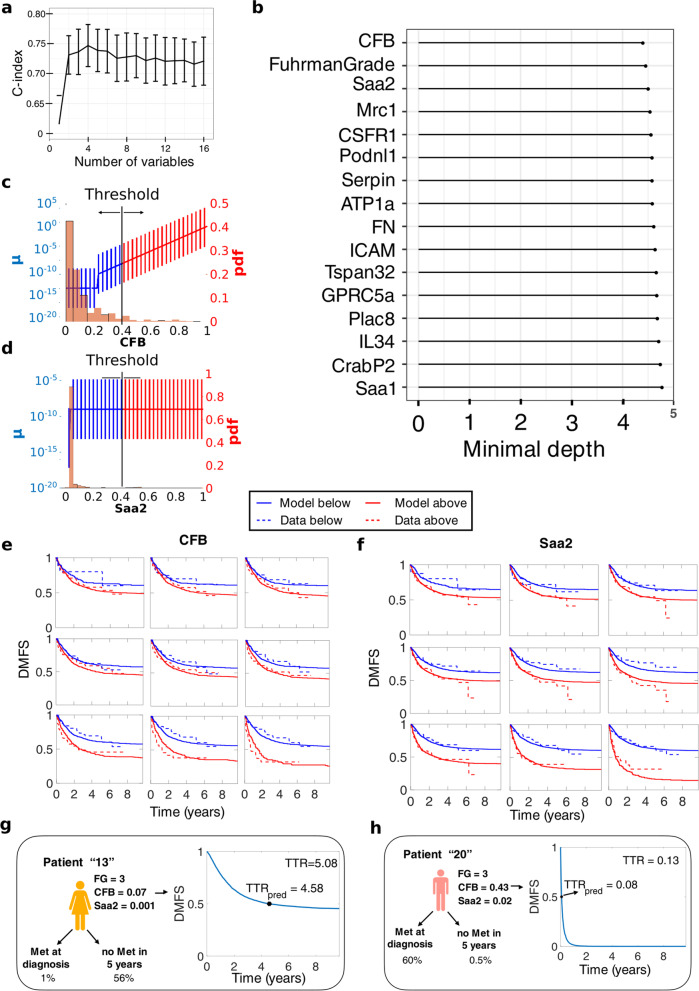
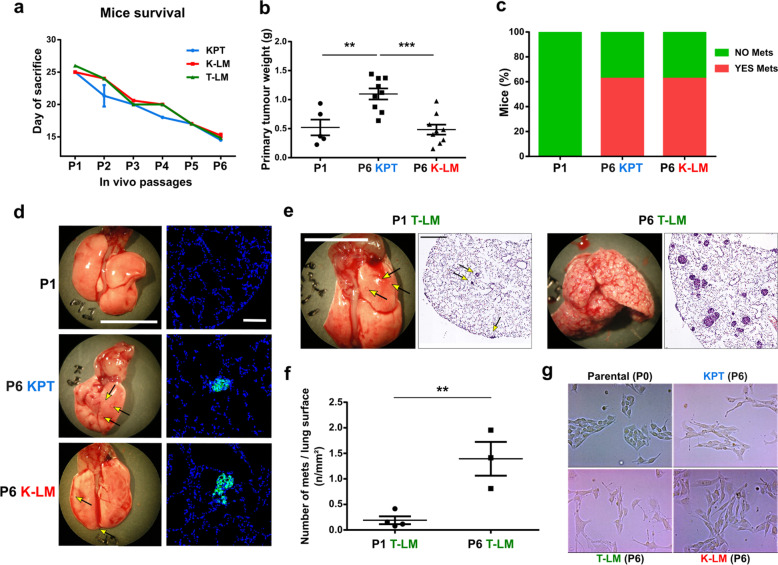
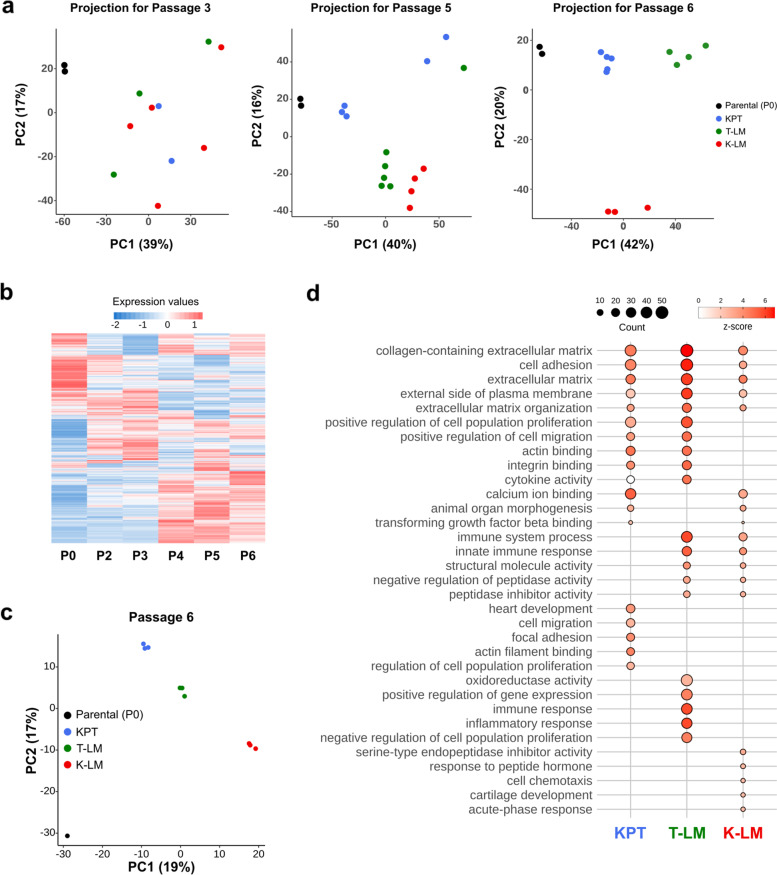
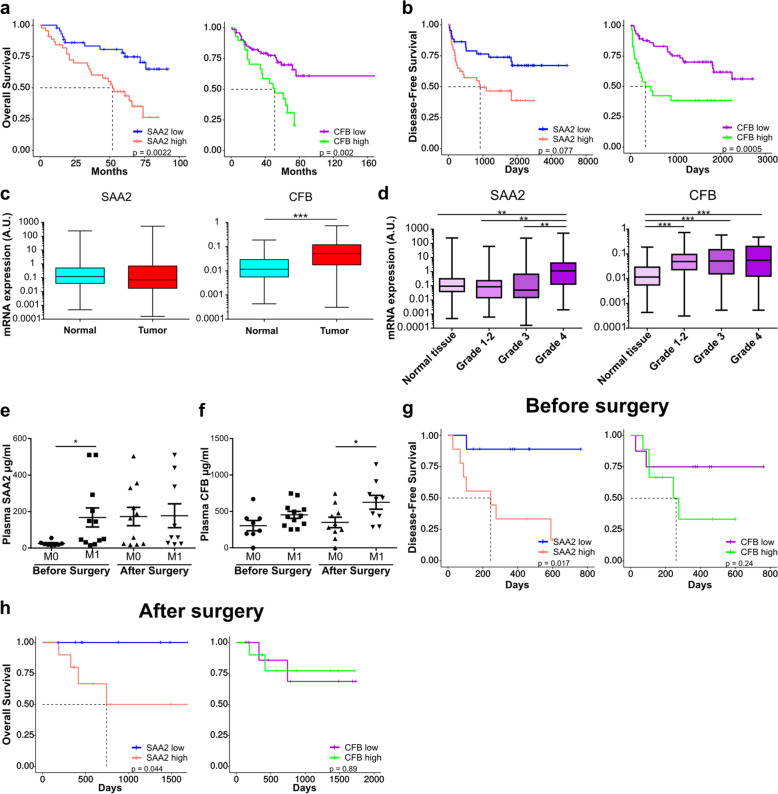
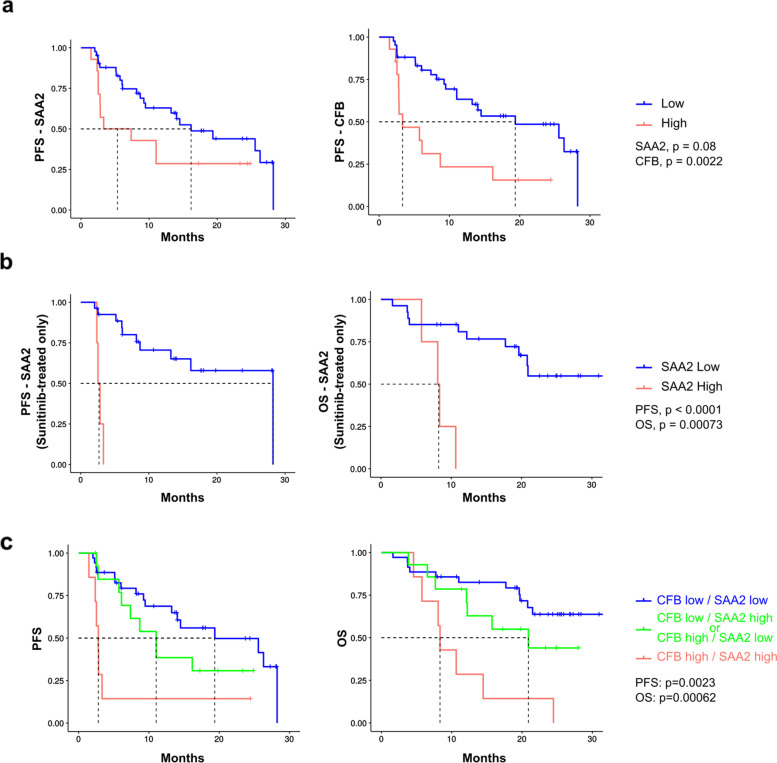
Through in vivo passaging, RENCA cells showed increased aggressiveness by reducing mice survival, enhancing primary tumor growth and lung metastases formation. In addition, transcriptome and methylome analyses showed distinct clustering of the cell lines without genomic variation. Distinct signatures of tumor aggressiveness were revealed and validated in different patient cohorts. In particular, we identified SAA2 and CFB as soluble prognostic and predictive biomarkers of the therapeutic response. Machine learning and mathematical modeling confirmed the importance of CFB and SAA2 together, which had the highest impact on distant metastasis-free survival. From these data sets, a computational model predicting tumor progression and relapse was developed and validated. These results are of great translational significance.
A combination of experimental and mathematical modeling was able to generate meaningful data for the prediction of the clinical evolution of RCC.
转移性肾细胞癌(RCC)的 5 年生存率仅为 10%,治疗难度较大。治疗失败的主要原因是缺乏经过验证的生物标志物,以及对 RCC 进展过程中发生的生物学过程知之甚少。因此,研究调节 RCC 进展的机制对于改善 RCC 治疗至关重要。
为了鉴定参与 RCC 进展步骤的分子标志物和基因过程,我们通过在小鼠中连续传代培养小鼠肾癌细胞 RENCA 来生成多个侵袭性更高的细胞系,同时对细胞进行功能基因组学分析。通过大规模转录组、基因组和甲基组分析生成并分析了多个描绘肿瘤进展主要步骤(包括原发肿瘤生长、在血液循环中的存活和转移扩散)的细胞系。此外,我们对我们的数据集进行了临床相关性分析。最后,我们基于我们的分子数据进行了计算分析,以预测复发时间。
通过体内传代,RENCA 细胞通过降低小鼠存活率、增强原发肿瘤生长和肺转移形成而表现出更高的侵袭性。此外,转录组和甲基组分析显示细胞系没有基因组变异的明显聚类。在不同的患者队列中验证和验证了不同的肿瘤侵袭性特征。特别是,我们鉴定出 SAA2 和 CFB 作为治疗反应的可溶性预后和预测性生物标志物。机器学习和数学建模证实了 CFB 和 SAA2 共同的重要性,它们对远处无转移生存的影响最大。从这些数据集,开发并验证了一种预测肿瘤进展和复发的计算模型。这些结果具有重要的转化意义。
实验和数学建模的结合能够生成有意义的数据,用于预测 RCC 的临床演变。