Lai Thuy Thi, Kim Yun Joong, Nguyen Phuong Thi, Koh Young Ho, Nguyen Tinh Thi, Ma Hyeo-Il, Kim Young Eun
Department of Biomedical Gerontology, Graduate School of Hallym University, Chuncheon, South Korea.
Department of Neurology, Hallym University Sacred Heart Hospital, Hallym University, Anyang, South Korea.
Front Integr Neurosci. 2021 Oct 5;15:715190. doi: 10.3389/fnint.2021.715190. eCollection 2021.
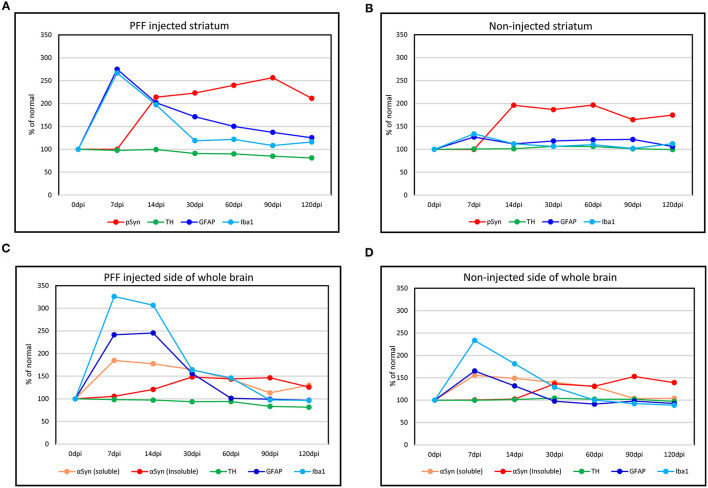
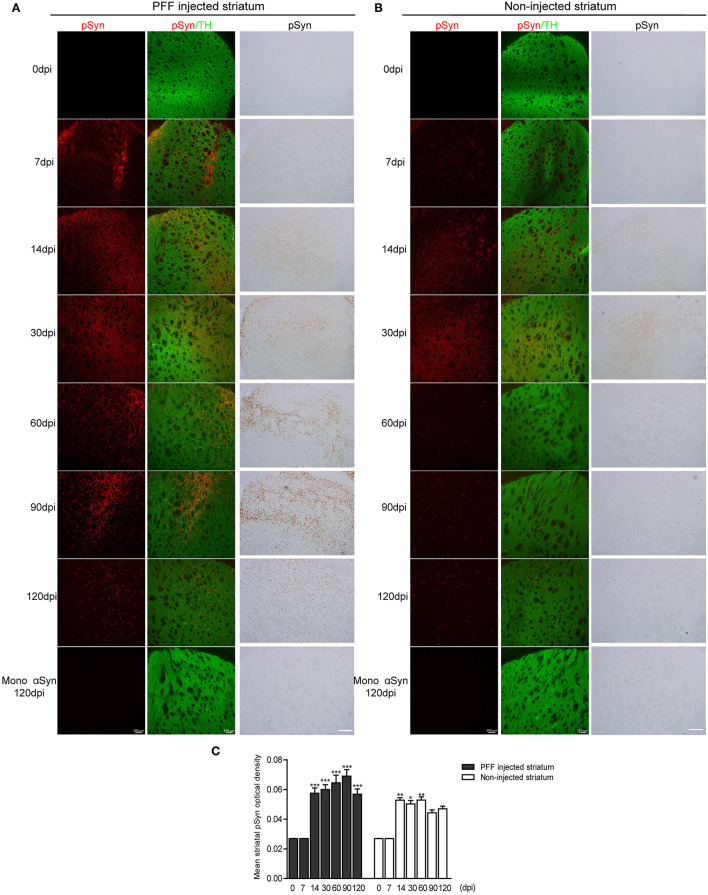
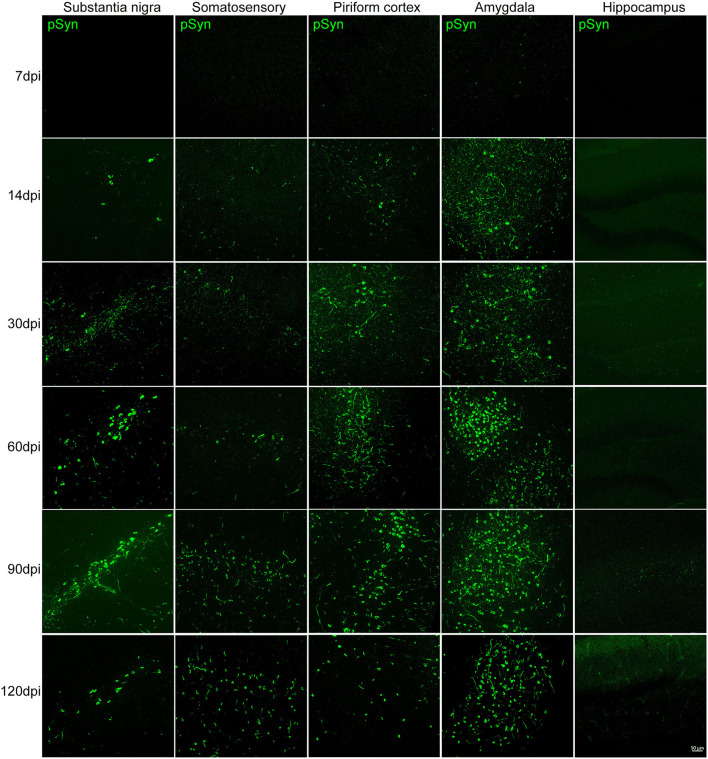
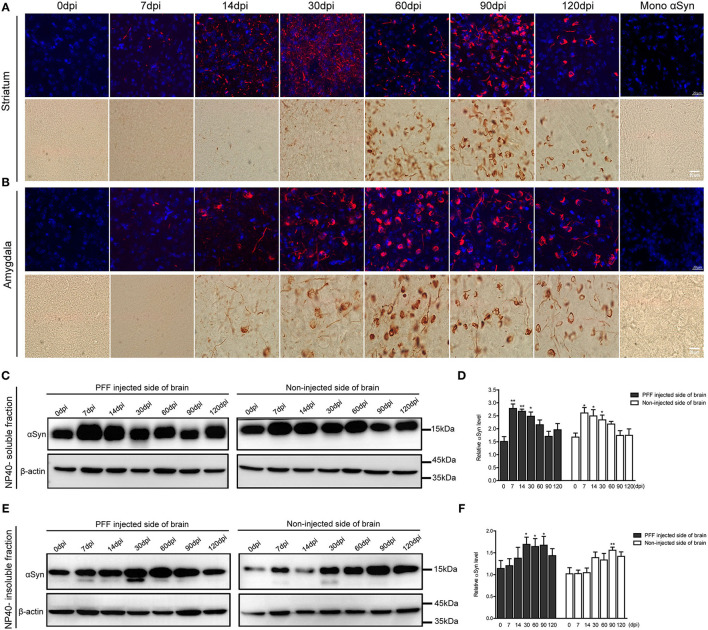
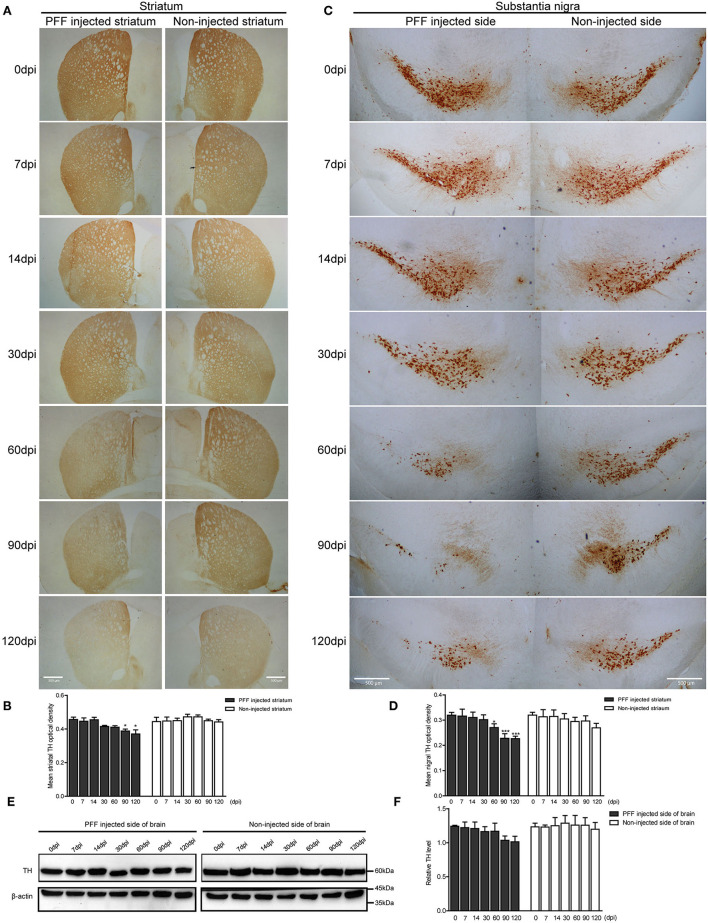
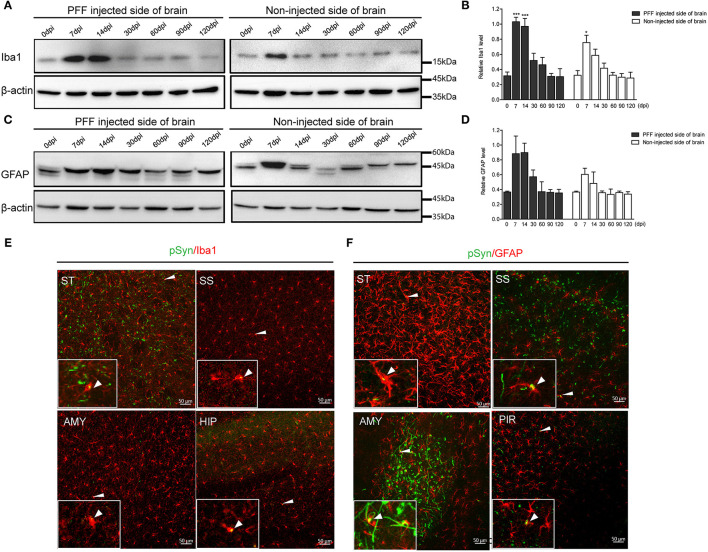
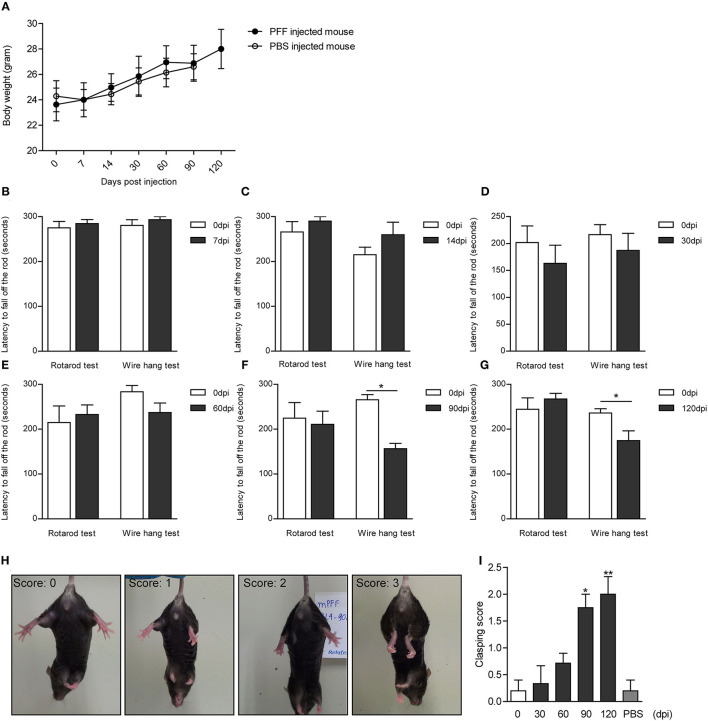
According to a few studies, α-synuclein (αSyn) propagation has been suggested to play a key role in the pathomechanism of Parkinson's disease (PD), but neurodegeneration and the involvement of inflammation in its pathologic progression are not well understood with regard to temporal relationship. In this study, with the help of the PD mouse model injected with intrastriatal αSyn preformed fibril (PFF), the temporal evolution of αSyn propagation, inflammation, and neurodegeneration was explored in the perspective of the striatum and the whole brain. In the PFF-injected striatum, inflammatory response cells, including microglia and astrocytes, were activated at the earliest stage and reduced with time, and the phosphorylated form of αSyn accumulation increased behind it. Afterward, the degeneration of striatal dopaminergic neurons became significant with the conspicuity of behavioral phenotype. Similar patterns of forefront eruption of inflammation and then followed by αSyn propagation were noted in the opposite striatum, which were not injured by PFF injection. In analyzing the whole brain, inflammatory responses were activated at the earliest stage, and the soluble αSyn expression increased concurrently. The inflammatory response decreased afterward, and the accumulation of the insoluble form of αSyn increased behind it. Our results suggested that the inflammatory response may precede the accumulation of the pathologic form of αSyn; thereafter, the neurodegeneration and motor dysfunction followed αSyn proliferation in the PD mouse model. From this model, recognizing the temporal relationship between inflammation, αSyn propagation, and neurodegeneration may be helpful in establishing the PD animal model and monitoring the effect of interventional therapy.
根据一些研究,α-突触核蛋白(αSyn)的传播被认为在帕金森病(PD)的发病机制中起关键作用,但关于神经退行性变以及炎症在其病理进展中的作用,在时间关系方面尚未得到充分理解。在本研究中,借助注射纹状体内αSyn预形成纤维(PFF)的PD小鼠模型,从纹状体和全脑的角度探讨了αSyn传播、炎症和神经退行性变的时间演变。在注射PFF的纹状体中,包括小胶质细胞和星形胶质细胞在内的炎症反应细胞在最早阶段被激活,并随时间减少,而αSyn积累的磷酸化形式在其后增加。随后,随着行为表型的显现,纹状体多巴胺能神经元的变性变得明显。在未受PFF注射损伤的对侧纹状体中也观察到了类似的炎症先爆发然后是αSyn传播的模式。在分析全脑时,炎症反应在最早阶段被激活,可溶性αSyn表达同时增加。随后炎症反应下降,不溶性αSyn的积累在其后增加。我们的结果表明,炎症反应可能先于病理性αSyn的积累;此后,在PD小鼠模型中,神经退行性变和运动功能障碍跟随αSyn增殖。从这个模型中,认识到炎症、αSyn传播和神经退行性变之间的时间关系可能有助于建立PD动物模型和监测介入治疗的效果。