Tsuda Takeshi
Nemours Cardiac Center, Nemours Children's Hospital Delaware, 1600 Rockland Rd, Wilmington, DE 19803, USA.
Department of Pediatrics, Sidney Kimmel Medical College at Thomas Jefferson University, 11th and Walnut Street, Philadelphia, PA 19107, USA.
J Cardiovasc Dev Dis. 2021 Sep 29;8(10):122. doi: 10.3390/jcdd8100122.
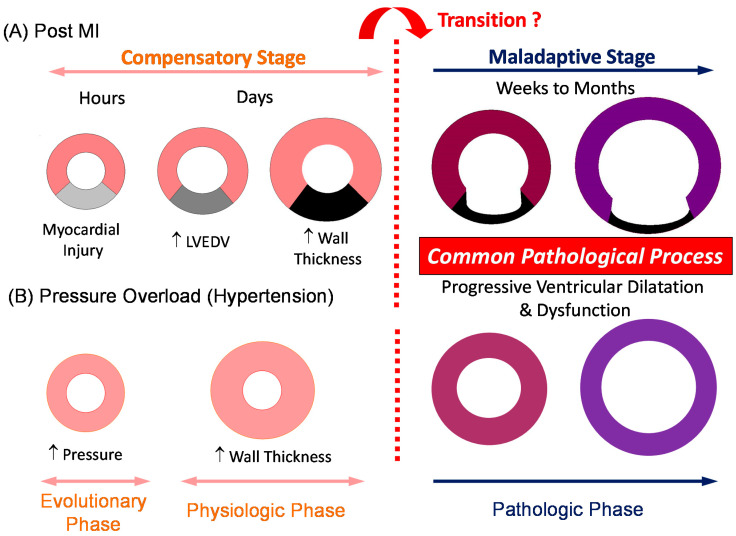
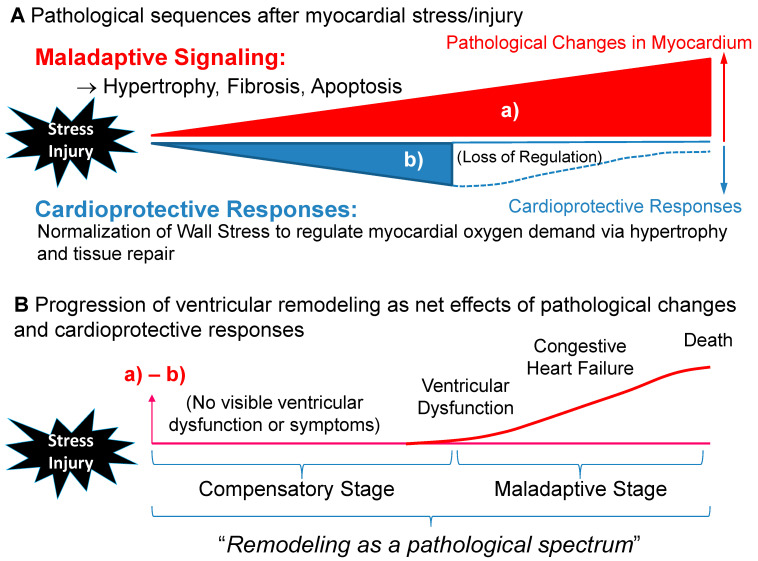
Ventricular wall stress (WS) is an important hemodynamic parameter to represent myocardial oxygen demand and ventricular workload. The normalization of WS is regarded as a physiological feedback signal that regulates the rate and extent of ventricular hypertrophy to maintain myocardial homeostasis. Although hypertrophy is an adaptive response to increased biomechanical stress, persistent hypertrophic stimulation forces the stressed myocardium into a progressive maladaptive process called ventricular remodeling, consisting of ventricular dilatation and dysfunction in conjunction with the development of myocyte hypertrophy, apoptosis, and fibrosis. The critical determinant of this pathological transition is not fully understood, but an energetic mismatch due to uncontrolled WS is thought to be a central mechanism. Despite extensive basic investigations conducted to understand the complex signaling pathways involved in this maladaptive process, clinical diagnostic studies that translate these molecular and cellular changes are relatively limited. Echocardiographic assessment with or without direct measurement of left ventricular pressure used to be a mainstay in estimating ventricular WS in clinical medicine, but in recent years more and more noninvasive applications with magnetic resonance imaging have been studied. In this review article, basic clinical applications of WS assessment are discussed to help understand the progression of ventricular remodeling.
心室壁应力(WS)是代表心肌需氧量和心室负荷的重要血流动力学参数。WS的正常化被视为一种生理反馈信号,可调节心室肥厚的速率和程度,以维持心肌内环境稳定。尽管肥厚是对生物力学应激增加的一种适应性反应,但持续的肥厚刺激会使应激心肌进入一种称为心室重构的进行性适应不良过程,包括心室扩张和功能障碍,同时伴有心肌细胞肥大、凋亡和纤维化的发展。这种病理转变的关键决定因素尚未完全明确,但由于不受控制的WS导致的能量失衡被认为是一个核心机制。尽管已经进行了广泛的基础研究以了解参与这种适应不良过程的复杂信号通路,但将这些分子和细胞变化转化为临床诊断的研究相对有限。在临床医学中,使用或不使用直接测量左心室压力的超声心动图评估曾经是估计心室WS的主要方法,但近年来,越来越多的磁共振成像无创应用得到了研究。在这篇综述文章中,将讨论WS评估的基础临床应用,以帮助理解心室重构的进展。