State Key Laboratory of Environmental Geochemistry, Institute of Geochemistry, Chinese Academy of Sciences, Guiyang 550081, China.
University of Chinese Academy of Sciences, Beijing 100049, China.
Biosensors (Basel). 2021 Sep 23;11(10):352. doi: 10.3390/bios11100352.
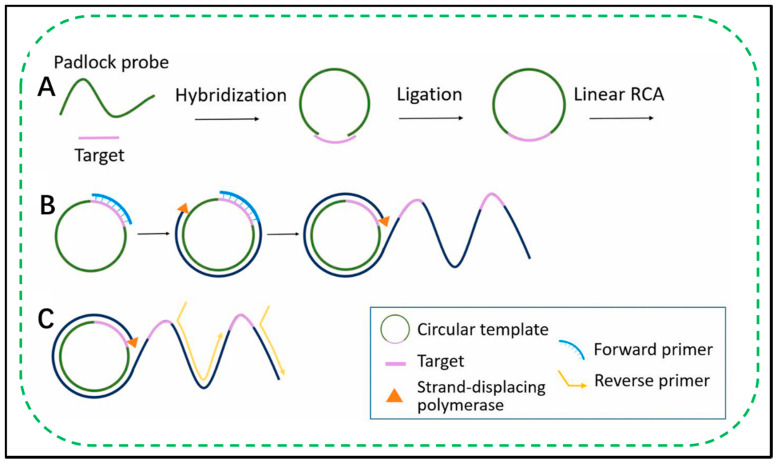
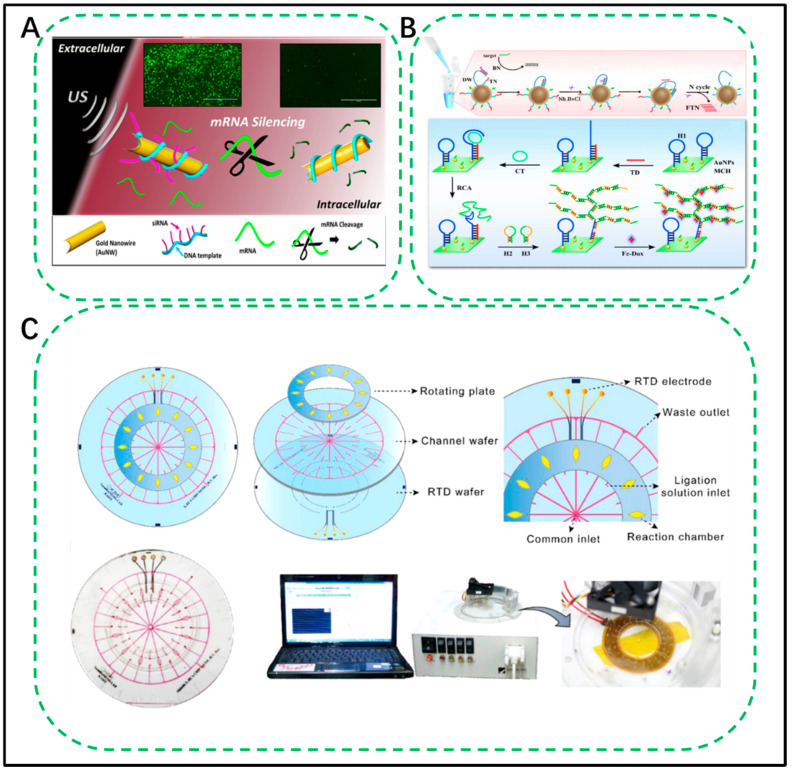
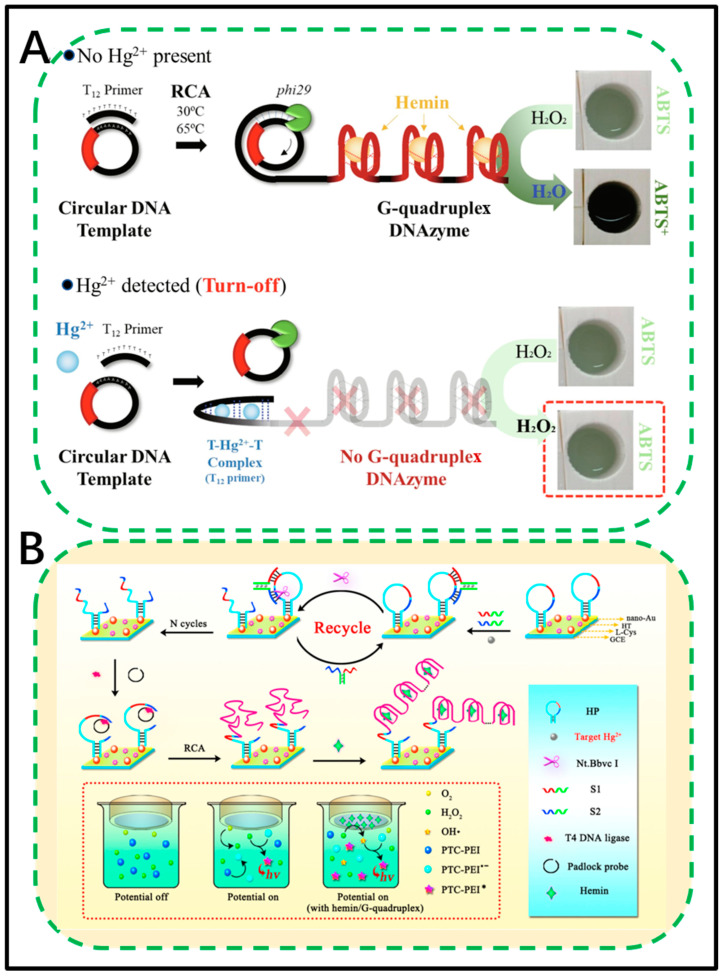
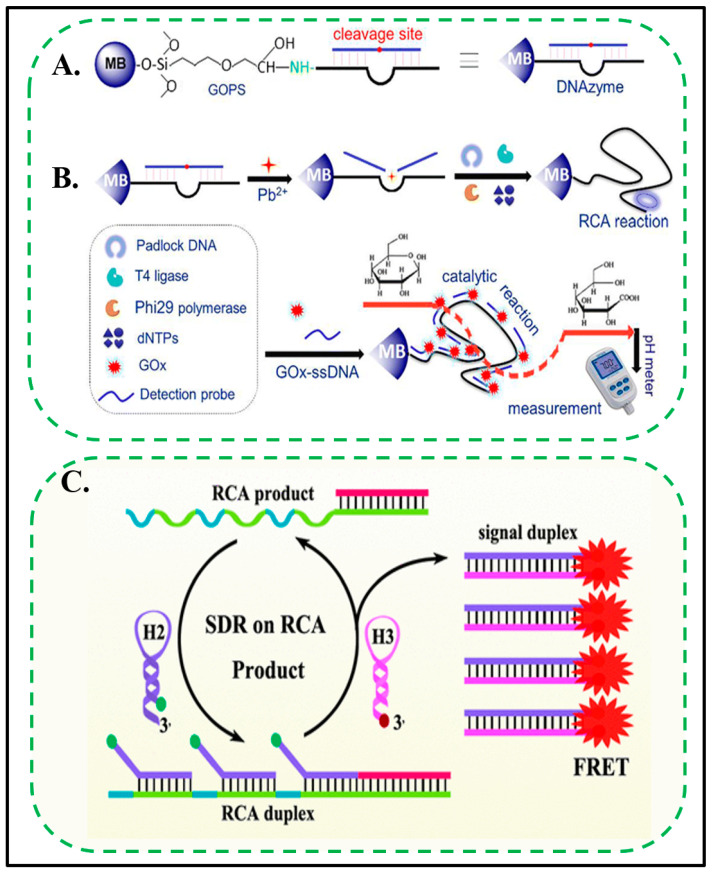
Environmental contaminants are a global concern, and an effective strategy for remediation is to develop a rapid, on-site, and affordable monitoring method. However, this remains challenging, especially with regard to the detection of various contaminants in complex water environments. The application of molecular methods has recently attracted increasing attention; for example, rolling circle amplification (RCA) is an isothermal enzymatic process in which a short nucleic acid primer is amplified to form a long single-stranded nucleic acid using a circular template and special nucleic acid polymerases. Furthermore, this approach can be further engineered into a device for point-of-need monitoring of environmental pollutants. In this paper, we describe the fundamental principles of RCA and the advantages and disadvantages of RCA assays. Then, we discuss the recently developed RCA-based tools for environmental analysis to determine various targets, including heavy metals, organic small molecules, nucleic acids, peptides, proteins, and even microorganisms in aqueous environments. Finally, we summarize the challenges and outline strategies for the advancement of this technique for application in contaminant monitoring.
环境污染物是一个全球性的问题,因此开发一种快速、现场、经济实惠的监测方法是一种有效的补救策略。然而,这仍然具有挑战性,特别是在检测复杂水环境中的各种污染物时。最近,分子方法的应用引起了越来越多的关注;例如,滚环扩增(RCA)是一种等温酶促过程,其中短的核酸引物通过使用圆形模板和特殊的核酸聚合酶来扩增形成长的单链核酸。此外,这种方法可以进一步设计成用于现场监测环境污染物的设备。在本文中,我们描述了 RCA 的基本原理以及 RCA 分析的优缺点。然后,我们讨论了最近开发的基于 RCA 的工具,用于分析环境中的各种目标物,包括重金属、有机小分子、核酸、肽、蛋白质,甚至是水中的微生物。最后,我们总结了该技术在污染物监测中的应用所面临的挑战,并概述了推进该技术的策略。