INM IRCCS Istituto Neurologico Mediterraneo NEUROMED, Via Atinense 18, 86077 Pozzilli, Italy.
Department of Environmental, Biological and Pharmaceutical Sciences and Technologies (DiSTABiF), University of Campania "Luigi Vanvitelli", Via Vivaldi 43, 81100 Caserta, Italy.
Toxins (Basel). 2021 Sep 25;13(10):684. doi: 10.3390/toxins13100684.
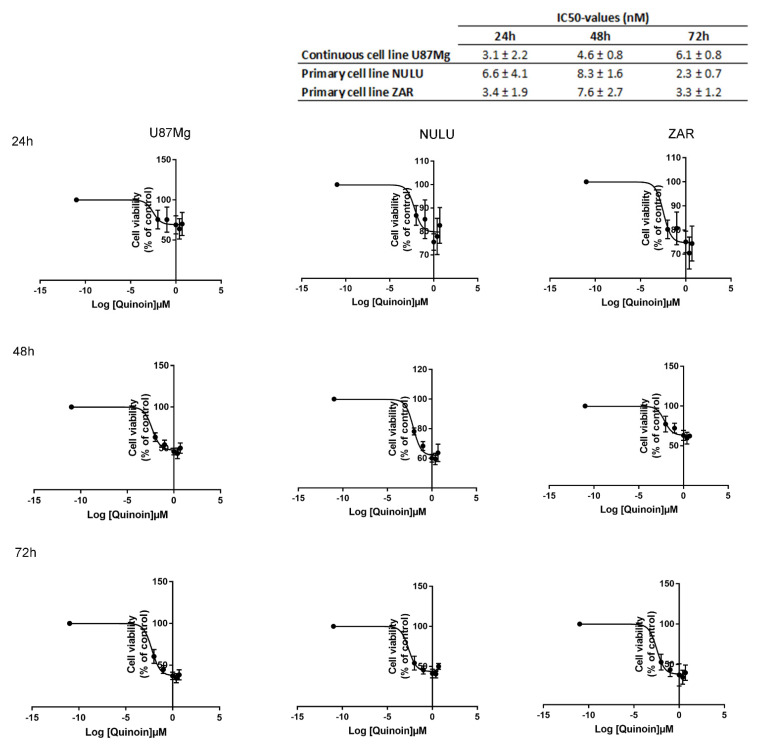
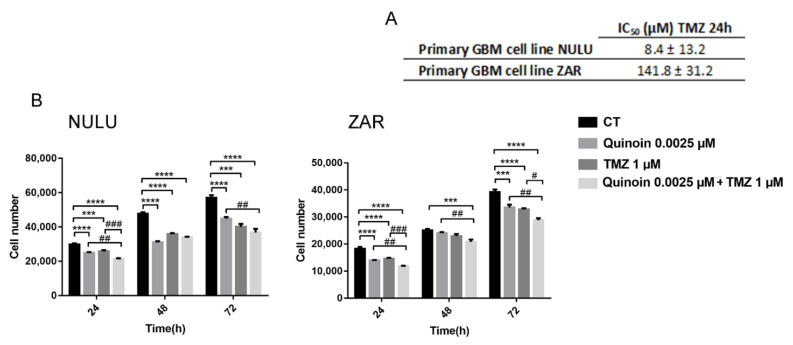
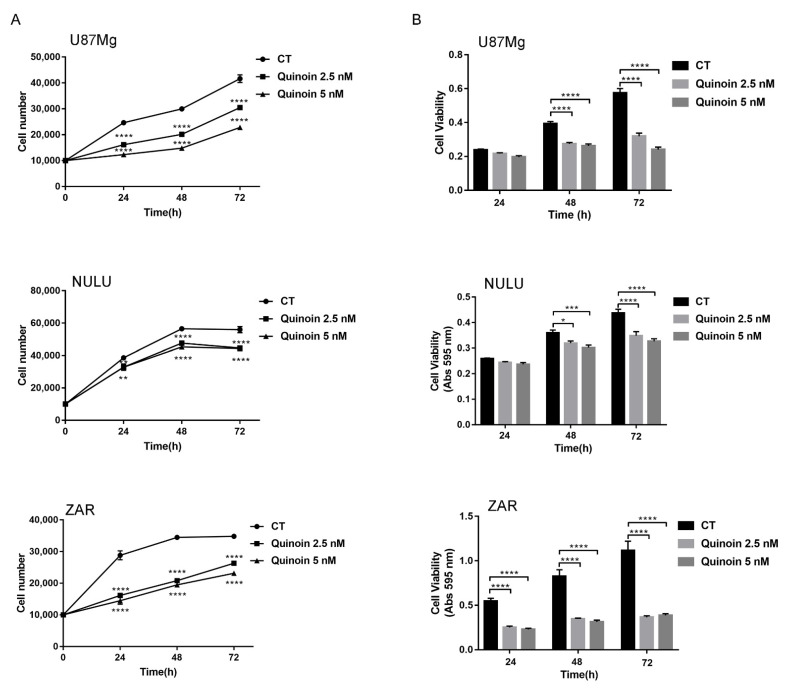
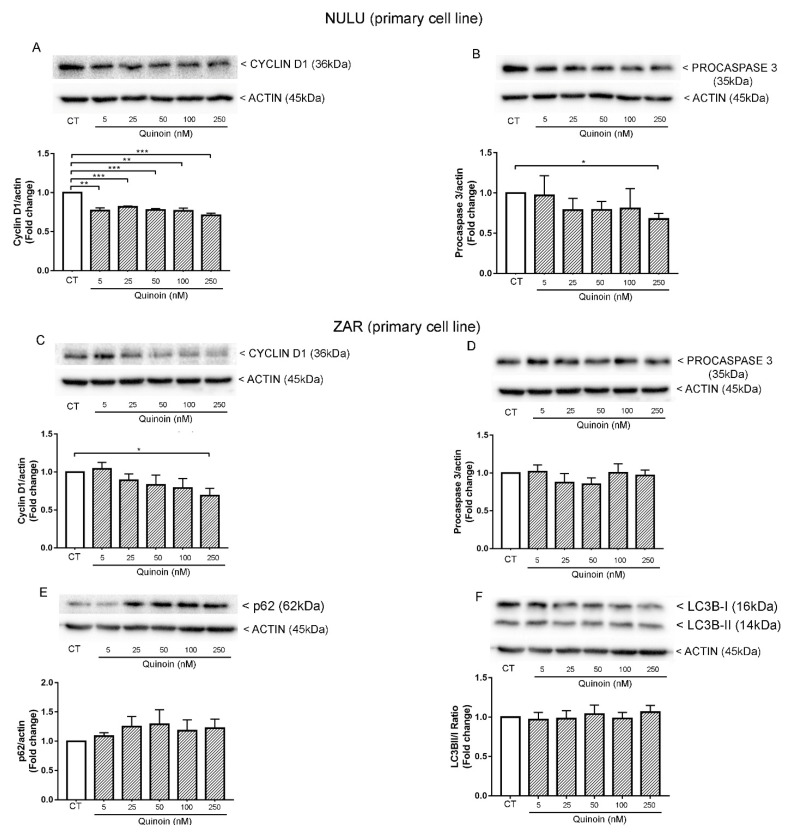
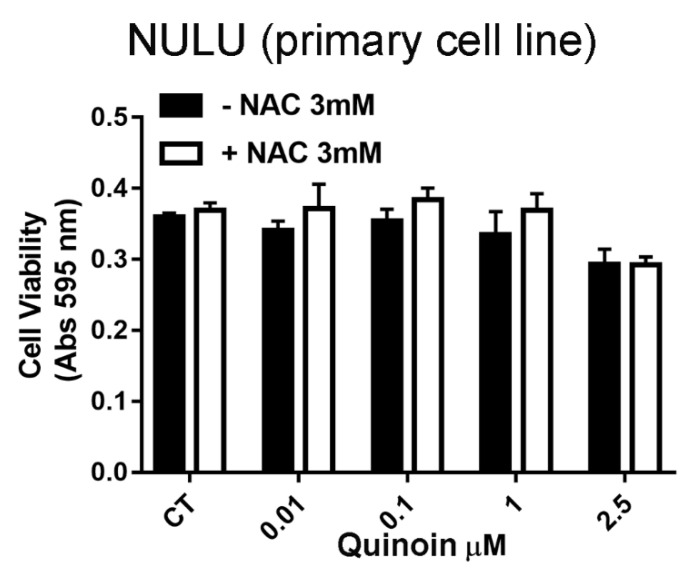
Ribosome-inactivating proteins (RIPs) are found in several edible plants and are well characterized. Many studies highlight their use in cancer therapy, alone or as immunoconjugates, linked to monoclonal antibodies directed against target cancer cells. In this context, we investigate the cytotoxicity of quinoin, a novel type 1 RIP from quinoa seeds, on human continuous and primary glioblastoma cell lines. The cytotoxic effect of quinoin was assayed on human continuous glioblastoma U87Mg cells. Moreover, considering that common conventional glioblastoma multiforme (GBM) cell lines are genetically different from the tumors from which they derive, the cytotoxicity of quinoin was subsequently tested towards primary cells NULU and ZAR (two cell lines established from patients' gliomas), also in combination with the chemotherapeutic agent temozolomide (TMZ), currently used in glioblastoma treatment. The present study demonstrated that quinoin (2.5 and 5.0 nM) strongly reduced glioblastoma cells' growth. The mechanisms responsible for the inhibitory action of quinoin are different in the tested primary cell lines, reproducing the heterogeneous response of glioblastoma cells. Interestingly, primary cells treated with quinoin in combination with TMZ were more sensitive to the treatment. Overall, our data highlight that quinoin could represent a novel tool for glioblastoma therapy and a possible adjuvant for the treatment of the disease in combination with TMZ, alone or as possible immunoconjugates/nanoconstructs.
核糖体失活蛋白 (RIPs) 存在于几种可食用植物中,并且已经得到了很好的描述。许多研究强调了它们在癌症治疗中的应用,无论是单独使用还是作为免疫偶联物,与针对靶癌细胞的单克隆抗体结合使用。在这种情况下,我们研究了来自藜麦种子的新型 1 型 RIP 喹啉对人连续和原发性神经胶质瘤细胞系的细胞毒性。在人连续神经胶质瘤 U87Mg 细胞上测定了喹啉的细胞毒性作用。此外,考虑到常见的常规多形性胶质母细胞瘤 (GBM) 细胞系在遗传上与它们来源于的肿瘤不同,随后还测试了喹啉对原发性细胞 NULU 和 ZAR(从患者的神经胶质瘤中建立的两种细胞系)的细胞毒性,也与化疗药物替莫唑胺 (TMZ) 联合测试,TMZ 目前用于胶质母细胞瘤治疗。本研究表明,喹啉(2.5 和 5.0 nM)强烈抑制神经胶质瘤细胞的生长。喹啉抑制作用的机制在测试的原代细胞系中不同,再现了神经胶质瘤细胞的异质性反应。有趣的是,用喹啉与 TMZ 联合治疗的原代细胞对治疗更敏感。总的来说,我们的数据表明,喹啉可能成为胶质母细胞瘤治疗的新工具,并可能与 TMZ 联合作为该疾病治疗的辅助药物,单独使用或作为可能的免疫偶联物/纳米结构。