Teng Wei-Lin, Huang Pao-Hsien, Wang Hui-Chun, Tseng Chih-Hua, Yen Feng-Lin
Graduate Institute of Natural Products, College of Pharmacy, Kaohsiung Medical University, Kaohsiung 807, Taiwan.
Department of Fragrance and Cosmetic Science, College of Pharmacy, Kaohsiung Medical University, Kaohsiung 807, Taiwan.
Antioxidants (Basel). 2021 Sep 29;10(10):1552. doi: 10.3390/antiox10101552.
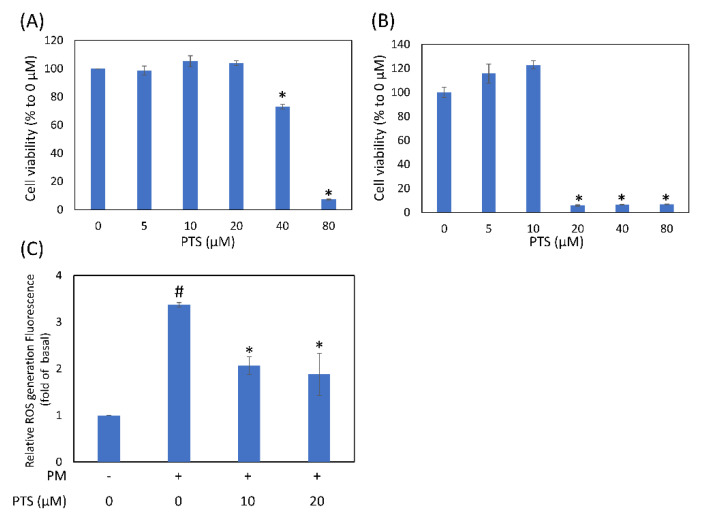
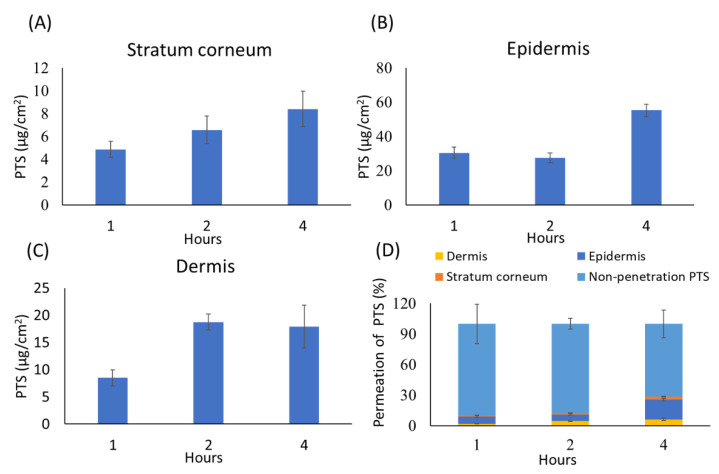
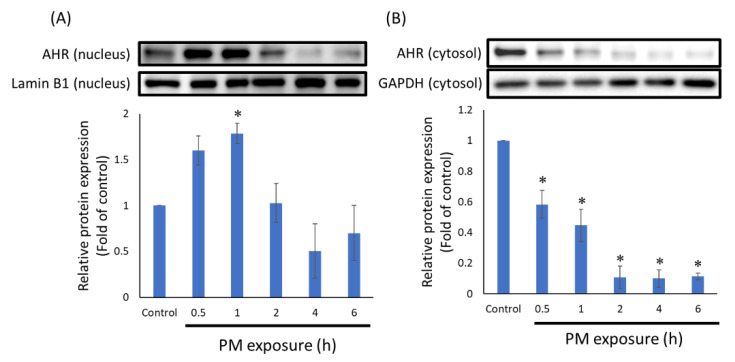
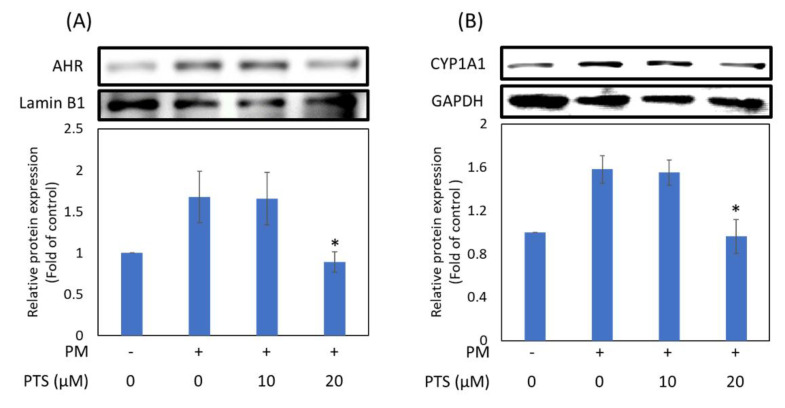
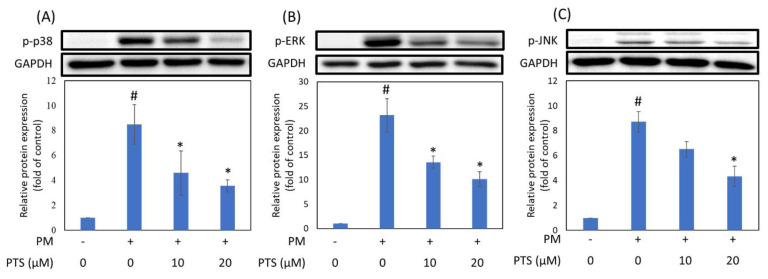
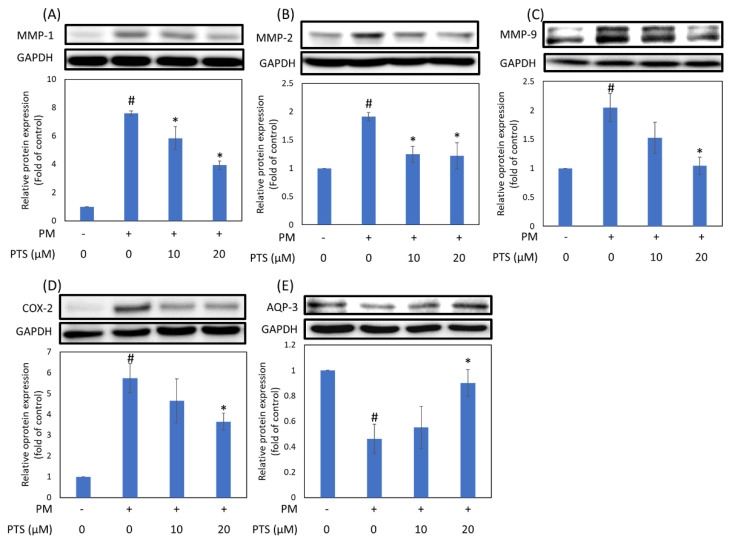
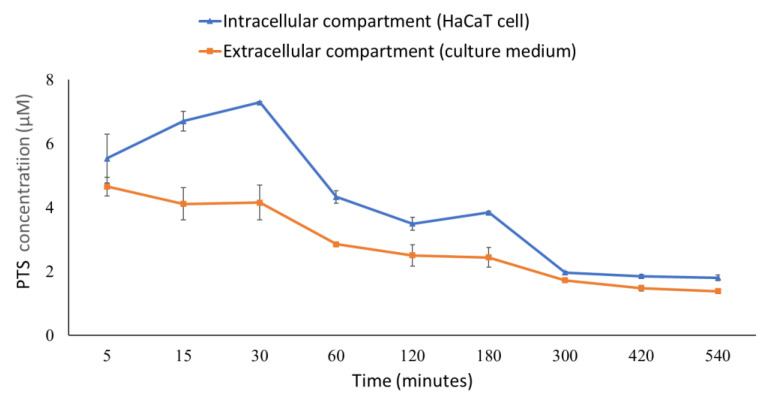
Particulate matter (PM) is the main indicator of air pollutants, and it may increase the level of reactive oxygen species (ROS) in keratinocytes, leading to skin inflammation, aging, and decreased moisturizing ability. Pterostilbene (PTS) is a dimethylated analog of resveratrol that has antioxidant effects. However, the molecular mechanisms of PTS in preventing PM-induced keratinocyte inflammation and aging have not been investigated yet. Therefore, we used PM-induced human keratinocytes to investigate the protective mechanisms of PTS. The results showed that 20 μM PTS had no toxicity to HaCaT keratinocytes and significantly reduced PM-induced intracellular ROS production. In addition, nuclear translocation of the aryl hydrocarbon receptor (AHR) was inhibited by PTS, leading to reduced expression of its downstream CYP1A1. PTS further inhibited PM-induced MAPKs, inflammation (COX-2), and aging (MMP-9) protein cascades, and rescued moisturizing (AQP-3) protein expression. We analyzed the PTS content in cells at different time points and compared the concentration required for PTS to inhibit the target proteins. Finally, we used the skin penetration assay to show that the PTS essence mainly exists in the epidermal layer and did not enter the system circulation. In conclusion, PTS could protect HaCaT keratinocytes from PM-induced damage and has the potential to become a cosmetic ingredient.
颗粒物(PM)是空气污染物的主要指标,它可能会增加角质形成细胞中活性氧(ROS)的水平,导致皮肤炎症、衰老以及保湿能力下降。紫檀芪(PTS)是白藜芦醇的二甲基化类似物,具有抗氧化作用。然而,PTS预防PM诱导的角质形成细胞炎症和衰老的分子机制尚未得到研究。因此,我们使用PM诱导的人角质形成细胞来研究PTS的保护机制。结果表明,20μM的PTS对HaCaT角质形成细胞没有毒性,并且显著降低了PM诱导的细胞内ROS生成。此外,PTS抑制了芳烃受体(AHR)的核转位,导致其下游CYP1A1的表达降低。PTS进一步抑制了PM诱导的丝裂原活化蛋白激酶(MAPKs)、炎症(COX-2)和衰老(MMP-9)蛋白级联反应,并挽救了保湿(AQP-3)蛋白的表达。我们分析了不同时间点细胞中的PTS含量,并比较了PTS抑制靶蛋白所需的浓度。最后,我们通过皮肤渗透试验表明,PTS精华主要存在于表皮层,并未进入体循环。总之,PTS可以保护HaCaT角质形成细胞免受PM诱导的损伤,并且有潜力成为一种化妆品成分。