Di Pietro Rebecca, Arroyo Luis G, Leclere Mathilde, Costa Marcio Carvalho
Department of Biomedical Sciences, Faculté de Médecine Vétérinaire, Université de Montréal, Saint-Hyacinthe, QC J2S 2M2, Canada.
Department of Clinical Studies, Ontario Veterinary College, University of Guelph, Guelph, ON N1G 2W1, Canada.
Animals (Basel). 2021 Sep 30;11(10):2859. doi: 10.3390/ani11102859.
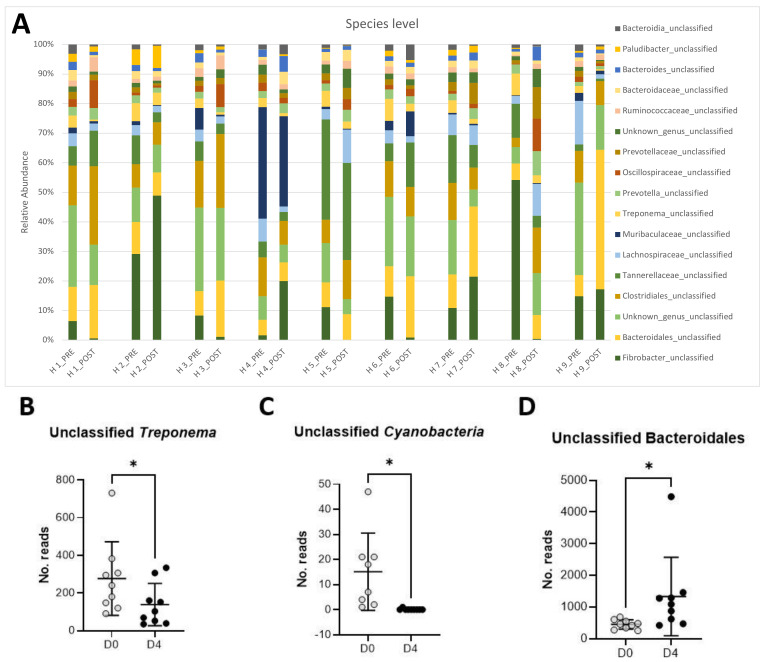
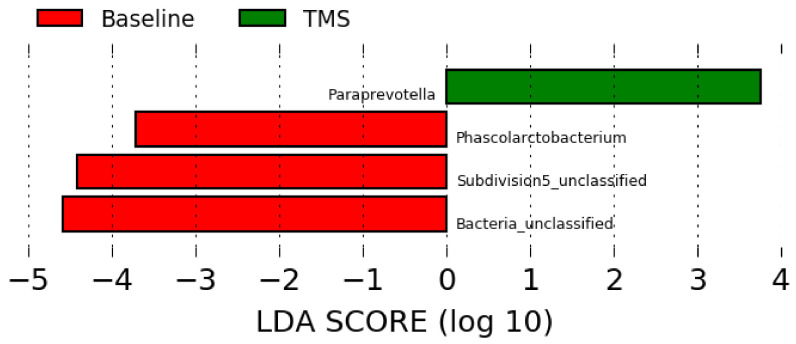
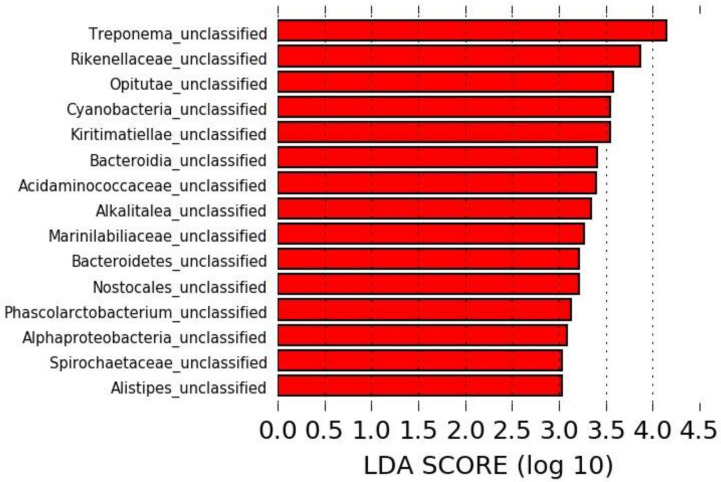
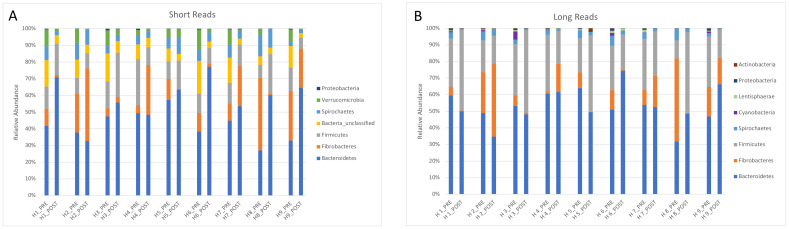
All current studies have used Illumina short-read sequencing to characterize the equine intestinal microbiota. Long-read sequencing can classify bacteria at the species level. The objectives of this study were to characterize the gut microbiota of horses at the species level before and after trimethoprim sulfadiazine (TMS) administration and to compare results with Illumina sequencing. Nine horses received TMS (30 mg/kg) orally for 5 days twice a day to induce dysbiosis. Illumina sequencing of the V4 region or full-length PacBio sequencing of the 16S rRNA gene was performed in fecal samples collected before and after antibiotic administration. The relative abundance and alpha diversity were compared between the two technologies. PacBio failed to classify the equine intestinal microbiota at the species level but confirmed Bacteroidetes as the most abundant bacteria in the feces of the studied horses, followed by Firmicutes and Fibrobacteres. An unknown species of the Bacteroidales order was highly abundant (13%) and deserves further investigation. In conclusion, PacBio was not suitable to classify the equine microbiota species but detected greater richness and less unclassified bacteria. Further efforts in improving current databanks to be used in equine studies are necessary.
目前所有的研究都使用Illumina短读长测序来表征马的肠道微生物群。长读长测序可以在物种水平上对细菌进行分类。本研究的目的是在给予磺胺嘧啶甲氧苄啶(TMS)前后,在物种水平上表征马的肠道微生物群,并将结果与Illumina测序进行比较。9匹马每天口服两次TMS(30 mg/kg),持续5天以诱导生态失调。在抗生素给药前后收集的粪便样本中,对V4区域进行Illumina测序或对16S rRNA基因进行全长PacBio测序。比较了两种技术之间的相对丰度和α多样性。PacBio未能在物种水平上对马的肠道微生物群进行分类,但证实拟杆菌门是所研究马粪便中最丰富的细菌,其次是厚壁菌门和纤维杆菌门。拟杆菌目一个未知物种的丰度很高(13%),值得进一步研究。总之,PacBio不适合对马的微生物群物种进行分类,但检测到了更高的丰富度和更少的未分类细菌。有必要进一步努力改进目前用于马研究的数据库。