Department of Preventive Medicine and Public Health, Faculty of Medicine and Health Science, Universitat Rovira i Virgili, 43201 Reus, Spain.
Department of Psychology, Faculty of Education Sciences and Psychology, Universitat Rovira i Virgili, 43007 Tarragona, Spain.
Nutrients. 2020 Mar 17;12(3):792. doi: 10.3390/nu12030792.
Autism spectrum disorder (ASD) is a public health problem and has a prevalence of 0.6%-1.7% in children. As well as psychiatric symptoms, dysbiosis and gastrointestinal comorbidities are also frequently reported. The gut-brain microbiota axis suggests that there is a form of communication between microbiota and the brain underlying some neurological disabilities. The aim of this study is to describe and compare the composition of gut microbiota in children with and without ASD.
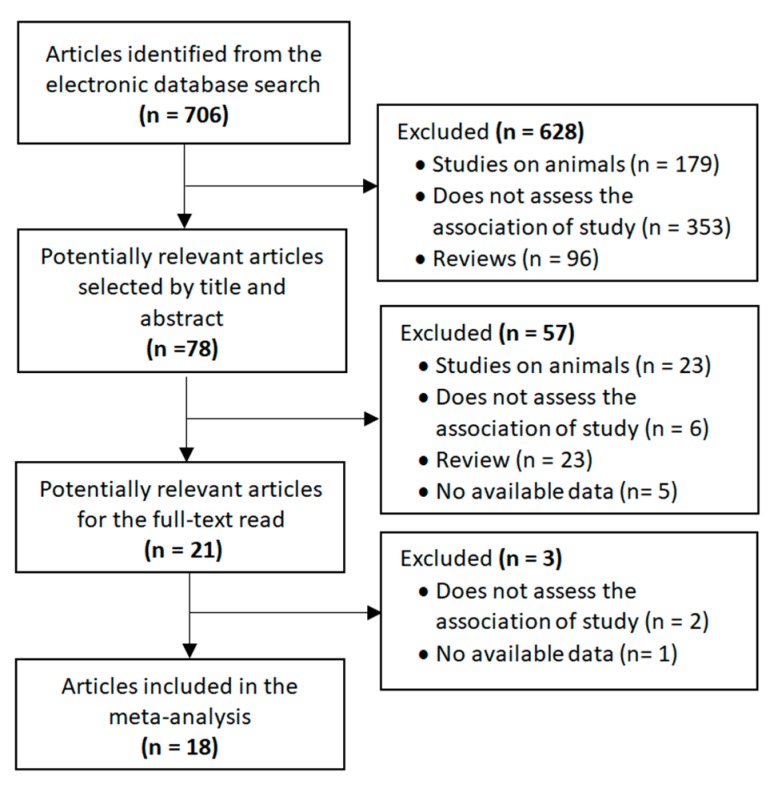
Electronic databases were searched as far as February 2020. Meta-analyses were performed using RevMan5.3 to estimate the overall relative abundance of gut bacteria belonging to 8 phyla and 17 genera in children with ASD and controls.
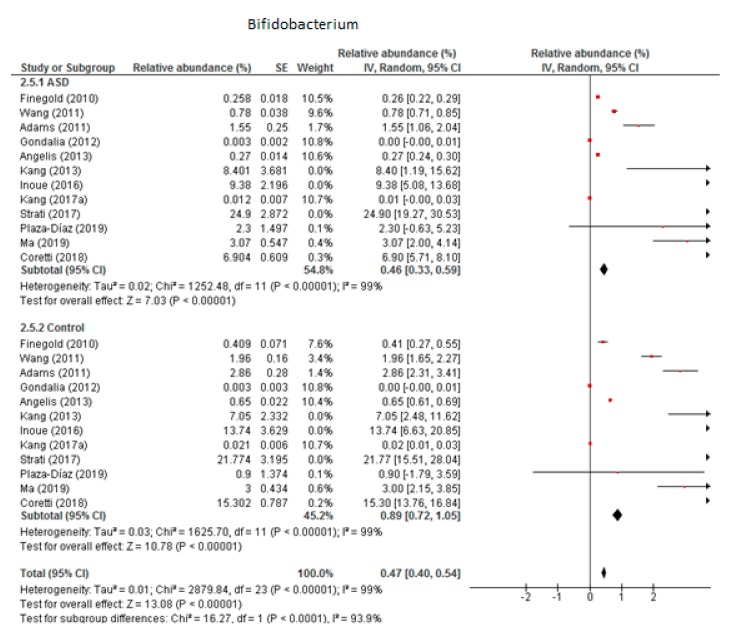
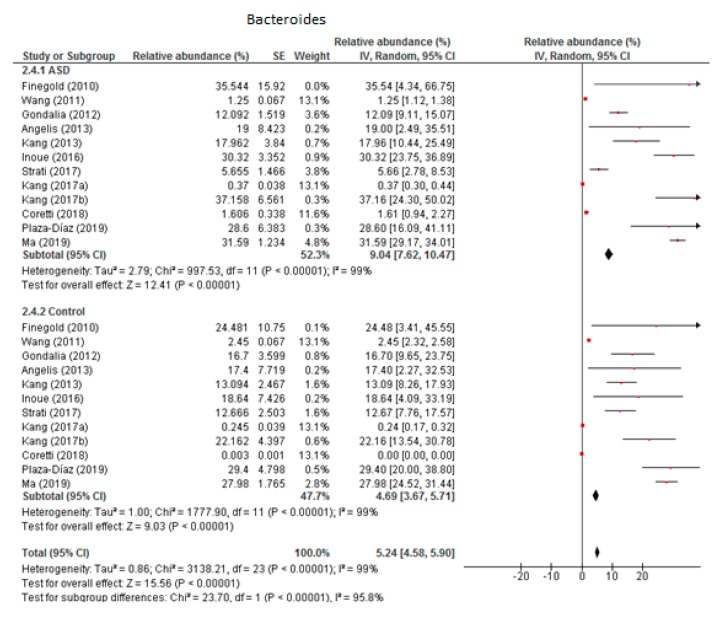
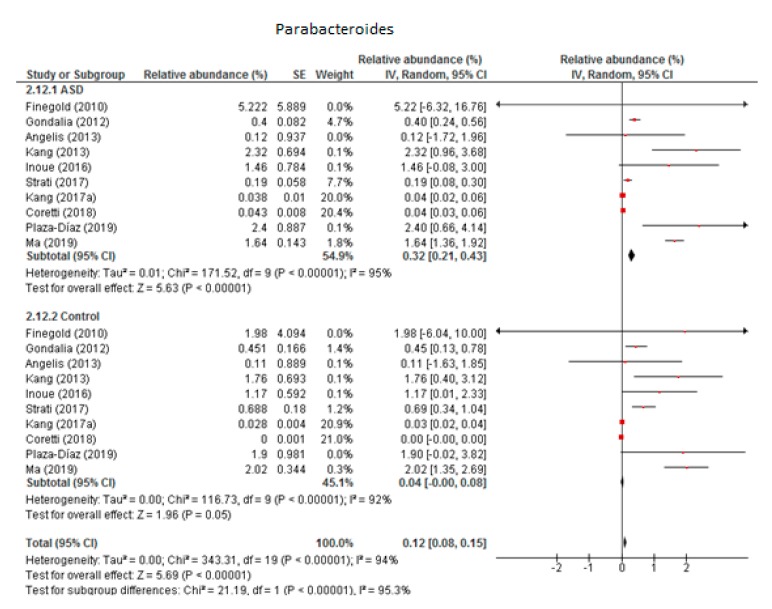
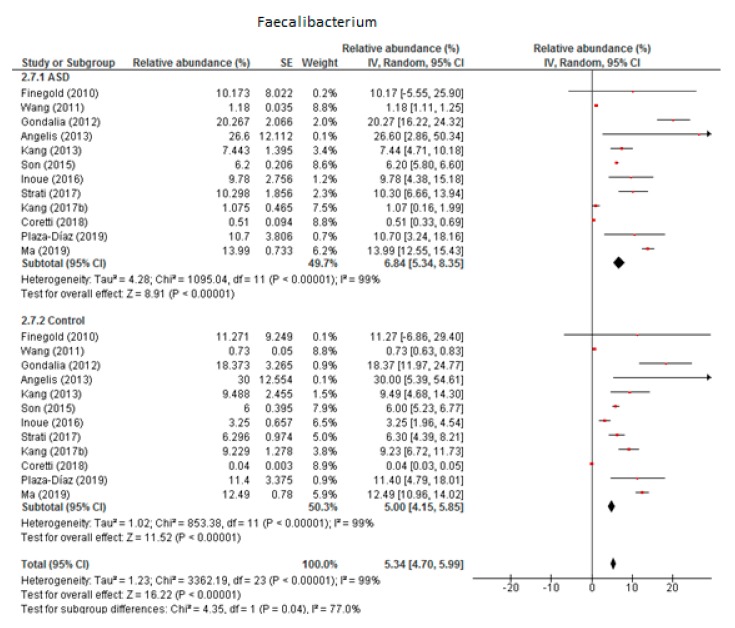
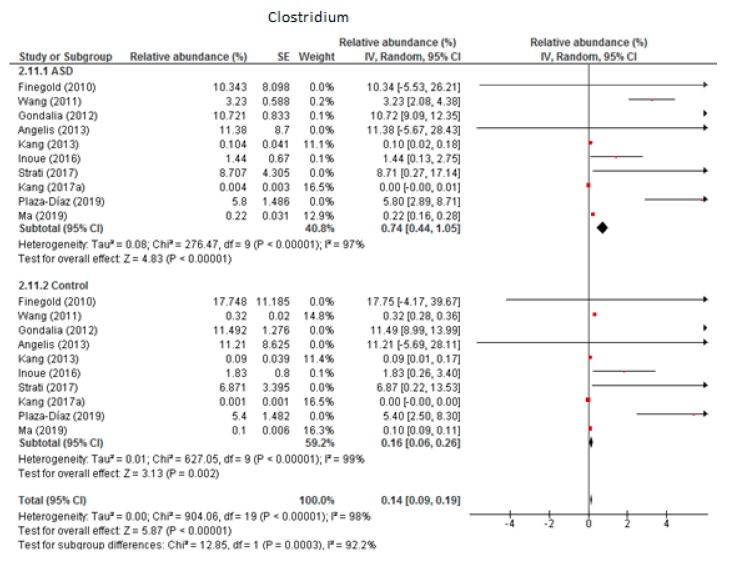
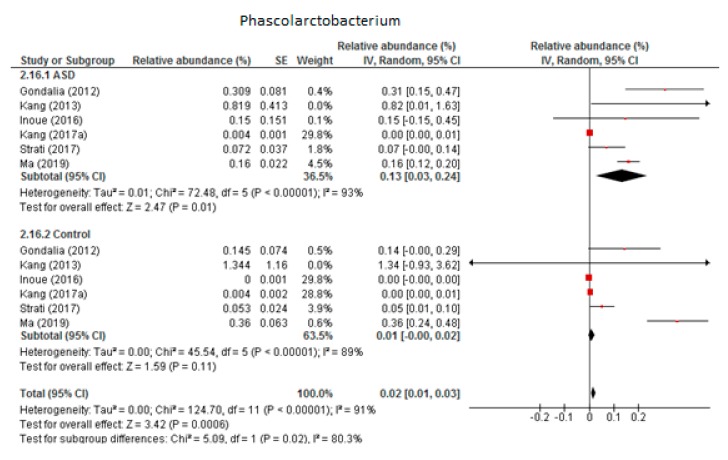
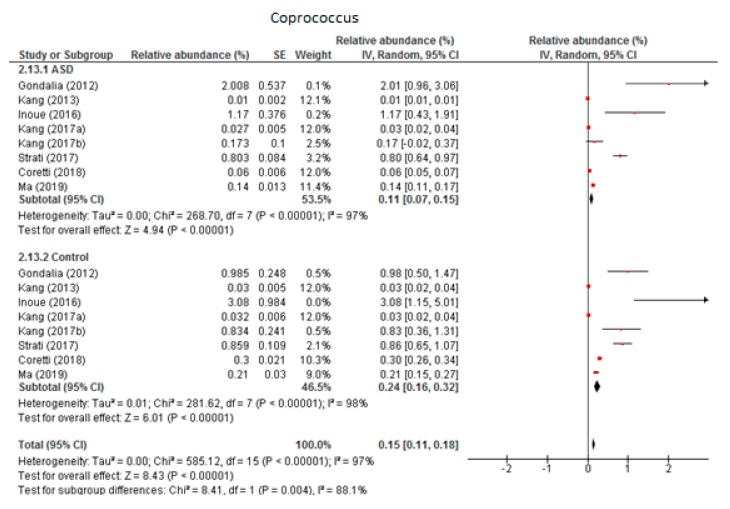
We included 18 studies assessing a total of 493 ASD children and 404 controls. The microbiota was mainly composed of the phyla Bacteroidetes, Firmicutes, and Actinobacteria, all of which were more abundant in the ASD children than in the controls. Children with ASD showed a significantly higher abundance of the genera , , , and and a lower percentage of and .
This meta-analysis suggests that there is a dysbiosis in ASD children which may influence the development and severity of ASD symptomatology. Further studies are required in order to obtain stronger evidence of the effectiveness of pre- or probiotics in reducing autistic behaviors.
自闭症谱系障碍(ASD)是一个公共卫生问题,在儿童中的患病率为 0.6%-1.7%。除了精神症状外,肠道菌群失调和胃肠道共病也经常被报道。肠道-大脑微生物群轴表明,微生物群和大脑之间存在着某种形式的沟通,这是一些神经发育障碍的基础。本研究旨在描述和比较自闭症儿童和非自闭症儿童肠道微生物群的组成。
电子数据库检索截至 2020 年 2 月。使用 RevMan5.3 进行荟萃分析,以估计自闭症儿童和对照组中属于 8 个门和 17 个属的肠道细菌的总体相对丰度。
我们纳入了 18 项研究,共评估了 493 名自闭症儿童和 404 名对照。微生物群主要由厚壁菌门、拟杆菌门和放线菌门组成,所有这些门在自闭症儿童中的丰度都高于对照组。自闭症儿童的属 、 、 、 和 丰度显著较高,而 和 的比例较低。
这项荟萃分析表明,自闭症儿童存在肠道菌群失调,这可能影响自闭症症状的发展和严重程度。需要进一步研究,以获得更强的证据证明益生菌或益生元在减少自闭症行为方面的有效性。