Merkle Jessica, Breunig Markus, Schmid Maximilian, Allgöwer Chantal, Krüger Jana, Melzer Michael K, Bens Susanne, Siebert Reiner, Perkhofer Lukas, Azoitei Ninel, Seufferlein Thomas, Heller Sandra, Meier Matthias, Müller Martin, Kleger Alexander, Hohwieler Meike
Department of Internal Medicine I, Ulm University Hospital, 89081 Ulm, Germany.
Department of Urology, Ulm University, 89081 Ulm, Germany.
Cancers (Basel). 2021 Oct 13;13(20):5139. doi: 10.3390/cancers13205139.
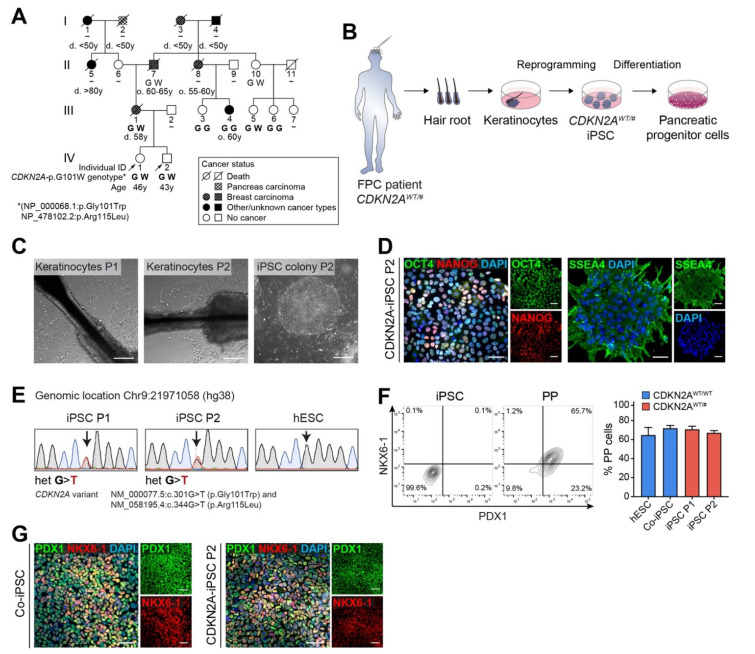
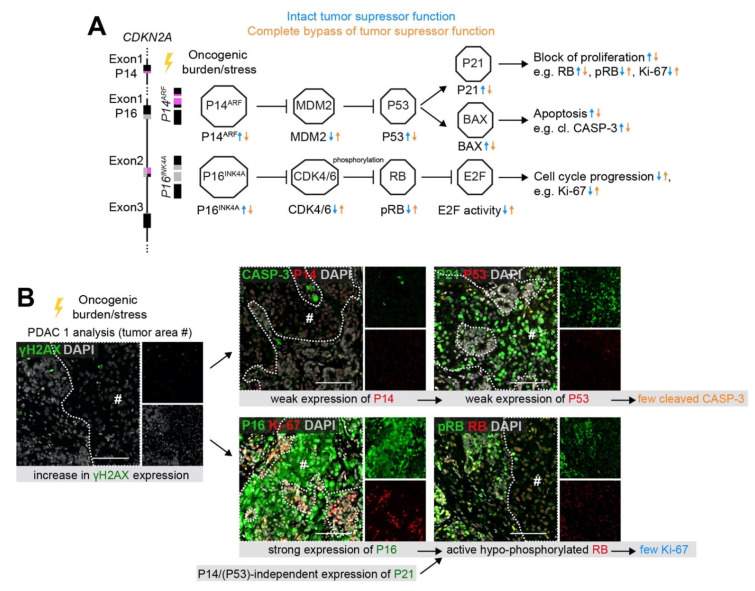
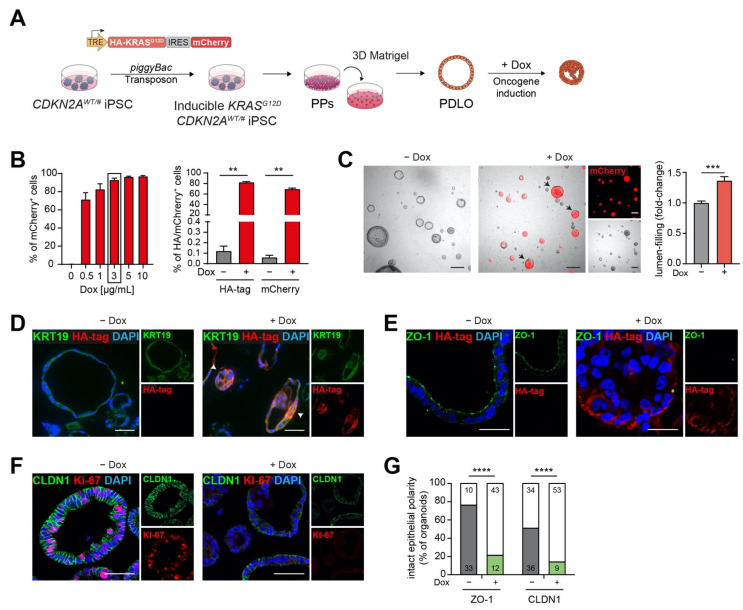
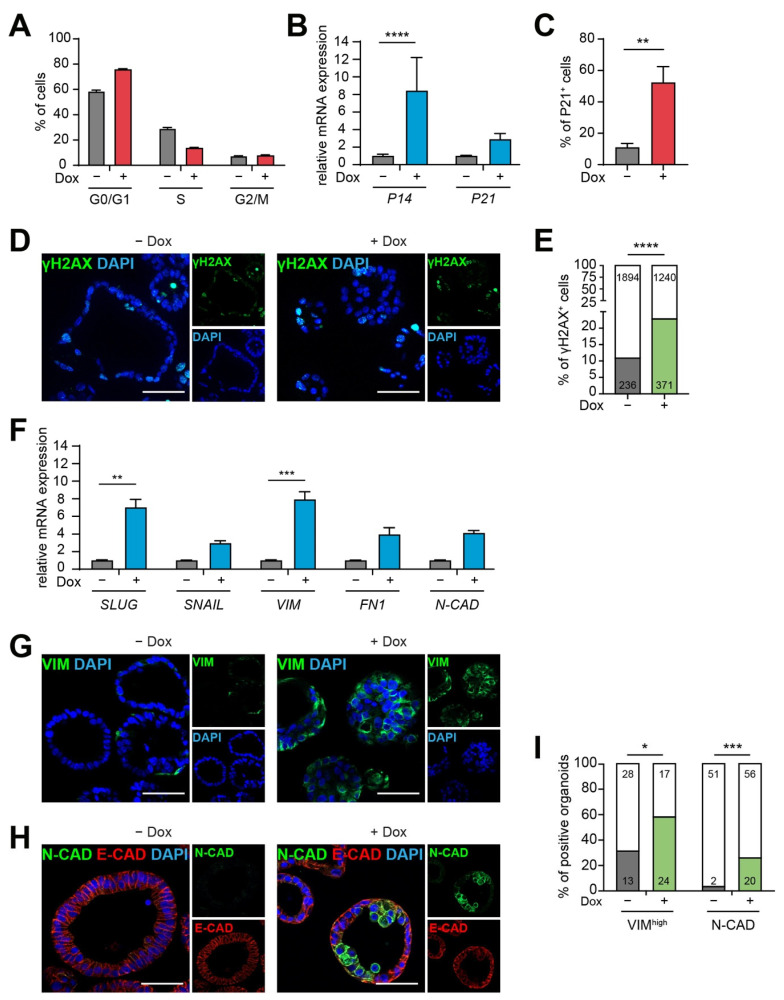
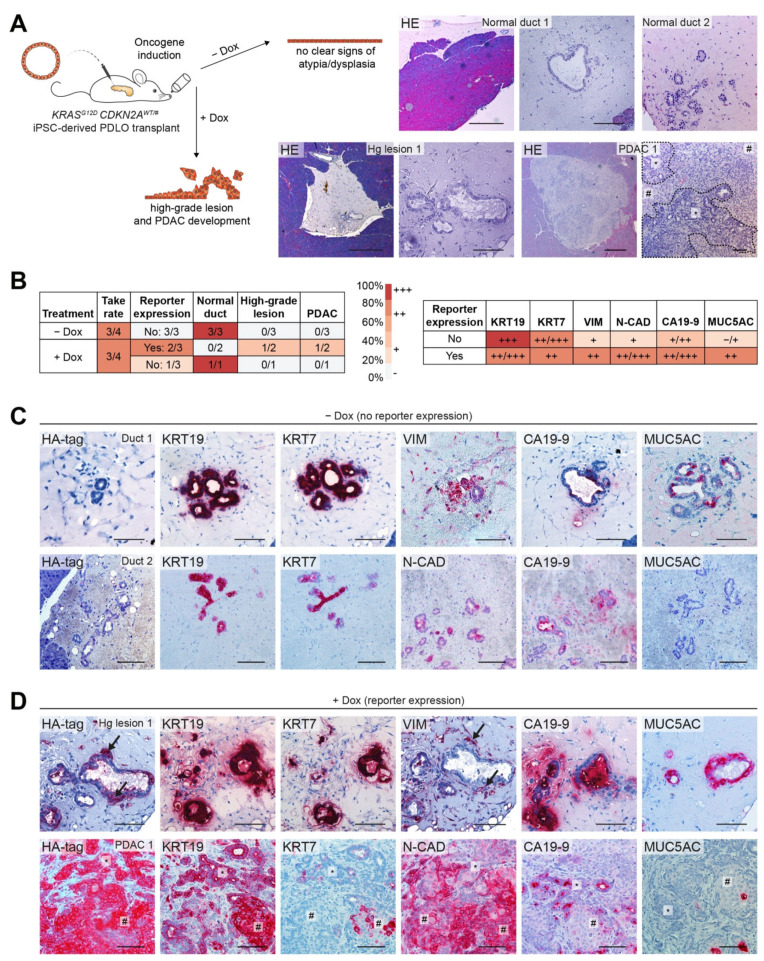
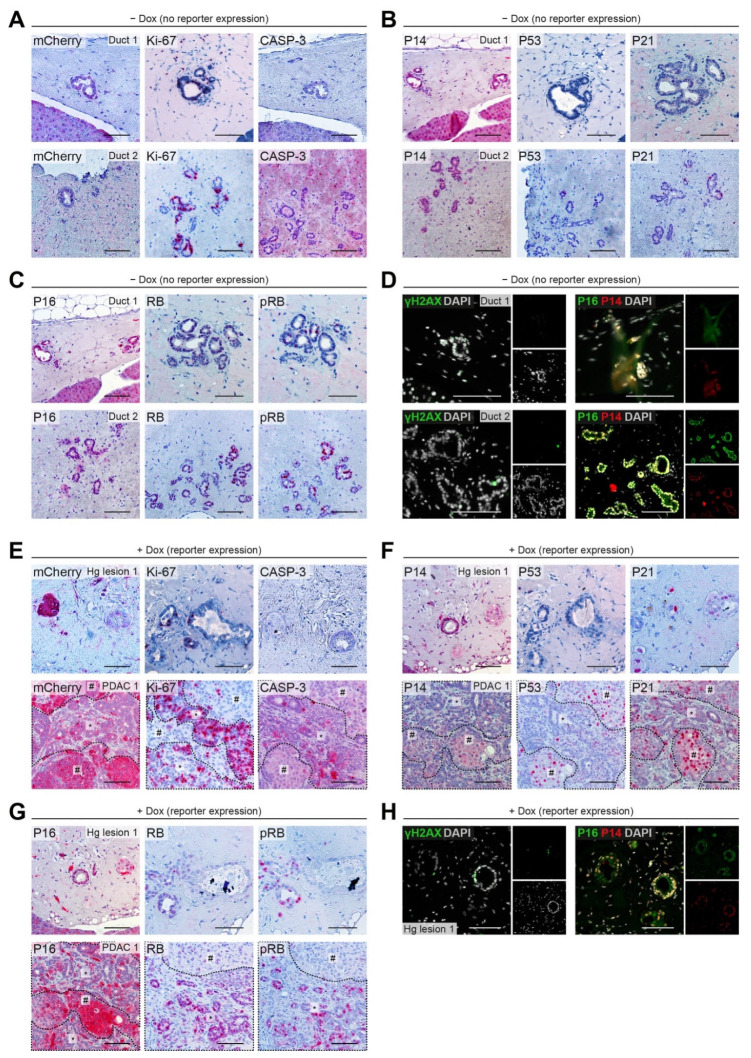
Patient-derived induced pluripotent stem cells (iPSCs) provide a unique platform to study hereditary disorders and predisposition syndromes by resembling germline mutations of affected individuals and by their potential to differentiate into nearly every cell type of the human body. We employed plucked human hair from two siblings with a family history of cancer carrying a pathogenic variant, P16-p.G101W/P14-p.R115L, to generate patient-specific iPSCs in a cancer-prone ancestry for downstream analytics. The differentiation capacity to pancreatic progenitors and to pancreatic duct-like organoids (PDLOs) according to a recently developed protocol remained unaffected. Upon inducible expression of using a transposon system in CDKN2A-mutated PDLOs, we revealed structural and molecular changes in vitro, including disturbed polarity and epithelial-to-mesenchymal (EMT) transition. -mutated PDLO xenotransplants formed either a high-grade precancer lesion or a partially dedifferentiated PDAC-like tumor. Intriguingly, P14/P53/P21 and P16/RB cell-cycle checkpoint controls have been only partly overcome in these grafts, thereby still restricting the tumorous growth. Hereby, we provide a model for hereditary human pancreatic cancer that enables dissection of tumor initiation and early development starting from patient-specific -mutated pluripotent stem cells.
患者来源的诱导多能干细胞(iPSC)提供了一个独特的平台,可通过模拟受影响个体的种系突变以及它们分化为几乎人体每种细胞类型的潜力来研究遗传性疾病和易患综合征。我们从两名有癌症家族史且携带致病性变体P16-p.G101W/P14-p.R115L的兄弟姐妹身上采集了毛发,以在易患癌症的谱系中生成患者特异性iPSC,用于下游分析。根据最近开发的方案,其向胰腺祖细胞和胰腺导管样类器官(PDLO)的分化能力不受影响。在CDKN2A突变的PDLO中使用转座子系统进行诱导表达后,我们在体外揭示了结构和分子变化,包括极性紊乱和上皮-间质转化(EMT)。突变的PDLO异种移植形成了高级别癌前病变或部分去分化的PDAC样肿瘤。有趣的是,在这些移植物中,P14/P53/P21和P16/RB细胞周期检查点控制仅被部分克服,从而仍然限制肿瘤生长。因此,我们提供了一种遗传性人类胰腺癌模型,该模型能够从患者特异性突变的多能干细胞开始剖析肿瘤的起始和早期发展。