Cheng Jai-Hong, Hsu Chieh-Cheng, Hsu Shan-Ling, Chou Wen-Yi, Wu Yi-No, Kuo Chun-En Aurea, Hsu Tsai-Chin, Shiu Li-Yen, Jhan Shun-Wun
Center for Shockwave Medicine and Tissue Engineering, Kaohsiung Chang Gung Memorial Hospital and Chang Gung University College of Medicine, Kaohsiung 833, Taiwan.
Medical Research, Kaohsiung Chang Gung Memorial Hospital and Chang Gung University College of Medicine, Kaohsiung 833, Taiwan.
Biomedicines. 2021 Oct 5;9(10):1399. doi: 10.3390/biomedicines9101399.
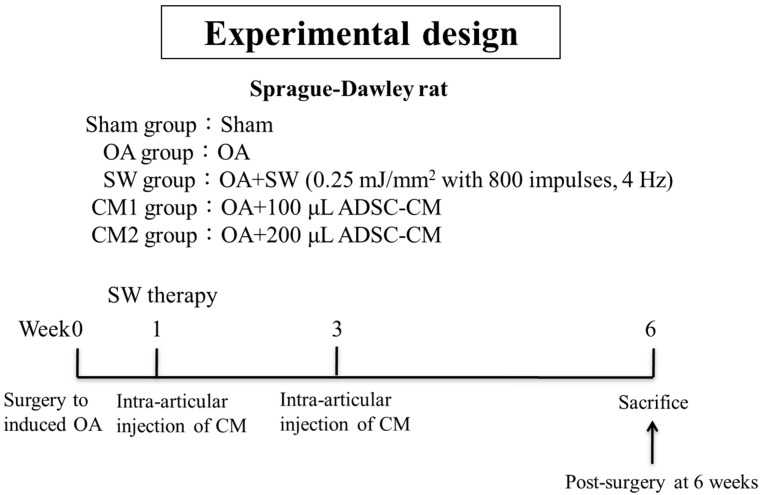
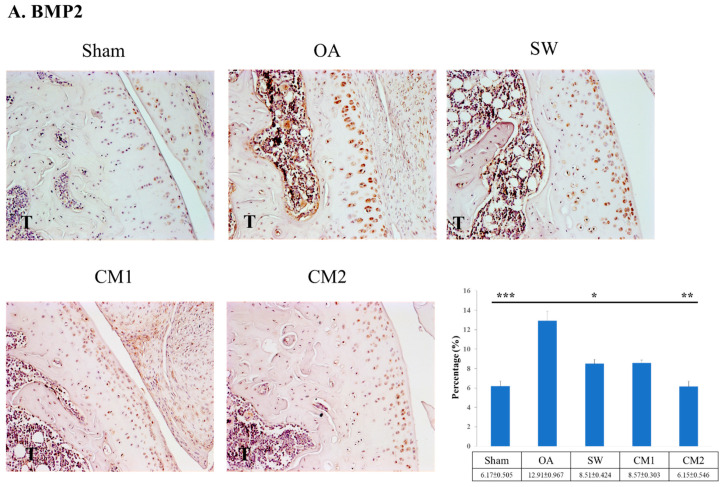
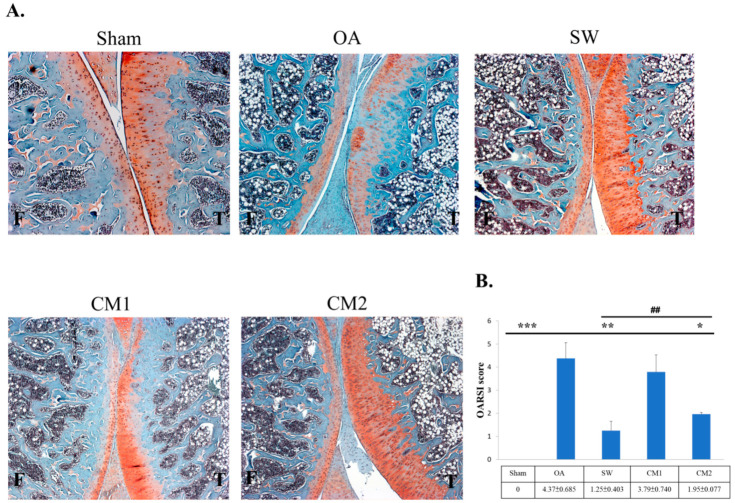
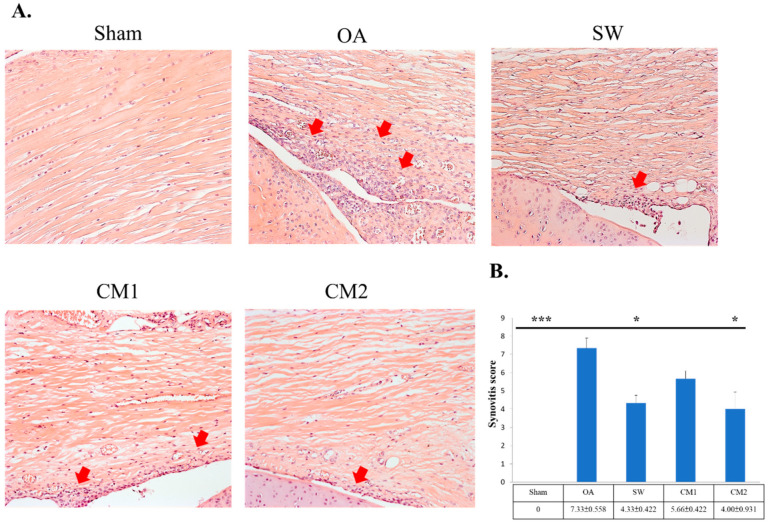
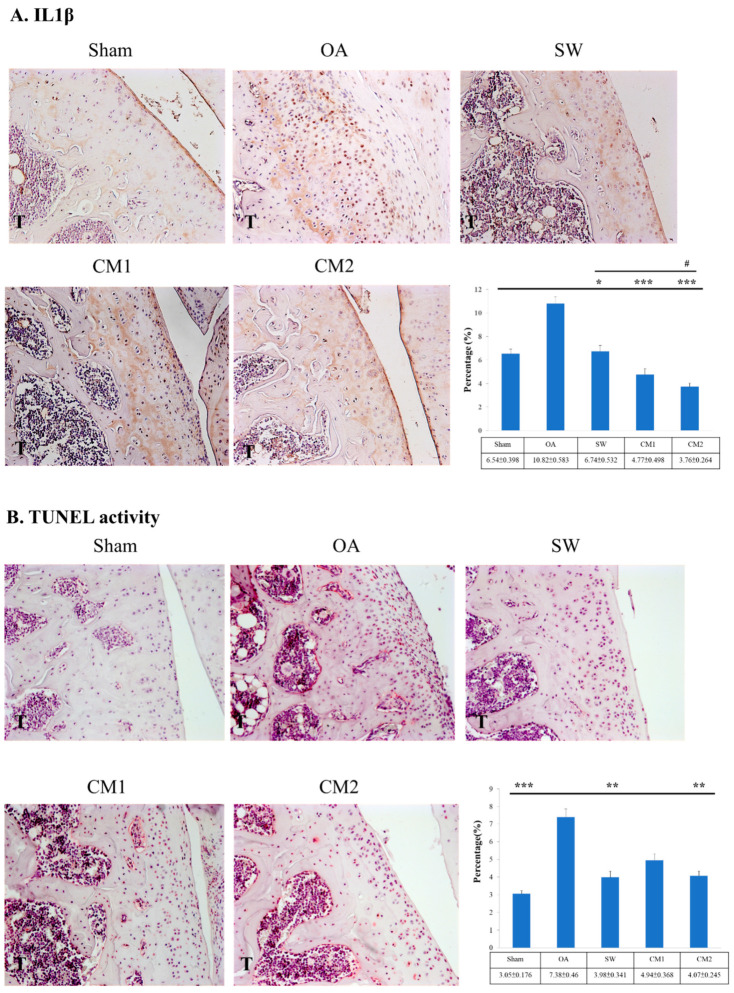
The dose-dependent effects of adipose-derived mesenchymal stem cell-conditioned medium (ADSC-CM) were compared with those of shockwave (SW) therapy in the treatment of early osteoarthritis (OA). Anterior cruciate ligament transaction (ACLT) with medial meniscectomy (MMx) was performed in rats divided into sham, OA, SW, CM1 (intra-articular injection of 100 μL ADSC-CM into knee OA), and CM2 (intra-articular injection of 200 μL ADSC-CM) groups. Cartilage grading, grading of synovium changes, and specific molecular analysis by immunohistochemistry staining were performed. The OARSI and synovitis scores of CM2 and SW group were significantly decreased compared with those of the OA group ( < 0.05). The inflammatory markers interleukin 1β, terminal deoxynucleotidyl transferase dUTP nick end labeling and matrix metalloproteinase 13 were significantly reduced in the CM2 group compared to those in the SW and CM1 groups ( < 0.001). Cartilage repair markers (type II collagen and SRY-box transcription factor 9, SOX9) expression were significantly higher in the CM2 group than in the other treatment groups ( < 0.001; < 0.05). Furthermore, inflammation-induced growth factors such as bone morphogenetic protein 2 (BMP2), BMP5, and BMP6 were significantly reduced in the treatment groups, and the CM2 group showed the best results among the treatments ( < 0.05). In conclusion, ADSC-CM and SW ameliorated the expression of inflammatory cytokines and inflammation-induced BMPs to protect the articular cartilage of the OA joint.
在早期骨关节炎(OA)的治疗中,比较了脂肪间充质干细胞条件培养基(ADSC-CM)与冲击波(SW)疗法的剂量依赖性效应。对大鼠进行前交叉韧带切断术(ACLT)并联合内侧半月板切除术(MMx),将大鼠分为假手术组、OA组、SW组、CM1组(向膝OA关节腔内注射100μL ADSC-CM)和CM2组(向膝OA关节腔内注射200μL ADSC-CM)。进行软骨分级、滑膜变化分级以及通过免疫组织化学染色进行特异性分子分析。与OA组相比,CM2组和SW组的OARSI评分和滑膜炎评分显著降低(P<0.05)。与SW组和CM1组相比,CM2组的炎症标志物白细胞介素1β、末端脱氧核苷酸转移酶dUTP缺口末端标记和基质金属蛋白酶13显著降低(P<0.001)。CM2组的软骨修复标志物(II型胶原蛋白和SRY盒转录因子9,SOX9)表达显著高于其他治疗组(P<0.001;P<0.05)。此外,治疗组中炎症诱导的生长因子如骨形态发生蛋白2(BMP2)、BMP5和BMP6显著降低,CM2组在各治疗组中效果最佳(P<0.05)。总之,ADSC-CM和SW改善了炎症细胞因子和炎症诱导的BMPs的表达,以保护OA关节的关节软骨。