Department of Pharmacology, Dubai Medical College, Dubai 20170, United Arab Emirates.
Int J Mol Sci. 2021 Oct 18;22(20):11248. doi: 10.3390/ijms222011248.
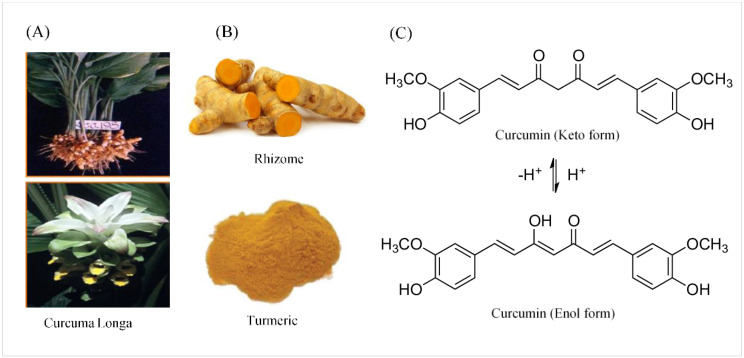
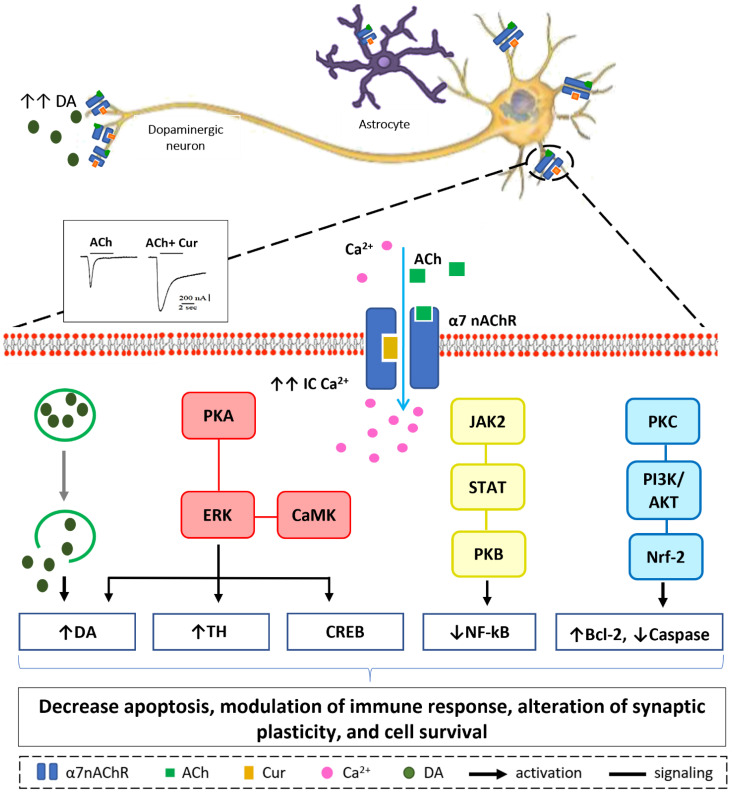
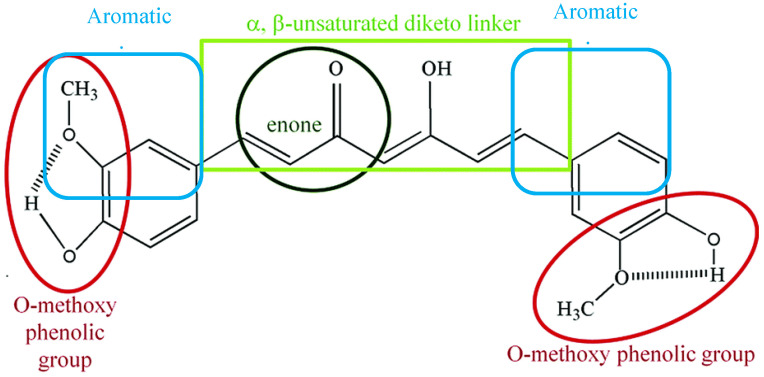
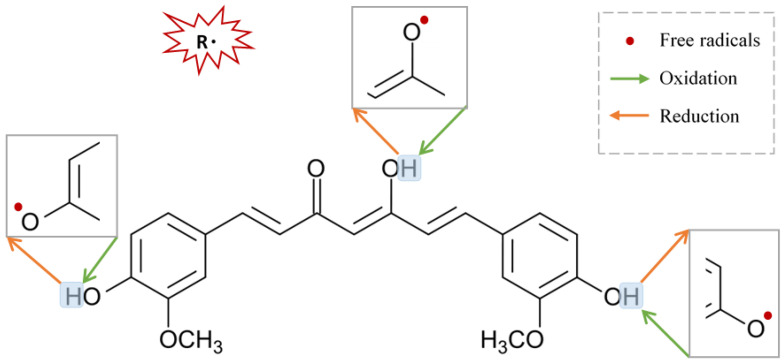
Parkinson's disease (PD) is a slowly progressive multisystem disorder affecting dopaminergic neurons of the substantia nigra pars compacta (SNpc), which is characterized by a decrease of dopamine (DA) in their striatal terminals. Treatment of PD with levodopa or DA receptor agonists replaces the function of depleted DA in the striatum. Prolonged treatment with these agents often has variable therapeutic effects and leads to the development of undesirable dyskinesia. Consequently, a crucial unmet demand in the management of Parkinson's disease is the discovery of new approaches that could slow down, stop, or reverse the process of neurodegeneration. Novel potential treatments involving natural substances with neuroprotective activities are being developed. Curcumin is a polyphenolic compound isolated from the rhizomes of Curcuma longa (turmeric). It has been demonstrated to have potent anti-inflammatory, antioxidant, free radical scavenging, mitochondrial protecting, and iron-chelating effects, and is considered a promising therapeutic and nutraceutical agent for the treatment of PD. However, molecular and cellular mechanisms that mediate the pharmacological actions of curcumin remain largely unknown. Stimulation of nicotinic receptors and, more precisely, selective α7 nicotinic acetylcholine receptors (α7-nAChR), have been found to play a major modulatory role in the immune system via the "cholinergic anti-inflammatory pathway". Recently, α7-nAChR has been proposed to be a potential therapeutic approach in PD. In this review, the detailed mechanisms of the neuroprotective activities of curcumin as a potential therapeutic agent to help Parkinson's patients are being discussed and elaborated on in detail.
帕金森病(PD)是一种缓慢进展的多系统疾病,影响黑质致密部(SNpc)的多巴胺能神经元,其特征是其纹状体末端的多巴胺(DA)减少。用左旋多巴或多巴胺受体激动剂治疗 PD 可替代纹状体中耗竭的 DA 的功能。这些药物的长期治疗通常具有不同的治疗效果,并导致出现不理想的运动障碍。因此,帕金森病管理中的一个关键未满足的需求是发现新的方法,这些方法可能减缓、阻止或逆转神经退行性过程。目前正在开发涉及具有神经保护活性的天然物质的新型潜在治疗方法。姜黄素是从姜黄(姜黄)根茎中分离出的多酚化合物。它已被证明具有强大的抗炎、抗氧化、自由基清除、线粒体保护和铁螯合作用,被认为是治疗 PD 的有前途的治疗和营养药物。然而,介导姜黄素药理作用的分子和细胞机制在很大程度上仍然未知。刺激烟碱受体,更确切地说,选择性α7 烟碱型乙酰胆碱受体(α7-nAChR),已被发现通过“胆碱能抗炎途径”在免疫系统中发挥主要调节作用。最近,α7-nAChR 被提议作为 PD 的一种潜在治疗方法。在这篇综述中,详细讨论并阐述了姜黄素作为一种潜在治疗剂的神经保护活性的详细机制,以帮助帕金森病患者。