Celikkol Sukriye, Fortin Nathalie, Tromas Nicolas, Andriananjamanantsoa Herinandrianina, Greer Charles W
Department of Natural Resource Sciences, McGill University, Sainte-Anne-de-Bellevue, QC H9X 3V9, Canada.
Energy, Mining and Environment Research Centre, National Research Council Canada, Montreal, QC H4P 2R2, Canada.
Microorganisms. 2021 Oct 4;9(10):2097. doi: 10.3390/microorganisms9102097.
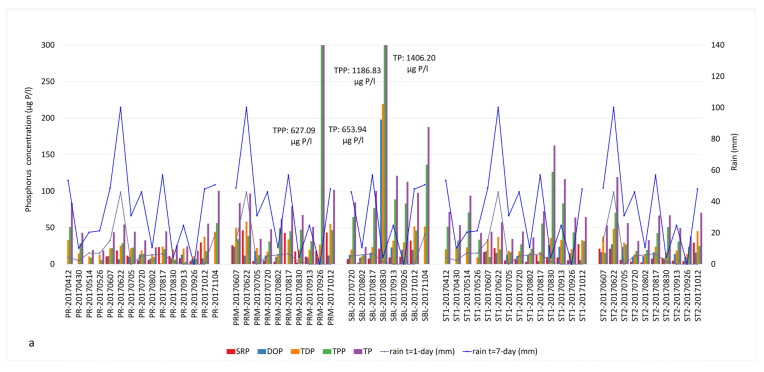
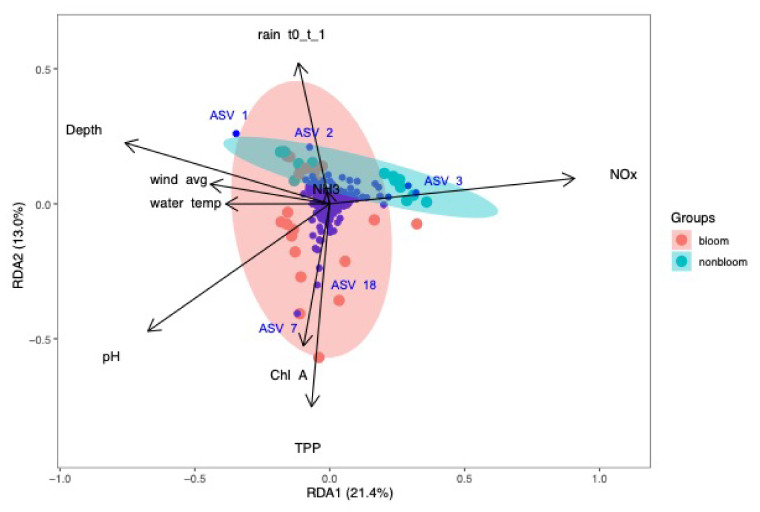
Anthropogenic activities release large amounts of nitrogen (N) and phosphorus (P) nutrients into the environment. Sources of nutrients include surface and sub-surface runoffs from agricultural practices with the application of chemical fertilizers and manure as well as combined sewer overflows (CSOs). Nutrient runoffs contribute to the eutrophication of aquatic ecosystems and enhance the growth of cyanobacteria. Precipitation is an important driving force behind the runoff of nutrients from agricultural fields into surrounding water bodies. To understand the dynamics between nutrient input, precipitation and cyanobacterial growth in Missisquoi Bay, Lake Champlain (Quebec), one location in Pike River (a major tributary into the bay) and four locations in Missisquoi Bay were monitored from April to November in 2017 and 2018. Biweekly water samples were analyzed using chemical methods and high-throughput sequencing of 16S rRNA gene amplicons. High concentrations of N and P were typically measured in April and May. Three major spikes in nutrient concentrations were observed in early and mid-summer as well as early fall, all of which were associated with intense cumulative precipitation events of 40 to 100 mm within 7 days prior to sampling. Despite the high concentrations of nutrients in the spring and early summer, the cyanobacterial blooms appeared in mid to late summer as the water temperature increased. sp. was the major bloom-forming cyanobacterium during both summers. A second intense bloom event of was also observed in the fall (October and November) for both years. Variation in the cyanobacteria population was strongly associated with inorganic and readily available fractions of N and P such as nitrites and nitrates (NOx), ammonia (NH) and dissolved organic phosphorus (DOP). During blooms, total Kjeldahl nitrogen (TKN) and total particulate phosphorus (TPP) fractions had a substantial influence on total nitrogen (TN) and total phosphorus (TP) concentrations, respectively. The abundance of bacteria involved in the metabolism of nitrogen compared to that of phosphorus revealed the importance of nitrogen on overall microbial dynamics as well as CB formation in the bay. Our findings emphasize the combined influence of precipitation events, temperature and several bioavailable fractions of nitrogen and phosphorus on cyanobacterial bloom episodes.
人为活动向环境中释放了大量的氮(N)和磷(P)养分。养分来源包括农业生产中施用化肥和粪肥后的地表及地下径流,以及合流制下水道溢流(CSO)。养分径流导致水生生态系统富营养化,并促进蓝藻生长。降水是养分从农田径流到周围水体的重要驱动力。为了解尚普兰湖(魁北克)米西索伊湾养分输入、降水与蓝藻生长之间的动态关系,2017年和2018年4月至11月对派克河(该湾的一条主要支流)的一个地点以及米西索伊湾的四个地点进行了监测。每两周采集一次水样,采用化学方法和16S rRNA基因扩增子的高通量测序进行分析。通常在4月和5月测得高浓度的氮和磷。在初夏和夏末以及初秋观察到养分浓度出现三次主要峰值,所有这些峰值都与采样前7天内40至100毫米的强累积降水事件有关。尽管春季和初夏养分浓度较高,但随着水温升高,蓝藻水华出现在夏末至秋末。在两个夏季, 属都是形成水华的主要蓝藻。在这两年的秋季(10月和11月)也观察到了第二次强烈的水华事件。蓝藻种群的变化与氮和磷的无机及易利用部分密切相关,如亚硝酸盐和硝酸盐(NOx)、氨(NH)和溶解有机磷(DOP)。在水华期间,凯氏氮(TKN)总量和总颗粒磷(TPP)部分分别对总氮(TN)和总磷(TP)浓度有重大影响。与参与磷代谢的细菌丰度相比,参与氮代谢的细菌丰度表明氮对该湾整体微生物动态以及蓝藻形成的重要性。我们的研究结果强调了降水事件、温度以及氮和磷的几种生物可利用部分对蓝藻水华事件的综合影响。