Physiological Sciences Graduate Interdisciplinary Program, University of Arizona, Tucson, AZ 85721, USA.
School of Nutritional Sciences and Wellness, University of Arizona, Tucson, AZ 85721, USA.
Nutrients. 2021 Sep 29;13(10):3470. doi: 10.3390/nu13103470.
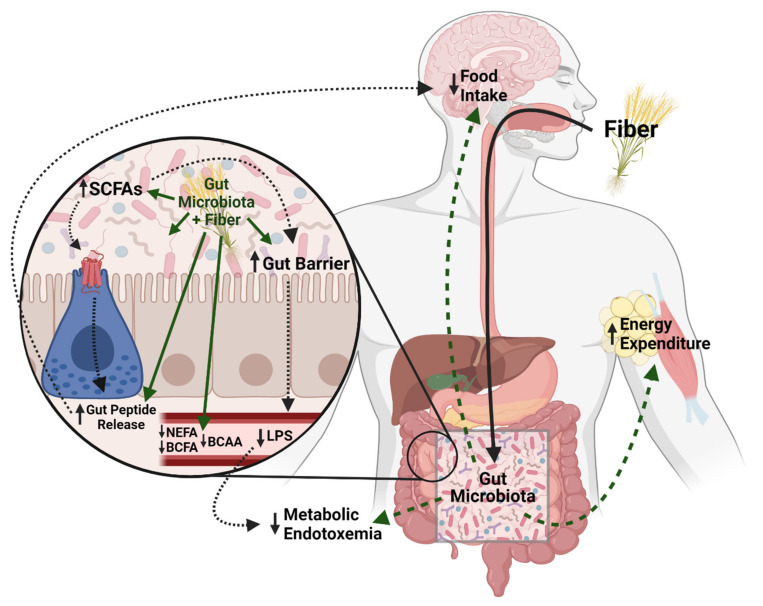
Obesity is due in part to increased consumption of a Western diet that is low in dietary fiber. Conversely, an increase in fiber supplementation to a diet can have various beneficial effects on metabolic homeostasis including weight loss and reduced adiposity. Fibers are extremely diverse in source and composition, such as high-amylose maize, β-glucan, wheat fiber, pectin, inulin-type fructans, and soluble corn fiber. Despite the heterogeneity of dietary fiber, most have been shown to play a role in alleviating obesity-related health issues, mainly by targeting and utilizing the properties of the gut microbiome. Reductions in body weight, adiposity, food intake, and markers of inflammation have all been reported with the consumption of various fibers, making them a promising treatment option for the obesity epidemic. This review will highlight the current findings on different plant-based fibers as a therapeutic dietary supplement to improve energy homeostasis via mechanisms of gut microbiota.
肥胖部分是由于西方饮食中膳食纤维含量低导致的。相反,增加膳食纤维的摄入量对代谢稳态有多种有益影响,包括减肥和减少肥胖。纤维在来源和组成上非常多样化,例如高直链玉米淀粉、β-葡聚糖、小麦纤维、果胶、菊粉型果聚糖和可溶性玉米纤维。尽管膳食纤维具有异质性,但大多数膳食纤维已被证明在缓解与肥胖相关的健康问题方面发挥作用,主要是通过靶向和利用肠道微生物组的特性。摄入各种纤维已被报道可降低体重、体脂、食物摄入量和炎症标志物,这使其成为肥胖症流行的一种有前途的治疗选择。本综述将重点介绍不同植物源性纤维作为一种治疗性膳食补充剂的最新发现,这些纤维通过肠道微生物组的作用来改善能量稳态。