Department of Nutritional Sciences, King's College London, London SE1 9NH, UK.
Department of Nutrition and Dietetics, Guys and St Thomas' NHS Foundation Trust, London SE1 7EH, UK.
Nutrients. 2021 Oct 14;13(10):3598. doi: 10.3390/nu13103598.
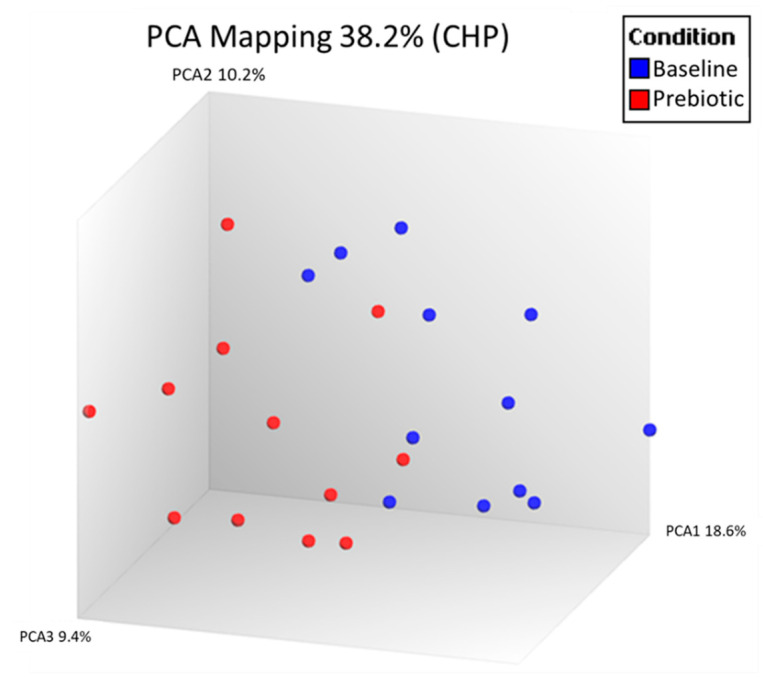
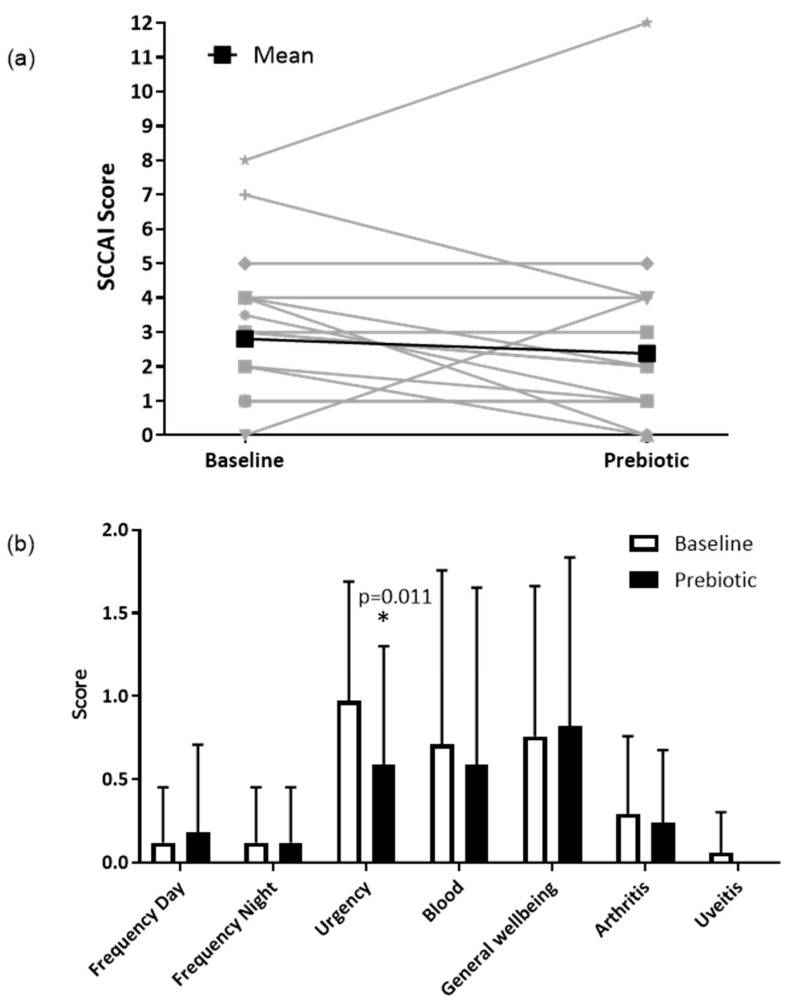
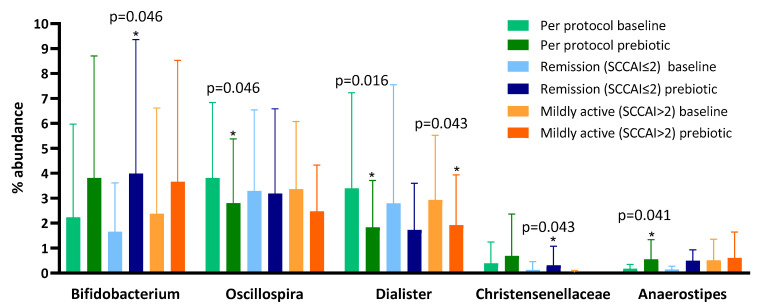
Prebiotics may promote immune homeostasis and reduce sub-clinical inflammation in humans. This study investigated the effect of prebiotic galactooligosaccharide (GOS) supplementation in colonic inflammation. Seventeen patients with active ulcerative colitis (UC) consumed 2.8 g/d GOS for 6 weeks. At baseline and 6 weeks, gene expression (microarray), fecal calprotectin (ELISA), microbiota (16S rRNA), short-chain fatty acids (SCFAs; gas-liquid chromatography), and clinical outcomes (simple clinical colitis activity index (SCCAI), gastrointestinal symptom rating scale (GSRS), and Bristol stool form scale (BSFS)) were measured. Following prebiotics, clinical scores (SCCAI), fecal calprotectin, SCFAs, and pH were unchanged. Five genes were upregulated and two downregulated. Normal stool proportion (BSFS) increased (49% vs. 70%, = 0.024), and the incidence (46% vs. 23%, = 0.016) and severity (0.7 vs. 0.5, = 0.048) of loose stool (GSRS), along with urgency (SCCAI) scores (1.0 vs. 0.5, = 0.011), were reduced. In patients with a baseline SCCAI ≤2, prebiotics increased the relative abundance of from 1.65% (1.97) to 3.99% (5.37) ( = 0.046) and from 0.13% (0.33) to 0.31% (0.76) ( = 0.043). Prebiotics did not lower clinical scores or inflammation but normalized stools. and proportions only increased in patients with less active diseases, indicating that the prebiotic effect may depend on disease activity. A controlled study is required to validate these observations.
益生元可能促进人体免疫稳态和减少亚临床炎症。本研究调查了补充半乳糖寡糖(GOS)对结肠炎症的影响。17 名活动期溃疡性结肠炎(UC)患者每天摄入 2.8 g GOS,持续 6 周。在基线和 6 周时,测量了基因表达(微阵列)、粪便钙卫蛋白(ELISA)、微生物组(16S rRNA)、短链脂肪酸(SCFA;气相色谱-液相色谱)和临床结果(简单临床结肠炎活动指数(SCCAI)、胃肠道症状评分量表(GSRS)和布里斯托粪便形态量表(BSFS))。在使用益生元后,临床评分(SCCAI)、粪便钙卫蛋白、SCFA 和 pH 没有变化。有 5 个基因上调,2 个基因下调。正常粪便比例(BSFS)增加(49%对 70%, = 0.024),稀便的发生率(46%对 23%, = 0.016)和严重程度(0.7 对 0.5, = 0.048)以及急迫感(SCCAI)评分(1.0 对 0.5, = 0.011)降低。在基线 SCCAI ≤2 的患者中,益生元增加了 的相对丰度从 1.65%(1.97)到 3.99%(5.37)( = 0.046)和 的相对丰度从 0.13%(0.33)到 0.31%(0.76)( = 0.043)。益生元没有降低临床评分或炎症,但使粪便正常化。仅在疾病活动度较低的患者中, 和 的比例增加,表明益生元的作用可能取决于疾病的活动度。需要进行对照研究来验证这些观察结果。