Obulapuram Prasanna Kumar, Arfin Tanvir, Mohammad Faruq, Khiste Sachin K, Chavali Murthy, Albalawi Aisha N, Al-Lohedan Hamad A
Wits Advanced Drug Delivery Platform Research Unit, Department of Pharmacy and Pharmacology, School of Therapeutic Sciences, Faculty of Health Sciences, University of the Witwatersrand, Johannesburg, 7 York Road, Johannesburg 2193, South Africa.
OPK Tech Solutions (PTY) Ltd., Pharmaceutical and Advanced Drug Delivery Research, 69 Hamlin Street, Highlands North, Johannesburg 2192, South Africa.
Polymers (Basel). 2021 Oct 11;13(20):3490. doi: 10.3390/polym13203490.
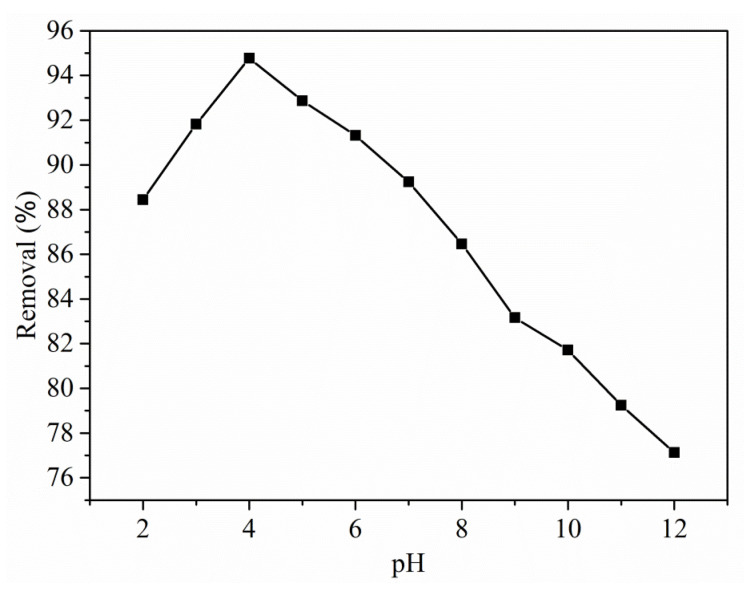
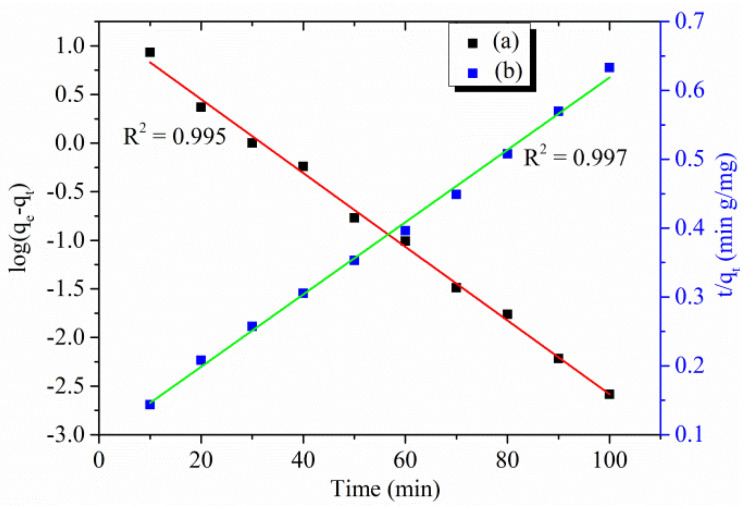
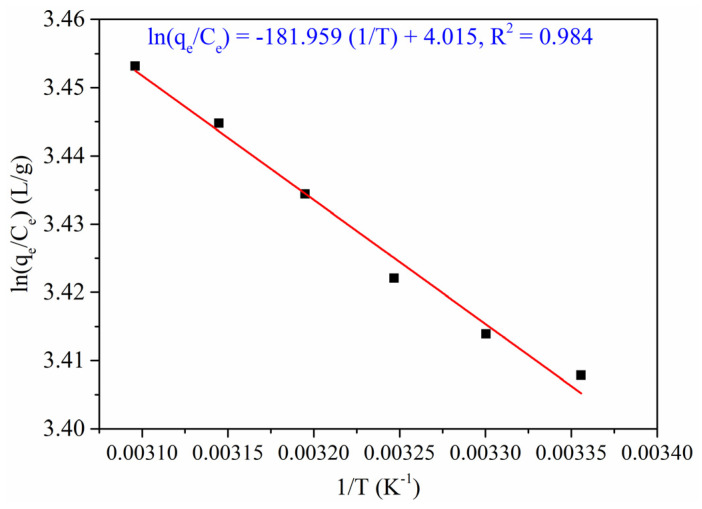
To overcome some of the limitations of activated carbon like efficiency, cost-effectiveness, and reusability, the present work deals with Cu(I)-based polyaniline (PANI) composite for the removal of reactive orange 16 (RO16) dye. Following the synthesis and characterization of formed Cu(I)-PANI composite, the batch experiments performed for the removal of RO16 dye indicated that the composite has the capacity to reduce the coloring from RO16. The experiments were conducted for the study of effects against changes in pH, time, and dose at room temperature, where we observed for a pH impact on the dye adsorption capacity in the range of 2-12. Among all, the optimal RO16 removal was found to be 94.77% at a pH of 4 and in addition, the adsorption kinetics confirmed to be pseudo-second-order with more suitability towards the Langmuir isotherm, where it is presumed to be the formation of a monolayer of dye molecule at the homogeneous absorbent surface. The calculated maximum capacity, q, determined from the Langmuir model was 392.156 mg/g. Further application of isotherms to attain thermodynamic parameters, a slight positive value of Δ° for RO16 adsorption was observed, meaning that there is an increased randomness in the irregular pattern at the specific Cu(I)-PANI interface for an adsorption process. This mechanism plays an essential role in maintaining the effects of water pollution; and, based on the analysis therefore, it is prominent that the Cu(I)-PANI composite can be employed as a promising and economical adsorbent for the treatment of RO16 and other dye molecules from the sewage in wastewater.
为了克服活性炭在效率、成本效益和可重复使用性等方面的一些局限性,本研究致力于研究基于Cu(I)的聚苯胺(PANI)复合材料对活性橙16(RO16)染料的去除效果。在合成并表征了所形成的Cu(I)-PANI复合材料之后,针对RO16染料去除进行的批次实验表明,该复合材料具有降低RO16染料色度的能力。实验在室温下进行,研究了pH值、时间和剂量变化的影响,我们观察到在2-12的pH范围内pH值对染料吸附容量有影响。其中,在pH为4时,RO16的最佳去除率为94.77%,此外,吸附动力学被证实为准二级反应,更符合朗缪尔等温线,推测在均匀的吸附剂表面形成了单层染料分子。根据朗缪尔模型计算得出的最大吸附容量q为392.156 mg/g。进一步应用等温线来获取热力学参数,观察到RO16吸附的Δ°值略有正值,这意味着在特定的Cu(I)-PANI界面处,吸附过程中不规则模式的随机性增加。这种机制在维持水污染治理效果方面起着至关重要的作用;因此,基于分析结果可知,Cu(I)-PANI复合材料有望成为一种经济有效的吸附剂,用于处理废水中的RO16和其他染料分子。