Department of Molecular and Cellular Physiology, Shinshu University School of Medicine, Matsumoto 390-8621, Japan.
Research Center for Advanced Science and Technology, Shinshu University, Matsumoto 390-8621, Japan.
Cells. 2021 Oct 12;10(10):2724. doi: 10.3390/cells10102724.
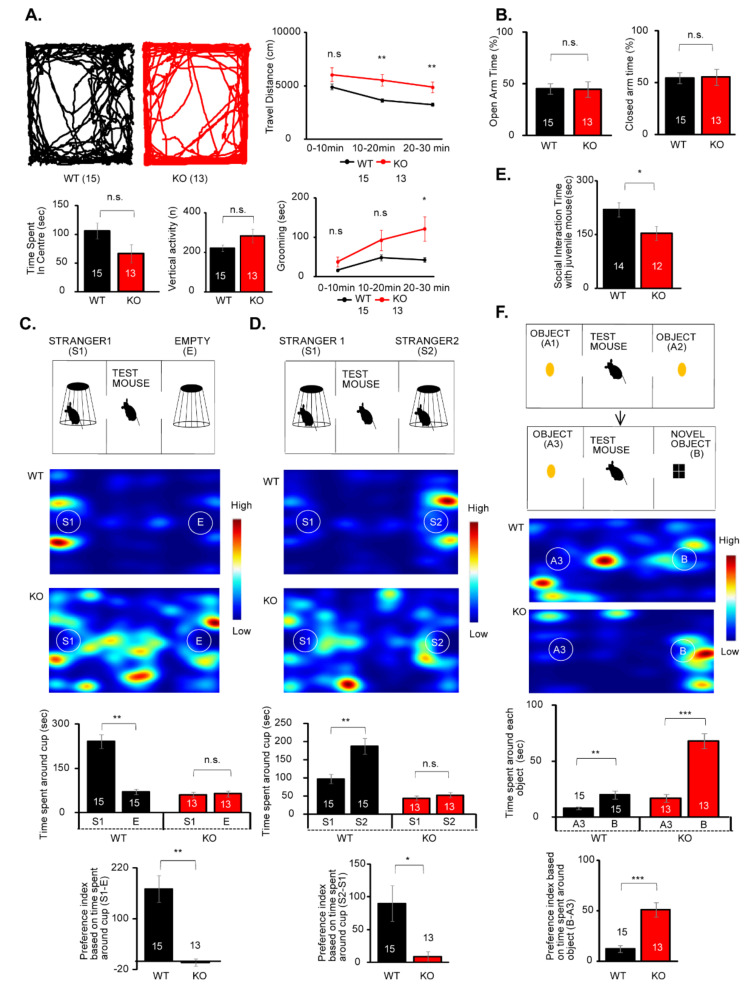
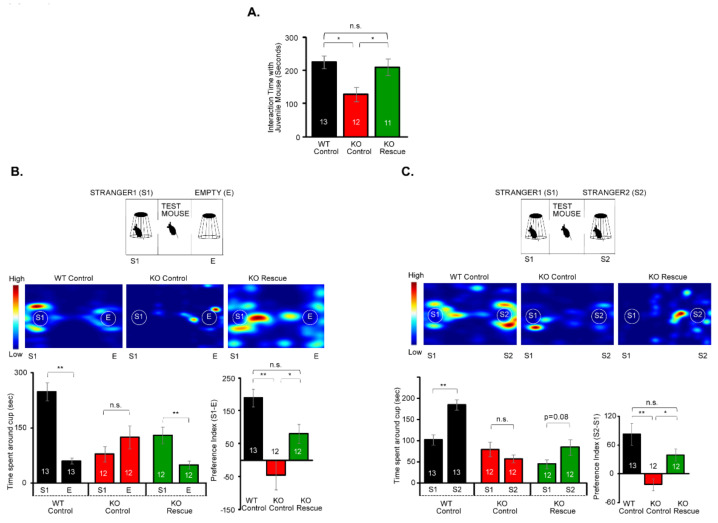
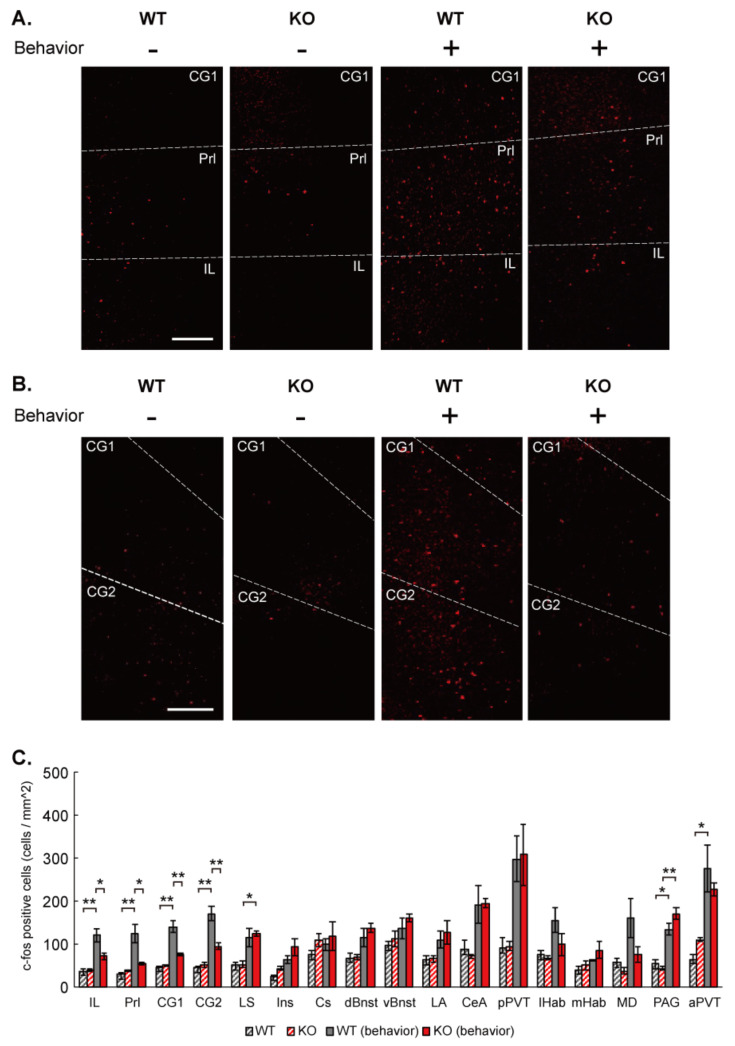
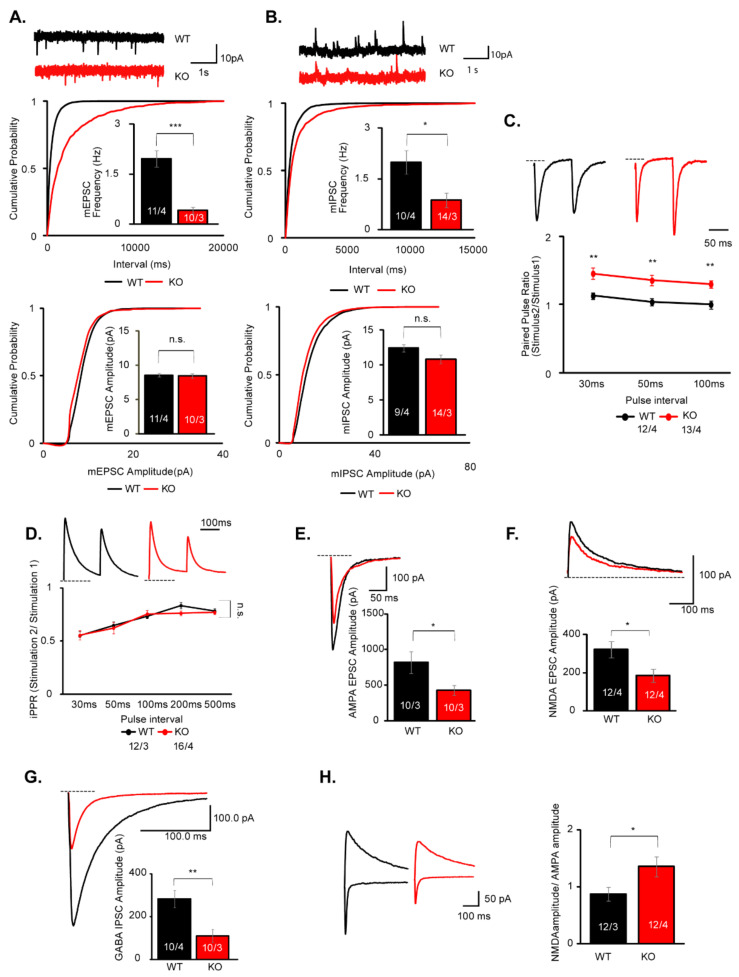
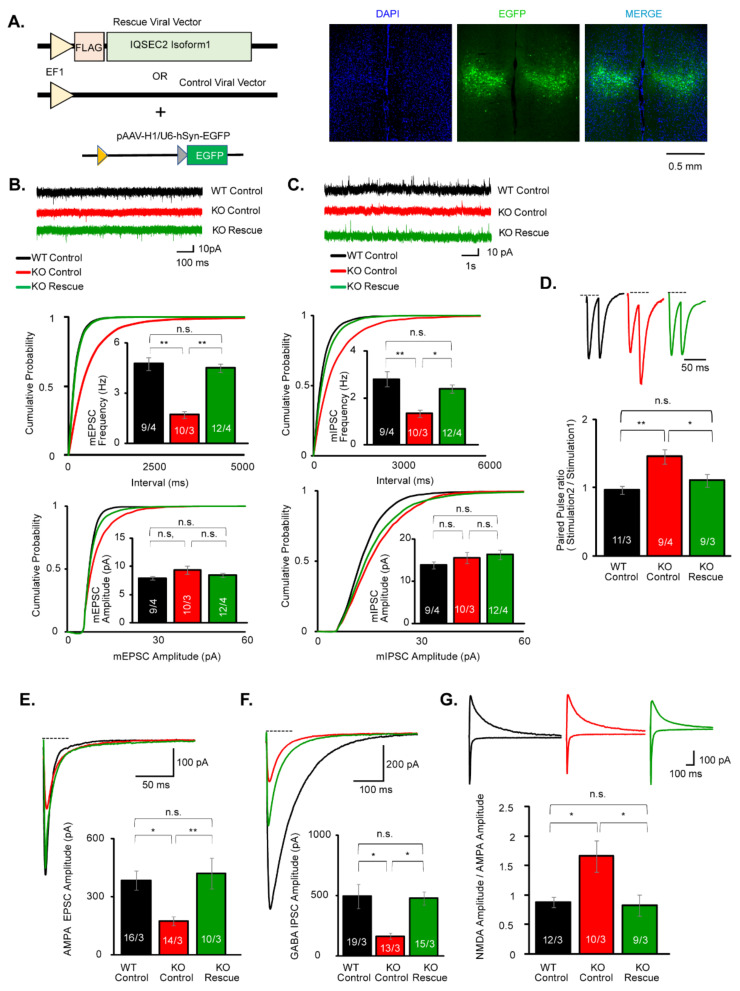
IQSEC2 is a guanine nucleotide exchange factor (GEF) for ADP-ribosylation factor 6 (Arf6), of which protein is exclusively localized to the postsynaptic density of the excitatory synapse. Human genome studies have revealed that the IQSEC2 gene is associated with X-linked neurodevelopmental disorders, such as intellectual disability (ID), epilepsy, and autism. In this study, we examined the behavior and synapse function in IQSEC2 knockout (KO) mice that we generated using CRIPSR/Cas9-mediated genome editing to solve the relevance between IQSEC2 deficiency and the pathophysiology of neurodevelopmental disorders. IQSEC2 KO mice exhibited autistic behaviors, such as overgrooming and social deficits. We identified that up-regulation of c-Fos expression in the medial prefrontal cortex (mPFC) induced by social stimulation was significantly attenuated in IQSEC2 KO mice. Whole cell electrophysiological recording identified that synaptic transmissions mediated by α-amino-3-hydroxy-5-methyl-4-isoxazolepropionic acid receptor (AMPAR), N-methyl-D-aspartate receptor (NMDAR), and γ-aminobutyric acid receptor (GABAR) were significantly decreased in pyramidal neurons in layer 5 of the mPFC in IQSEC2 KO mice. Reexpression of IQSEC2 isoform 1 in the mPFC of IQSEC2 KO mice using adeno-associated virus (AAV) rescued both synaptic and social deficits, suggesting that impaired synaptic function in the mPFC is responsible for social deficits in IQSEC2 KO mice.
IQSEC2 是一种鸟嘌呤核苷酸交换因子 (GEF),可作用于 ADP-ribosylation factor 6 (Arf6),该蛋白仅定位于兴奋性突触的突触后密度。人类基因组研究表明,IQSEC2 基因与 X 连锁神经发育障碍有关,如智力障碍 (ID)、癫痫和自闭症。在这项研究中,我们使用 CRISPR/Cas9 介导的基因组编辑生成了 IQSEC2 敲除 (KO) 小鼠,以研究 IQSEC2 缺乏与神经发育障碍病理生理学之间的相关性。IQSEC2 KO 小鼠表现出自闭症行为,如过度梳理和社交缺陷。我们发现,社交刺激引起的内侧前额叶皮质 (mPFC) 中 c-Fos 表达的上调在 IQSEC2 KO 小鼠中明显减弱。全细胞膜片钳记录表明,IQSEC2 KO 小鼠 mPFC 第 5 层锥体神经元中 α-氨基-3-羟基-5-甲基-4-异恶唑丙酸受体 (AMPAR)、N-甲基-D-天冬氨酸受体 (NMDAR) 和 γ-氨基丁酸受体 (GABAR) 介导的突触传递明显减少。通过腺相关病毒 (AAV) 在 IQSEC2 KO 小鼠的 mPFC 中重新表达 IQSEC2 同工型 1 可挽救突触和社交缺陷,表明 mPFC 中的突触功能障碍是 IQSEC2 KO 小鼠社交缺陷的原因。