Department of Pathology, Yale University School of Medicine, New Haven, Connecticut.
Department of Medicine, School of Medicine, National and Kapodistrian University of Athens, Athens, Greece.
Clin Cancer Res. 2022 Jan 15;28(2):360-367. doi: 10.1158/1078-0432.CCR-21-2649. Epub 2021 Oct 22.
Programmed cell death protein 1 (PD-1)/programmed death-ligand 1 (PD-L1) interaction suppresses local T-cell responses and promotes peripheral tolerance. In the current study, we focus on PD-1/PD-L1 co-location as a surrogate for this interaction and assess its association with immunotherapy outcomes in patients with non-small cell lung cancer (NSCLC).
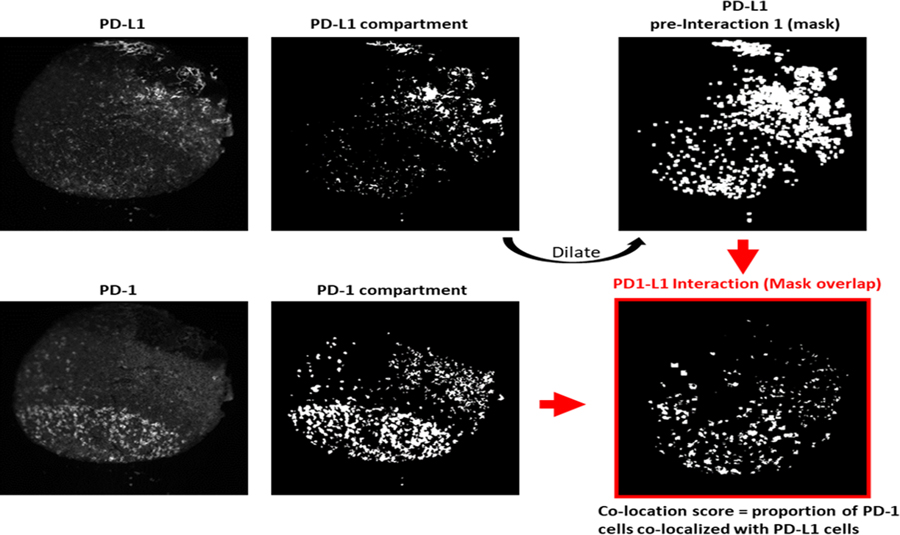
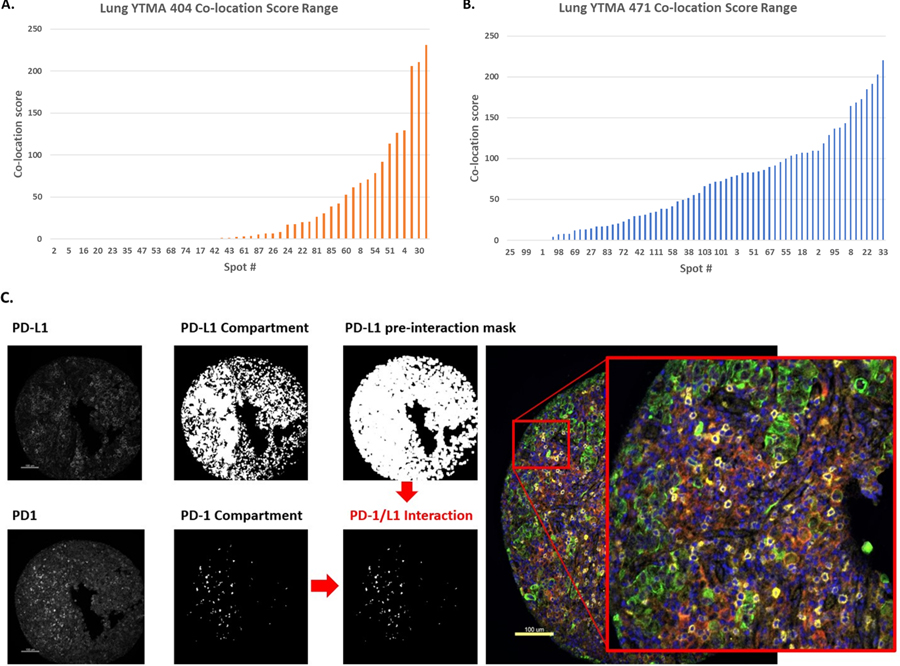
Pretreatment biopsies from a retrospective cohort of 154 immunotherapy-treated patients with advanced NSCLC were analyzed. Expression of PD-1 and PD-L1 was assessed by multiplexed quantitative immunofluorescence (QIF) and PD-1 expression in the same pixels as PD-L1 (called a co-location score) was measured using an algorithm to define overlapping expression areas. Co-location scores were correlated with immunotherapy outcomes and PD-L1 tumor proportion score.
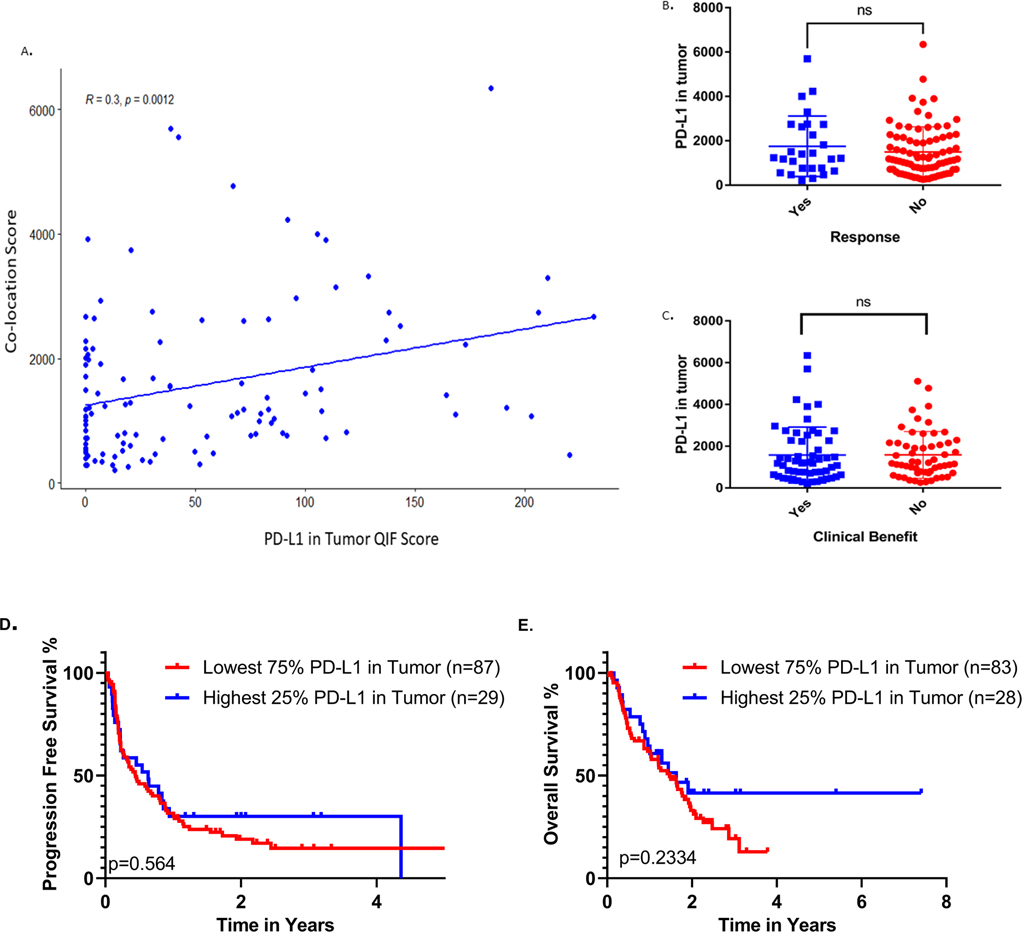
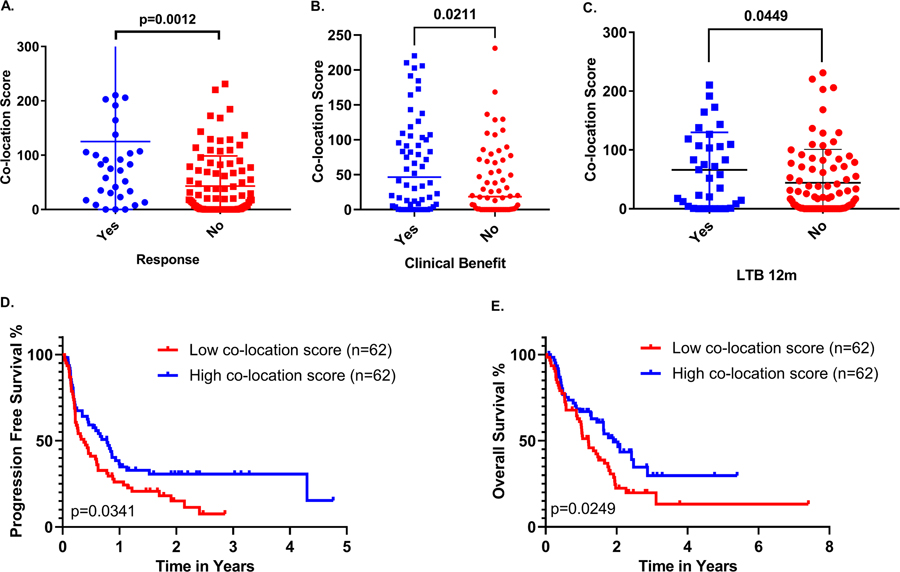
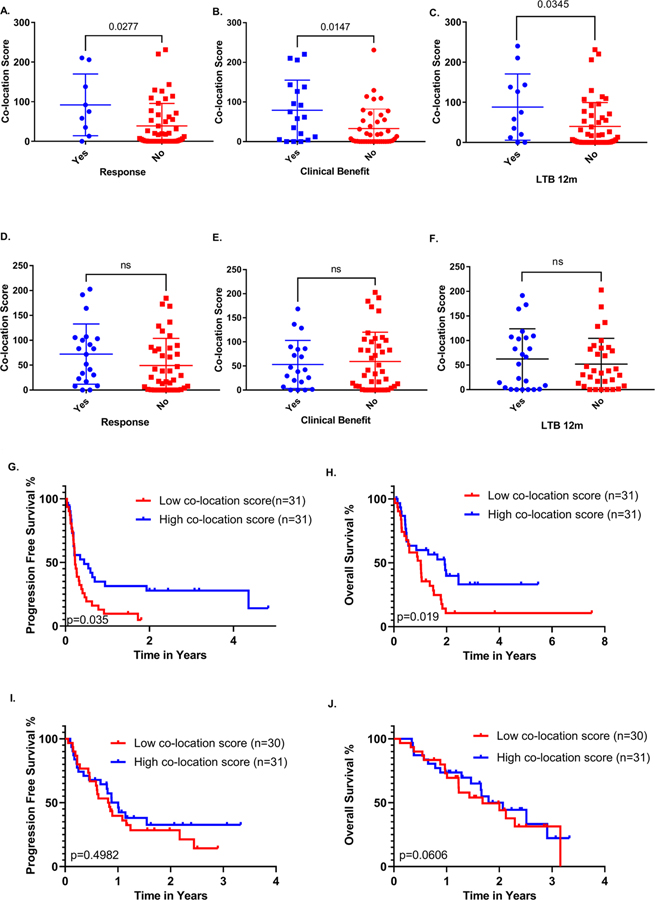
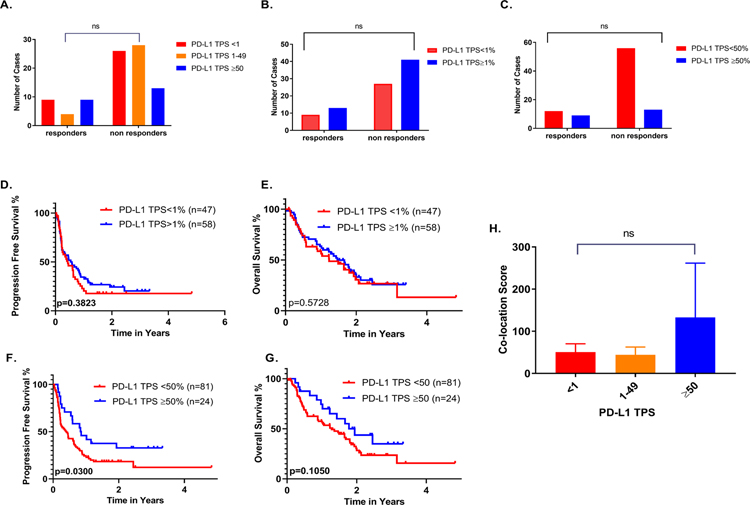
PD-1/PD-L1 co-location score was associated with best overall response ( = 0.0012), progression-free survival ( = 0.0341), and overall survival after immunotherapy ( = 0.0249). The association was driven by patients receiving immune checkpoint inhibitors in the second or subsequent line of treatment. PD-L1 tumor proportion score by IHC was also correlated with best overall response and progression-free survival. PD-L1 measured within the tumor compartment by QIF did not show any significant association with either best overall response or overall survival. Finally, co-location score was not associated with PD-L1 expression by either method.
On the basis of our findings, co-location score shows promise as a biomarker associated with outcome after immunotherapy. With further validation, it could have value as a predictive biomarker for the selection of patients with NSCLC receiving treatment with immune checkpoint inhibitors.
程序性死亡蛋白 1(PD-1)/程序性死亡配体 1(PD-L1)相互作用抑制局部 T 细胞反应并促进外周耐受。在本研究中,我们关注 PD-1/PD-L1 共定位作为这种相互作用的替代物,并评估其与非小细胞肺癌(NSCLC)患者免疫治疗结果的相关性。
对 154 名接受晚期 NSCLC 免疫治疗的回顾性队列患者的预处理活检进行分析。通过多重定量免疫荧光(QIF)评估 PD-1 和 PD-L1 的表达,并使用算法测量 PD-1 在 PD-L1 相同像素处的表达(称为共定位评分)以定义重叠表达区域。共定位评分与免疫治疗结果和 PD-L1 肿瘤比例评分相关。
PD-1/PD-L1 共定位评分与最佳总体反应(=0.0012)、无进展生存期(=0.0341)和免疫治疗后总生存期(=0.0249)相关。这种相关性是由接受二线或二线以上免疫检查点抑制剂治疗的患者驱动的。免疫组织化学法测定的 PD-L1 肿瘤比例评分与最佳总体反应和无进展生存期相关。QIF 测定的肿瘤内 PD-L1 表达与最佳总体反应或总生存期均无显著相关性。最后,两种方法测定的 PD-L1 表达均与共定位评分无关。
基于我们的研究结果,共定位评分有望成为一种与免疫治疗后结果相关的生物标志物。随着进一步验证,它可能作为预测生物标志物,用于选择接受免疫检查点抑制剂治疗的 NSCLC 患者。