Laboratory of Genetics, University of Wisconsin-Madison, Madison, WI 53706.
US Department of Agriculture-Agricultural Research Service Plant Science Research Unit, North Carolina State University, Raleigh, NC 27695.
Proc Natl Acad Sci U S A. 2021 Oct 26;118(43). doi: 10.1073/pnas.2112970118.
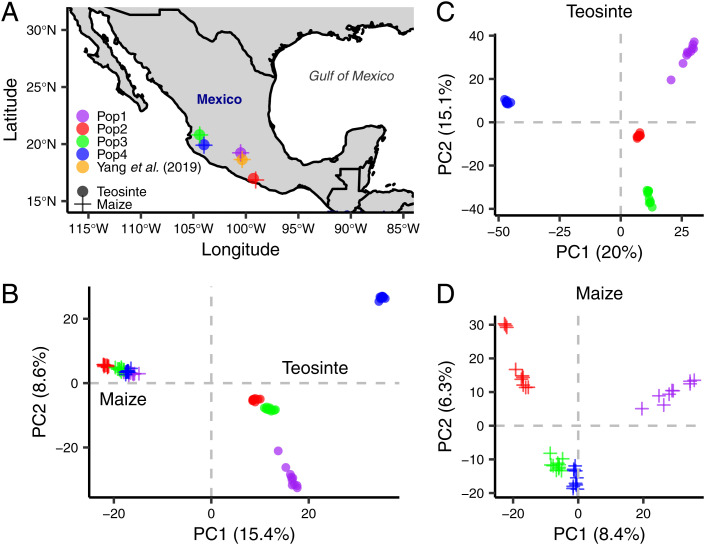
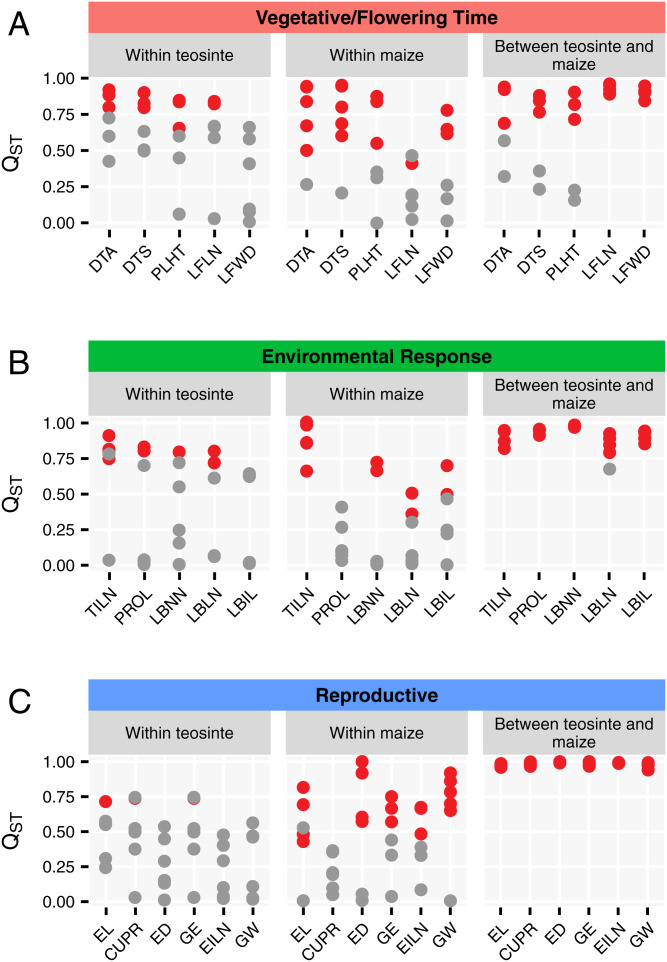
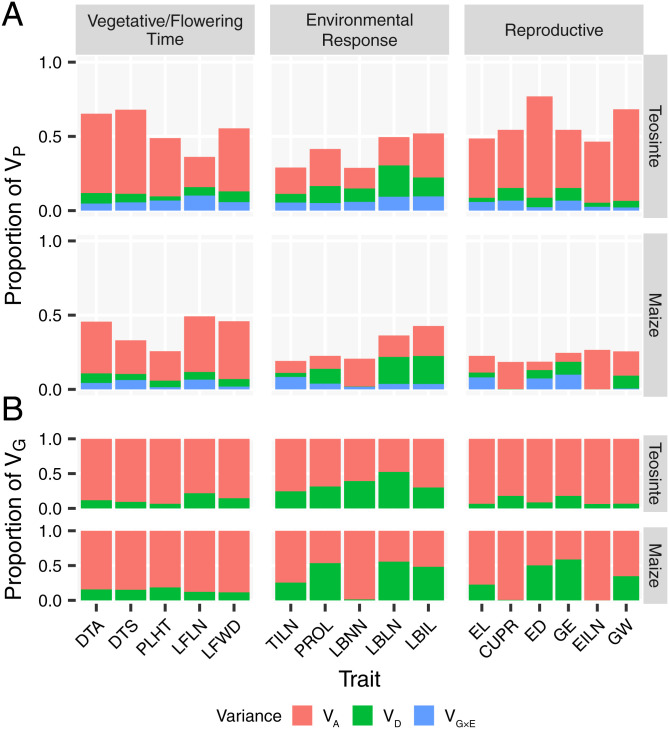
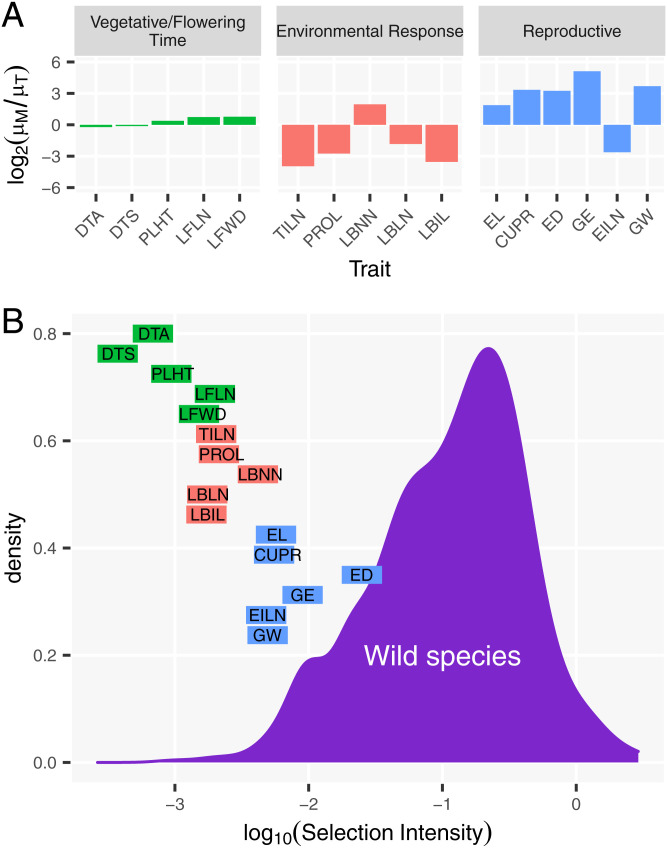
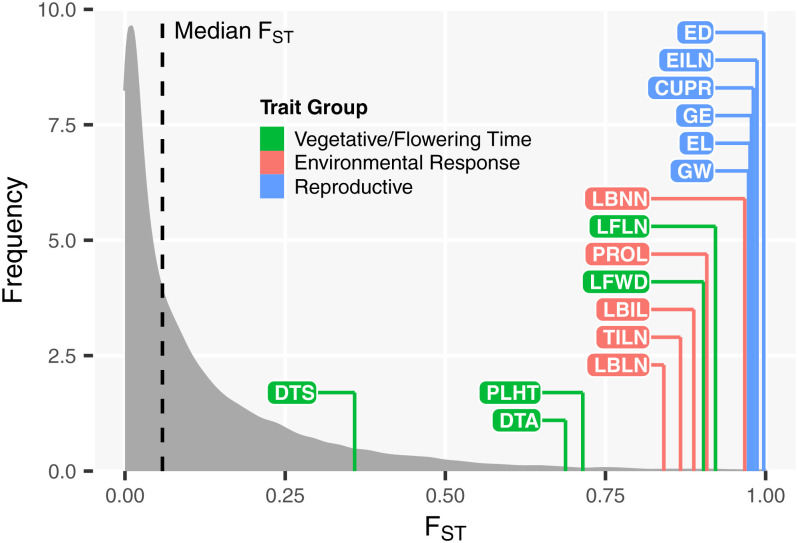
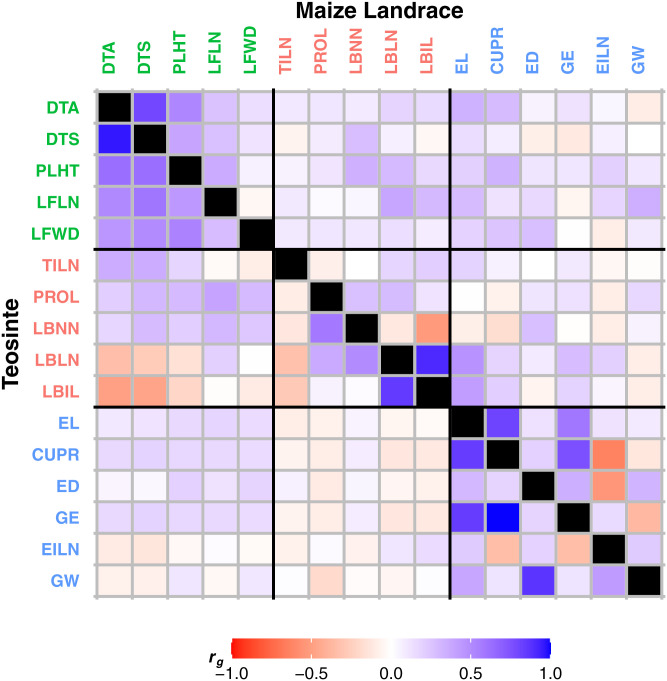
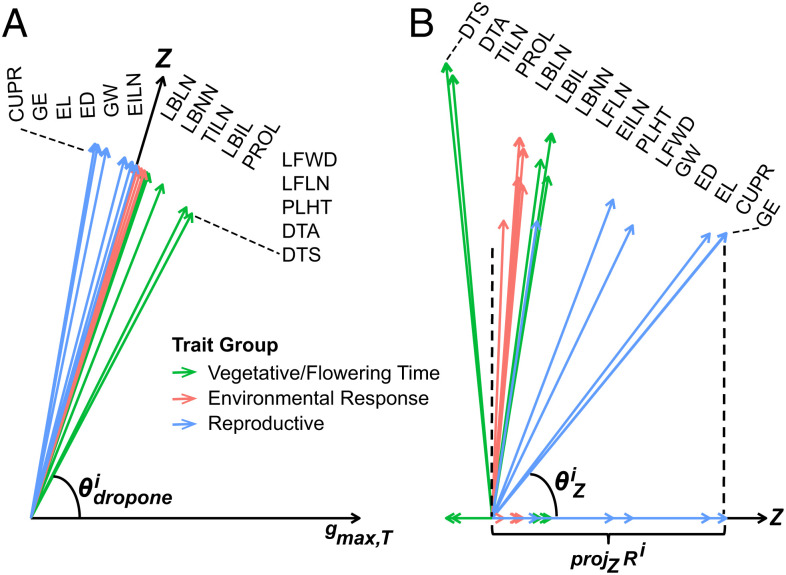
Very little is known about how domestication was constrained by the quantitative genetic architecture of crop progenitors and how quantitative genetic architecture was altered by domestication. Yang et al. [C. J. Yang , 116, 5643-5652 (2019)] drew multiple conclusions about how genetic architecture influenced and was altered by maize domestication based on one sympatric pair of teosinte and maize populations. To test the generality of their conclusions, we assayed the structure of genetic variances, genetic correlations among traits, strength of selection during domestication, and diversity in genetic architecture within teosinte and maize. Our results confirm that additive genetic variance is decreased, while dominance genetic variance is increased, during maize domestication. The genetic correlations are moderately conserved among traits between teosinte and maize, while the genetic variance-covariance matrices (-matrices) of teosinte and maize are quite different, primarily due to changes in the submatrix for reproductive traits. The inferred long-term selection intensities during domestication were weak, and the neutral hypothesis was rejected for reproductive and environmental response traits, suggesting that they were targets of selection during domestication. The -matrix of teosinte imposed considerable constraint on selection during the early domestication process, and constraint increased further along the domestication trajectory. Finally, we assayed variation among populations and observed that genetic architecture is generally conserved among populations within teosinte and maize but is radically different between teosinte and maize. While selection drove changes in essentially all traits between teosinte and maize, selection explains little of the difference in domestication traits among populations within teosinte or maize.
关于作物祖先的数量遗传结构如何限制驯化,以及驯化如何改变数量遗传结构,人们知之甚少。Yang 等人 [C. J. Yang 等,116,5643-5652(2019)] 根据一对同域的玉米和墨西哥类蜀黍种群,得出了关于遗传结构如何影响和被玉米驯化改变的多个结论。为了检验他们的结论的普遍性,我们检测了遗传方差结构、性状间遗传相关、驯化过程中选择的强度以及墨西哥类蜀黍和玉米中遗传结构的多样性。我们的结果证实,在玉米驯化过程中,加性遗传方差减小,显性遗传方差增加。墨西哥类蜀黍和玉米之间的性状遗传相关具有中等程度的保守性,而墨西哥类蜀黍和玉米的遗传方差-协方差矩阵(-矩阵)却大不相同,主要是由于生殖性状的子矩阵发生了变化。推断的驯化过程中的长期选择强度较弱,并且对于生殖和环境响应性状,中性假设被拒绝,表明它们是驯化过程中的选择目标。墨西哥类蜀黍的 -矩阵对早期驯化过程中的选择施加了相当大的限制,并且随着驯化轨迹的进一步发展,限制会进一步增加。最后,我们检测了种群间的变异,并观察到遗传结构在墨西哥类蜀黍和玉米的种群内通常是保守的,但在墨西哥类蜀黍和玉米之间则有很大的差异。虽然选择驱动了墨西哥类蜀黍和玉米之间的所有性状的变化,但选择在墨西哥类蜀黍或玉米的种群内的驯化性状之间的差异中解释很少。