Laboratory of Genetics, University of Wisconsin-Madison, Madison, WI 53706.
US Department of Agriculture-Agricultural Research Service Plant Science Research Unit, North Carolina State University, Raleigh, NC 27695.
Proc Natl Acad Sci U S A. 2019 Mar 19;116(12):5643-5652. doi: 10.1073/pnas.1820997116. Epub 2019 Mar 6.
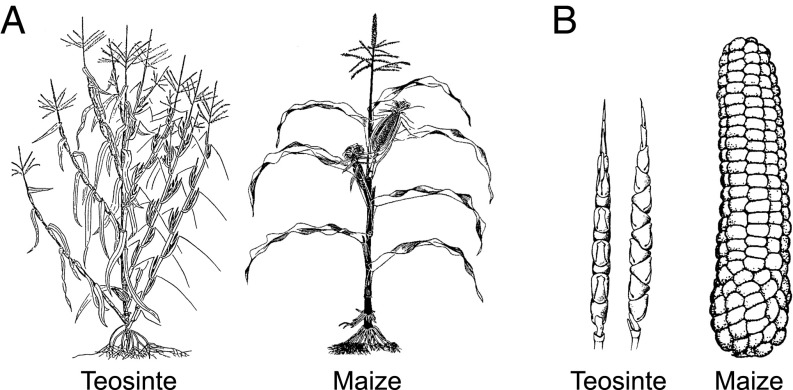
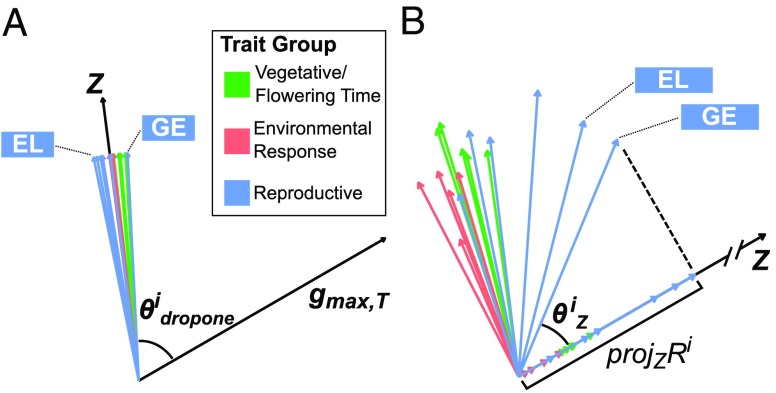
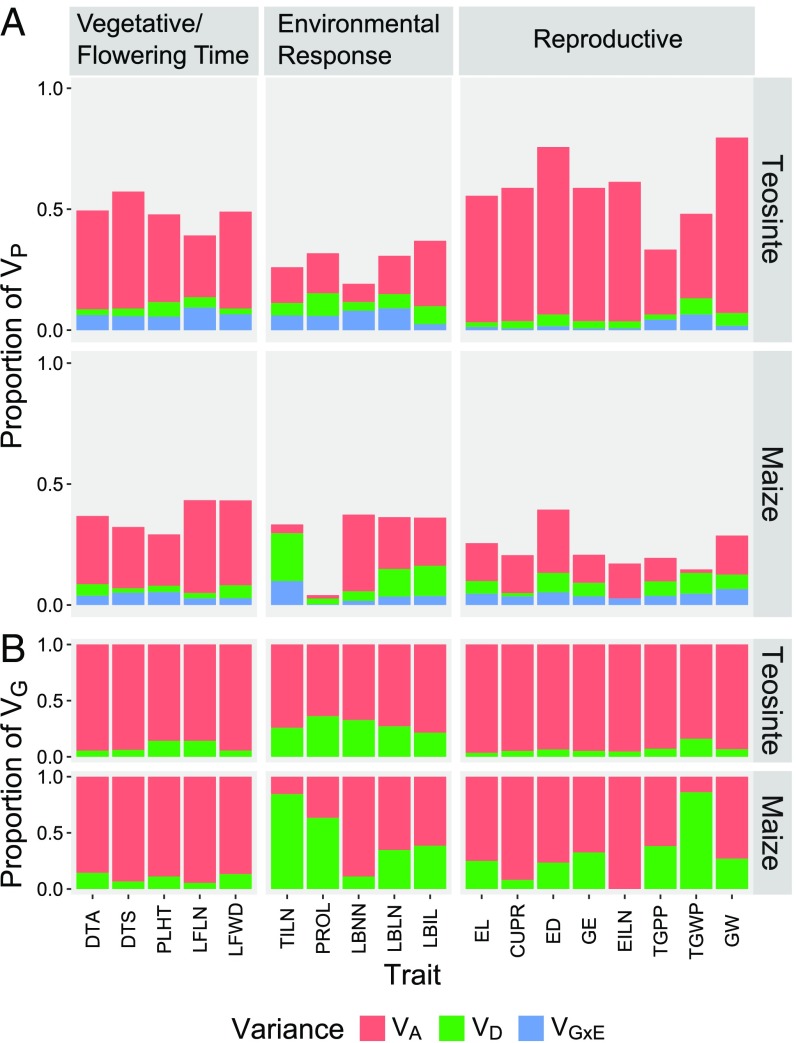
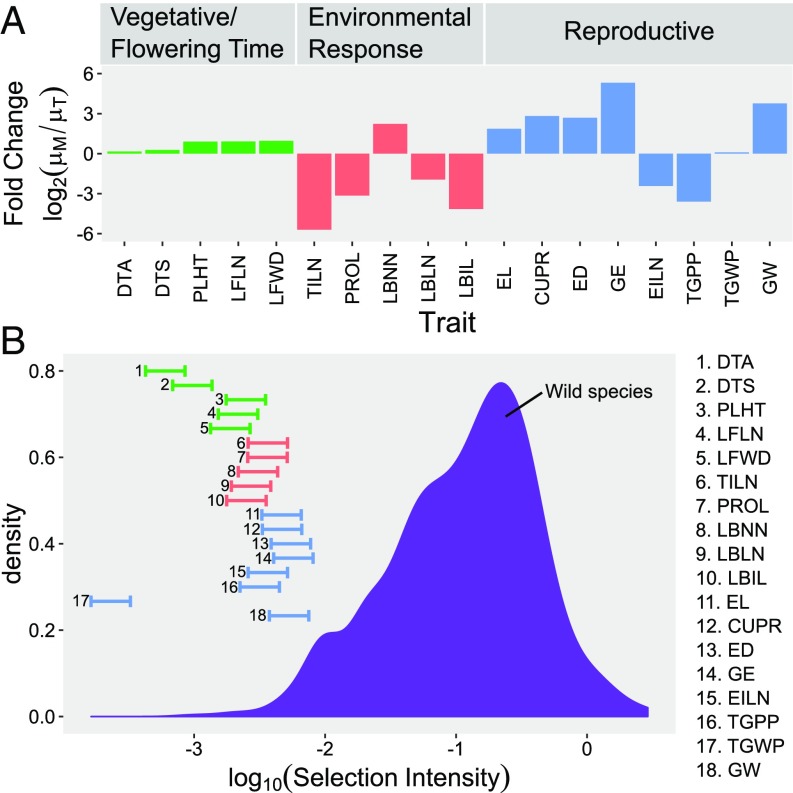
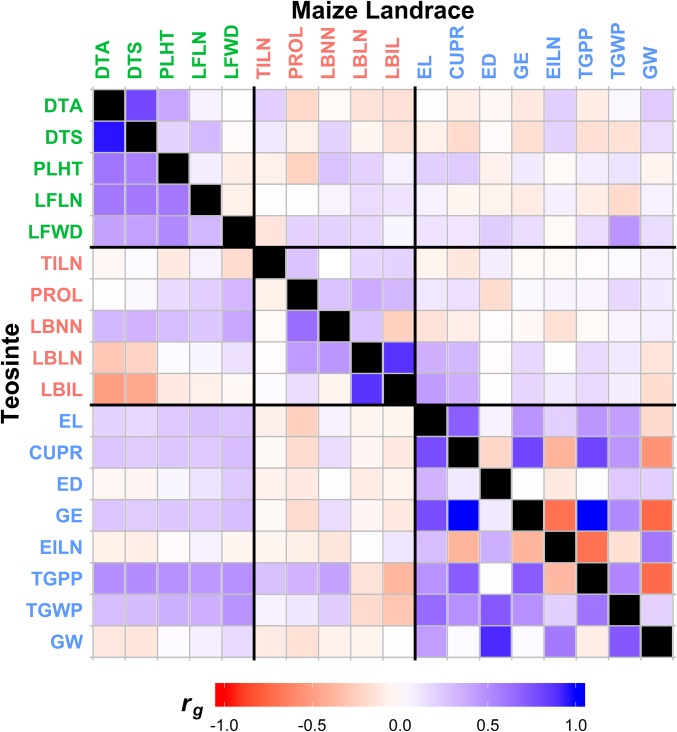
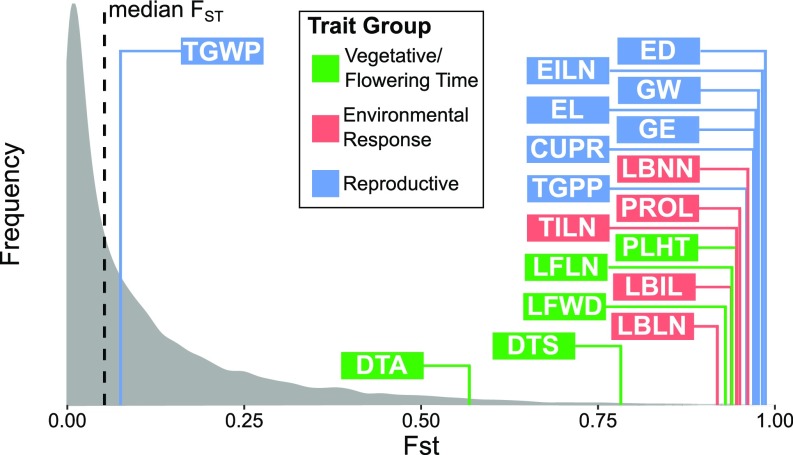
The process of evolution under domestication has been studied using phylogenetics, population genetics-genomics, quantitative trait locus (QTL) mapping, gene expression assays, and archaeology. Here, we apply an evolutionary quantitative genetic approach to understand the constraints imposed by the genetic architecture of trait variation in teosinte, the wild ancestor of maize, and the consequences of domestication on genetic architecture. Using modern teosinte and maize landrace populations as proxies for the ancestor and domesticate, respectively, we estimated heritabilities, additive and dominance genetic variances, genetic-by-environment variances, genetic correlations, and genetic covariances for 18 domestication-related traits using realized genomic relationships estimated from genome-wide markers. We found a reduction in heritabilities across most traits, and the reduction is stronger in reproductive traits (size and numbers of grains and ears) than vegetative traits. We observed larger depletion in additive genetic variance than dominance genetic variance. Selection intensities during domestication were weak for all traits, with reproductive traits showing the highest values. For 17 of 18 traits, neutral divergence is rejected, suggesting they were targets of selection during domestication. Yield (total grain weight) per plant is the sole trait that selection does not appear to have improved in maize relative to teosinte. From a multivariate evolution perspective, we identified a strong, nonneutral divergence between teosinte and maize landrace genetic variance-covariance matrices (G-matrices). While the structure of G-matrix in teosinte posed considerable genetic constraint on early domestication, the maize landrace G-matrix indicates that the degree of constraint is more unfavorable for further evolution along the same trajectory.
进化过程在驯化过程中已通过系统发生学、群体遗传学-基因组学、数量性状位点(QTL)作图、基因表达分析和考古学进行了研究。在这里,我们应用进化数量遗传学方法来了解玉米野生祖先玉米的性状变异的遗传结构所施加的限制,以及驯化对遗传结构的影响。使用现代玉米和玉米地方品种群体分别作为祖先和驯化的代表,我们使用来自全基因组标记估计的实际基因组关系来估计 18 个与驯化相关的性状的遗传力、加性和显性遗传方差、遗传与环境方差、遗传相关性和遗传协方差。我们发现大多数性状的遗传力都有所降低,而生殖性状(籽粒和穗的大小和数量)的降低幅度比营养性状更强。我们观察到加性遗传方差的耗散比显性遗传方差更大。所有性状的驯化选择强度都很弱,生殖性状的选择强度最高。在驯化过程中,有 17/18 个性状的中性分歧被拒绝,表明它们是驯化过程中的选择目标。与玉米相比,单位植物的产量(总籽粒重量)是唯一没有表现出选择改良的性状。从多变量进化的角度来看,我们发现玉米地方品种的遗传方差-协方差矩阵(G 矩阵)与玉米地方品种之间存在强烈的、非中性分歧。虽然 teosinte 的 G 矩阵结构对早期驯化构成了相当大的遗传限制,但玉米地方品种的 G 矩阵表明,限制的程度对沿着相同轨迹进一步进化更为不利。