European Molecular Biology Laboratory (EMBL), Heidelberg, Germany.
The Medical Research Council Toxicology Unit, University of Cambridge, Cambridge, UK.
Mol Syst Biol. 2021 Oct;17(10):e10141. doi: 10.15252/msb.202010141.
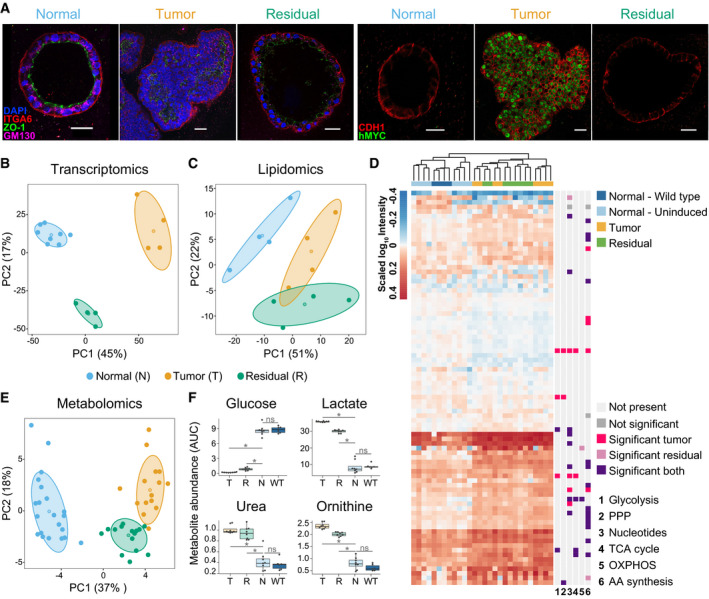
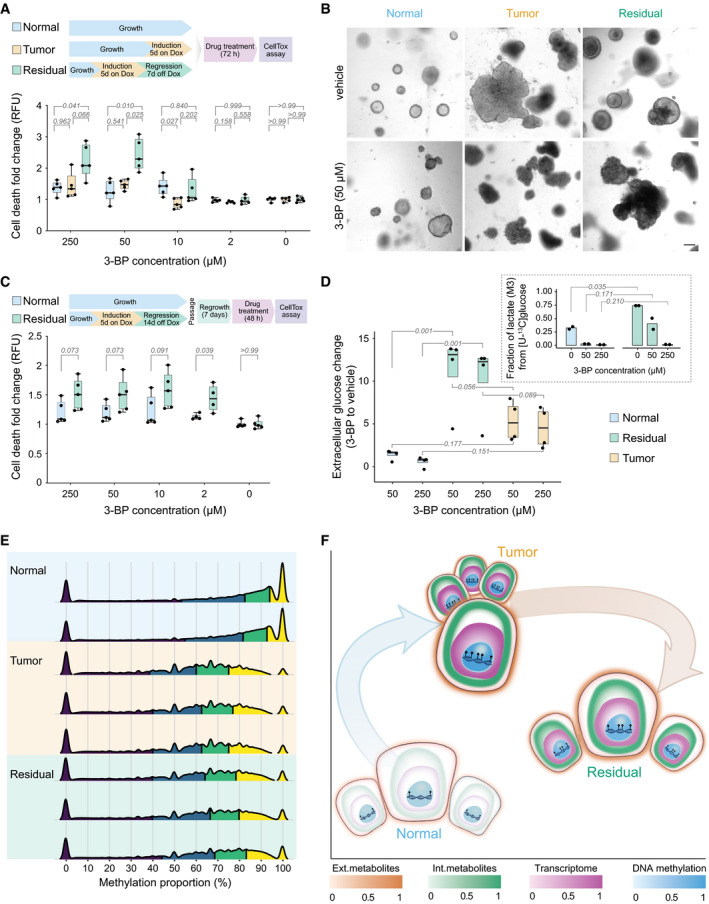
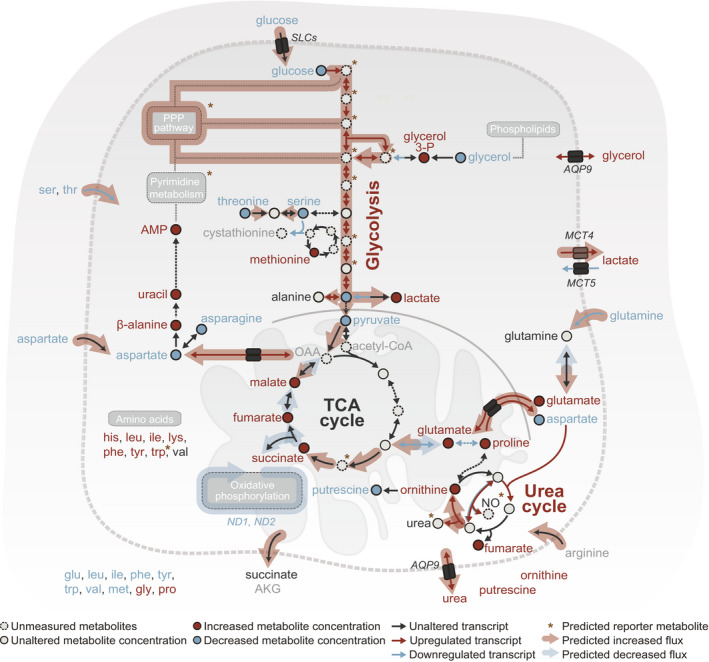
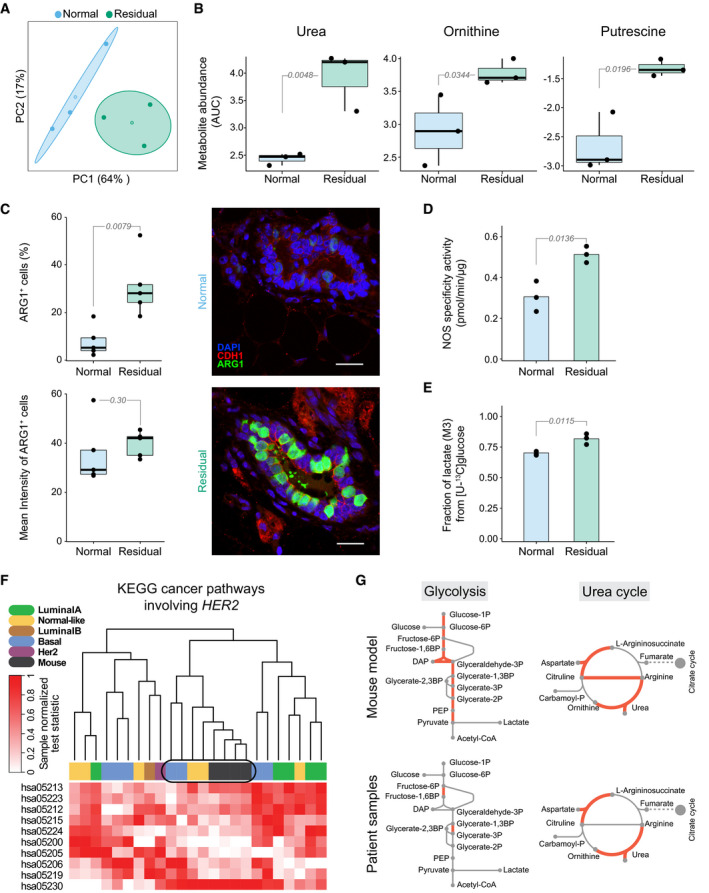
Tumor relapse from treatment-resistant cells (minimal residual disease, MRD) underlies most breast cancer-related deaths. Yet, the molecular characteristics defining their malignancy have largely remained elusive. Here, we integrated multi-omics data from a tractable organoid system with a metabolic modeling approach to uncover the metabolic and regulatory idiosyncrasies of the MRD. We find that the resistant cells, despite their non-proliferative phenotype and the absence of oncogenic signaling, feature increased glycolysis and activity of certain urea cycle enzyme reminiscent of the tumor. This metabolic distinctiveness was also evident in a mouse model and in transcriptomic data from patients following neo-adjuvant therapy. We further identified a marked similarity in DNA methylation profiles between tumor and residual cells. Taken together, our data reveal a metabolic and epigenetic memory of the treatment-resistant cells. We further demonstrate that the memorized elevated glycolysis in MRD is crucial for their survival and can be targeted using a small-molecule inhibitor without impacting normal cells. The metabolic aberrances of MRD thus offer new therapeutic opportunities for post-treatment care to prevent breast tumor recurrence.
治疗耐药细胞(微小残留病灶,MRD)引发的肿瘤复发是大多数乳腺癌相关死亡的原因。然而,定义其恶性程度的分子特征在很大程度上仍难以捉摸。在这里,我们整合了可处理类器官系统的多组学数据和代谢建模方法,揭示了 MRD 的代谢和调控特征。我们发现,耐药细胞尽管表现出非增殖表型和缺乏致癌信号,但具有增强的糖酵解和某些尿素循环酶的活性,这与肿瘤相似。这种代谢特征在小鼠模型和新辅助治疗后患者的转录组数据中也很明显。我们还发现肿瘤和残留细胞之间的 DNA 甲基化谱存在明显的相似性。总之,我们的数据揭示了治疗耐药细胞的代谢和表观遗传记忆。我们进一步证明,MRD 中被记忆的升高的糖酵解对于它们的存活至关重要,可以使用小分子抑制剂靶向治疗,而不会影响正常细胞。因此,MRD 的代谢异常为治疗后提供了新的治疗机会,以防止乳腺癌复发。