Hajjo Rima, Sabbah Dima A, Bardaweel Sanaa K, Tropsha Alexander
Department of Pharmacy, Faculty of Pharmacy, Al-Zaytoonah University of Jordan, Amman 11733, Jordan.
Laboratory for Molecular Modeling, Division of Chemical Biology and Medicinal Chemistry, Eshelman School of Pharmacy, The University of North Carlina at Chapel Hill, Chapel Hill, NC 27515, USA.
Vaccines (Basel). 2021 Oct 15;9(10):1186. doi: 10.3390/vaccines9101186.
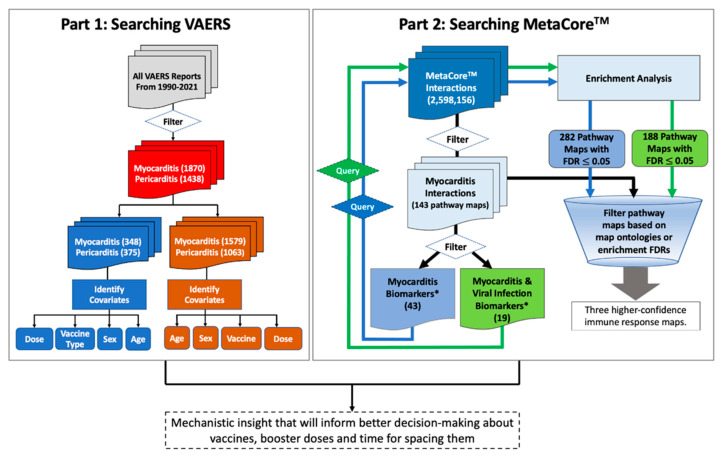
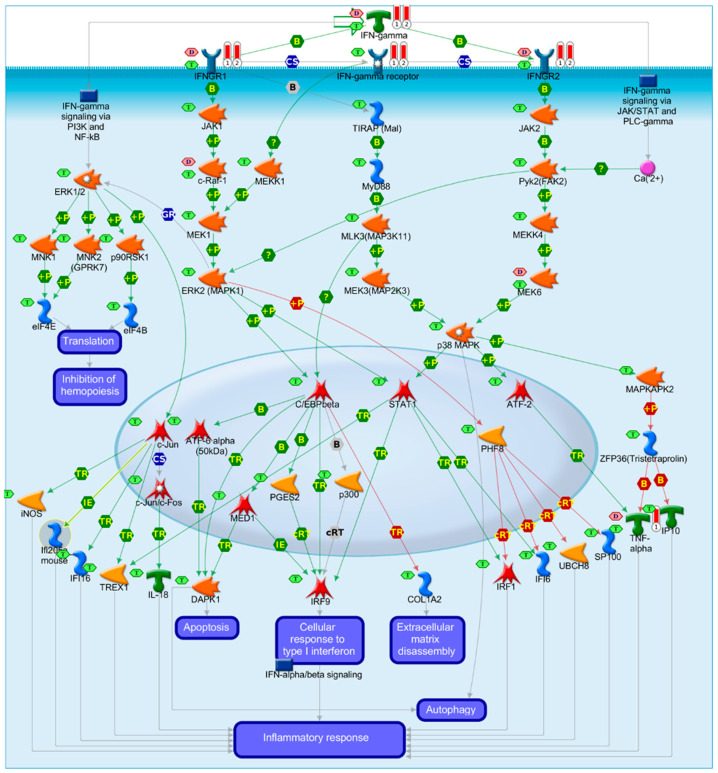
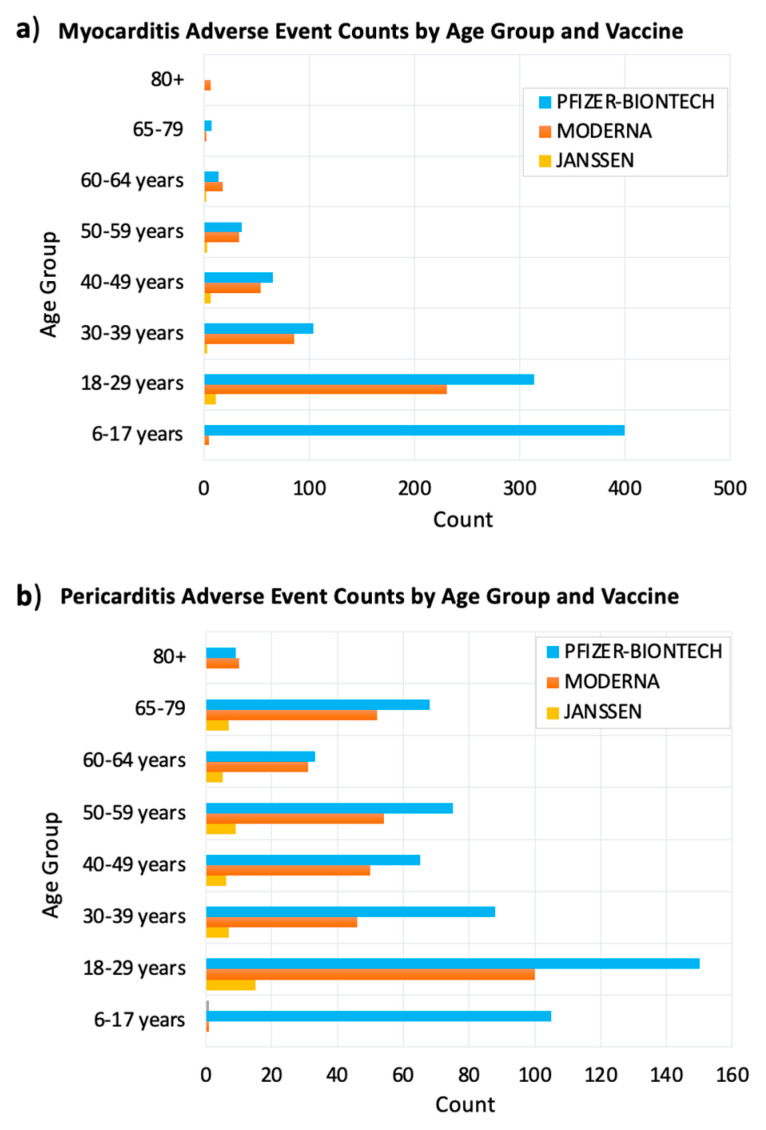
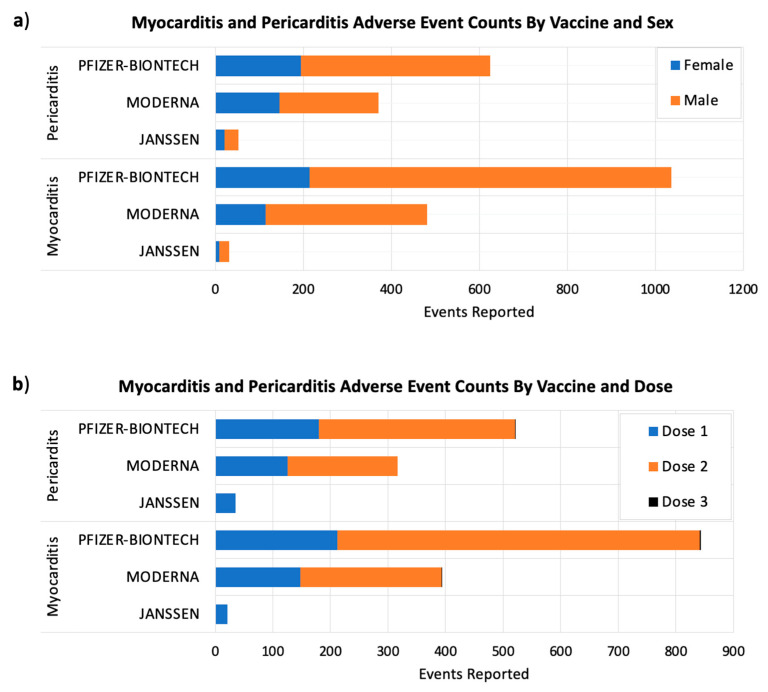
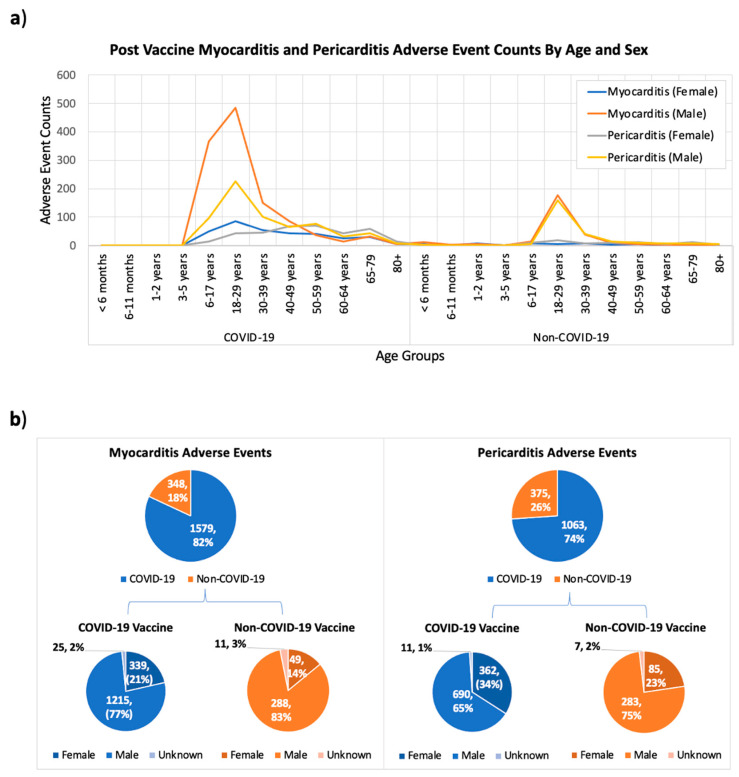
Myocarditis and pericarditis have been linked recently to COVID-19 vaccines without exploring the underlying mechanisms, or compared to cardiac adverse events post-non-COVID-19 vaccines. We introduce an informatics approach to study post-vaccine adverse events on the systems biology level to aid the prioritization of effective preventive measures and mechanism-based pharmacotherapy by integrating the analysis of adverse event reports from the Vaccine Adverse Event Reporting System (VAERS) with systems biology methods. Our results indicated that post-vaccine myocarditis and pericarditis were associated most frequently with mRNA COVID-19 vaccines followed by live or live-attenuated non-COVID-19 vaccines such as smallpox and anthrax vaccines. The frequencies of cardiac adverse events were affected by vaccine, vaccine type, vaccine dose, sex, and age of the vaccinated individuals. Systems biology results suggested a central role of interferon-gamma (INF-gamma) in the biological processes leading to cardiac adverse events, by impacting MAPK and JAK-STAT signaling pathways. We suggest that increasing the time interval between vaccine doses minimizes the risks of developing inflammatory adverse reactions. We also propose glucocorticoids as preferred treatments based on system biology evidence. Our informatics workflow provides an invaluable tool to study post-vaccine adverse events on the systems biology level to suggest effective mechanism-based pharmacotherapy and/or suitable preventive measures.
心肌炎和心包炎最近被认为与新冠疫苗有关,但尚未探究其潜在机制,也未与非新冠疫苗接种后的心脏不良事件进行比较。我们引入一种信息学方法,在系统生物学层面研究疫苗接种后的不良事件,通过将疫苗不良事件报告系统(VAERS)的不良事件报告分析与系统生物学方法相结合,来帮助确定有效的预防措施和基于机制的药物治疗的优先级。我们的结果表明,接种疫苗后发生的心肌炎和心包炎最常与新冠mRNA疫苗有关,其次是天花和炭疽疫苗等活疫苗或减毒活非新冠疫苗。心脏不良事件的发生频率受疫苗、疫苗类型、疫苗剂量、接种者的性别和年龄影响。系统生物学结果表明,干扰素-γ(INF-γ)通过影响丝裂原活化蛋白激酶(MAPK)和Janus激酶-信号转导子和转录激活子(JAK-STAT)信号通路,在导致心脏不良事件的生物学过程中起核心作用。我们建议增加疫苗接种剂量之间的时间间隔,以将发生炎症性不良反应的风险降至最低。我们还根据系统生物学证据提出将糖皮质激素作为首选治疗方法。我们的信息学工作流程为在系统生物学层面研究疫苗接种后的不良事件提供了一个宝贵工具,以提出有效的基于机制的药物治疗和/或合适的预防措施。