Center for Influenza and Emerging Infectious Diseases, University of Missouri, Columbia, MO 65211, USA.
Department of Molecular Microbiology and Immunology, School of Medicine, University of Missouri, Columbia, MO 65211, USA.
Viruses. 2021 Sep 22;13(10):1896. doi: 10.3390/v13101896.
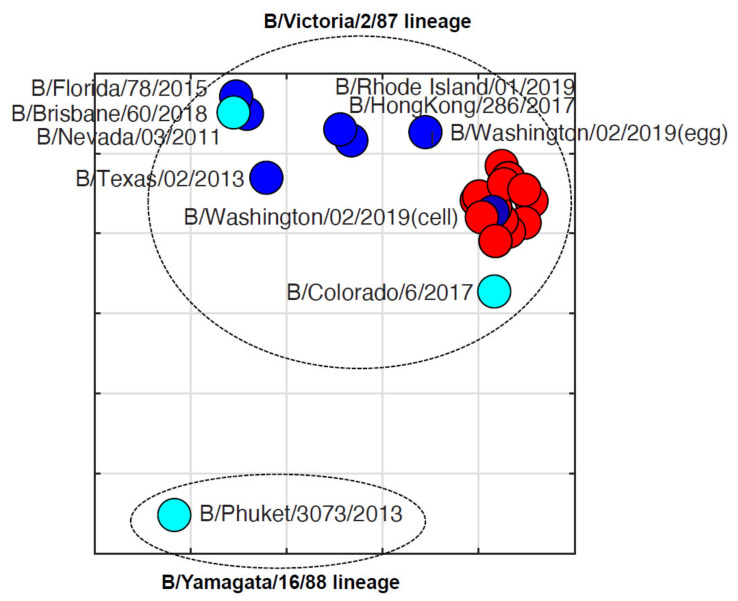
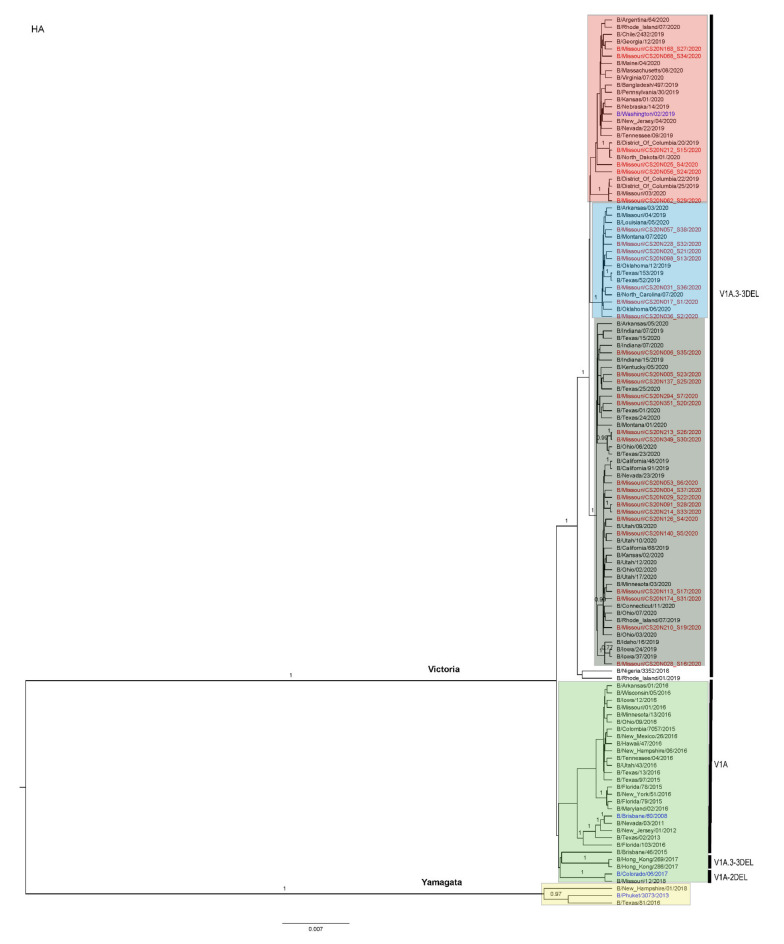
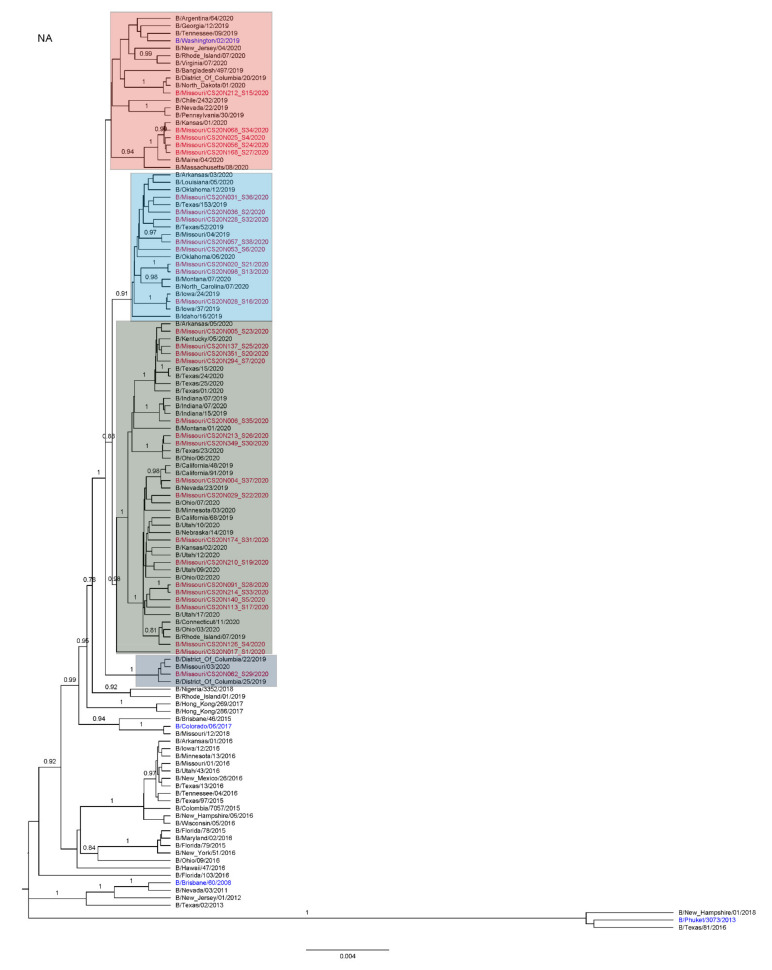
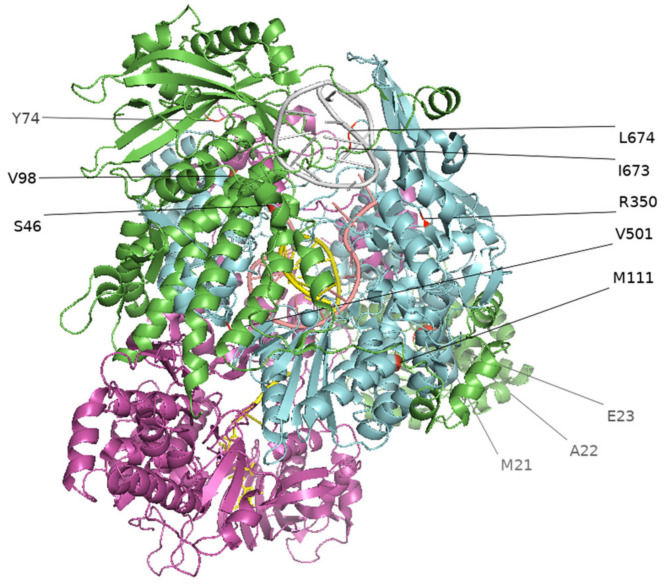
Influenza B viruses (IBVs) are causing an increasing burden of morbidity and mortality, yet the prevalence of culture-adapted mutations in human seasonal IBVs are unclear. We collected 368 clinical samples from patients with influenza-like illness in Missouri during the 2019-2020 influenza season and recovered 146 influenza isolates including 38 IBV isolates. Of MDCK-CCL34, MDCK-Siat1, and humanized MDCK (hCK), hCK showed the highest virus recovery efficiency. All Missourian IBVs belonged to the Victoria V1A.3 lineage, all of which contained a three-amino acid deletion on the HA protein and were antigenically distant from the Victoria lineage IBV vaccine strain used during that season. By comparing genomic sequences of these IBVs in 31 paired samples, eight cell-adapted nonsynonymous mutations were identified, with the majority in the RNA polymerase. Analyses of IBV clinical sample-isolate pairs from public databases further showed that cell- and egg-adapted mutations occurred more widely in viral proteins, including the receptor and antibody binding sites on HA. Our study suggests that hCK is an effective platform for IBV isolation and that culture-adapted mutations may occur during IBV isolation. As culture-adapted mutations may affect subsequent virus studies and vaccine development, the knowledge from this study may help optimize strategies for influenza surveillance, vaccine strain selection, and vaccine development.
乙型流感病毒(IBV)导致发病率和死亡率不断上升,但人类季节性 IBV 中适应培养的突变的流行情况尚不清楚。我们收集了 2019-2020 流感季节密苏里州 368 例流感样病例患者的 368 份临床样本,并从这些样本中恢复了 146 株流感分离株,包括 38 株 IBV 分离株。在 MDCK-CCL34、MDCK-Siat1 和人源化 MDCK(hCK)中,hCK 显示出最高的病毒回收率。所有密苏里州的 IBV 均属于 Victoria V1A.3 谱系,均在 HA 蛋白上存在三个氨基酸缺失,与该季节使用的 Victoria 谱系 IBV 疫苗株的抗原性有很大差异。通过比较 31 对配对样本中这些 IBV 的基因组序列,鉴定出 8 个细胞适应的非同义突变,其中大多数位于 RNA 聚合酶中。对公共数据库中 IBV 临床样本-分离株对的分析进一步表明,细胞和卵适应的突变在病毒蛋白中更为广泛,包括 HA 上的受体和抗体结合位点。我们的研究表明,hCK 是一种有效的 IBV 分离平台,并且在 IBV 分离过程中可能会发生适应培养的突变。由于培养适应的突变可能会影响随后的病毒研究和疫苗开发,因此本研究的知识可能有助于优化流感监测、疫苗株选择和疫苗开发策略。