Jiangsu Key Laboratory for Food Quality and Safety-State Key Laboratory Cultivation Base, Institute of Plant Protection, Jiangsu Academy of Agricultural Sciences, Nanjing 210014, China.
College of Plant Protection, Nanjing Agricultural University, Nanjing 210095, China.
Viruses. 2021 Oct 18;13(10):2100. doi: 10.3390/v13102100.
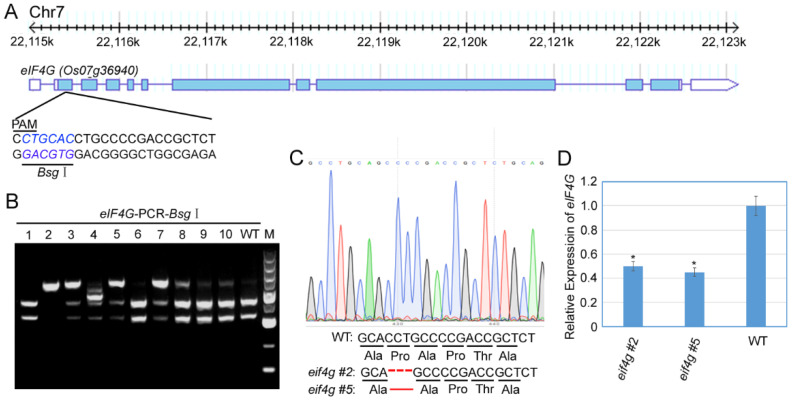
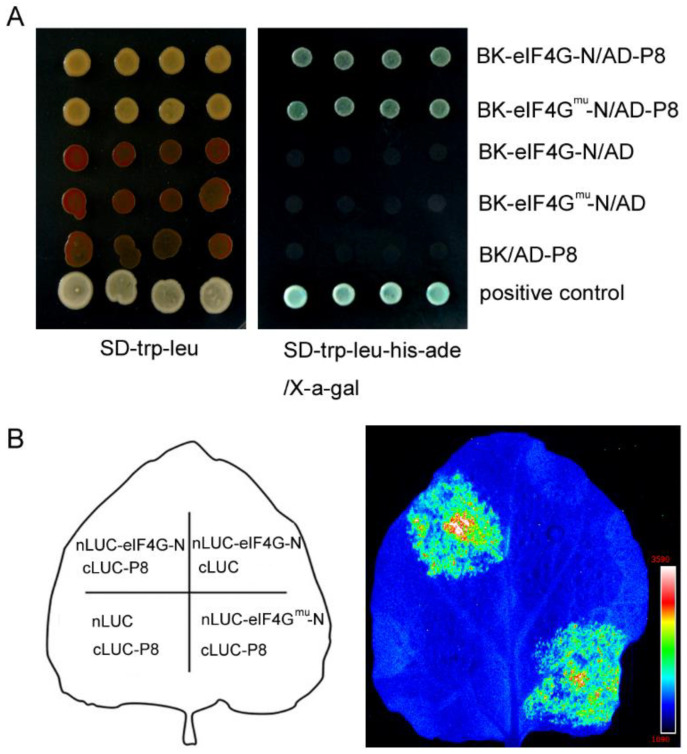
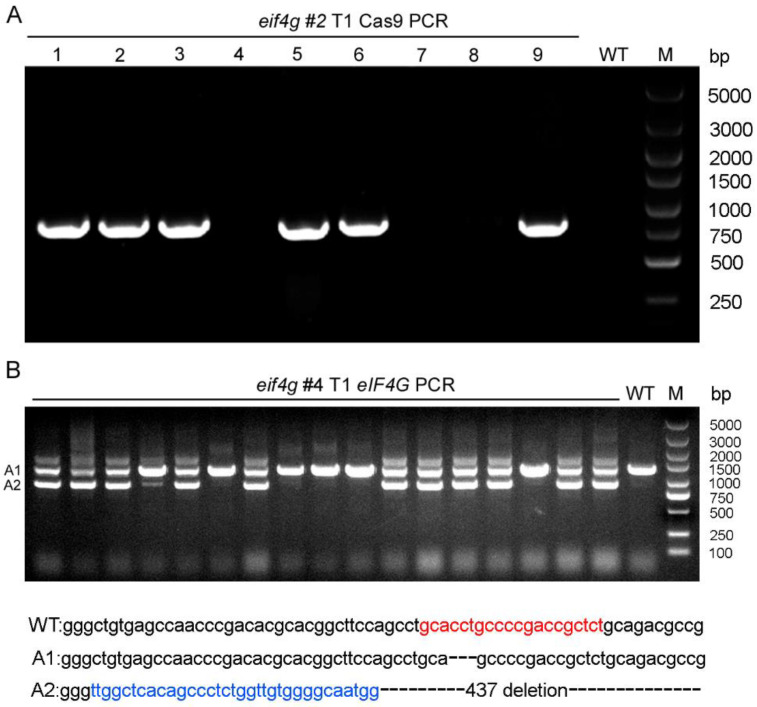
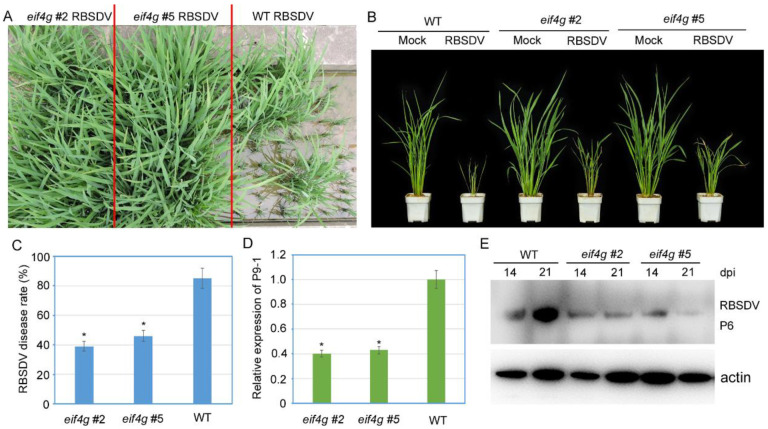
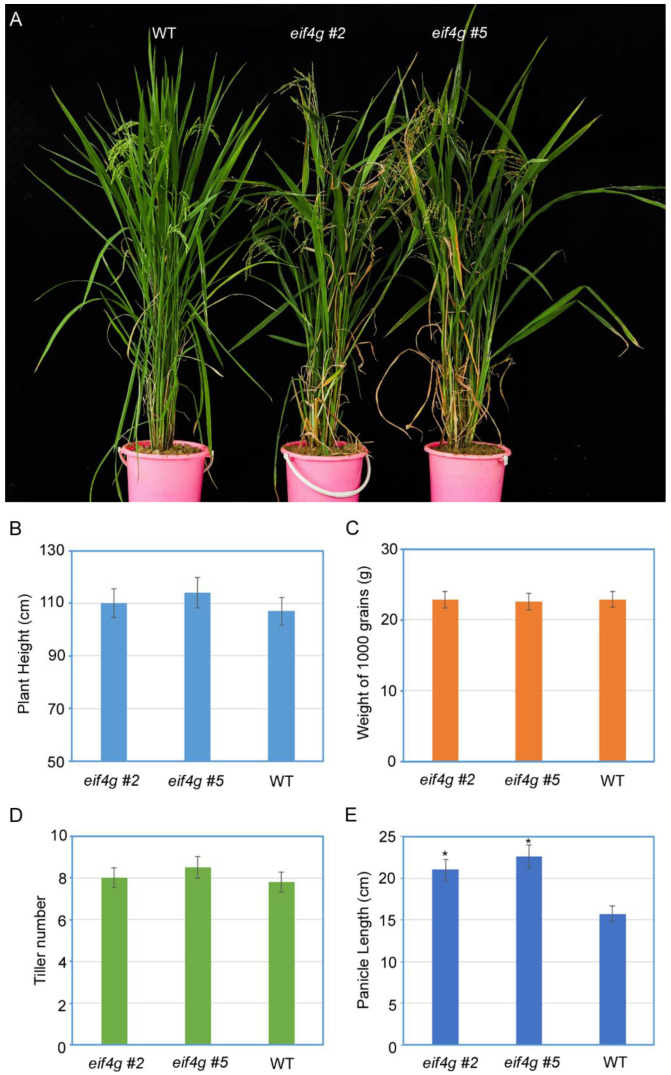
Rice black-streaked dwarf disease, caused by rice black-streaked dwarf virus (RBSDV), is a serious constraint in Chinese rice production. Breeding disease-resistant varieties through multigene aggregation is considered an effective way to control diseases, but few disease-resistant resources have been characterized thus far. To develop novel resources for resistance to RBSDV through CRISPR/Cas9-mediated genome editing, a guide RNA sequence targeting exon 1 of was designed and cloned into a binary vector, pHUE401. This recombinant vector was used to generate mutations in the rice cultivar Nipponbare via -mediated transformation. This approach produced heritable homozygous mutations in the transgene-free T1 generation. Sequence analysis of the target region from T1 transgenic plants identified 3 bp deletion mutants, and analysis of the predicted amino acid sequence identified one amino acid deletion in mutants that possess near full-length eIF4G. Furthermore, our data suggest that may plays an important role in rice normal development, as there were no knock-out homozygous mutants in T1 generation plants. When homozygous mutant lines were inoculated with RBSDV, they exhibited enhanced tolerance to virus infection, without visibly affecting plant growth and development. However, the mutant plants showed the same sensitivity to rice stripe virus (RSV) infection as wild-type plants. Notably, the wild-type and mutant N-termini of eIF4G interacted directly with RBSDV P8 in yeast and in planta. Additionally, compared to wild-type plants, the transcript level was reduced twofold in the mutant plants. These results indicate that site-specific mutation of rice successfully conferred partial resistance specific to RBSDV associated with less transcription of in mutants. Therefore, this study demonstrates that the novel alleles generated by CRISPR/Cas9 represent valuable disease-resistant resources that can be used to develop RBSDV-resistant varieties.
水稻黑条矮缩病是由水稻黑条矮缩病毒(RBSDV)引起的,是中国水稻生产的严重制约因素。通过多基因聚合培育抗病品种被认为是控制病害的有效方法,但迄今为止,很少有抗病资源得到鉴定。为了通过 CRISPR/Cas9 介导的基因组编辑开发抗 RBSDV 的新资源,设计并克隆了靶向 的外显子 1 的向导 RNA 序列到二元载体 pHUE401 中。该重组载体用于通过 -介导的转化生成水稻品种 Nipponbare 的突变体。该方法在无转基因的 T1 代中产生了可遗传的纯合突变体。来自 T1 转基因植物的 目标区域的序列分析鉴定出 3bp 缺失突变体,并且对预测的氨基酸序列的分析鉴定出一个在具有近乎全长 eIF4G 的突变体中缺失一个氨基酸。此外,我们的数据表明 可能在水稻正常发育中发挥重要作用,因为在 T1 代植物中没有 敲除纯合突变体。当纯合突变系被 RBSDV 接种时,它们对病毒感染表现出增强的耐受性,而不会明显影响植物的生长和发育。然而, 突变体植物对水稻条纹病毒(RSV)的感染与野生型植物一样敏感。值得注意的是,野生型和突变型 eIF4G 的 N 端在酵母和体内与 RBSDV P8 直接相互作用。此外,与野生型植物相比,突变体植物中的 转录物水平降低了两倍。这些结果表明,水稻 的定点突变成功赋予了与突变体中 转录减少相关的针对 RBSDV 的部分抗性。因此,本研究表明,通过 CRISPR/Cas9 产生的新 等位基因代表了有价值的抗病资源,可以用于开发抗 RBSDV 的品种。