Centro de Estudos do Genoma Humano e Células-Tronco, Departamento de Genética e Biologia Evolutiva, Instituto de Biociências, Universidade de São Paulo, Cidade Universitária, São Paulo 05508-090, SP, Brazil.
Hemotherapy and Cellular Therapy Department, Hospital Israelita Albert Einstein, São Paulo 05652-900, SP, Brazil.
Viruses. 2021 Oct 19;13(10):2103. doi: 10.3390/v13102103.
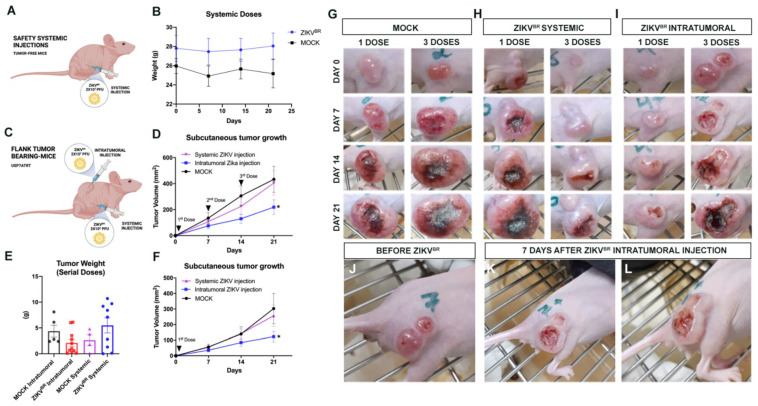
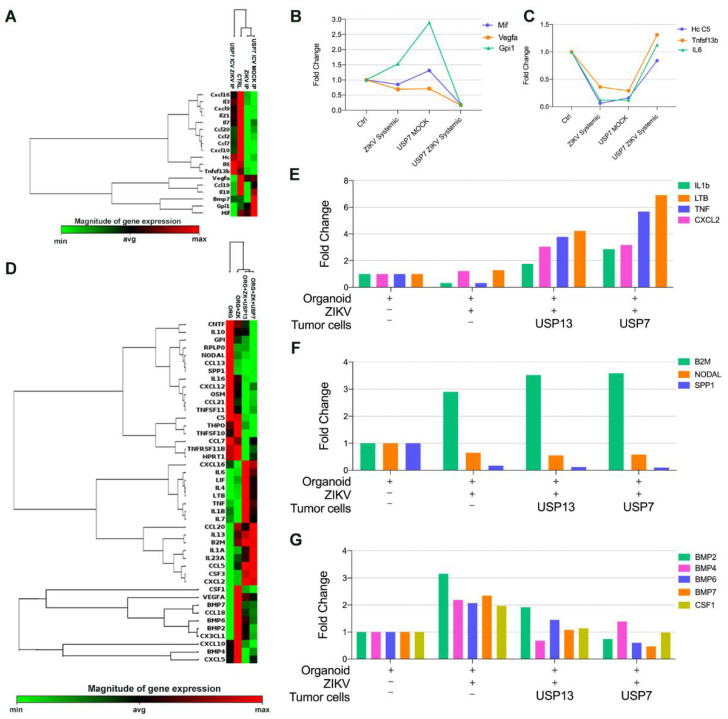
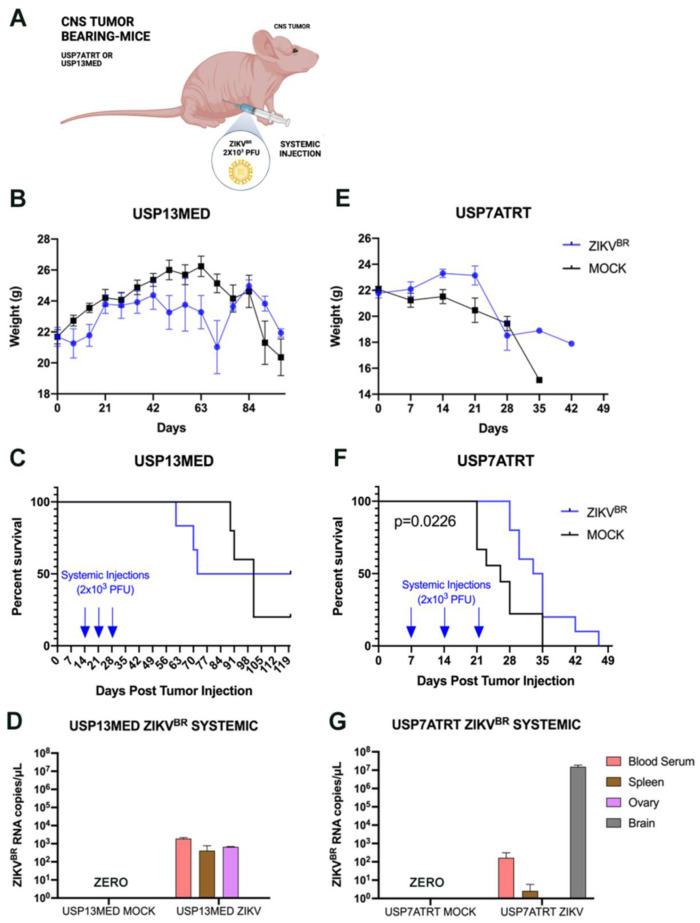
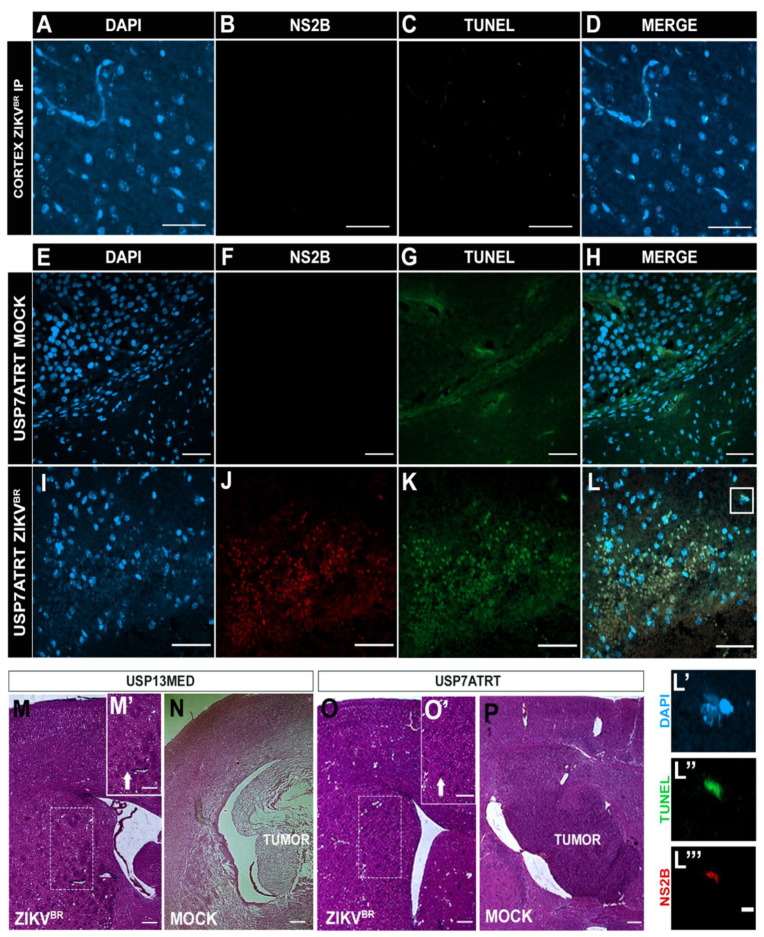
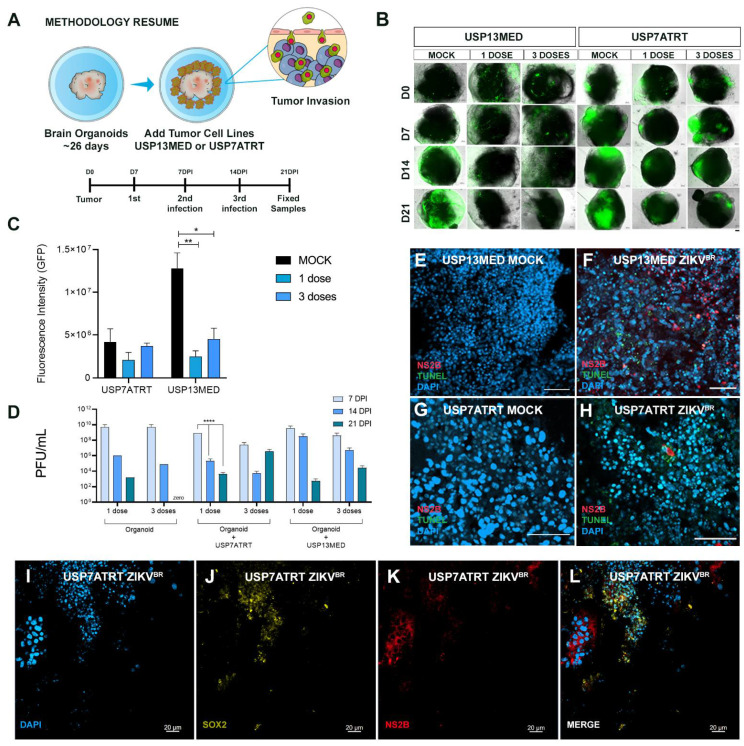
The Zika virus (ZIKV) has shown a promising oncolytic effect against embryonal CNS tumors. However, studies on the effect of different administration routes and the ideal viral load in preclinical models are highly relevant aiming for treatment safety and efficiency. Here, we investigated the effect and effectiveness of different routes of administration, and the number of ZIKV injections on tumor tropism, destruction, and side effects. Furthermore, we designed an early-stage human brain organoid co-cultured with embryonal CNS tumors to analyze the ZIKV oncolytic effect. We showed that in the mice bearing subcutaneous tumors, the ZIKV systemically presented a tropism to the brain. When the tumor was located in the mice's brain, serial systemic injections presented efficient tumor destruction, with no neurological or other organ injury and increased mice survival. In the human cerebral organoid model co-cultured with embryonal CNS tumor cells, ZIKV impaired tumor progression. The gene expression of cytokines and chemokines in both models suggested an enhancement of immune cells recruitment and tumor inflammation after the treatment. These results open new perspectives for virotherapy using the ZIKV systemic administration route and multiple doses of low virus load for safe and effective treatment of embryonal CNS tumors, an orphan disease that urges new effective therapies.
寨卡病毒(ZIKV)在对抗胚胎中枢神经系统肿瘤方面显示出有希望的溶瘤作用。然而,研究不同给药途径和临床前模型中理想病毒载量对于治疗安全性和效率至关重要。在这里,我们研究了不同给药途径和 ZIKV 注射次数对肿瘤趋向性、破坏和副作用的影响。此外,我们设计了一种早期人类脑类器官与胚胎中枢神经系统肿瘤共培养的模型,以分析 ZIKV 的溶瘤作用。我们发现,在皮下肿瘤的小鼠中,ZIKV 系统地趋向于大脑。当肿瘤位于小鼠的大脑中时,连续的系统注射可有效破坏肿瘤,且不会导致神经或其他器官损伤,并提高了小鼠的存活率。在与胚胎中枢神经系统肿瘤细胞共培养的人类脑类器官模型中,ZIKV 可抑制肿瘤进展。两种模型中的细胞因子和趋化因子的基因表达表明,治疗后免疫细胞募集和肿瘤炎症增强。这些结果为使用 ZIKV 系统给药途径和多次低病毒载量的病毒疗法为治疗胚胎中枢神经系统肿瘤提供了新的视角,该疾病是一种孤儿病,迫切需要新的有效疗法。